


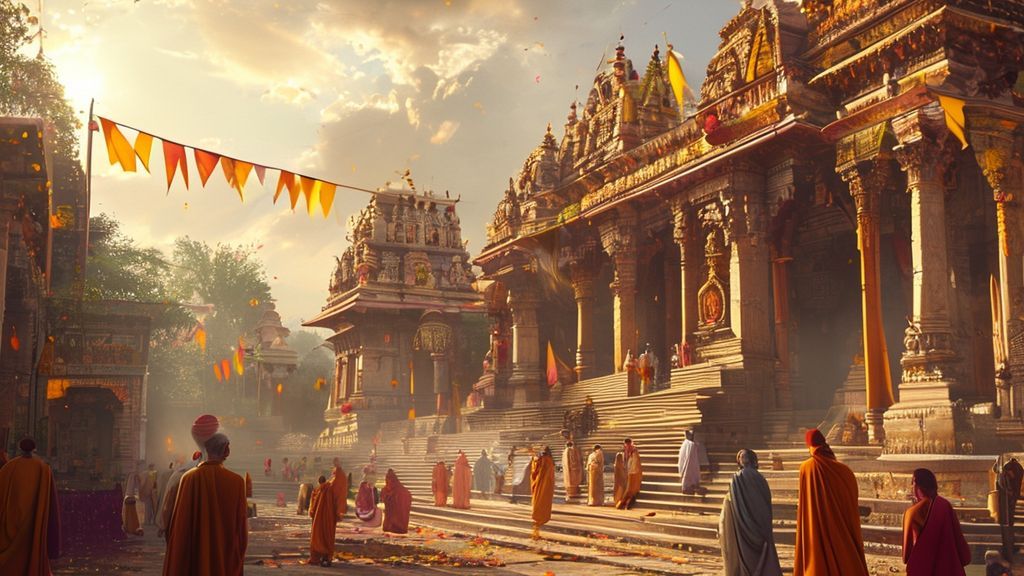
Andhra Pradesh Temple Towns of Tirupati and Srisailam are paramount spiritual destinations, embodying the rich tapestry of Sanatan Dharma. Tirupati, home to Lord Venkateswara, is a preeminent Vaishnava pilgrimage site, while Srisailam, consecrated with a Jyotirlinga and Shakti Peetha, represents the profound Shaiva and Shakta traditions, drawing millions of devotees seeking divine blessings and liberation.
| Attribute | Details |
|---|---|
| Deity (Tirupati) | Lord Venkateswara (Srinivasa, Balaji), an incarnation of Vishnu. |
| Deity (Srisailam) | Lord Mallikarjuna Swamy (Jyotirlinga), Devi Bhramaramba (Shakti Peetha). |
| Location/Origin | Tirupati: Tirumala Hills, Chittoor district. Srisailam: Nallamala Hills, Kurnool district. |
| Key Festival (Tirupati) | Sri Venkateswara Salakatla Brahmotsavam. |
| Key Festival (Srisailam) | Maha Shivaratri, Dasara (Navaratri). |
| Scripture Reference (Tirupati) | Varaha Purana, Bhavishyottara Purana, Skanda Purana. |
| Scripture Reference (Srisailam) | Skanda Purana, Linga Purana, Devi Bhagvata Purana. |
Introduction: The Spiritual Heartbeat of Andhra Pradesh
The sacred land of Andhra Pradesh pulsates with devotion, its spiritual arteries being the ancient temple towns of Tirupati and Srisailam. These hallowed destinations are not mere places of worship; they are vibrant repositories of Sanatan Dharma, echoing millennia of faith, philosophy, and architectural genius. Tirupati, home to the resplendent Lord Venkateswara, draws devotees with its promise of liberation and fulfillment of vows, while Srisailam stands as a unique confluence of Shaiva and Shakta traditions, enshrining a potent Jyotirlinga and a revered Shakti Peetha. Together, they represent the harmonious diversity and profound depth of Hindu spirituality, guiding countless souls on their path to moksha.
Puranic History & Legend: Unraveling Divine Narratives
Tirupati: The Abode of Lord Venkateswara
The divine manifestation of Lord Venkateswara in Tirumala is intricately detailed across several Puranas. According to the Varaha Purana and Bhavishyottara Purana, the Lord descended to Earth in Kali Yuga to protect humanity. One of the most cherished legends recounts the saga of Sage Bhrigu, who, tasked with identifying the greatest deity, tested the Trimurtis. Finding Lord Vishnu undisturbed by his kick to the chest, Bhrigu declared Vishnu the supreme protector. This act, however, angered Devi Lakshmi, Vishnu’s consort, who then left Vaikuntha and descended to Earth as Padmavathi, the daughter of Akasha Raja.
Lord Vishnu, in sorrow, also descended, taking the form of Srinivasa. Wandering through the Tirumala Hills, he was eventually adopted by Vakula Devi. During his earthly sojourn, Srinivasa encountered and fell in love with Padmavathi. To solemnize their marriage, Lord Srinivasa needed immense wealth and thus took a colossal loan from Kubera, the celestial treasurer, promising to repay it by the end of Kali Yuga. This cosmic debt explains the continuous flow of offerings at Tirupati, a practice deeply ingrained in the devotional psyche. The Lord’s presence here, specifically as Venkateswara, is considered an accessible form for devotees to attain salvation in this yuga.
Srisailam: The Sacred Confluence of Shiva and Shakti
Srisailam, nestled in the picturesque Nallamala Hills, holds a unique distinction as one of the twelve Jyotirlinga shrines and one of the eighteen Shakti Peethas. The Skanda Purana vividly describes the origin of Lord Mallikarjuna. A princess named Chandravati, daughter of Chandragupta, found her cows showering milk over a particular lingam hidden in the forest. Upon digging, she discovered the self-manifested lingam, which later came to be known as Mallikarjuna. The word ‘Mallika’ refers to Devi Parvati (Jasmine), and ‘Arjuna’ refers to Lord Shiva, signifying their inseparable presence.
As a Shakti Peetha, Srisailam is revered as the place where Devi Sati’s neck (or as some traditions assert, her upper lip or a specific part of her body) fell after Lord Shiva’s Tandava following her self-immolation at Daksha’s Yagna, as narrated in the Devi Bhagvata Purana. The presiding deity here is Devi Bhramaramba, a form of Durga, who is often depicted with a swarm of bees, signifying her power to destroy evil. This duality of Shiva and Shakti in a single complex makes Srisailam an extraordinarily potent spiritual center, where devotees receive the blessings of both the cosmic father and mother.
Architectural & Scientific Marvels: Stones That Speak Devotion
Tirumala Venkateswara Temple: A Dravidian Masterpiece
The Sri Venkateswara Swamy Temple at Tirumala exemplifies magnificent Dravidian architecture. Its imposing gopurams (ornate gateways), intricate carvings, and the resplendent gold-plated Ananda Nilayam Vimanam (the dome above the sanctum sanctorum) are breathtaking. The temple complex has evolved over centuries, with contributions from various dynasties including the Pallavas, Cholas, Pandyas, and Vijayanagara emperors, notably Sri Krishnadevaraya. The engineering marvels are evident in its ability to accommodate millions of pilgrims annually, with sophisticated queue management systems and colossal kitchens (the ‘potu’) preparing Prasadam for over a lakh devotees daily. The temple’s grandeur is not just in its aesthetics but in its functional brilliance, a testament to ancient Indian wisdom in public infrastructure management.
Srisailam Temple: Fortified Devotion
The Srisailam Temple complex is a colossal structure resembling a fortress, enclosed by massive walls built by Vijayanagara emperor Prauda Devaraya in the 15th century. Its architecture is a beautiful blend of early Chalukyan, Kakatiyan, and Vijayanagara styles, predominantly Dravidian. The exquisite carvings on its pillars, gopurams, and mandapams narrate tales from the Puranas and depict various forms of Shiva. The temple stands as a testament to the skill of ancient artisans and engineers, particularly in managing the flow of pilgrims through its vast courtyards. Inscriptions detailing grants and construction activities from different eras provide valuable historical insights, showcasing a continuous tradition of patronage and reverence. This grand edifice stands not merely as a structure but as a living legacy of our glorious spiritual past, which you can explore further at Hindutva.online.
Rituals & Puja Vidhi: Connecting with the Divine
Tirupati: Seva and Samarpana
- Darshan: Devotees queue for hours, sometimes days, to have a fleeting glimpse of Lord Venkateswara. The Suprabhata Seva (waking the Lord) and Thomala Seva (decoration with flowers) are highly sought-after.
- Hair Offering (Mokku): A significant ritual where devotees shave their heads as a symbol of sacrificing ego and attachment. This offering is made at the Kalyanakatta.
- Archana and Arjita Sevas: Personalized prayers and paid services like Kalyanotsavam (Lord’s marriage ceremony) and Dolotsavam (swing festival) are performed for specific blessings.
- Prasadam: The world-renowned Tirupati Laddu, consecrated and offered to the Lord, is distributed to devotees.
- Govinda Nama Sankeertanam: The continuous chanting of “Govinda! Govinda!” reverberates through the hills, creating an atmosphere of intense devotion.
Srisailam: Abhishekam and Archana
- Lingabhishekam: Devotees perform Rudrabhishekam to Lord Mallikarjuna, offering water, milk, curd, honey, and Bilva leaves. This is believed to cleanse sins and bestow blessings.
- Darshan of Devi Bhramaramba: A separate darshan is performed for the Mother Goddess, often with offerings of kumkum and flowers, seeking protection and strength.
- Sparsha Darshan: Unique to Jyotirlingas, devotees can directly touch the lingam and perform personal puja during specific timings.
- Chandi Homa: Specialized fire rituals are performed for Devi Bhramaramba, invoking her divine energy for welfare and prosperity.
Mantras & Chants: Echoes of Devotion
For Lord Venkateswara (Tirupati):
- Mantra: ॐ नमो वेंकटेशाय (Om Namo Venkateshaya) – The fundamental mantra for invoking Lord Venkateswara’s blessings.
- Chant: “गोविंदा! गोविंदा!” (Govinda! Govinda!) – A powerful chant that fills the air of Tirumala, connecting devotees directly to the Lord.
- Sloka: “वेङ्कटाद्रिसमं स्थानं ब्रह्माण्डे नास्ति किंचन। वेङ्कटेशसमो देवो न भूतो न भविष्यति।” (Venkataadrisamam sthanam brahmaande naasti kinchana | Venkateshasamo devo na bhooto na bhavishyati ||) – “There is no place equal to Venkatadri in the universe, nor has there been or will there be a deity equal to Venkateswara.”
For Lord Mallikarjuna and Devi Bhramaramba (Srisailam):
- Mantra (Shiva): ॐ नमः शिवाय (Om Namah Shivaya) – The Panchakshari Mantra, supremely potent for Shiva devotees.
- Mantra (Shakti): ॐ श्रीं ह्रीं क्लीं ऐं सौं ॐ ह्रीं श्रीं क्लीं ऐं सौं भ्रामरम्बायै नमः (Om Shreem Hreem Kleem Aim Soum Om Hreem Shreem Kleem Aim Soum Bhramarambayai Namah) – A powerful Bija mantra for Devi Bhramaramba.
- Sloka (Shiva): “सौराष्ट्रे सोमनाथं च श्रीशैले मल्लिकार्जुनम्।” (Saurashtre Somanatham cha Srisailam Mallikarjunam) – A part of the Dvadasha Jyotirlinga Stotram, invoking Mallikarjuna Swamy.
Dos and Don’ts: Upholding Dharma in Sacred Spaces
- DO: Dress modestly, covering shoulders and knees, as a mark of respect for the sanctity of the temples.
- DO: Maintain silence and decorum within the temple premises, especially inside the sanctum.
- DO: Follow the queue systems patiently and respect the instructions of temple authorities.
- DO: Offer prayers with a pure heart and sincere devotion.
- DO: Deposit offerings and donations only in designated hundi/collection points.
- DON’T: Engage in photography or videography where explicitly prohibited, particularly inside the main shrines.
- DON’T: Consume non-vegetarian food, alcohol, or other intoxicants within the temple towns.
- DON’T: Litter or deface the temple premises; help maintain cleanliness.
- DON’T: Enter the temple if you are undergoing a period of ritual impurity (e.g., during menstruation or a recent death in the family, as per traditional practices).
- DON’T: Disturb other devotees or create unnecessary noise.
Frequently Asked Questions
Why is Tirupati considered one of the wealthiest temples in the world?
Tirupati’s immense wealth stems from centuries of unbroken tradition of devotee offerings. The legend of Lord Venkateswara taking a loan from Kubera, combined with the profound faith of millions, inspires devotees to donate generously as part of their vows and gratitude. This accumulated wealth, diligently managed by the Tirumala Tirupati Devasthanams (TTD), is utilized for various dharmic activities, including education, healthcare, and propagation of Sanatan Dharma, making it a pivotal institution for Hindutva.online initiatives.
What is the unique spiritual significance of Srisailam being both a Jyotirlinga and a Shakti Peetha?
Srisailam holds extraordinary spiritual potency due to its dual status. As a Jyotirlinga, it is a direct manifestation of Lord Shiva’s cosmic light, offering liberation and spiritual upliftment. As a Shakti Peetha, it embodies the primordial feminine energy of Devi Sati/Bhramaramba, granting strength, protection, and fulfillment of desires. This rare combination means devotees receive the combined blessings of both Shiva and Shakti, leading to holistic spiritual growth and the removal of obstacles.
How ancient are these temple towns, and what evidence supports their antiquity?
Both Tirupati and Srisailam boast antiquity stretching back millennia. Their origins are rooted in the Puranas, indicating pre-historic sanctity. Archeological evidence and historical inscriptions found within and around the temple complexes corroborate their continuous existence and development since at least the early centuries CE, with various dynasties contributing to their expansion and grandeur. The continuous worship practices and oral traditions further attest to their unbroken spiritual lineage.
Dharmic Significance: Pillars of Sanatan Dharma
Tirupati and Srisailam are more than just pilgrimage sites; they are living testaments to the enduring strength and adaptability of Sanatan Dharma. They serve as cultural anchors, preserving ancient rituals, art forms, and scriptural knowledge. By drawing millions of devotees, they foster a profound sense of community and reinforce dharmic values across generations. These sacred towns are constant reminders of India’s spiritual heritage, offering solace, inspiration, and a tangible connection to the divine for every sincere seeker. Their continued vibrancy ensures the propagation of Bhakti, Karma, and Jnana yoga, keeping the flame of Sanatan Dharma eternally alight.