


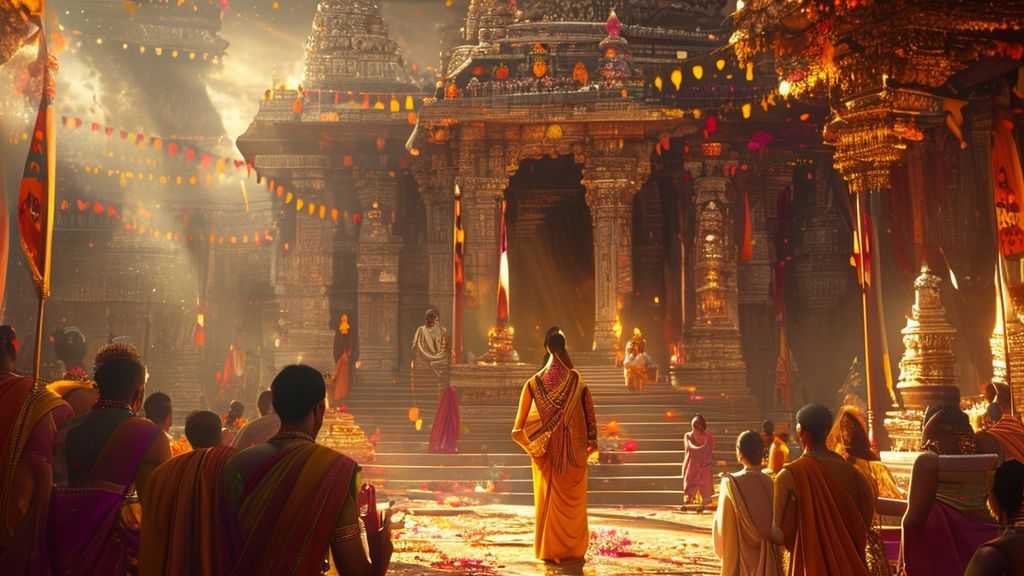
Bharatanatyam is a classical Indian dance form originating in Tamil Nadu, deeply rooted in ancient temple traditions and spiritual devotion, serving as a profound medium for expressing Hindu philosophical concepts and Puranic narratives. It meticulously embodies the principles laid down in Bharat Muni’s Natya Shastra, utilizing Bhava (expression), Raga (melody), Tala (rhythm), and Natya (drama) to transport the devotee into a realm of divine experience.
| Attribute | Details |
|---|---|
| Name Derivation | Bha (Bhava – Emotion), Ra (Raga – Melody), Ta (Tala – Rhythm), Natyam (Dance) |
| Origin | Ancient Tamil Nadu, South India |
| Core Principles | Spiritual Expression, Devotion (Bhakti), Storytelling (Katha), Aesthetic Purity |
| Key Scriptural Text | Natya Shastra by Bharat Muni; portions of Agni Purana, Silappadikaram |
| Associated Deity | Nataraja (Lord Shiva as the Cosmic Dancer) |
| Traditional Practitioners | Devadasis (temple dancers), later Nattuvanars (gurus) |
| Modern Revivalists | Tanjore Quartet, E. Krishna Iyer, Rukmini Devi Arundale |
The Embodiment of Dharma: Bharatanatyam as Sacred Art
Bharatanatyam is not merely an aesthetic performance; it is a profound spiritual discipline, a sadhana, that elevates both the performer and the spectator. From its genesis in the sacred precincts of South Indian temples, it has served as a dynamic conduit for transmitting the timeless wisdom of Sanatan Dharma. Each gesture, each movement, each facial expression (abhinaya) is imbued with devotional intent, transforming classical literature, Puranic tales, and philosophical concepts into a vivid, living experience. This ancient art form, sustained through millennia, continues to be a cornerstone of Hindu culture, reminding us of the intrinsic connection between art, devotion, and the divine.
Puranic History and Divine Legends of Dance
The origins of Bharatanatyam are deeply intertwined with Hindu mythology, tracing back to the celestial realms. The Hindutva.online tradition posits that dance itself was gifted to humanity by the Devas. Lord Shiva, as Nataraja, the Cosmic Dancer, is the supreme embodiment of rhythm and movement, performing the Ananda Tandava (dance of bliss) that sustains creation, preservation, and dissolution. This divine dance is extensively described in the *Shiva Tandava Stotram* and referenced in the *Linga Purana* and *Skanda Purana*, particularly in the Kashi Khanda, where Shiva’s mystical dances are recounted.
According to legend, Lord Brahma, witnessing the need for a fifth Veda that could be understood by all castes and genders, extracted elements from the existing four Vedas to create the *Natya Veda*. From the *Rig Veda*, he took the text (pathya); from the *Sama Veda*, the music (geeta); from the *Yajur Veda*, the acting (abhinaya); and from the *Atharva Veda*, the emotions (rasas). He then entrusted this *Natya Veda* to the sage Bharat Muni, who codified its principles in the monumental treatise, the *Natya Shastra*.
The *Natya Shastra* details the intricate grammar of Indian classical dance, including mudras (hand gestures), karana (unit of dance movement), angaharas (sequences of karanas), and the theory of rasas (aesthetic sentiments). Early temple inscriptions, such as those found in the Brihadeeswarar Temple in Thanjavur (Tanjore), depict the 108 Karanas described in the *Natya Shastra*, confirming the art’s ancient lineage and its deep integration into temple worship through the Devadasi system. These women, dedicated to temple deities, performed daily rituals and danced for the Gods, preserving and evolving the art form. The Tamil epic *Silappadikaram* (circa 2nd-5th century CE) further elaborates on the dance forms of its era, providing vivid descriptions of performances by the protagonist Madhavi, showcasing a sophisticated understanding of classical dance.
Architectural & Scientific Marvels in Stone
The profound connection between Bharatanatyam and Hindu temple architecture is a testament to its sacred origins and scientific precision. Many ancient temples in South India serve as living textbooks of this dance form. The most iconic example is the Chidambaram Nataraja Temple, dedicated to Lord Shiva as the Cosmic Dancer. Its towering gopurams and inner corridors are adorned with sculptures depicting all 108 Karanas from Bharat Muni’s *Natya Shastra*. Each *karana* represents a specific posture and movement sequence, frozen in stone, providing an invaluable visual lexicon for practitioners and scholars.
Similarly, the walls of the Brihadeeswarar Temple (Rajarajeswaram) in Thanjavur, built by Raja Raja Chola I, also feature intricate carvings of Karanas. These architectural marvels are not mere decorations; they are mnemonic devices and instructional guides, demonstrating the scientific rigor embedded within the art form. The precise geometry of the poses, the alignment of the body, and the balance required reflect a deep understanding of human anatomy and kinesiology. The rhythmic patterns (talas) in Bharatanatyam are mathematically complex, often involving intricate subdivisions of beats and cross-rhythms, mirroring the sophisticated astronomical calculations and engineering principles applied in temple construction itself.
Rituals and Puja Vidhi in Practice
Bharatanatyam is not just a stage performance; it is a ritualistic offering, a puja in motion. The training and performance aspects are steeped in devotional protocols.
- Guru Vandanam and Bhoomi Vandanam: Every practice session and performance traditionally begins with a respectful obeisance to the Guru (teacher) and an invocation to Mother Earth (Bhoomi Devi), seeking her blessings and forgiveness for stamping on her. This sets a reverent tone for the sacred activity.
- Alarippu: The first item in a traditional Bharatanatyam recital (margam), Alarippu (meaning ‘to bloom’ in Tamil), is a pure dance piece that serves as an invocation. It involves simple, rhythmic movements that gradually unfold the various body parts, preparing the dancer for more complex expressions, akin to a floral offering to the deities.
- Pushpanjali: This is a devotional offering of flowers, often performed as an opening piece, where the dancer symbolically offers flowers to the deity, the guru, and the audience, invoking divine blessings.
- Arangetram: The debut solo performance, known as Arangetram (meaning ‘ascending the stage’ in Tamil), is a significant rite of passage. It is not merely a graduation but a spiritual consecration, marking the culmination of years of rigorous training and the dancer’s formal entry into the art form as a dedicated devotee. It often includes traditional Hindu rituals and prayers.
- Abhinaya for Deities: During the narrative pieces (padams, varnams), the dancer portrays various deities, sages, and characters from the Puranas and Epics. This act of embodying divine forms is a form of deep meditation and devotional service, transporting the audience through the power of bhakti rasa.
Mantras and Chants for the Devotee Dancer
For practitioners of Bharatanatyam, chanting relevant mantras before and during practice helps in invoking divine grace, enhancing focus, and infusing the performance with spiritual energy. The primary deity associated with dance is Lord Shiva as Nataraja.
Nataraja Stuti (Invocation to Nataraja):
चित्सभेशम् वन्दे
नृत्तसभापतिम् वन्दे
आनन्द ताण्डवम् वन्दे
नटराजम् वन्दे
Chitsabheśam vande
Nṛttasabhāpatim vande
Ānanda tāṇḍavam vande
Naṭarājam vande
(Salutations to the Lord of Chitsabha, Salutations to the Master of the dance assembly, Salutations to the Cosmic Dance of Bliss, Salutations to Nataraja.)
Guru Mantra:
गुरुर् ब्रह्मा गुरुर् विष्णु गुरुर् देवो महेश्वरः |
गुरुर् साक्षात् परब्रह्म तस्मै श्री गुरवे नमः ||
Gurur Brahma Gurur Vishnu Gurur Devo Maheshwaraha |
Gurur Sakshat Parabrahma Tasmai Shri Gurave Namaha ||
(The Guru is Brahma, the Guru is Vishnu, the Guru is verily the great Lord Shiva. The Guru is directly the Supreme Brahman, to that Guru I offer my salutations.)
Chanting “Om Namah Shivaya” (ॐ नमः शिवाय) is also highly beneficial for aligning with the energy of Nataraja and invoking spiritual purity in the art.
Dos and Don’ts for Bharatanatyam Practitioners
Adherence to certain cultural and ethical guidelines is paramount for maintaining the sanctity and authenticity of Bharatanatyam.
- Do: Show utmost reverence to your Guru, as they are the embodiment of knowledge and tradition.
- Do: Maintain impeccable discipline and dedication in practice, understanding it as a form of Sadhana.
- Do: Dress modestly and appropriately during practice and performance, respecting the art form’s sacred nature.
- Do: Learn the meaning and context of the lyrical pieces (sahitya) to effectively convey the Bhava (emotion).
- Do: Treat the stage as sacred ground, offering respect before and after performances.
- Don’t: Disrespect the Guru, fellow dancers, or the performance space through inappropriate conduct or language.
- Don’t: Compromise the traditional purity of the dance for fleeting trends or entertainment value.
- Don’t: Practice or perform with a casual attitude; approach it with seriousness and devotion.
- Don’t: Wear distracting or inappropriate attire that detracts from the spiritual essence of the dance.
What does ‘Bharatanatyam’ truly signify?
The name ‘Bharatanatyam’ is profoundly meaningful, embodying the very essence of classical Indian dance. It is often broken down as ‘Bha’ from Bhava (expression/emotion), ‘Ra’ from Raga (melody/musicality), ‘Ta’ from Tala (rhythm/timing), and ‘Natyam’ (dance). This etymological understanding highlights that Bharatanatyam is a holistic art form where emotional narrative, musical harmony, rhythmic precision, and dramatic representation coalesce to create a deeply moving spiritual experience, drawing from the tenets of Bharat Muni’s *Natya Shastra*.
Is Bharatanatyam exclusively for women?
While Bharatanatyam has historically been predominantly performed by women, particularly the temple dancers (Devadasis) who were the custodians of this tradition, it is absolutely not exclusive to women. In ancient times, male dancers and Nattuvanars (gurus) were integral to the art form. Today, many accomplished male dancers pursue Bharatanatyam, showcasing its universality and timeless appeal. The energy and grace, though often associated with Lasya (feminine aspect), also encompass the powerful Tandava (masculine aspect) of Shiva, making it accessible and profound for all genders.
What are the fundamental components of a Bharatanatyam performance?
A Bharatanatyam performance is traditionally structured around three core components: Nritta, Nritya, and Natya. Nritta refers to pure dance movements, characterized by rhythmic patterns and intricate footwork (adavus) without conveying any specific meaning or emotion; it is abstract and aesthetic. Nritya combines rhythmic movements with expressive gestures (mudras) and facial expressions (abhinaya) to interpret a song’s lyrics and convey specific moods or narratives. Natya is the dramatic aspect, where the dancer plays a character and tells a complete story through the combination of Nritta and Nritya, along with stagecraft and costume. These elements are meticulously woven together in a traditional Bharatanatyam repertoire (margam).
Why This Matters for Every Hindu: Preserving Sanatan Dharma
Bharatanatyam stands as a magnificent testament to the enduring power and beauty of Sanatan Dharma. It is more than just an art form; it is a living scripture, a visual mantra, and a dynamic vehicle for spiritual awakening. By engaging with Bharatanatyam, whether as a performer, student, or appreciative audience member, we actively participate in the preservation and propagation of our ancient heritage. It connects us to the divine, teaches us discipline, fosters devotion, and embodies the profound philosophical truths of our ancestors. In a rapidly changing world, the continued flourishing of Bharatanatyam ensures that the spiritual wisdom, aesthetic brilliance, and cultural identity of Hindu civilization remain vibrant and accessible for future generations. It is a source of immense pride and a potent reminder of the richness found at Hindutva.online.