


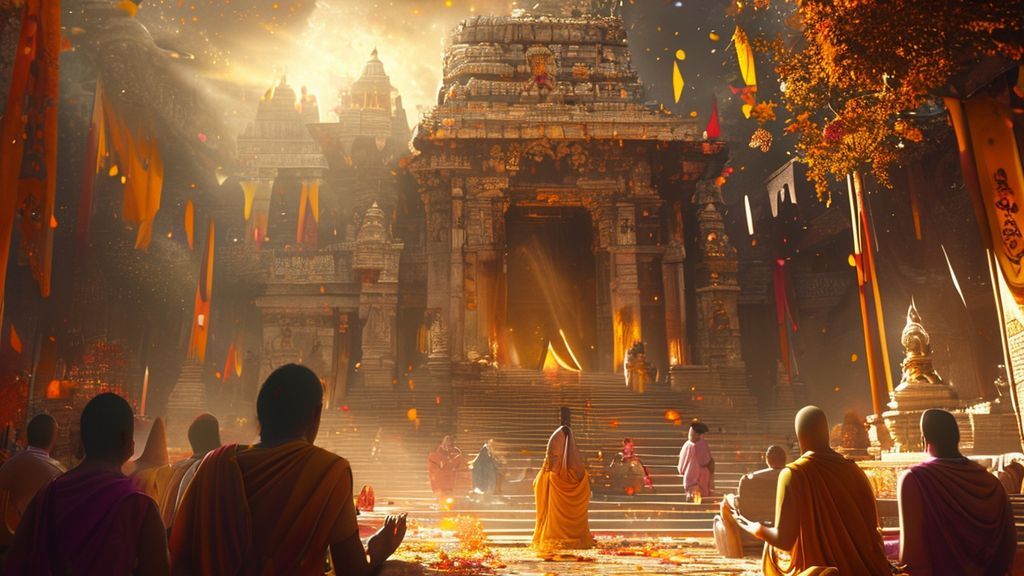
Brahma Muhurta is the supremely auspicious period preceding sunrise, spanning approximately 96 to 48 minutes before the sun’s first appearance. Revered in Sanatan Dharma, it is considered the ideal window for spiritual practices, meditation, learning, and self-realization, aligning an individual’s consciousness with the universal creative energies. This sacred time, named after Lord Brahma, bestows clarity, peace, and accelerated spiritual progress.
| Attribute | Details |
|---|---|
| Name | Brahma Muhurta (ब्रह्म मुहूर्त) |
| Meaning | The Creator’s Hour; The Time of Brahma |
| Timing | Begins approximately 1 hour 36 minutes (96 minutes) before local sunrise, and concludes 48 minutes before sunrise. |
| Duration | Approximately 48 minutes (one Muhurta) |
| Associated Deity | Lord Brahma, the creator of the universe; also associated with Saraswati (knowledge) and Vishnu (sustenance of Dharma). |
| Dominant Qualities | Sattva Guna (goodness, purity, tranquility), conducive to spiritual growth and intellectual pursuits. |
| Primary Benefits | Enhanced concentration, deeper meditation, improved health, mental clarity, spiritual awakening, increased creativity. |
| Scriptural Reference | Mentioned in Dharma Shastras (e.g., Manusmriti, Yajnavalkya Smriti), Puranas, and ancient Yogic texts. |
Introduction: Awakening to the Divine Rhythm
In the timeless wisdom of Sanatan Dharma, every aspect of existence is imbued with sacred rhythm and profound significance. Among these, the concept of Brahma Muhurta stands as a paramount injunction for every sincere seeker. It is not merely an early hour but a profound cosmic invitation, a gateway to higher consciousness and the flourishing of one’s spiritual journey. Our ancient Rishis, through their deep introspection and communion with the divine, discerned that this specific segment of time, before the sun’s full ascent, holds a unique potency for spiritual practices (Sadhana), making the mind most receptive to divine energies and knowledge.
To awaken during Brahma Muhurta is to consciously choose alignment with the very pulse of creation, setting the tone for a day infused with purpose, tranquility, and divine connection. It is the time when the veil between the material and spiritual realms is thinnest, offering unparalleled opportunities for self-realization and inner peace. This guide aims to illuminate the profound benefits and practices associated with this sacred hour, drawing from the rich tapestry of Vedic scriptures and yogic traditions.
Vedic Roots & Puranic Wisdom: The Creator’s Time
The concept of Muhurta, a unit of time measurement, is deeply ingrained in Vedic chronology and astrology (Jyotisha Shastra). A day (24 hours) is traditionally divided into 30 Muhurtas, with each Muhurta lasting approximately 48 minutes. The night comprises 15 Muhurtas. Brahma Muhurta specifically refers to the 14th Muhurta of the night, which culminates exactly 48 minutes before sunrise. Thus, this auspicious period spans from 96 minutes before sunrise until 48 minutes before sunrise.
Its naming, “Brahma Muhurta,” is profoundly significant. Lord Brahma is the creator deity, responsible for manifesting the universe. This time is imbued with His creative energy, making it ideal for initiating new thoughts, creative projects, and, most importantly, the creation of a new, purified self through spiritual discipline. The sacred texts emphatically advocate for awakening during this time:
- The Yajnavalkya Smriti (Achara Adhyaya, Verse 115) states: “अकाले च न शयीत सन्ध्यास्वपि च पर्वसु । ब्रह्ममुहूर्त उत्थाय चिन्तयेदात्मनो हितम् ॥” (One should not sleep at inappropriate times, nor during twilight or on auspicious days. One should wake up in Brahma Muhurta and contemplate what is beneficial for oneself.) This clearly mandates an early awakening for self-reflection and well-being.
- The Manusmriti (Chapter 4, Verse 92), another foundational Dharma Shastra, implicitly supports the idea of early morning duties and practices, advocating for a life aligned with Dharma from the very start of the day.
- While not a narrative legend, the concept’s ancient origin underscores a deep understanding of cosmic cycles. The Skanda Purana, and specifically the Kashi Khanda, often elaborates on the importance of specific timings for religious observances and austerities, aligning with the broader principle of Muhurta Shastra.
This ancient wisdom underscores that Brahma Muhurta is not a human invention but a divinely ordained period, conducive to spiritual evolution, a truth recognized and practiced by Rishis and yogis for millennia.
The Science of Awakening: Yogic & Environmental Perspectives
Beyond its scriptural basis, Brahma Muhurta is supported by profound yogic and environmental insights, offering a scientific rationale for its potency:
- Atmospheric Purity and Ojas: During this pre-dawn period, the atmosphere is exceptionally pure and fresh. There’s a heightened concentration of oxygen and an abundance of negatively charged ions, which are known to enhance mood, vitality, and cognitive function. This atmospheric clarity is conducive to deep breathing exercises (Pranayama) and meditation. Ancient texts refer to a subtle energy called ‘Ojas’ that is particularly abundant and assimilable during this time, nourishing the body and mind.
- Sattvic Dominance: The three Gunas (Sattva, Rajas, Tamas) cycle throughout the day. Brahma Muhurta is predominantly Sattvic, meaning qualities of purity, clarity, wisdom, and peace are at their peak. This makes the mind calm, alert, and free from the inertia of Tamas and the agitation of Rajas, which dominate later in the day.
- Pineal Gland Activation: The pineal gland, often called the ‘third eye’, is highly active in the absence of sunlight. Early morning hours, before direct sun exposure, are optimal for its function, which is linked to intuition, spiritual insight, and the regulation of sleep-wake cycles.
- Brainwave States: Modern neuroscience recognizes that during early morning, the brain naturally transitions through alpha and theta wave states. These states are associated with deep relaxation, heightened creativity, improved memory, and easier access to subconscious mind, making them ideal for meditation and spiritual practices.
- Prana Vayu Movement: Yogic physiology indicates that the Udana Vayu, responsible for upward movement of energy, speaking, and spiritual growth, is particularly active. This supports the upward flow of consciousness and facilitates deeper spiritual experiences.
Optimal Practices During Brahma Muhurta: A Step-by-Step Guide
Utilizing Brahma Muhurta effectively requires discipline and a structured approach. The following steps outline a traditional sequence of practices:
- Awakening Without Alarm: Ideally, train your body to awaken naturally during this period. Go to bed early, preferably before 10 PM.
- Morning Prayers and Bhumi Vandana: Upon waking, first utter a prayer of gratitude. Then, before stepping out of bed, touch the earth with reverence (Bhumi Vandana) as you recite:
कराग्रे वसते लक्ष्मी करमध्ये सरस्वती।
करमूले तु गोविन्दः प्रभाते करदर्शनम्॥
(Karagre Vasate Lakshmi, Karamadhye Saraswati. Karamule Tu Govindah, Prabhate Karadarshanam.)
(At the tip of my hand resides Lakshmi, in the middle Saraswati, at the base Govinda. Thus, I behold my hands in the morning.)Then, upon placing your feet on the ground, recite:
समुद्रवसने देवि पर्वतस्तनमण्डले।
विष्णुपत्नि नमस्तुभ्यं पादस्पर्शं क्षमस्व मे॥
(Samudravasane Devi, Parvatastanamandale. Vishnupatni Namastubhyam, Padasparsham Kshamasva Me.)
(O Mother Earth, whose garment is the oceans, and whose breasts are the mountains, consort of Vishnu, I bow to you. Please forgive me for touching you with my feet.) - Shuddhi (Purity): Perform morning ablutions (brushing teeth, emptying bowels/bladder), followed by a purifying bath (Snana). Cold water baths are highly recommended to invigorate the body and awaken the mind.
- Sankalpa (Intention): Sit in a comfortable meditative posture (e.g., Padmasana, Sukhasana). Set a clear intention for your Sadhana and for the day ahead.
- Pranayama (Breath Control): Practice simple breathing exercises like Anulom Vilom (alternate nostril breathing) or Kapalbhati to cleanse the energy channels (Nadis) and calm the mind.
- Japa & Mantra Chanting: Engage in silent or vocal chanting of your Ishta Devata’s Mantra, the Gayatri Mantra, or other sacred chants. The vibrations created are exceptionally powerful during this time.
- Dhyana (Meditation): This is the most crucial practice. Focus on your breath, a chosen mantra, or the divine light within. The mind’s tranquility allows for deeper states of meditation.
- Swadhyaya (Self-Study/Scriptural Reading): Dedicate time to reading sacred texts, philosophical treatises, or spiritual literature. The mind’s receptivity facilitates deeper comprehension.
- Contemplation and Planning: Reflect on your life, express gratitude, and plan your day in alignment with Dharmic principles.
Sacred Mantras for Brahma Muhurta
Chanting during Brahma Muhurta amplifies the benefits manifold. Here are some essential mantras:
- Gayatri Mantra: The supreme Vedic mantra for intellectual and spiritual illumination.
ॐ भूर्भुवः स्वः तत्सवितुर्वरेण्यं भर्गो देवस्य धीमहि धियो यो नः प्रचोदयात्॥
(Om Bhur Bhuvah Svah, Tat Savitur Varenyam, Bhargo Devasya Dhimahi, Dhiyo Yo Nah Prachodayat.) - Mahamrityunjaya Mantra: For health, longevity, and liberation.
ॐ त्र्यम्बकं यजामहे सुगन्धिं पुष्टिवर्धनम्। उर्वारुकमिव बन्धनान् मृत्योर्मुक्षीय मामृतात्॥
(Om Tryambakam Yajamahe Sugandhim Pushtivardhanam. Urvarukamiva Bandhanan Mrityor Mukshiya Maamritat.) - Guru Vandana Mantra: Offering salutations to the Guru.
गुरुर्ब्रह्मा गुरुर्विष्णुः गुरुर्देवो महेश्वरः। गुरुः साक्षात् परब्रह्म तस्मै श्री गुरवे नमः॥
(Gurur Brahma Gurur Vishnu, Gurur Devo Maheshwarah. Guruh Sakshat Para Brahma, Tasmai Shri Gurave Namah.)
Dharma-Aligned Conduct: Dos and Don’ts
Dos
- Maintain a state of purity, both physical and mental.
- Engage in silent reflection, meditation, or japa.
- Read sacred texts or inspiring spiritual literature.
- Perform light yoga asanas or stretches to awaken the body.
- Drink a glass of water to hydrate and cleanse the system.
- Focus on positive affirmations and gratitude.
- Plan your day with clarity and intention.
Don’ts
- Avoid heavy meals late in the evening.
- Do not engage in arguments or negative conversations.
- Refrain from consuming intoxicating substances or stimulants.
- Avoid strenuous physical activity immediately.
- Do not engage in activities that cause mental agitation or stress.
- Do not sleep during this sacred period, as it invites lethargy and ill-health.
Frequently Asked Questions
Is Brahma Muhurta the same for everyone worldwide?
Brahma Muhurta is calculated based on local sunrise time, which varies daily and geographically. It is always a period relative to the local sunrise, typically 96 to 48 minutes before. Therefore, its absolute clock time will be different for individuals in different locations and even from day to day in the same location due to seasonal changes in sunrise.
What if I cannot wake up during Brahma Muhurta?
While Brahma Muhurta is considered ideal, consistency is more important than perfection. If you are genuinely unable to wake up during this specific window, choose the earliest time you can consistently maintain for your spiritual practices. Even 15-30 minutes of dedicated practice daily is more beneficial than sporadic, intense sessions.
How can I cultivate the habit of waking up early?
Cultivating this habit requires gradual change. Start by going to bed earlier, ideally by 10 PM. Gradually adjust your wake-up time by 15-minute increments each day. Ensure your sleeping environment is conducive to rest. Avoid heavy meals and electronic screens before bed. Consistency, patience, and a strong Sankalpa (resolve) are key.
Embracing Brahma Muhurta for Sanatan Dharma
The practice of awakening during Brahma Muhurta is not merely a recommendation; it is a fundamental pillar of spiritual discipline within Sanatan Dharma. It offers a tangible pathway for individuals to connect with the divine, purify their minds, and cultivate virtues essential for a Dharmic life. By consciously integrating this ancient wisdom, we not only foster personal growth but also contribute to the collective spiritual awakening, preserving the timeless essence of our heritage.
As dedicated seekers and practitioners, let us uphold this sacred tradition, experiencing firsthand the profound peace and power it bestows. May your mornings during Brahma Muhurta be filled with divine light and lead you closer to self-realization. Explore more such insights at Hindutva.online.