

The festival of Chhath Puja – 4-Day Procedure and Significance from Sanskrit [translate:षष्ठी (Shashthi)] meaning “sixth day” referring to Kartik month’s sixth lunar day when main rituals occur – represents one of India’s most ancient, ecologically harmonious, and spiritually profound festivals where devotees worship Surya Dev (Sun God) and Chhathi Maiya (goddess of dawn and children’s protector) through rigorous four-day observance combining strict nirjala (waterless) fasting lasting 36+ hours, ritual bathing in sacred rivers or water bodies,

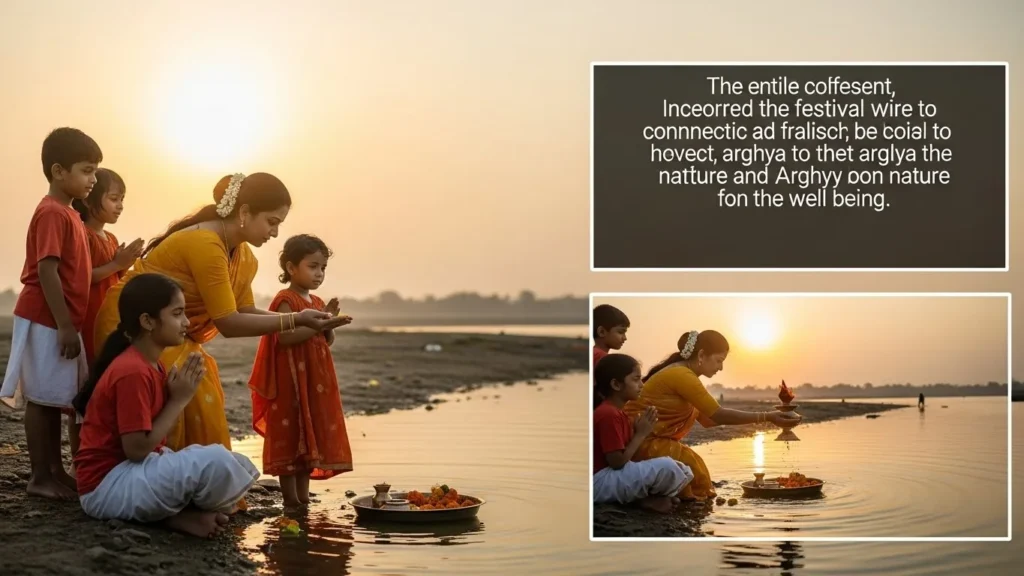
elaborate offerings ([translate:अर्घ्य] Arghya) presented to both setting and rising sun standing in waist-deep water, and preparation ofpure sattvic prasad using traditional methods honoring nature’s gifts while maintaining absolute cleanliness, truthfulness, and devotional discipline creating uniquely austere yet joyful celebration predominantly observed in Bihar, eastern Uttar Pradesh, Jharkhand, and Nepal where millions gather at riverbanks transforming ordinary ghats into sacred spaces resonating with traditional
Chhath songs ([translate:छठ गीत]) expressing gratitude for life-sustaining solar energy. Unlike temple-based idol worship or elaborate ritualistic ceremonies requiring priestly mediation, Chhath embodies direct communion with natural elements through which devotees personally offer prayers to visible manifestation of divine power – the sun whose light, warmth, and energy sustain all earthly existence – creating deeply democratic egalitarian tradition transcending caste, class, and gender distinctions where every [translate:परवैतिन] (Parvaitin, devotee observing fast) regardless of social status stands together in same river facing identical sun following identical procedures demonstrating fundamental equality before cosmic forces,
while festival’s emphasis on environmental purity through exclusive use of organic materials (bamboo baskets, clay lamps, fresh fruits, leaves), natural water bodies rather than artificial pools, and biodegradable offerings reflects sophisticated ancient ecological wisdom recognizing humanity’s interdependence with nature requiring reverent sustainable relationship.
The complete Chhath observance encompasses understanding detailed four-day procedure beginning with Day 1 Nahay Khay (ritual bathing and eating simple pure meal establishing sacred discipline), progressing to Day 2 Kharna (daylong fast broken at sunset with jaggery kheer initiating 36-hour waterless fast), reaching climactic Day 3 Sandhya Arghya (evening offering to setting sun amid communal gathering at decorated riverbanks), and concluding with Day 4 Usha Arghya (pre-dawn offering to rising sun followed by fast-breaking and prasad distribution),
mythological origins traced to ancient Vedic solar worship practices mentioned in scriptures with legendary connections to Lord Rama and Sita’s post-exile thanksgiving plus Mahabharata’s Kunti and Karna (sun’s son) performing similar rituals establishing timeless precedent, profound spiritual significance honoring Surya as life’s ultimate source while seeking Chhathi Maiya’s blessings for children’s welfare and family prosperity through extreme austerity demonstrating devotion’s depth, distinctive cultural identity particularly for Bihari diaspora worldwide who recreate
traditional riverbank rituals using local water bodies maintaining emotional connection to homeland and ancestral practices, and contemporary relevance as festival gaining recognition beyond traditional regions with urban centers establishing designated Chhath ghats while environmental activists appreciate its ecological consciousness and scientists study therapeutic benefits of solar energy exposure during specific sunrise/sunset timings.
For practitioners in 2025 whether lifelong observers maintaining family traditions passed through generations with deep emotional attachment to every ritual detail, first-time participants learning complex procedures navigating physical challenges of strict fasting and precise timing requirements, Bihari diaspora abroad recreating sacred observance using local ponds and rivers while teaching children about cultural heritage, environmental
activists appreciating festival’s organic natural-materials emphasis and water-body conservation message, or simply curious observers wanting to understand this visually stunning spiritually profound celebration beyond superficial media coverage recognizing festival’s extraordinary combination of ancient wisdom, physical discipline, environmental harmony, and democratic egalitarian ethos, approaching Chhath with complete understanding of its multidimensional significance – Vedic scriptural roots, ecological consciousness, health benefits, social equality, and unwavering devotion demonstrated through voluntary extreme austerity – enables appreciating this tradition as living testament to humanity’s eternal relationship with cosmos and nature’s life-giving forces embodied most visibly in sun’s daily journey across sky.
Origins, Mythology, and Deep Significance
Understanding festival’s ancient roots reveals profound spiritual and cultural dimensions.
Ancient Vedic Solar Worship
Oldest Form of Prayer:
“The ritual of offering water to the rising and setting sun – known as Arghya – is among the oldest forms of Hindu prayer, mentioned in several ancient scriptures.”
Vedic Tradition:
Surya Dev in Vedas:
The Rigveda contains numerous hymns ([translate:सूर्य सूक्त]) dedicated to Surya:
- Sun as cosmic eye witnessing all
- Source of light, warmth, time
- Sustainer of all life forms
- Destroyer of darkness and ignorance
4-Day Procedure and SignificanceChhath as Continuation:
Modern Chhath preserves these ancient Vedic solar worship practices, making it potentially thousands of years old.
Mythological Connections
1. Lord Rama and Sita’s Observance:
“According to legends, Lord Rama and Sita performed Chhath Puja after their return from exile to thank the Sun God for their wellbeing and for the strength that sustained them.”
The Context:
After 14 years of exile and victory over Ravana:
- Returned to Ayodhya on Diwali
- Six days later (Kartik Shashthi) performed Chhath
- Gratitude for divine protection throughout ordeal
- Sun worship as thanksgiving ritual
This establishes Chhath timing – six days after Diwali
2. Mahabharata: Kunti and Karna:
“Another myth links it to the Mahabharata, where Kunti, mother of Karna, performed Chhath rituals to invoke Surya Dev.”
The Story:
Karna’s Birth:
- Kunti invoked Surya through mantra
- Conceived Karna (sun’s son)
- Performed Chhath honoring her son’s divine father
Karna as Sun Worshipper:
“Karna, being the son of the Sun God, was himself known as a devout sun-worshipper who never missed his daily offerings.”
His Discipline:
- Daily Arghya to Surya at dawn
- Never refused donation during this time
- Legendary generosity and devotion
3. Pre-Epic Tribal Origins:
“Historically, Chhath is believed to predate both these epics.”
The Theory:
“It may have originated as a tribal and agrarian sun festival in the fertile plains of the Ganga, where the prosperity of crops depended on sunlight, water, and the rhythm of the seasons.”
Agricultural Roots:
- Farmers’ gratitude for harvest
- Recognition of sun’s role in crop growth
- Water (rivers) + Sun = Agricultural prosperity
- Seasonal rhythm celebration
The Deities: Surya Dev and Chhathi Maiya
Surya – The Life Giver:
“The Sun, as the source of all life and energy, represents divine power, health, and prosperity.”
Why Worship Sun?
Visible Deity:
- Unlike invisible gods, sun is directly perceivable
- Daily presence reminds of constancy
- Universal deity (all cultures recognize sun’s importance)
- Scientific reality matching spiritual significance
Life’s Foundation:
Without sun:
- No photosynthesis (plants die)
- No warmth (earth freezes)
- No light (perpetual darkness)
- No time measurement (day/night cycle)
Thus: Sun = Ultimate life sustainer
Chhathi Maiya – The Protector:
“The festival also venerates Chhathi Maiya, believed to be the goddess who protects children and ensures fertility, prosperity, and happiness in families.”
Identity:
Multiple Interpretations:
- Usha – Goddess of dawn (sun’s sister/consort)
- Shashthi Devi – Sixth day goddess (Shashthi)
- Chhath Mata – Folk deity specific to this festival
Her Blessings:
- Children’s health and longevity
- Fertility for couples
- Family prosperity
- Protection from diseases
For Women’s Devotion:
“For women, especially mothers, the ritual holds deep emotional and spiritual importance.”
Praying for children’s welfare through extreme austerity.
The Profound Spiritual Significance
1. Gratitude and Thanksgiving:
“Devotees observe Chhath to express gratitude to Surya for sustaining life and to seek his blessings for the wellbeing of their family, particularly children.”
Core Emotion:
Not requesting favors but thanking for gifts already received:
- Life itself
- Daily sustenance
- Nature’s abundance
- Health and strength
2. Purification – Physical and Spiritual:
“Chhath is also seen as a path to purification – not only of the body through fasting and abstinence, but of the mind through devotion and self-control.”
Complete Cleansing:
Physical:
- Fasting removes bodily toxins
- River bathing cleanses externally
- Sunlight exposure (Vitamin D, circadian rhythm)
Mental/Spiritual:
- Devotion focuses wandering mind
- Discipline strengthens willpower
- Austerity transcends ego and comfort
3. Social Equality and Unity:
“Socially, Chhath transcends caste, class, and status. It is the festival of the common people – where every devotee, regardless of background, stands together in the river, facing the same sun, offering the same prayer.”
Democratic Festival:
No Discrimination:
- Rich and poor use same river
- Brahmin and Shudra perform identical rituals
- No priestly mediation required
- Direct devotee-deity relationship
Unique Aspect:
Unlike many Hindu rituals requiring Brahmin priests, Chhath is self-performed by each devotee.
4. Environmental Harmony:
“Chhath Puja is also a festival of environmental harmony. The rituals emphasize natural purity – the use of organic materials like bamboo, clay, and fruits instead of synthetic items.”
Ecological Wisdom:
Materials Used:
- Bamboo baskets (biodegradable)
- Clay lamps (natural, eco-friendly)
- Fresh fruits, sugarcane (organic offerings)
- No plastics, synthetics, or artificial items
Water Bodies:
Rivers, ponds, natural water sources venerated and kept clean.
The Teaching:
“The offering to the Sun connects humans to the cycles of nature, reminding them of their role as caretakers of the environment.”
The Complete 4-Day Procedure
The detailed observance ritual follows precise sequence across four sacred days.
Timing: When is Chhath Celebrated?
Kartik Shashthi:
Hindu Calendar:
- Month: Kartik (October-November)
- Paksha: Shukla (waxing moon)
- Tithi: Shashthi (sixth day after new moon)
Gregorian Calendar:
Six days after Diwali, typically late October or early November.
2025 Dates:
Complete Schedule:
- Day 1 (Nahay Khay): Saturday, October 25, 2025
- Day 2 (Kharna): Sunday, October 26, 2025
- Day 3 (Sandhya Arghya): Monday, October 27, 2025
- Day 4 (Usha Arghya): Tuesday, October 28, 2025
Regional Observance:
Also celebrated during Chaitra month (March-April) but Kartik Chhath is grander and more widely observed.
Day 1: Nahay Khay (Purification)
[translate:नहाय खाय (Nahay Khay)] = Bathe and Eat
The Beginning:
“On the first day of Chhath Puja, the devotees take a dip, preferably in the holy river Ganges, and carry home the holy water of the river Ganges to prepare the offerings.”
Ritual Bath:
Morning Procedure:
1. Holy River Dip:
- Devotee bathes in Ganga or local sacred river
- Full immersion purification
- Carries holy water home in vessel
2. Purpose:
- Physical cleanliness
- Spiritual purification
- Entering sacred state
Home Purification:
“The house and surroundings are scrupulously cleaned.”
Complete Cleaning:
- Entire home swept and washed
- Kitchen especially purified
- Sacred space created for next three days
The Single Meal:
“The parvaitin allows themselves only one meal on this day.”
Nahay Khay Meal:
Traditional Foods:
Cooked using holy river water:
- Rice
- Bottle gourd (Lauki) curry
- Chana dal (Bengal gram)
Preparation Rules:
- Cooked in bronze or earthen vessels (no steel/aluminum)
- No onion, garlic, salt (some traditions)
- Absolutely pure and simple
- Often prepared by Parvaitin themselves
Symbolism:
Last full meal before strict fasting begins.
Mental Preparation:
Day 1 establishes sacred discipline and mindful eating starting the journey.
Day 2: Kharna (Breaking Fast at Sunset)
[translate:खरना (Kharna)] = The preliminary fast-breaking
Alternate Name: Lohanda (in some regions)
The Daylong Fast:
“On Panchami, the day before Chhath, the parvaitins observe a fast for the whole day, which ends in the evening a little after sunset.”
Strict Rules:
From Sunrise to Sunset:
- No food consumed
- No water allowed (nirjala fast)
- Complete abstinence for 12-14 hours
Physical Challenge:
First experience of waterless fasting.
Sunset Ritual and Meal:
“Just after the worship of earth, the offerings of Rasiao-kheer (rice delicacy), puris (deep-fried puffs of wheat flour) and bananas, are distributed among family and friends.”
Kharna Prasad Preparation:
Essential Items:
1. Gur ki Kheer (Jaggery Rice Pudding):
Traditional Recipe:
- Rice cooked in milk
- Sweetened with jaggery (gur) – no white sugar
- Often flavored with cardamom
- Cooked in earthen pot
2. Roti or Puri:
- Whole wheat bread
- Deep-fried puri (some traditions)
3. Fruits:
- Bananas (most common)
- Seasonal fruits
Preparation Rules:
Absolute Purity:
- Cook in separate designated space
- No onion, garlic, salt
- Ghee used for cooking
- First offer to deities, then consume
The Ritual:
Sunset Worship:
- Earth worship performed
- Offerings made to Surya and Chhathi Maiya
- Prayers for children and family
- Prasad distributed to all family members
Breaking the Fast:
Everyone, including Parvaitin, eats prasad.
The Critical Transition:
“From this day onwards, for the next 36 hours, the parvaitin goes on a fast without water.”
The 36-Hour Nirjala Vrat Begins:
After Kharna meal at sunset:
- No food until Day 4 morning
- No water either (most challenging aspect)
- Continuous for approximately 36 hours
- Among Hindu tradition’s toughest fasts
Day 3: Sandhya Arghya (Evening Offering to Setting Sun)
The Most Visually Spectacular Day:
Preparation Throughout Day:
“The day is spent preparing the prasad (offerings) at home.”
Thekua Making:
The Iconic Chhath Prasad:
[translate:ठेकुआ (Thekua)] – Sweet wheat cookies
Traditional Recipe:
Ingredients:
- Whole wheat flour
- Jaggery (dissolved in water)
- Ghee
- Cardamom powder (optional)
Procedure:
- Mix flour with jaggery water and ghee
- Knead into firm dough
- Shape into decorative patterns (using fingers or molds)
- Deep fry in ghee until golden brown
- Crispy, long-lasting prasad
Symbolism:
- Purity (simple ingredients)
- Auspiciousness (jaggery’s sweetness)
- Tradition (generations-old recipe)
Other Prasad Items:
- Fruits: Bananas, coconuts, apples, seasonal fruits
- Sugarcane (with roots and leaves intact)
- Rice laddoos
- Betel leaves and nuts
- Fresh water chestnuts
Arranging Soop (Bamboo Basket):
Traditional Offering Tray:
All prasad arranged beautifully in:
- Bamboo basket ([translate:सूप] Soop)
- Decorated with colorful cloths
- Systematic arrangement of items
Evening Ghat Gathering:
“On the eve of this day, the entire household accompanies the parvaitins to a riverbank, pond or a common large water body to make the offerings (Aragh) to the setting sun.”
The Procession:
Community Event:
Families walk together to ghat carrying:
- Soop with prasad
- Clay diyas (lamps)
- Incense
- Flowers
Atmosphere:
“The occasion is almost a carnival. Besides the parvaitin, there are friends and family, and numerous participants and onlookers, all willing to help and receive the blessings of the worshipper.”
The Ghat Setup:
Decorations:
Riverbanks transformed:
- Bamboo huts erected
- Sugarcane arches created
- Diyas lit everywhere
- Colorful festive atmosphere
Kosi Ritual:
“On the night of day three, a colorful event of Kosi is held. Here, lighted earthen lamps are kept under a canopy of five sugarcane sticks.”
Symbolism:
“The five sticks signify the human body made of Panchatattva (the five great elements – earth, water, fire, air and ether).”
Who Performs:
“This is a symbolic ritual in Chhath Puja, performed especially in those families where marriage or childbirth has taken place recently.”
Sandhya Arghya Ritual:
Sunset Offering:
Procedure:
- Enter Water:
- Parvaitin stands in knee to waist-deep water
- Facing west (setting sun direction)
- Hold Soop:
- Bamboo basket with all offerings
- Raised toward sun
- Offer Arghya:
- Pour water from hands toward sun
- Bow reverently
- Pray for blessings
- Repeat:
- Multiple Arghyas offered
- With continuous prayers
The Songs:
“Ritual rendition of regional folk songs, carried on through oral transmission from mothers and mothers-in-law to daughters and daughters-in-law, are sung on this occasion.”
Chhath Geet:
“The folk songs sung on the evening of Chhath reflect the culture, social structure, mythology and history of Bihar and Uttar Pradesh.”
Themes:
- Praising Chhathi Maiya
- Describing festival rituals
- Family relationships
- Seasonal beauty
- Devotional surrender
Linguistic Diversity:
“The three main linguistic regions of Bihar (the Maithili, the Magadhi, and the Bhojpuri), and all the various dialects associated with these, have different folk songs; but have an underlying unity in their dedicated to Chhath.”
After Sandhya Arghya:
Devotees return home but fast continues through night.
Overnight Vigil:
Some traditions maintain jaagran (staying awake) singing devotional songs.
Day 4: Usha Arghya (Morning Offering to Rising Sun)
The Conclusion:
Pre-Dawn Return to Ghat:
“On the final day of Chhath Puja, the devotees, along with family and friends, go to the riverbank before sunrise, in order to make the offerings (Aragh) to the rising sun.”
Timing:
Critical to arrive before sunrise (typically 5:30-6:00 AM).
The Morning Ritual:
Usha Arghya Procedure:
Similar to Evening:
- Stand in water facing east (rising sun)
- Hold soop with fresh offerings
- Wait for sunrise
- First rays appear – moment of maximum sanctity
- Offer multiple Arghyas to rising sun
- Pour water, bow, pray
The Symbolism:
Rising Sun:
- New beginning, hope, renewal
- Life’s continuation
- Energy returning to earth
- Completing the cycle (setting → rising)
Breaking the 36-Hour Fast:
“The festival ends with the breaking of the fast by the parvaitin and friends visiting the houses of the devotees to receive the prashad.”
Parna (Breaking Fast):
First Intake:
After final Arghya:
- Parvaitin drinks water
- Eats prasad (thekua, fruits)
- Breaks 36+ hour nirjala vrat
Gradual Eating:
After extreme fast:
- Small sips of water first
- Light prasad gradually
- Full meal later in day
Prasad Distribution:
Community Sharing:
“Friends visiting the houses of the devotees to receive the prashad.”
The Belief:
Chhath prasad considered extremely sacred:
- Blessed by Sun God
- Carries divine grace
- Brings prosperity and health
Widely distributed among neighbors, friends, relatives.
The Spiritual Experience:
“Witnessing Chhath being celebrated at the crack of the dawn on a river bank is a beautiful, elating spiritual experience connecting the modern Indian to his ancient cultural roots.”
Immersion:
“The idols prepared for worship should be immersed the following day after rituals” (some traditions create small idols).
Frequently Asked Questions
Who can observe Chhath Puja fast?
Remarkably inclusive tradition: Anyone regardless of gender, caste, age can observe Chhath – making it uniquely democratic among Hindu festivals. Traditionally: More women observe, but men also fast commonly (unlike many women-exclusive fasts). No caste restriction: Brahmins and Dalits stand side-by-side in same river – profound social equality.
Age: Even children participate in modified forms; elderly observe if health permits. Marital status: Both married and unmarried devotees observe. Regional: While concentrated in Bihar/UP/Jharkhand, anyone anywhere can observe. The key: Sincere devotion and discipline matter, not birth or status. Modern spread: Urban areas outside traditional regions now have designated Chhath ghats; diaspora communities globally recreate rituals. Unique aspect: No priestly mediation required – direct personal worship making it accessible to all.
Is the 36-hour waterless fast mandatory or can it be modified?
Traditionally considered essential but health prioritized: Orthodox observance: Complete nirjala (no food, no water) for 36 hours from Kharna sunset to Usha Arghya considered ideal and most powerful. Physical reality: Among Hinduism’s toughest fasts; many find it extremely challenging especially in warm weather or with health conditions.
Modifications allowed: 1. Sajal vrat (taking water) if complete nirjala impossible, 2. Partial fasting (fruits/milk), 3. Shortened duration for health reasons. Who should modify: Pregnant women, chronically ill, diabetics, elderly with health issues – must prioritize health. Traditional wisdom: God values sincere devotion over mechanical compliance; harming health not virtuous. Personal assessment: Honest evaluation of capacity; completing modified fast better than breaking nirjala mid-way. First-timers: Can start with sajal version, progress to nirjala in future years as body adapts.
Can Chhath Puja be performed at home without going to river?
River strongly preferred but alternatives exist: Traditional ideal: Natural water body (river, pond, lake) considered essential – connection to nature central to Chhath philosophy. Scriptural preference: Offering Arghya standing in flowing water while facing sun is classic procedure. Urban challenges: Many cities lack accessible clean rivers; pollution concerns at traditional ghats.
Alternatives: 1. Designated Chhath ghats – municipal authorities create artificial ponds/pools for festival, 2. Home terrace/balcony – Can perform Arghya if direct sunlight available (facing east/west at appropriate times), 3. Bathtub/large vessel – Some devotees use water-filled containers maintaining symbolic water element. Reduced efficacy? Traditional belief: River offers maximum benefit; alternatives acceptable when impossible. The principle: Devotion and sincerity matter most; God understands practical constraints. Recommendation: Use natural water body if remotely accessible; resort to alternatives only when truly unavoidable.
What is the significance of offering to both setting and rising sun?
Profound cosmic symbolism: The cycle of life: Setting sun (evening Arghya) represents completion, gratitude for day’s blessings, letting go; Rising sun (morning Arghya) symbolizes renewal, hope, new beginning, receiving energy. Balance and completeness: Worshipping both ensures honoring full solar cycle – not just favorable aspects but entire reality including endings and beginnings. Day and Night: Acknowledging sun’s continuous journey even when invisible (night) shows faith in constancy despite absence.
Philosophical depth: Death and rebirth metaphorically represented – setting sun “dies” each evening, “reborn” each dawn teaching impermanence and renewal. Scientific awareness: Ancient sages recognized sun never truly sets (earth rotation creates appearance) – continuous presence honored through dual worship. Energetic benefits: Sunrise rays (UVA dominant) and sunset rays (different spectrum) offer distinct health benefits; exposing body to both optimal. Completion: One Arghya alone incomplete; both together fulfill ritual’s purpose.
Why is Chhath predominantly celebrated in Bihar and not all of India?
Regional cultural identity meets ancient tradition: Historical roots: Likely originated as agrarian festival in Gangetic plains (Bihar/UP) where Ganga worship and sun dependence for crops created this unique synthesis. Cultural transmission: Passed through generations primarily in Bhojpuri/Maithili/Magahi speaking regions creating strong regional identity. Folk tradition: Unlike Brahmanical festivals spread through scriptures, Chhath transmitted through oral folk traditions, songs, family customs keeping it geographically concentrated.
Bihar’s identity: Chhath became cultural symbol of Bihari pride and identity – emigrants worldwide maintain it connecting to homeland. Modern spread: Now expanding beyond traditional regions: Delhi, Mumbai, Kolkata have large Chhath gatherings (migrant Bihari populations); some non-Biharis adopting too. Why not pan-Indian? Different regions have own distinct festivals serving similar purposes (gratitude, purification, seasonal celebration); India’s cultural diversity creates regional specialization rather than uniformity. Growing recognition: Increasingly acknowledged as national heritage rather than just regional custom.
What foods can and cannot be eaten during Chhath?
Strict sattvic dietary rules: Completely prohibited: Onion, garlic, salt (most traditions), non-vegetarian (meat, fish, eggs), alcohol, tobacco, tamasic foods (stale, processed, canned). Allowed foods: Grains: Rice, wheat; Pulses: Chana dal, moong dal; Vegetables: Lauki (bottle gourd), pumpkin, root vegetables; Fruits: All fresh fruits; Dairy: Milk, ghee (pure); Sweetener: Jaggery only (no white sugar); Spices: Minimal – turmeric, cardamom acceptable. Cooking method: Bronze or earthen vessels only (no steel/aluminum traditionally); Ghee for cooking (not oil); Fresh preparation (no refrigerated leftovers). Water: Holy river water for Nahay Khay meal ideally.
Thekua ingredients: Only wheat flour, jaggery, ghee, cardamom – epitome of purity. Principle: Food prepared for Chhath considered as pure as temple offerings – same cleanliness and sanctity standards. Modern adaptation: Some urban devotees relax salt restriction slightly while maintaining other purity standards.
Can menstruating women participate in Chhath Puja?
Progressive tradition welcomes women unlike many Hindu rituals: Chhath’s unique stance: Generally more inclusive than other festivals; many traditions allow menstruating women to observe with some modifications. Regional variation: Practices differ across families and communities – no single universal rule. Orthodox view: Some traditional families restrict menstruating women from touching prasad or entering water (similar to other Hindu restrictions).
Progressive perspective: Growing rejection of menstrual taboos; many argue Chhath’s egalitarian nature should extend to this too. Practical consideration: Nirjala fast + menstruation = Physically very challenging (dehydration, cramps); health-wise inadvisable. Recommended approach: Personal decision based on family tradition and physical comfort. If observing: perhaps modify to sajal fast. If abstaining: can participate in singing, decorations, community aspects without fasting. The principle: Devotion matters most; one year’s absence due to menstruation doesn’t diminish faith or blessings.
What are the health benefits and risks of Chhath fasting?
Complex medical considerations: Potential benefits: 1. Detoxification – Fasting allows digestive system rest, cellular cleansing; 2. Circadian rhythm – Sunrise/sunset exposure regulates body clock; 3. Vitamin D – Solar exposure boosts vitamin D production; 4. Mental discipline – Builds willpower and focus; 5. Spiritual wellbeing – Sense of achievement, devotional fulfillment. Scientific interest: Some researchers study therapeutic benefits of controlled sun exposure at specific times (sunrise/sunset UV spectrum different from midday).
Serious risks: 1. Severe dehydration – 36 hours without water dangerous especially in heat; 2. Electrolyte imbalance – Can cause dangerous cardiac rhythms; 3. Hypoglycemia – Low blood sugar causes dizziness, fainting; 4. Kidney stress – Dehydration strains kidneys. Who must NOT fast: Diabetics, kidney patients, pregnant/nursing women, heart patients, chronic illness sufferers – medical emergency risk too high. Safe observance: Adequate hydration before Kharna, rest during fast, break immediately if severe symptoms, medical supervision for at-risk individuals. Balance: Recognize spiritual value while respecting medical reality.
Conclusion
The ancient festival of Chhath Puja represents extraordinary synthesis of profound spirituality, ecological wisdom, social equality, and cultural identity – embodying humanity’s eternal gratitude toward life’s ultimate sustainer (Surya Dev) through rigorous four-day observance combining extreme physical austerity via 36-hour nirjala fast testing devotees’ determination and discipline, direct communion with natural elements through standing in sacred rivers offering Arghya to both setting and rising sun acknowledging complete solar cycle, meticulous preparation of pure sattvic prasad using only organic
traditional materials honoring nature’s gifts, and democratic egalitarian participation transcending caste, class, and gender creating uniquely inclusive spiritual experience where every Parvaitin regardless of social status performs identical rituals demonstrating fundamental equality before cosmic forces.
Understanding complete framework – that ancient Vedic solar worship roots potentially predating recorded epics yet incorporated into Hindu tradition through mythological connections to Lord Rama’s thanksgiving and Mahabharata’s Karna establishing scriptural legitimacy, that detailed four-day procedure from Nahay Khay’s purificatory bathing establishing sacred discipline through Kharna’s sunset fast-breaking initiating grueling 36-hour waterless marathon to climactic
Sandhya Arghya’s spectacular riverbank gatherings amid traditional songs and decorated ghats culminating in Usha Arghya’s pre-dawn offering followed by joyful fast-breaking and prasad sharing creates multifaceted experience engaging physical endurance, devotional focus, communal bonding, and aesthetic appreciation simultaneously, that profound significance encompasses gratitude for life-sustaining solar energy.
purification of body and mind through voluntary austerity, seeking Chhathi Maiya’s blessings for children’s welfare and family prosperity, and environmental consciousness through exclusive use of biodegradable natural materials plus water-body veneration demonstrating sophisticated ancient ecological wisdom, that distinctive cultural identity particularly for Bihari diaspora worldwide who recreate traditional observance using local water bodies maintaining emotional connection to ancestral heritage while teaching subsequent
generations about roots, and that contemporary relevance emerges through growing recognition beyond traditional regions, environmental activists appreciating organic natural-materials emphasis, and scientific interest in therapeutic benefits of sunrise/sunset solar exposure – enables approaching Chhath with complete appreciation for this living tradition connecting modern practitioners with millennia-old cosmic relationship.
As you engage with Chhath Puja in 2025, whether lifelong observer maintaining family traditions passed through generations with deep emotional attachment to every ritual detail from grandmother’s Thekua recipe to riverbank’s familiar ghat, first-time participant courageously undertaking challenging nirjala fast while learning complex procedures and discovering personal meaning beyond family expectations, Bihari diaspora abroad recreating sacred observance at local pond or lake teaching children about cultural heritage and identity, environmental activist appreciating festival’s remarkable
ecological consciousness and natural-materials emphasis offering model for sustainable celebrations, health-conscious individual weighing spiritual benefits against medical risks making informed decisions about safe participation, or simply observer witnessing spectacular pre-dawn riverbank gatherings understanding profound significance beyond superficial visual appeal recognizing sophisticated integration of ancient wisdom, physical discipline, environmental harmony, and democratic ethos, remember that tradition’s ultimate value emerges
when extreme austerity meets genuine devotion where voluntary suffering undertaken from sincere gratitude and faith proves far more spiritually powerful than comfortable mechanical ritual performance, that Chhath’s remarkable synthesis of Vedic scriptural roots, folk cultural transmission, egalitarian social philosophy, ecological sustainability, and unwavering devotion demonstrated through arguably
Hinduism’s toughest fast creates living testament to humanity’s capacity for transcending ego and comfort when inspired by genuine reverence toward cosmic forces sustaining existence, and that whether observing complete traditional nirjala fast with full riverbank rituals, choosing health-conscious modifications respecting personal medical limitations, participating in cultural community aspects without fasting, or consciously
declining while respectfully observing others’ devotion, approaching this tradition with understanding its complete multidimensional significance – ancient origins, spiritual depth, ecological wisdom, social equality, health considerations, and cultural identity – transforms potentially rigid ritual into conscious engagement with heritage allowing each individual to craft meaningful relationship with practice serving their unique values, circumstances, and spiritual journey
while honoring timeless truth that when we bow before rising and setting sun offering Arghya with humble gratitude, we acknowledge fundamental dependence on cosmic forces beyond human control recognizing eternal relationship between life and light, humanity and nature, devotion and discipline embodied beautifully in Chhath Puja’s sacred simplicity.
[translate:॥ ॐ सूर्याय नमः। ॐ छठी मैया की जय॥]
(Om, salutations to Surya. Glory to Chhathi Maiya.)
About the Author
Sandeep Vohra – Scriptural Knowledge, Vedic Traditions, and Ancient Rituals Expert
Sandeep Vohra is a distinguished scholar and practitioner specializing in Hindu scriptures, Vedic traditions, ancient ritual practices, and the integration of timeless spiritual wisdom with contemporary understanding particularly regarding festivals and observances rooted in India’s most ancient textual and cultural heritage. Drawing from deep study of Vedic literature including Rigveda’s solar hymns, Puranic narratives, and regional folk traditions, combined with fieldwork documenting Chhath Puja’s observance across Bihar, Uttar Pradesh, and Jharkhand witnessing firsthand how ancient Vedic solar worship continues through living folk practice maintained by common people rather than priestly elites, his work examines
how festivals like Chhath preserve sophisticated ancient knowledge about astronomy, ecology, health, and spirituality encoded in accessible ritual forms transmitted across millennia through oral folk traditions, family customs, and regional songs demonstrating remarkable continuity despite historical upheavals. Sanjay has extensively researched Chhath’s Vedic roots tracing Arghya practice to ancient Surya Suktas, mythological connections establishing scriptural legitimacy, ecological wisdom reflected in natural-materials usage and water-body veneration, and social egalitarianism challenging hierarchical Brahmanical structures through direct personal worship requiring no priestly mediation creating profoundly democratic spiritual tradition.
He regularly teaches courses on Vedic heritage explaining how ancient practices remain relevant addressing contemporary challenges from environmental degradation requiring sustainable celebration models to social inequality requiring egalitarian spiritual frameworks, conducts workshops on traditional ritual procedures maintaining authentic observance while accommodating modern urban constraints, and facilitates dialogues between orthodox traditionalists insisting on complete nirjala fast rigor and progressive adapters seeking health-conscious modifications finding balanced approaches honoring both spiritual ideals and practical realities.
His teaching emphasizes that ancient wisdom encoded in festivals like Chhath – solar energy’s life-sustaining centrality, natural cycles’ sacred rhythms, community equality before cosmic forces, voluntary austerity’s purificatory power – offers profound insights transcending mere cultural nostalgia providing genuine spiritual, ecological, and social guidance for contemporary humanity navigating modernity’s challenges while seeking connection to timeless truths embodied beautifully in simple act of standing in river at dawn offering water to rising sun with humble gratitude.