


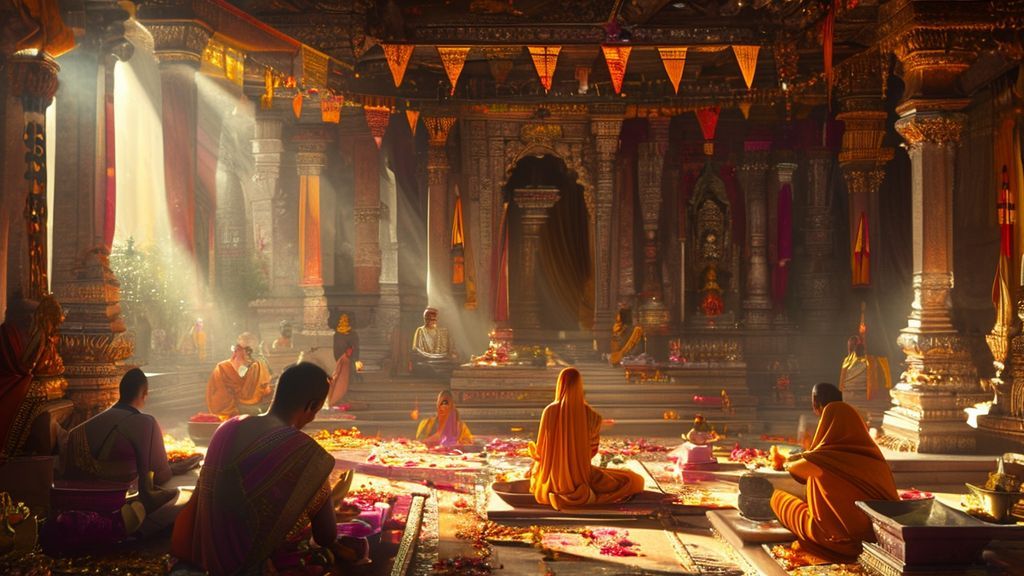
Daily Pooja at Home, known as Nitya Karma, is the venerable practice of offering morning worship to the Divine within one’s sacred domestic space. This foundational discipline of Sanatan Dharma cultivates spiritual purity, gratitude, and an unwavering connection with Ishta Devata, fostering inner peace and aligning daily life with universal spiritual principles.
| Attribute | Details |
|---|---|
| Purpose | Cultivating spiritual discipline, expressing devotion, seeking blessings, purification of mind and environment. |
| Primary Focus | Ishta Devata (Chosen Deity), Panchadevata (Vishnu, Shiva, Devi, Surya, Ganesha), or Universal Brahman. |
| Ideal Time | Brahma Muhurta (approx. 90 minutes before sunrise) or early morning. |
| Guiding Principle | Nitya Karma (Daily Duty), Bhakti Yoga (Path of Devotion), Dharma. |
| Scripture Source | Smritis (e.g., Manu Smriti), Agamas, Puranas (e.g., Skanda Purana, Garuda Purana), Karma Kanda of Vedas. |
The Sanctity of Daily Pooja: A Cornerstone of Sanatan Dharma
For millennia, the practice of daily worship, known as Nitya Pooja or Nitya Karma, has been an indispensable pillar of Sanatan Dharma. It is not merely a ritualistic observance but a profound spiritual discipline that anchors the individual consciousness to the Divine. In a world increasingly fraught with distractions and materialism, the morning pooja offers a sacred pause, a moment of profound introspection and connection that purifies the mind, energizes the spirit, and imbues the entire day with a sense of purpose and divine grace. This disciplined practice is a direct expression of our innate yearning for the transcendent, transforming the home into a vibrant sanctuary where spiritual energies resonate, blessing not just the practitioner but the entire household.
The wisdom embedded in our scriptures emphasizes that through such consistent devotion, one performs an inner yajna, an offering of the self to the Supreme Brahman. It is a way of acknowledging the divine presence in all aspects of life, fostering humility, gratitude, and unwavering faith. The very act of preparing the sacred space, invoking the deities, and offering prayers transforms mundane activities into acts of devotion, elevating daily existence to a spiritual journey. This guide aims to empower every sincere seeker to establish a meaningful and consistent daily pooja routine, enriching their spiritual life profoundly, as outlined on Hindutva.online.
The Scriptural Mandate: Origins of Daily Worship
The practice of daily worship is not a modern innovation but is deeply rooted in the foundational texts of Sanatan Dharma. The concept of Nitya Karma, or daily obligatory duties, is extensively discussed in the Smritis and Dharma Shastras. The Manu Smriti, for instance, outlines specific daily rituals for a householder (Grihastha), emphasizing acts like Sandhyavandanam (twilight worship) and Devapooja (deity worship) as essential for maintaining social order (Dharma) and personal purity (Shaucha). Neglecting these duties was considered a transgression, impacting both individual well-being and cosmic harmony.
The Puranas further elaborate on the merits of daily devotion. The Skanda Purana, in various sections, narrates numerous legends highlighting the blessings received by devotees who meticulously performed their daily worship. Similarly, the Garuda Purana details the spiritual benefits of offering specific items to deities on a regular basis, emphasizing that such acts accrue immense Punya (merit) and purify one’s Karma. The Agamas, particularly the Pancharatra and Shaiva Agamas, provide intricate details on the methodologies of temple and home worship, specifying the Mantras, Mudras, and Upacharas (offerings) to be used for various deities. This scriptural emphasis underscores that daily pooja is not merely optional but a prescribed path for spiritual evolution and a profound way to express devotion and connect with the cosmic order, known as Ṛta (ऋत).
The Sacred Space: Crafting Your Home Mandir
While daily pooja at home does not involve grand architectural marvels, the creation of a dedicated home mandir or altar is paramount. This space becomes a focal point for spiritual energy and devotion. It should ideally be located in a clean, quiet corner of the house, preferably facing the East or North, allowing the practitioner to face these auspicious directions during worship. The orientation is significant; facing East invokes the rising sun, symbolizing enlightenment and new beginnings, while facing North connects to the divine energies associated with the Himalayas and celestial realms.
The home mandir should contain murtis (idols) or framed pictures of your Ishta Devata (chosen deity), along with other revered deities, saints, and Gurus. Essential items include: a traditional oil lamp (deepa), incense stick holder (dhoopdaani), a bell (ghanta), water pot (kalasha) with a spoon (achamani), a plate for offerings (naivedyam), a small mat (asana) for sitting, and fresh flowers (pushpa). The purity and tidiness of this space are reflective of the inner purity one seeks to cultivate. Regular cleaning and adorning the deities with fresh flowers and garlands create an inviting and spiritually charged atmosphere, transforming a simple corner into a potent vortex of divine presence.
The Morning Pooja Vidhi: A Step-by-Step Guide
Performing daily pooja systematically helps in focusing the mind and consecrating the ritual. While variations exist based on tradition and deity, a general framework involves the following steps:
- Purification (Shaucha): Begin by bathing and wearing clean clothes. Perform Achamanam (sipping water with specific mantras) to purify internally. Chant: Om Achyutaya Namaha, Om Anantaya Namaha, Om Govindaya Namaha.
- Lighting the Lamp (Deep Prajwalan): Light the oil lamp, invoking the divine light. Chant: Deepa Jyoti Param Brahma, Deepa Sarva Tamopaha. Deepena Sadhyate Sarvam, Sandhya Deepa Namo'stute.
- Sankalpa (Intention): State your intention for the pooja, affirming your devotion and seeking blessings for your family and all beings. This can be a mental resolve or a short prayer.
- Avahana (Invocation): Invoke your Ishta Devata and other deities by offering flowers, chanting their names (Nama Japa), or specific invocation mantras. Visualize their presence in the idols or pictures.
- Upacharas (Offerings): Offer various symbolic items to the deities:
- Gandham: Apply sandalwood paste (chandan) to the deity.
- Pushpam: Offer fresh flowers.
- Dhoopam: Light incense sticks.
- Deepam: Show the lit lamp (already performed, but can be a dedicated movement).
- Naivedyam: Offer fruits, sweets, or milk.
- Tamboolam: Offer betel leaf and nut (optional).
- Mantra Japa: Chant the Moola Mantra (root mantra) of your Ishta Devata, the Gayatri Mantra (ॐ भूर्भुवः स्वः तत्सवितुर्वरेण्यं भर्गो देवस्य धीमहि धियो यो नः प्रचोदयात्॥), or other chosen Vedic hymns for a prescribed number of repetitions (e.g., 108 times).
- Aarti: Perform Aarti by circulating a lit lamp (or camphor) in front of the deities, accompanied by ringing the bell and chanting Aarti hymns like Om Jai Jagadish Hare. This symbolizes the offering of light to the Divine.
- Pranama (Prostration): Bow down in reverence, offering your complete surrender and devotion.
- Prasada Vitaran (Distribution of Offerings): Distribute the offered Naivedyam as Prasada to all family members, symbolizing divine blessings.
- Visarjan/Kshama Prarthana (Concluding Prayer): Conclude with a prayer seeking forgiveness for any errors committed during the pooja and expressing gratitude.
Essential Mantras for Daily Pooja
The power of sound (Shabda Brahman) is central to Vedic worship. Integrating specific mantras enhances the spiritual efficacy of your daily pooja:
- Karagre Vasate Lakshmi: Chanted upon waking, acknowledging the divine presence in one's hands:
कराग्रे वसते लक्ष्मीः करमध्ये सरस्वती ।
करमूले तु गोविन्दः प्रभाते करदर्शनम् ॥
(Karagre Vasate Lakshmi, Karamadhye Saraswati. Karamule Tu Govinda, Prabhate Karadarshanam.) - Gayatri Mantra: The supreme Vedic mantra for intellectual and spiritual illumination:
ॐ भूर्भुवः स्वः तत्सवितुर्वरेण्यं भर्गो देवस्य धीमहि धियो यो नः प्रचोदयात् ॥
(Om Bhur Bhuvah Svah, Tat Savitur Varenyam, Bhargo Devasya Dhimahi, Dhiyo Yo Nah Prachodayat.) - Ishta Devata Moola Mantra: Chant the root mantra of your chosen deity, e.g., Om Namah Shivaya (for Shiva), Om Namo Narayanaya (for Vishnu), Om Aim Hreem Kleem Chamundaye Vichche (for Devi).
- Sarve Bhavantu Sukhinah: A universal prayer for peace and well-being:
सर्वे भवन्तु सुखिनः सर्वे सन्तु निरामयाः ।
सर्वे भद्राणि पश्यन्तु मा कश्चिद् दुःखभाग् भवेत् ॥
(Sarve Bhavantu Sukhinah, Sarve Santu Niramayah. Sarve Bhadrani Pashyantu, Ma Kaschid Dukha Bhag Bhavet.)
Dos and Don’ts for Home Worship
- Dos:
- Maintain utmost cleanliness in the puja area and personal hygiene.
- Perform pooja with genuine devotion (Shraddha) and purity of heart.
- Be consistent; even a short, sincere daily pooja is more effective than intermittent long ones.
- Offer fresh flowers, clean water, and freshly prepared food (Naivedyam).
- Ring the bell gently during invocation and Aarti to purify the atmosphere and invite divine vibrations.
- Keep a dedicated lamp for daily pooja, using ghee or sesame oil.
- Seek guidance from a knowledgeable elder or priest for specific traditions or queries.
- Don’ts:
- Do not perform pooja in an impure state (e.g., without bathing, in unwashed clothes).
- Avoid distractions like phone calls or conversations during pooja.
- Do not offer stale food, withered flowers, or items that have been tasted by others.
- Do not place deities directly on the floor; use an elevated altar or cloth.
- Avoid displaying anger, ego, or negative emotions in the sacred space.
- Do not consume alcohol or non-vegetarian food before or during the day you perform pooja.
Frequently Asked Questions
How long should daily pooja take?
The duration is flexible. A simple morning pooja can range from 10-15 minutes, focusing on essential steps like lamp lighting, mantra chanting, and Aarti. More elaborate poojas can extend to 30-60 minutes or more. Consistency and sincerity are more important than duration.
Can women perform pooja during menstruation?
Traditionally, women refrain from performing ritualistic pooja during menstruation due to the concept of ritual impurity (Ashaucha) associated with physiological processes. However, mental worship (Manasika Pooja) or listening to chants is always permissible. Modern interpretations often emphasize personal devotion over strict adherence to traditional rules, encouraging women to follow their conscience while respecting family traditions.
What if I don’t have all the puja items?
The essence of pooja lies in devotion, not the quantity of items. If items are unavailable, mental offerings (Manasika Upachara) can be made. Water, a lamp, and incense are generally considered sufficient basic offerings. The scriptures emphasize that even a leaf, a flower, a fruit, or water offered with devotion is accepted by the Divine.
Is idol worship mandatory for daily pooja?
While idol worship (Murti Pooja) is a prevalent and cherished tradition, it is not the only form. Daily pooja can also involve meditating on a Yantra, a picture, or simply focusing on the formless Brahman. The Murti serves as a focal point to concentrate the mind, helping the devotee to perceive the divine attributes. The ultimate goal is internal connection, which can be achieved through various means, as explored further on Hindutva.online.
Nurturing Dharma: The Enduring Legacy of Daily Pooja
Daily pooja is far more than a routine; it is a spiritual anchor that connects the individual to the timeless wisdom and profound truths of Sanatan Dharma. By dedicating a portion of each day to the Divine, we cultivate inner discipline, emotional balance, and spiritual fortitude. This consistent practice infuses our homes with sacred vibrations, creating an environment conducive to peace, harmony, and well-being. It is through such simple yet profound acts of devotion that we preserve our rich heritage, pass on our values to future generations, and continually align our lives with the eternal principles of righteousness and spiritual truth. The daily pooja is a humble offering, yet its rewards are immeasurable – a direct path to experiencing the Divine within and without.