


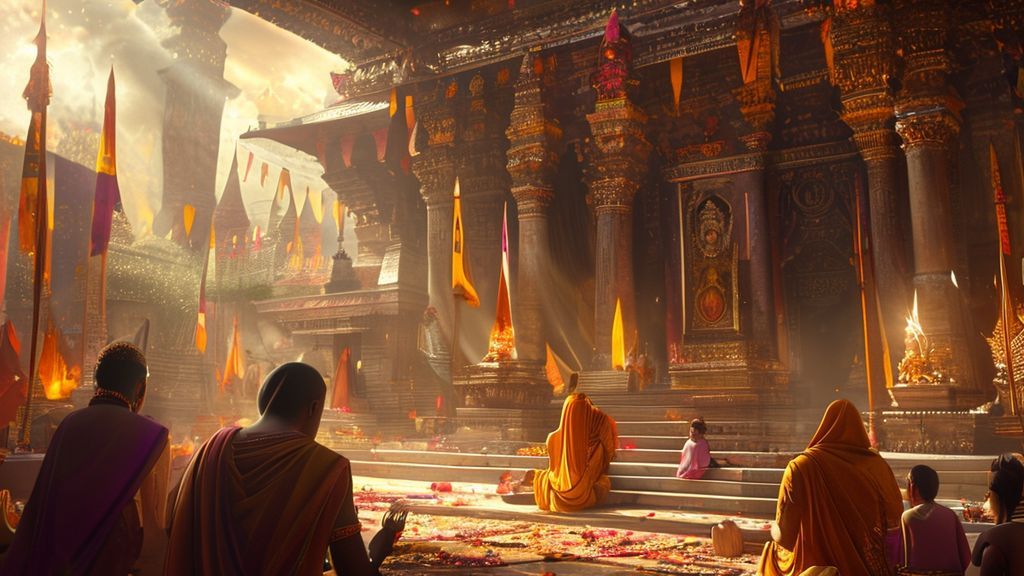
Dealing with grief from a Hindu perspective centers on the eternal nature of the Atman (soul) and the cycles of karma and rebirth (samsara). It emphasizes understanding impermanence (Anitya), performing prescribed rituals (Shraddha), finding solace in Dharma, and cultivating detachment, transforming sorrow into spiritual growth and a deeper understanding of universal truths.
| Attribute | Details |
|---|---|
| Core Principle | The Atman (soul) is immortal and distinct from the perishable body. |
| Key Concept | Karma and Rebirth (Samsara), leading to Moksha (liberation). |
| Primary Scripture | Bhagavad Gita, Upanishads. |
| Purpose of Grief | A natural human emotion, a catalyst for spiritual introspection and growth. |
| Ultimate Goal | Acceptance, peace, and spiritual realization, aiding the departed soul’s journey. |
Introduction: The Sanatana View of Loss and Impermanence
The experience of loss is universal, a profound testament to our attachments and love. In Sanatana Dharma, the spiritual tradition often known as Hinduism, grief is acknowledged as a natural human emotion, yet it is simultaneously viewed through the lens of profound philosophical truths concerning life, death, and eternity. Our scriptures do not dismiss sorrow but provide a framework to understand it, transcend it, and ultimately find peace. This framework is built upon the foundational principles of the immortal Atman, the immutable law of Karma, and the grand cycle of Samsara.
Unlike perspectives that see death as an absolute end, Hindu thought portrays it as a transition, a shedding of the physical garment for the eternal soul. This understanding, while not eradicating immediate pain, offers a deeper solace, transforming the raw anguish of separation into a contemplation of existence, purpose, and spiritual continuity. The wisdom passed down through millennia guides the devotee not merely to cope with grief, but to utilize it as a crucible for spiritual growth, leading towards greater wisdom and compassion.
Philosophical Roots & Itihasa Examples
The philosophical bedrock for dealing with grief is found primarily in the Upanishads and the Bhagavad Gita. The Brihadaranyaka Upanishad declares, “As a worm moves from one blade of grass to another, so does the Atman move from one body to another.” This seminal teaching highlights the impermanence of the physical and the eternal nature of the soul.
The Bhagavad Gita, nestled within the epic Mahabharata, presents the most comprehensive discourse on loss. Lord Krishna’s counsel to Arjuna, who is paralyzed by grief at the prospect of fighting his own kin, forms the core of this wisdom. Krishna instructs Arjuna:
“Na jayate mriyate va kadacin nayam bhutva bhavita va na bhuyah ajah nityah shashvato ‘yam purano na hanyate hanyamane sharire.” (Bhagavad Gita 2.20)
Meaning: “The soul is never born nor does it ever die; nor having once existed does it ever cease to be. The soul is unborn, eternal, everlasting, and primeval. It is not slain when the body is slain.”
This verse, among others, serves as a direct antidote to the illusion that death is annihilation. The Mahabharata itself is replete with examples of profound grief and subsequent philosophical introspection. Yudhishthira’s sorrow after the Kurukshetra war and his subsequent questions to Bhishma Pitamaha on Dharma, duty, and the nature of existence, reveal how even profound sorrow can lead to ultimate wisdom. Similarly, Lord Rama’s agony over Sita’s abduction in the Ramayana portrays the very human experience of loss, yet his unwavering adherence to Dharma ultimately guides him and his devotees.
The Sanatana Dharma’s Metaphysical Framework: Atman, Karma, and Rebirth
Understanding the Hindu perspective on grief requires a deep dive into its metaphysical underpinnings. The central tenet is the distinction between the physical body (sharira) and the eternal soul (Atman or Jiva). The body is a temporary vehicle, a perishable shell, while the Atman is pure consciousness, an infinitesimal spark of the Divine (Brahman).
When death occurs, it is merely the Atman’s departure from one body. This journey is governed by the intricate laws of Karma. Every action, thought, and word creates karmic impressions, determining the future trajectory of the soul. The departing soul carries these impressions, forming a subtle body (linga sharira) that transmigrates to a new existence based on its accumulated karma. This cycle of birth, death, and rebirth is known as Samsara.
This understanding provides immense comfort: the loved one has not vanished into oblivion but has embarked on another leg of their spiritual journey. The quality of their next birth depends on their past actions, making it imperative for the living to perform virtuous deeds and prayers, especially rituals for the departed, to assist them.
Rituals & Puja Vidhi: Supporting the Departed and Healing the Living
Hinduism prescribes a series of rituals to honor the departed soul and help the grieving family. These rituals are not merely symbolic; they are believed to have tangible spiritual benefits for both the deceased and the living.
- Antyesti (Last Rites): Typically performed within a day of death, involving cremation. The body is an offering to Agni (fire god), symbolizing the return of the five elements to their origin. The chanting of mantras during cremation is believed to purify the subtle body and release the soul from its earthly attachments.
- Dashagatra & Sapindikarana (Post-Cremation Rites): A series of rituals spanning ten to thirteen days, often involving daily offerings (pinda-daan) made of rice and sesame seeds. These are believed to help the subtle body transition and form a new astral body for its journey.
- Shraddha (Annual Memorial Rites): Performed annually on the death anniversary, or during the fortnight of Pitru Paksha. These ceremonies honor the ancestors (Pitru-s) and offer food, water, and prayers to ensure their well-being in their current realm and to receive their blessings. The performance of Shraddha is considered a sacred duty (dharma) for descendants. These rituals serve as a profound way to process grief and remember the departed, and one can find detailed guides on Hindutva.online.
- Tarpana: Offering water with sesame seeds to the ancestors, especially during Pitru Paksha, invoking peace for them.
Mantras & Chants for Solace and Liberation
Chanting mantras provides spiritual strength, helps purify the mind, and offers solace during times of grief. They are potent vibrations that connect us to higher truths.
- Mahamrityunjaya Mantra: Often chanted for healing, protection, and to ease the transition of the soul.
“Om Tryambakam Yajamahe Sugandhim Pushtivardhanam
Urvarukamiva Bandhanan Mrityor Mukshiya Maamritat.”Meaning: “We worship the three-eyed Lord Shiva, who is fragrant and nourishes all beings. May he liberate us from death for the sake of immortality, just as the cucumber is severed from its bondage to the creeper.”
- Gayatri Mantra: A universal prayer for enlightenment and wisdom. Chanting it can bring peace and clarity to a grieving mind.
“Om Bhur Bhuvah Svah Tat Savitur Varenyam Bhargo Devasya Dhimahi Dhiyo Yo Nah Prachodayat.”
- Chanting “Om Namo Bhagavate Vasudevaya” or “Om Namah Shivaya”: These powerful primordial sounds connect the devotee with the divine, offering immense comfort and strength.
- Bhagavad Gita recitation: Listening to or reciting chapters 2, 11, and 15 can bring deep philosophical understanding and peace.
Dos and Don’ts During Bereavement
Adherence to certain cultural and spiritual practices during bereavement is considered respectful and beneficial:
- Do observe the mourning period: Typically 10-13 days (Shuddhi Karma), where the family refrains from festivities and focuses on prayers and remembrance.
- Do perform Shraddha rituals: Essential for the well-being of the departed soul and the spiritual continuity of the family.
- Do offer food to Brahmins or the needy: A charitable act believed to benefit the departed.
- Do maintain a sattvic (pure) lifestyle: Eating simple, vegetarian food and abstaining from intoxicants during the mourning period.
- Don’t engage in celebrations or worldly pleasures: Avoidance of elaborate social events or personal indulgences out of respect for the departed and the sanctity of the mourning period.
- Don’t neglect self-care: While mourning, it’s important to find balance and allow time for healing, spiritual reflection, and connection with supportive family and community.
Frequently Asked Questions About Loss in Hinduism
What happens to the soul after death in Hinduism?
Upon death, the immortal Atman departs from the physical body. It carries its accumulated karma and transmigrates to a new body or realm, either immediately or after a period of rest, based on its karmic trajectory and spiritual evolution, continuing its journey through Samsara until liberation (Moksha) is achieved.
Do Hindus believe in heaven and hell?
Yes, Hinduism describes various lokas (planes of existence or realms), which can be loosely understood as heavens (e.g., Svarga Loka, Brahmaloka) and hells (e.g., Naraka). However, these are not eternal destinations but temporary abodes where souls experience the results of their good or bad karma before returning to the cycle of rebirth on Earth or moving to higher spiritual planes.
How long should one mourn in Hinduism?
The immediate period of ritual impurity (Ashaucha) and intense mourning typically lasts for 10 to 13 days, concluding with purification rituals. However, the emotional process of grieving is understood to be personal and can last longer. Annual Shraddha ceremonies ensure remembrance and spiritual connection beyond this initial period.
Is it okay to cry and feel sad?
Absolutely. Hinduism acknowledges grief as a natural human emotion. Even great sages and deities in our scriptures expressed sorrow. The emphasis is not on suppressing grief but on understanding its transient nature and seeking solace through Dharma, spiritual wisdom, and community support, preventing it from consuming one’s life or hindering spiritual progress.
Dharmic Significance: Embracing the Truth of Samsara
The Hindu approach to grief is a profound lesson in Dharma, the righteous way of living. It teaches us not to cling to the ephemeral, but to embrace the eternal. By understanding that death is not an end but a transition, we gain a wider perspective on life itself. The rituals we perform, the mantras we chant, and the philosophical wisdom we internalize are all tools to help both the departed soul on its onward journey and the living to find peace and purpose. This perspective encourages us to live a life of virtue, knowing that our actions shape not only our present but also our future and the journey of our loved ones. It strengthens our faith in the divine order and reminds us that true connection transcends the boundaries of the physical world. For further insights into Sanatana Dharma’s wisdom, visit Hindutva.online.