


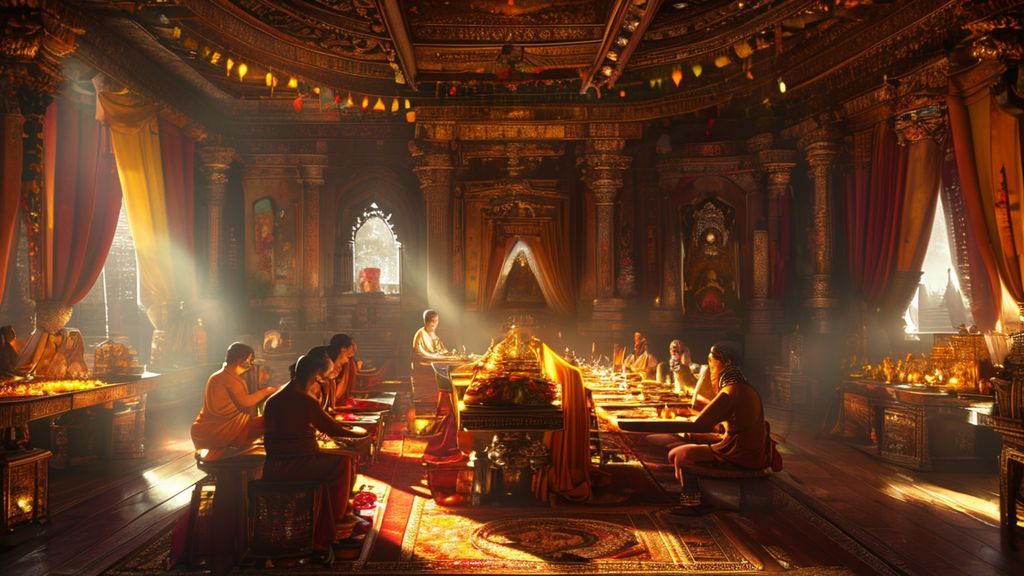
Dining Room Vastu for table direction and setup is a profound Sanatan Dharma science guiding the arrangement of your eating space to foster health, harmony, and prosperity. Rooted in ancient scriptures, it ensures positive energy flow, aids digestion, and strengthens familial bonds by aligning the dining environment with cosmic principles and elemental forces.
| Attribute | Details |
|---|---|
| Primary Deities/Elements | Annapurna Devi (sustenance), Agni (digestion), Prithvi (stability) |
| Ideal Room Location | West, Northwest, East (secondary) |
| Ideal Table Direction | Central, slightly towards Northwest or West of the room. Not directly under a beam. |
| Optimal Seating Direction | Primary eater (head of family) facing East or North; others facing East, North, or West. Avoid South. |
| Auspicious Table Shapes | Square, Rectangle (for stability and equality). Oval/Round can be used, but with care. |
| Recommended Colors | Light, earthy tones like beige, cream, light green, sky blue, peach. |
| Scripture Reference | Matsya Purana, Agni Purana, Brhat Samhita, Samarangana Sutradhara |
The Sacred Space of Sustenance: Introduction to Dining Room Vastu
In Sanatan Dharma, food, or anna, is revered as Brahma itself, as declared in the Taittiriya Upanishad: “Annam vai Brahma” (Food indeed is Brahman). The act of eating is not merely a biological necessity but a profound ritual that nourishes not just the body, but the mind and soul. Consequently, the space where this sacred act occurs – the dining room – holds immense significance. Dining Room Vastu is the ancient science that guides the arrangement of this vital space to ensure it vibrates with positive energy, promoting health, well-being, harmonious family relations, and spiritual growth. By aligning our dining environment with cosmic energies, we invite prosperity, contentment, and robust health into our lives.
This authoritative guide from Hindutva.online delves deep into the scriptural foundations and practical applications of Vastu for your dining room, particularly focusing on the crucial aspects of table direction and setup. We aim to equip every sincere seeker with the knowledge to transform their dining area into a sanctuary of sustenance and joy.
Puranic History & The Essence of Vastu Purusha in Dining
The principles of Vastu Shastra, which govern the energetic layout of any built space, are deeply embedded in our ancient texts. The genesis of Vastu is traditionally attributed to the story of the Vastu Purusha, as vividly narrated in the Matsya Purana (Chapter 252), the Agni Purana (Chapter 101), and the Skanda Purana. Lord Brahma, upon creating the Vastu Purusha, assigned various deities to different parts of his body, establishing the Vastu Purusha Mandala. Each direction and quadrant within a structure is thus governed by specific Devatas, and their energies directly influence the inhabitants.
For the dining room, several elemental and divine influences are crucial. The primary element associated with food and digestion is Agni (Fire), often located in the Southeast, though the dining room itself benefits from being in zones that support digestion and social interaction. The stability and grounding aspect comes from Prithvi (Earth). The directions are key: the East is ruled by Surya (Sun), promoting health and vitality; the North by Kuber (wealth) and Soma (mental peace); the West by Varuna (stability and fulfillment); and the Northwest by Vayu (air, movement, and social interaction).
A Vastu-compliant dining room ensures that these energies are balanced, fostering not just physical nourishment but also intellectual stimulation and emotional well-being during meals. The placement of the dining table and seating arrangement, therefore, becomes an act of reverence towards these divine forces, ensuring that every morsel consumed is charged with auspicious vibrations.
Architectural & Scientific Marvels: Principles of Dining Room Vastu
Vastu Shastra is not mere superstition; it is an ancient science of harmonics, aligning human dwellings with the Earth’s electromagnetic fields and cosmic energies. For the dining room, these principles dictate optimal placement and arrangement:
- Ideal Room Placement: The most auspicious locations for a dining room are the West or Northwest zones of the house. The West promotes stability and satisfaction, while the Northwest supports easy movement of food and good social interaction. The East can also be considered secondary. Avoid placing the dining room in the South or Southwest, as these directions can lead to digestive issues or family discord.
- Dining Table Direction: The dining table should preferably be placed in the center of the dining room, slightly towards the Northwest or West. Crucially, it must never be placed directly under a beam, as this is believed to create oppressive energy, causing stress and digestive problems. It should also not obstruct the main walkway.
- Optimal Seating Arrangement: The head of the family or the main earner should ideally face East or North while eating. The East direction enhances health and positivity, while North attracts wealth and new opportunities. Other family members and guests can face East, North, or West. Eating while facing South must be strictly avoided, as it is considered inauspicious and can lead to health issues and arguments.
- Table Shape: Square and rectangular tables are highly recommended in Vastu. They symbolize stability, balance, and equality, fostering harmony among family members. While circular or oval tables are not strictly prohibited, they lack the same grounding energy and might lead to less structured conversations. If used, ensure they are sturdy and well-anchored.
- Colors and Lighting: The walls of the dining room should be painted in light, soothing colors such as cream, beige, light green, peach, or sky blue. These colors promote a calm atmosphere and stimulate appetite. Avoid dark, aggressive colors like red or black, which can induce stress or arguments. Ensure ample natural light during the day and warm, inviting artificial lighting in the evenings.
- Mirrors: A mirror placed on the dining room wall that reflects the dining table is highly auspicious. It symbolizes abundance and multiplied food, inviting prosperity. However, ensure the mirror does not reflect the main entrance, a toilet door, or a distorted image.
- Decorations: Adorn the dining space with fresh flowers, a bowl of fresh fruits, or images depicting nature, landscapes, or Goddess Annapurna. These elements enhance positive vibrations and remind us of the divine blessings of sustenance.
Rituals & Puja Vidhi: Setting Up Your Vastu-Compliant Dining Space
Creating a Vastu-compliant dining room is an act of conscious intention and reverence. Follow these steps:
- Purification and Cleansing: Begin by thoroughly cleaning and decluttering the dining area. A clean space is essential for positive energy flow. Use natural cleansers or a sprinkle of Gangajal (Ganga water) to purify the space.
- Placement of the Dining Table: Position your dining table according to the optimal directions described above – West or Northwest, slightly off-center if possible, ensuring no direct alignment under a beam.
- Seating Arrangement: Designate seating positions based on the recommended directions, with the head of the family facing East or North.
- Color Scheme: Paint the walls in Vastu-approved light and earthy tones.
- Lighting and Ventilation: Ensure good ventilation and abundant natural light. Install warm, ambient lighting fixtures.
- Decor and Symbolism: Place a bowl of fresh fruits or a small, healthy plant as a centerpiece. Hang auspicious artwork or a well-placed mirror. Avoid displaying broken items or images that evoke sadness.
- Offering Before Meals (Annadaanam): Before partaking in food, it is a traditional Hindu practice to offer a small portion to Agni (fire), the elements, or mentally to the Divine, symbolizing gratitude and acknowledging the source of our sustenance. This practice sanctifies the meal.
- Maintenance: Regularly clean the dining area. Keep it free from clutter. Broken crockery should be immediately discarded.
Mantras & Chants for Sanctified Meals
Incorporating sacred chants before meals elevates the act of eating into a spiritual experience, aligning us with the divine energy of food:
- Annapurna Mantra for Abundance: This mantra invokes Goddess Annapurna, the deity of nourishment and food. Chanting it expresses gratitude and invites sustained prosperity.
ॐ ह्रीं क्लीं श्रीं अन्नपूर्णायै नमः ॥
Om Hreem Kleem Shreem Annapurnayai Namah॥ - Brahmarpanam Mantra (from Bhagavad Gita 4.24): This profound verse transforms the act of eating into an offering to Brahman.
ब्रह्मार्पणं ब्रह्म हविर् ब्रह्माग्नौ ब्रह्मणा हुतम् ।
ब्रह्मैव तेन गन्तव्यं ब्रह्मकर्मसमाधिना ॥
Brahmarpanam Brahma Havir Brahmagnau Brahmana Hutam.
Brahmaiva Tena Gantavyam Brahmakarma Samadhina.
(The act of offering is Brahman, the oblation is Brahman, offered by Brahman into the fire of Brahman; Brahman alone is to be reached by him who meditates on Brahman in his action.) - Simple Gratitude: A heartfelt “Om Sahana Vavatu, Sahanau Bhunaktu, Saha Veeryam Karavavahai” (May He protect us both, may He nourish us both, may we work together with great energy) or a simple “Thank you, Mother Annapurna,” before starting the meal, expresses profound gratitude.
Dos and Don’ts for Your Dining Room Vastu
Dos for a Harmonious Dining Experience:
- Do ensure the primary eater faces East or North.
- Do use square or rectangular dining tables for stability.
- Do choose light, earthy colors for walls and decor.
- Do keep the dining area clean, tidy, and well-ventilated.
- Do place a bowl of fresh fruits or a mirror reflecting the table.
- Do maintain a pleasant and peaceful atmosphere during meals.
Don’ts to Avoid Discord and Ill-Health:
- Don’t sit facing South while eating.
- Don’t place the dining table directly under a beam or arch.
- Don’t have the dining table directly opposite the main entrance or a toilet door.
- Don’t use dark or aggressive colors in the dining room.
- Don’t clutter the dining area or keep broken crockery.
- Don’t engage in arguments or negative conversations during meals.
Frequently Asked Questions on Dining Room Vastu
What is the best direction to eat food according to Vastu?
The best directions to eat food are East or North. Eating facing East promotes good health, positivity, and aids digestion, while facing North attracts wealth, new opportunities, and mental clarity. It is strictly advised to avoid eating while facing South, as it can lead to health problems and negative energies.
Can I use a round dining table as per Vastu?
While square or rectangular tables are highly preferred in Vastu for their symbolism of stability and equality, a round or oval table can be used. However, ensure it is sturdy and not wobbly. If using a round table, balance its energy with other grounding elements in the room, and avoid placing it directly under a ceiling beam.
Where should the dining room be located in a house?
According to Vastu, the ideal locations for a dining room are the West or Northwest zones of the house. The West promotes contentment and fulfillment, while the Northwest supports social interaction and easy movement of food. The East can also be considered as a secondary option. Avoid locating the dining room in the South or Southwest.
What colors are best for a Vastu-compliant dining room?
The best colors for a Vastu-compliant dining room are light and earthy tones such as cream, beige, light green, peach, and sky blue. These colors create a serene and inviting atmosphere, stimulating appetite and promoting healthy digestion. Avoid dark colors like black or dark red, which can induce stress or negativity.
Why This Matters for Every Hindu: Preserving Sanatan Dharma through Vastu
Adhering to Dining Room Vastu is far more than an interior design choice; it is a conscious effort to integrate the timeless wisdom of our Rishis into our daily lives. By aligning our homes with cosmic energies, we honor the intricate relationship between humanity and the universe, fostering not just physical health but also spiritual well-being. Each meal prepared and consumed in a Vastu-compliant dining space becomes an offering, a meditation, and a source of profound nourishment, contributing to the holistic development of the individual and the family.
This practice reinforces the core tenets of Sanatan Dharma: reverence for nature, gratitude for sustenance, and the pursuit of harmony in all aspects of existence. By creating a sacred space for meals, we invite the blessings of Annapurna Devi and ensure that our sustenance nourishes our journey towards dharma, artha, kama, and ultimately, moksha. For more insights into living a Dharmic life, explore the vast resources at Hindutva.online.