


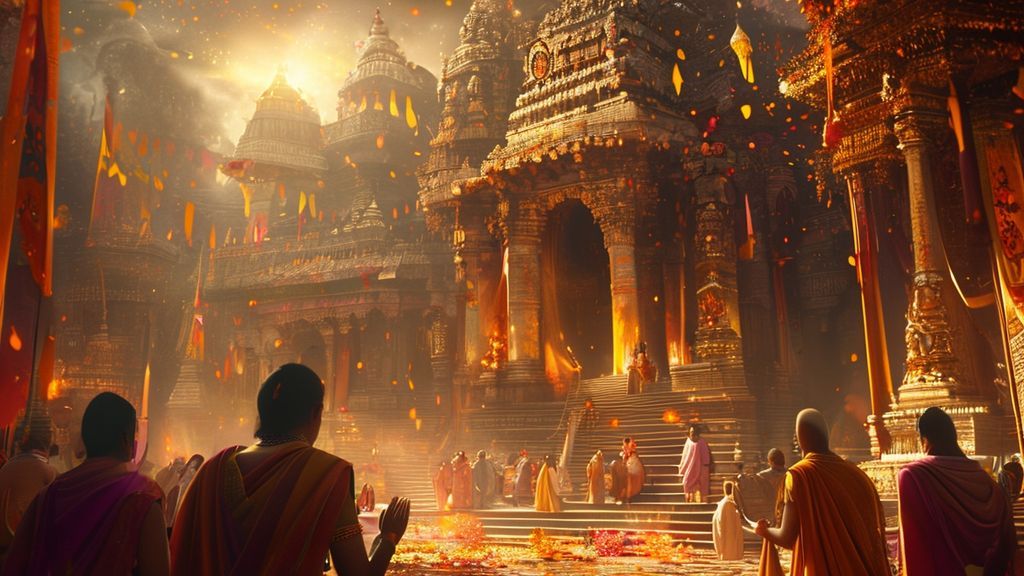
Durga Chalisa is a forty-verse devotional hymn dedicated to Goddess Durga, encapsulating Her divine glories, valor, and protective power. Chanting it regularly bestows immense spiritual benefits, including protection from adversity, fulfillment of righteous desires, and profound inner strength, guiding devotees on their path to liberation and peace.
| Attribute | Details |
|---|---|
| Deity | Goddess Durga (Mahishasuramardini, Chandika, Bhadrakali) |
| Origin/Composer | Traditional hymn, its authorship is attributed to various devotional poets, deeply rooted in Puranic narrations. |
| Key Festival | Navaratri, Durga Puja, Chaitra Navaratri, Vijayadashami, Kali Puja |
| Scripture Reference | Its thematic content draws heavily from the Devi Mahatmyam (part of the Markandeya Purana), Skanda Purana, and various other Shaakta Agamas. |
The Invocation of Divine Shakti: Understanding the Durga Chalisa
In the vast ocean of Sanatan Dharma, devotional hymns serve as luminous lighthouses, guiding sincere seekers towards the divine. Among these, the Durga Chalisa holds a place of profound reverence and spiritual potency. It is not merely a collection of verses but a potent spiritual tool, a direct invocation of Adi Shakti herself, Maa Durga. For millennia, devotees have found solace, courage, and protection in its forty verses, each a radiant bead on the rosary of divine praise. This sacred text encapsulates the multifaceted glories of the Divine Mother, making her immense power accessible to every earnest heart. Through its regular chanting, a devotee forges an unbreakable bond with the cosmic feminine energy, experiencing firsthand the transformative grace of Jagadamba.
Puranic Roots: The Legend and Lineage of Maa Durga
The essence of the Durga Chalisa is deeply interwoven with the ancient narratives of the Puranas, particularly the Devi Mahatmyam, an integral part of the Markandeya Purana. This revered text recounts the spectacular manifestation of Goddess Durga to vanquish insurmountable evil and restore cosmic balance. When the male deities, unable to defeat the formidable demon Mahishasura, pooled their collective energies (Tejas), a blazing effulgence emanated, culminating in the form of Maa Durga, the embodiment of supreme power. Her appearance, adorned with numerous arms wielding the weapons of all the Devas, symbolized the unified strength of the divine against chaos.
The Chalisa beautifully captures these profound episodes. Verses like “दुर्गा दुर्गति नाशिनी, दुर्गम द्वार विनाशिनी” (Durga, dispeller of distress, destroyer of difficult paths) echo her role as Mahishasuramardini, the slayer of Mahishasura, and other formidable demons such as Shumbha and Nishumbha, as detailed in the Devi Bhagavata Purana. Each line of the Chalisa acts as a condensed summary of these epic battles and the boundless compassion of the Mother, who protects her children from all forms of adversity – external and internal. It teaches us that the Divine Mother is not just a fierce warrior but also the source of knowledge, wealth, and liberation, a truth echoed across countless ancient scriptures and upheld by Hindutva.online.
The Poetic and Spiritual Architecture of the Durga Chalisa
While the concept of “Architectural & Scientific Marvels” might typically refer to grand temples, the Durga Chalisa itself is a marvel of spiritual engineering and poetic structure. It is composed of forty chaupais (quadrains), a distinct metrical form common in devotional Hindi literature, preceded by an invocation (Doha) and concluded with a final Doha acknowledging the benefits of chanting. This precise structure is not arbitrary; it is designed to systematically elevate the devotee’s consciousness.
The opening Doha, “नमो नमो दुर्गे सुख करनी, नमो नमो दुर्गे दुःख हरनी” (Salutations, Salutations to Durga, who bestows joy; Salutations, Salutations to Durga, who removes sorrow), immediately sets a devotional tone. Subsequent verses meticulously describe Maa Durga’s various forms, attributes, and exploits. From Shailputri to Siddhidatri, the Navadurga aspects are implicitly glorified, showcasing Her cosmic role. The rhyming scheme and rhythmic flow aid memorization and focus, allowing the mind to stabilize and immerse itself in the divine names and deeds. This poetic design ensures that even a novice can easily chant it, while a scholar can delve into its profound theological depths, revealing a sophisticated design intended for universal spiritual access and transformation.
Rituals and Puja Vidhi for Chanting the Durga Chalisa
Chanting the Durga Chalisa is a sacred act that requires purity, devotion, and sincerity. Following a prescribed vidhi enhances its efficacy and spiritual impact. Here is a step-by-step guide for its proper recitation:
- Achieving Purity (Shuddhi): Begin by taking a bath and wearing clean clothes. This external purification symbolizes the internal cleansing of the mind and heart.
- Sanctifying the Space: Choose a clean, quiet spot. Place a picture or idol of Goddess Durga. Light a diya (lamp) with ghee or oil, and incense sticks (dhoop or agarbatti). Offer flowers, especially red ones, as they are dear to Maa Durga.
- Sankalpa (Intention): Sit facing East or North. Take a moment to silently state your intention (Sankalpa) for chanting – whether for spiritual growth, removal of obstacles, or expressing gratitude.
- Preliminary Invocations: Before starting the Chalisa, it is traditional to invoke Lord Ganesha, the remover of obstacles, with the mantra “Om Gam Ganapataye Namaha” (ॐ गं गणपतये नमः). You may also offer prayers to your Guru and family deities.
- Dhyanam (Meditation): Meditate on the form of Goddess Durga. Visualize Her radiant, powerful, and compassionate presence protecting you. The Dhyana Mantra of the Chalisa itself can be used: “या देवी सर्वभूतेषु शक्तिरूपेण संस्थिता। नमस्तस्यै नमस्तस्यै नमस्तस्यै नमो नमः।।”
- Recitation of the Chalisa: Begin chanting the Durga Chalisa with clear pronunciation and a devotional heart. It is recommended to chant it at least once, or in multiples of 3, 7, 9, 11, 21, or 108 times, depending on your commitment and the purpose of your Anushthan (devotional practice). Regularity is key.
- Aarti and Kshama Prarthana: After chanting, perform Aarti (waving of lamps) to Maa Durga. Conclude with a Kshama Prarthana (prayer for forgiveness) for any errors committed during the Puja or chanting.
- Prasad Distribution: Offer Prasad (sacred food offering), such as fruits or sweets, to Maa Durga, and then distribute it among family and friends.
A consistent practice, especially during Brahma Muhurta (early morning) or Sandhya Kaal (twilight), amplifies the benefits. Many devotees undertake a Chalisaparayan (chanting for 40 consecutive days) to achieve specific spiritual goals or invoke profound blessings.
Potent Mantras and Chants for Maa Durga
While the entire Durga Chalisa is a potent mantra in itself, understanding specific Bijaksharas and core mantras enhances the depth of devotion and impact of the chanting. The foundational Dhyana Mantra of the Chalisa, as mentioned above, encapsulates the essence of Her omnipresent power:
Dhyana Mantra:
या देवी सर्वभूतेषु शक्तिरूपेण संस्थिता।
नमस्तस्यै नमस्तस्यै नमस्तस्यै नमो नमः॥
(Yaa Devi Sarva Bhooteshu Shakti Roopena Samsthitaa,
Namastasyai Namastasyai Namastasyai Namo Namah.)
Meaning: Salutations to that Devi who dwells in all beings in the form of Shakti. Salutations to Her, salutations to Her, salutations to Her again and again.
Beyond the Chalisa, the Navarna Mantra is a supreme chant in Devi worship, especially profound during Navaratri periods:
Navarna Mantra:
ॐ ऐं ह्रीं क्लीं चामुण्डायै विच्चे
(Om Aim Hreem Kleem Chamundaye Vichche)
This mantra invokes the three primary aspects of the Divine Mother: Mahasaraswati (Aim), Mahalakshmi (Hreem), and Mahakali (Kleem), along with Chamunda, representing Her fierce protective aspect. Reciting this mantra before or after the Chalisa can create a powerful synergy, channeling immense divine energy and purifying the devotee’s mind and surroundings.
Dos and Don’ts for Chanting the Durga Chalisa
To maximize the spiritual benefits and show proper reverence while chanting the Durga Chalisa, observe these guidelines:
Dos:
- Maintain Purity: Ensure physical and mental cleanliness before and during chanting.
- Cultivate Devotion: Chant with a sincere heart, full of faith and love for Maa Durga.
- Focus and Concentration: Keep your mind focused on the divine form and meaning of the verses. Avoid distractions.
- Regularity: Consistent daily chanting is more beneficial than intermittent, long sessions.
- Pronunciation: Strive for correct pronunciation of the Sanskrit words to ensure the vibrational accuracy of the hymn.
- Understand the Meaning: Meditate on the meaning of the verses to deepen your connection.
- Offerings: Offer Naivedyam (food), flowers, and incense as an expression of devotion.
Don’ts:
- Chant in Impurity: Avoid chanting if you are physically unclean or mentally disturbed by negative emotions.
- Distraction: Do not chant while engaged in other activities or with a wandering mind.
- Lack of Faith: Chanting without faith or with skepticism diminishes its power.
- Disrespect: Treat the Chalisa as a sacred text, not merely a poem. Do not place it on the ground or in impure places.
- Ego: Approach the chanting with humility, not with an ego of accomplishment.
- Expect Immediate Results: Focus on the devotion, not solely on the fruits. Blessings manifest in divine timing.
Frequently Asked Questions About the Durga Chalisa
Who can chant the Durga Chalisa?
The Durga Chalisa is a universal hymn, accessible to all sincere devotees irrespective of age, gender, caste, or background. Maa Durga’s grace knows no bounds, and anyone with devotion and a pure heart can chant it to invoke Her blessings. It is a powerful tool for householders and spiritual aspirants alike.
How many times should I chant the Durga Chalisa?
While chanting the Chalisa once a day is beneficial, many devotees find enhanced results by chanting it multiple times. Common practices include chanting 3, 7, 9, 11, 21, or 108 times in a single session. For specific desires or deeper spiritual transformation, a Chalisaparayan (chanting 108 times daily for 40 consecutive days) is highly recommended.
Is there a specific time to chant the Durga Chalisa?
You can chant the Durga Chalisa at any time of day or night. However, certain times are considered more auspicious for spiritual practices. These include Brahma Muhurta (the hour and a half before sunrise), Sandhya Kaal (twilight hours), and during festivals like Navaratri or Durga Puja. Consistency is ultimately more important than specific timing.
Do I need an idol or picture of Durga to chant the Chalisa?
While having an idol or picture of Goddess Durga helps in focusing one’s mind and devotion, it is not strictly mandatory. The essence of the chanting lies in your sincere faith and inner connection with the Divine Mother. You can chant it anywhere, as long as your heart is pure and intent on devotion.
Dharmic Significance: Why This Matters for Every Hindu
The regular recitation of the Durga Chalisa is more than just a ritual; it is a profound act of Dharma Raksha – the preservation of righteousness. In an age fraught with challenges, spiritual and material, the Chalisa serves as a constant reminder of the invincibility of truth and divine justice. It instills courage, not merely physical, but the inner fortitude to face life’s battles with unwavering faith. It teaches us the importance of surrendering to a higher power, recognizing that the Divine Mother is eternally vigilant, ready to protect Her children.
By immersing ourselves in the glories of Maa Durga, we strengthen our own Dharmic resolve, cultivating virtues like compassion, fearlessness, and devotion. This practice contributes to the spiritual well-being of the individual and, by extension, the entire Sanatan Dharma community. It is a timeless conduit to the ultimate reality of Shakti, reminding every Hindu of their inherent connection to the Cosmic Mother, and fostering a tradition of spiritual discipline that has sustained our civilization for millennia. Explore more such insightful guides at Hindutva.online for your spiritual journey.