


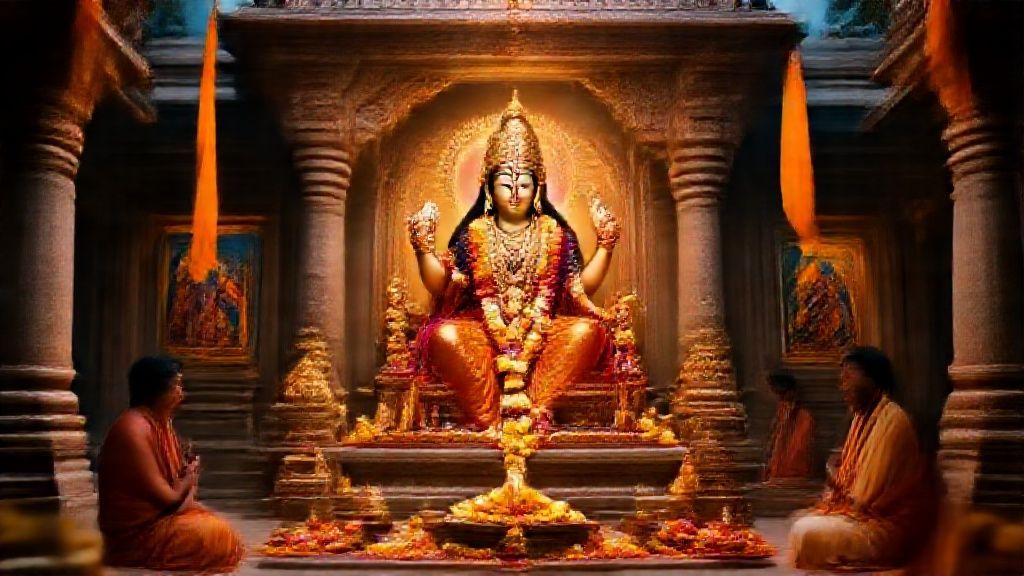
Friday Lakshmi Worship, often observed as a weekly business puja, is a sacred Hindu ritual dedicated to Goddess Lakshmi, the deity of wealth, prosperity, and auspiciousness. Devotees perform this puja to invite financial stability, business success, and overall abundance into their lives and enterprises, affirming their faith in Her benevolent grace for both material and spiritual well-being.
| Attribute | Details |
|---|---|
| Deity | Goddess Lakshmi (Mahalakshmi, Ashtalakshmi forms) |
| Location/Origin | Ancient Vedic traditions, elaborated in Puranas (Samudra Manthan narrative). Primarily a home/business establishment ritual. |
| Key Festivals | Diwali, Varalakshmi Vratam. Friday is observed as a weekly auspicious day. |
| Scripture Reference | Rig Veda (Sri Suktam), Vishnu Purana, Padma Purana, Skanda Purana, Garuda Purana. |
The Auspiciousness of Friday Lakshmi Worship for Business Prosperity
In Sanatan Dharma, the worship of Divine Mother Lakshmi transcends mere material desire; it is a profound seeking of holistic well-being, encompassing not only financial abundance (artha) but also good fortune, spiritual growth, and the removal of obstacles (dhana-badha). Friday, known as Shukravar, is traditionally consecrated to Goddess Lakshmi, as it is the day governed by Shukra (Venus), the planet associated with wealth, luxury, beauty, and all forms of worldly comforts. For householders, and especially for those engaged in trade and commerce, performing weekly Lakshmi Puja on Friday is considered paramount to invoke blessings for sustained prosperity and ethical business practices.
This weekly ritual is a testament to the Hindu understanding that prosperity is not accidental but a divine grace earned through devotion (bhakti), righteous action (dharma), and consistent effort (purushartha). It establishes a spiritual rhythm in one’s life, creating an energetic flow that supports growth and success. Every devotee seeking to align their material pursuits with spiritual values finds immense solace and strength in this sacred practice, a tradition upheld steadfastly across generations. Explore more profound insights into Sanatan Dharma at Hindutva.online.
Puranic History and Legend: The Divine Origins of Sri
The venerable Goddess Lakshmi’s origin is most famously recounted in the sacred lore of the Samudra Manthan, the great Churning of the Cosmic Ocean, as vividly detailed in the Vishnu Purana (Book I, Chapter 9) and the Bhagavata Purana (Canto 8, Chapter 8). During this monumental endeavor by Devas and Asuras, conducted to unearth the elixir of immortality, the radiant Goddess Lakshmi emerged from the depths, seated upon a lotus, holding a lotus, and bathed in divine effulgence. She was the fourteenth jewel to appear, immediately captivating all with Her unparalleled beauty and grace.
The Padma Purana further elaborates on Her eternal connection to Lord Vishnu, stating that She is Sri, His divine consort, inseparable from Him in all His incarnations. Whenever Vishnu descends as an avatar, Lakshmi accompanies Him – as Sita with Rama, Rukmini with Krishna. This eternal partnership signifies that true prosperity (Lakshmi) is always aligned with righteousness (Vishnu as Dharma). The Skanda Purana also extols Her virtues, describing how even great sages and kings perform rigorous austerities to gain Her favor. The custom of Friday worship is rooted in the belief that Shukra Deva, the guru of the Asuras, himself revered Lakshmi, recognizing Her as the source of all opulence. By propitiating Lakshmi on Friday, devotees tap into this ancient stream of divine grace, ensuring their ventures are blessed with abundance and good fortune, free from the clutches of poverty (daridrya).
The Spiritual Architecture of the Puja Space
While Friday Lakshmi worship is primarily a home or business premise ritual, its effectiveness is deeply rooted in the careful creation of a sacred space, a ‘spiritual architecture’ that mirrors the grand design of temple worship. This involves principles akin to Vastu Shastra, ensuring the flow of positive energies. The designated puja area should ideally be in the Northeast (Ishanya) or East direction of the room, symbolizing purity and the dawning of new beginnings. The use of specific geometric patterns, such as the Rangoli or Alpana drawn at the entrance or around the altar, is not merely decorative. These are potent Yantras, sacred diagrams that invoke and amplify divine vibrations. For Lakshmi worship, a lotus diagram or a star pattern is particularly auspicious, symbolizing Her seat and Her ability to attract wealth from all directions.
The arrangement of items on the altar also follows a symbolic design. The idol or image of Goddess Lakshmi is typically placed on a red or yellow cloth, signifying royalty and prosperity. Around Her, offerings are arranged in a specific order: a copper pot (kalasha) filled with water and mango leaves, symbolizing abundance; specific flowers like red hibiscus and lotus, chosen for their energetic affinity with Lakshmi; and traditional sweets (naivedyam) reflecting the sweetness of divine blessings. The lighting of a ghee lamp (deepam) in the South-East corner activates the fire element, purifying the space and carrying prayers heavenward. This meticulous arrangement transforms an ordinary space into a vibrant conduit for divine energy, a microcosm of a consecrated temple, thereby enhancing the efficacy of the business puja.
Rituals and Puja Vidhi: A Step-by-Step Guide for Weekly Business Puja
Performing Friday Lakshmi Puja requires sincerity and adherence to scriptural guidelines. Here is a traditional step-by-step guide:
- Purification (Shuddhi): Begin by purifying the self through a bath and wearing clean clothes. Cleanse the puja area thoroughly.
- Altar Preparation: Place a red or yellow cloth on a raised platform. Install the idol or picture of Goddess Lakshmi. Place a Kalasha filled with water, five mango leaves, and a coconut on top, representing the universe and prosperity.
- Lighting the Lamp (Deep Prajwalan): Light a ghee lamp (deepam) and incense sticks (dhup).
- Sankalpa (Intention): With folded hands, declare your intent for the puja, mentioning your name, purpose (e.g., business prosperity, removal of financial obstacles), and the date.
- Dhyanam (Meditation): Meditate upon Goddess Lakshmi’s form, chanting Her dhyana mantra or simply visualizing Her radiant presence.
- Avahanam (Invocation): Invoke Goddess Lakshmi, requesting Her to grace the puja with Her presence. Offer a seat (aasana).
- Panchamrita Snanam (Ablution): If performing with an idol, bathe it with panchamrita (mixture of milk, curd, ghee, honey, sugar), followed by pure water. Wipe with a clean cloth.
- Vastra Arpanam (Offering Clothing): Offer new clothes or a piece of fabric (vastram) to the deity.
- Gandham (Fragrance): Apply sandalwood paste (chandan) and vermillion (kumkum) to the idol/picture.
- Pushpam (Flowers): Offer fresh flowers, especially red hibiscus, marigolds, and lotus flowers, with devotion.
- Dhupam & Deepam (Incense & Lamp): Offer fragrant incense and wave the ghee lamp before the deity.
- Naivedyam (Food Offering): Offer sweets (e.g., kheer, ladoos), fruits, and milk. Ensure it is freshly prepared and vegetarian. Place betel leaves (paan) with betel nut (supari) and cloves.
- Mantra Japa: Chant Lakshmi Mantras or the Sri Suktam at least 108 times using a mala.
- Aarti: Perform Aarti with a camphor lamp, circulating it clockwise before the deity while singing devotional songs.
- Pradakshina (Circumambulation): Perform three circumambulations around the altar, if space permits.
- Pushpanjali (Flower Offering): Offer a handful of flowers, bowing in reverence.
- Kshama Prarthana (Apology): Seek forgiveness for any known or unknown errors during the puja.
- Prasada Vitarana: Distribute the offered food as prasad among family members and employees.
Mantras and Chants: Invoking Divine Abundance
Chanting the sacred names and mantras of Goddess Lakshmi during the Friday puja profoundly connects the devotee to Her divine energy. These vibrational sounds purify the mind and attract auspiciousness.
- Basic Lakshmi Mantra:
ॐ ह्रीं श्रीं लक्ष्मीभ्यो नमः ॥
Om Hreem Shreem Lakshmíbhyo Namaha.
(This is a potent seed mantra for invoking wealth and prosperity.) - Mahalakshmi Mantra:
ॐ श्रीं महालक्ष्म्यै नमः ॥
Om Shreem Mahalakshmyai Namah.
(A powerful mantra for universal abundance and all forms of wealth.) - Sri Suktam: This is a venerable Vedic hymn found in the Rig Veda (Khila Sukta 5.87) entirely dedicated to Goddess Lakshmi, or Sri. Reciting the Sri Suktam is considered one of the most auspicious ways to invoke Her blessings for wealth, prosperity, and spiritual enlightenment. It beautifully describes Her divine attributes and Her connection to Vishnu.
- Ashtalakshmi Stotram: This hymn glorifies the eight divine manifestations of Goddess Lakshmi, each representing a specific form of wealth: Adi Lakshmi (primeval wealth), Dhana Lakshmi (monetary wealth), Dhanya Lakshmi (agricultural wealth), Gaja Lakshmi (animal wealth, power), Santana Lakshmi (progeny), Veera Lakshmi (courage), Vijaya Lakshmi (victory), and Vidya Lakshmi (knowledge). Chanting this stotram ensures blessings across all aspects of life.
Regular recitation of these mantras with devotion and concentration during your weekly business puja will amplify the positive vibrations and attract the desired prosperity.
Dos and Don’ts for Friday Lakshmi Worship
To ensure the efficacy and reverence of the Lakshmi Puja, observe these cultural and spiritual guidelines:
Dos:
- Maintain utmost cleanliness in your home, especially the puja area.
- Bathe and wear clean, preferably traditional, clothing before commencing the puja.
- Use fresh flowers, fruits, and sweets for offerings.
- Perform the puja with a calm, focused mind and sincere devotion.
- Offer a ghee lamp, as it is considered highly auspicious for Lakshmi.
- Keep a clean broom in the North-West direction, symbolizing the sweeping away of poverty.
- Share the consecrated prasad with family, friends, and employees.
Don’ts:
- Do not perform puja in an unclean environment or with an impure body/mind.
- Avoid using stale or previously offered items for the puja.
- Do not speak ill or engage in negative thoughts during the puja.
- Refrain from consuming non-vegetarian food or alcohol on the day of the puja.
- Do not show disrespect to elders or women, as they are considered embodiments of Lakshmi.
- Avoid performing puja with anger, greed, or any ill intentions.
Frequently Asked Questions
Why is Friday specifically for Lakshmi Puja?
Friday, or Shukravar, is associated with Shukra (the planet Venus), which represents beauty, luxury, wealth, and all material comforts in Vedic astrology. Goddess Lakshmi is the presiding deity of these aspects, making Friday the most auspicious day for Her worship to attract prosperity and abundance.
Can anyone perform this weekly business puja?
Yes, any sincere devotee, regardless of gender or social standing, can perform the Friday Lakshmi Puja. The primary requirement is purity of heart, devotion (shraddha), and adherence to the basic ritualistic guidelines.
What is the most essential offering for Goddess Lakshmi?
While various offerings are made, the Lotus flower (Kamal Pushpa) is considered Her most beloved and essential offering, symbolizing purity, divinity, and spiritual growth. Ghee lamps and sweets are also highly significant.
Is it necessary to use a particular idol or image for Friday Lakshmi Puja?
While a beautiful idol or picture enhances focus, the most crucial aspect is the devotee’s devotion. Any representation of Goddess Lakshmi, even a symbolic drawing of a lotus or a Yantra, can be used. The Sri Yantra is particularly revered for its powerful geometric representation of divine abundance.
Dharmic Significance: Why This Matters for Every Hindu
The weekly Friday Lakshmi Worship is more than a ritual; it is a profound reinforcement of Sanatan Dharma’s principles in daily life. It instills discipline, gratitude, and a deep understanding that wealth, when obtained righteously (dharma-artha), is a means to serve society and uphold spiritual values, not an end in itself. By consistently performing this puja, a devotee aligns their personal and professional endeavors with cosmic rhythms, cultivating not just material gains but also inner peace, ethical conduct, and a sense of responsibility. It reminds us that true prosperity (aishwarya) is holistic, embracing spiritual wisdom (vidya), courage (dhairya), and compassion (karuna) alongside monetary wealth. This practice preserves our ancient heritage and ensures that the pursuit of prosperity remains rooted in righteousness, benefiting individuals, families, and the larger community. Continue your journey of dharmic understanding and spiritual growth at Hindutva.online.