


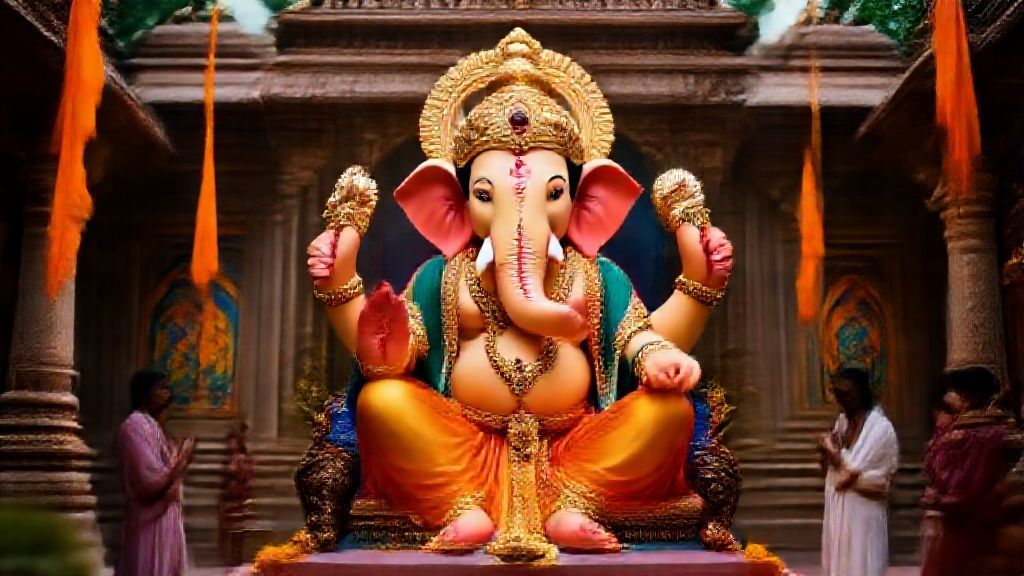
Ganesh idol size for home friendly options is ideally compact, ranging from a few inches to about 18-24 inches, ensuring it harmonizes with your dwelling’s energy and allows for accessible daily worship. Scriptural traditions, particularly Vastu Shastra and Agamic texts, guide devotees in choosing proportions that facilitate a serene and spiritually conducive environment without overwhelming the sacred space.
| Attribute | Details |
|---|---|
| Deity | Bhagwan Ganesha (Ganapati, Vinayaka) |
| Recommended Home Size Range | Approximately 4 inches (10 cm) to 24 inches (60 cm) in height. |
| Key Principles Governing Size | Pratimā Māna (Iconometric Proportions), Vastu Shastra (Architectural Science), Agama Shastra (Ritual Texts). |
| Relevant Scripture References | Shilpa Shastras (e.g., Mānasāra, Mayamata, Brihat Samhita), Ganesha Purana, Mudgala Purana. |
| Primary Purpose for Home | Daily worship (nitya pūjā), invocation of auspiciousness, removal of obstacles, personal devotion (bhakti). |
The Spiritual Essence of Ganesha in Your Home
In the vibrant tapestry of Sanatan Dharma, Bhagwan Ganesha stands as the remover of obstacles (Vighnaharta), the bestower of wisdom (Buddhi-pradata), and the harbinger of auspicious beginnings. His divine presence is invoked before any significant undertaking, ensuring success and harmony. For millions of devotees, installing a Ganesh idol at home is not merely an act of decoration, but a profound spiritual commitment to invite divine grace into their daily lives. However, the question of appropriate idol size for a home often arises, stirring contemplation on aesthetics, Vastu compliance, and scriptural guidelines. This guide delves into these sacred considerations, offering clarity rooted in ancient wisdom to help you choose a Ganesha idol that resonates harmoniously with your domestic sanctuary and fosters deep devotion.
Puranic History and the Multifaceted Forms of Ganesha
The origins of Bhagwan Ganesha are richly narrated across various Puranas, primarily the Shiva Purana, Brahma Vaivarta Purana, and the dedicated Ganesha Purana and Mudgala Purana. While the accounts vary, the core narrative speaks to His miraculous birth and His status as the son of Devi Parvati and Bhagwan Shiva. The Shiva Purana, for instance, details how Parvati fashioned Ganesha from her own bodily unguents (mala) to guard her privacy, an act that led to his beheading by Shiva and subsequent resurrection with an elephant head. This primal form, initially small and formed by clay, signifies the accessibility of divinity even in the most humble manifestations.
The scriptures describe Ganesha in multiple forms, each embodying specific attributes and energies. The Mudgala Purana notably elaborates on eight primary manifestations (Ashta Vinayaka), including Ekadanta (single tusk), Vakratunda (curved trunk), Mahodara (big belly), and Gajanana (elephant-faced). While grand temple idols (achala pratima) like those at Siddhivinayak are designed for public reverence and elaborate rites requiring immense scale, the essence of these forms can be invoked in smaller, home-friendly idols (chala pratima). The inherent principle is that Ganesha, being Anu-mahato-mahiyan (smaller than the smallest, greater than the greatest), transcends physical dimension. A small, reverently installed idol can hold the same divine potency as a large one, provided it is imbued with sincere devotion and follows foundational iconographic principles. The key is to select a form and size that aids personal meditation and regular worship, fostering a constant spiritual connection.
Vastu Shastra and Iconographic Principles for Home Idols
Choosing the correct Ganesha idol size for home goes beyond aesthetics; it is deeply intertwined with Vastu Shastra (the science of architecture) and Shilpa Shastras (iconography manuals). These ancient treatises provide precise guidelines for idol creation (Pratimā Māna) and placement, ensuring that the deity’s energy harmonizes with the living space.
Pratimā Māna: The Science of Proportions
The Shilpa Shastras, such as Mānasāra and Mayamata, meticulously detail the iconometric rules for sculpting idols. For temple deities, these rules are often based on large units like *tāla* (a unit of measure derived from the face) or *hasta* (forearm). However, for home idols, the emphasis shifts to proportionality that suits a personal worship space. While no specific verse dictates “home idol must be X inches,” the principle of not overwhelming the space is implicit. A Ganesha idol for home is typically a chala pratima (movable idol), which is generally smaller and easier to handle for daily rituals, unlike the fixed achala pratima of temples.
An idol that is too large for the designated Puja altar or room can create a feeling of being imposing rather than inviting, potentially disrupting the subtle energy flow (prana shakti) within the home. Generally, idols ranging from 4 inches to 24 inches (roughly 10 cm to 60 cm) are considered ideal. This size allows for comfortable daily worship (nitya pūjā), cleaning, and performing traditional rituals like abhishekam (ritual bathing) without requiring extensive infrastructure. The idol should be proportionate to the size of the worshipper and the sacred space, making it easy to focus during dhyāna (meditation) and darśan (viewing).
Vastu Guidelines for Placement and Size Harmony
Vastu Shastra offers invaluable guidance for placing deities. For Ganesha, the ideal direction is the North or Northeast, which are considered zones of wealth, prosperity, and spiritual growth. The idol should not face the South, nor should it be placed near a bathroom, under a staircase, or directly opposite the main entrance (if it leads to an inauspicious view).
The size of the idol also impacts Vastu. A modest-sized idol helps maintain a balanced energy field. A Ganesha idol of 12-18 inches (30-45 cm) is widely popular, providing a visible, yet non-overpowering, presence for a typical home altar. Materials like clay, metal (brass, copper, silver), or stone are acceptable, with each imparting subtle energetic qualities. Importantly, the idol’s trunk should ideally turn towards the left (Vamukhi), symbolizing material success and domestic happiness, making it highly suitable for home worship.
Rituals and Puja Vidhi for Home-Friendly Ganesha Idols
Establishing a Ganesha idol in your home is a sacred act that involves a simplified, yet potent, Prana Pratishtha (invoking life force) followed by regular Puja Vidhi. The smaller size of home idols makes these rituals more accessible and intimate.
- Sankalpa (Intention): Begin by purifying yourself and stating your intention (sankalpa) for performing the puja, seeking Bhagwan Ganesha’s blessings.
- Avahana (Invocation): Invoke the deity by chanting mantras, inviting Ganesha to reside in the idol.
- Shodashopachara Puja (Sixteen Offerings): Perform the standard 16 steps of worship:
- Dhyana: Meditation on Ganesha’s form.
- Avahana: Invocation.
- Asana: Offering a seat.
- Padya: Offering water for feet washing.
- Arghya: Offering water for hand washing.
- Achaman: Offering water for sipping.
- Snana: Ritual bathing (abhishekam) with water, milk, curd, honey, ghee, sugar, and then pure water. This is particularly easy with smaller idols.
- Vastra: Offering new clothes or sacred threads.
- Yagyopavit: Offering the sacred thread (janeu).
- Gandha: Applying sandalwood paste (chandan) or kumkum.
- Pushpa: Offering fresh flowers, especially red hibiscus.
- Dhupa: Lighting incense.
- Deepa: Lighting a lamp (diya).
- Naivedya: Offering food, especially modak or laddoo.
- Tambula: Offering betel leaves.
- Dakshina: Offering symbolic monetary gift.
- Aarti (Waving of Lamps): Conclude with Aarti, singing devotional songs and waving a lamp.
- Pradakshina (Circumambulation) & Kshama Prarthana (Apology): Perform a circumambulation and seek forgiveness for any errors.
The beauty of a home-friendly Ganesha idol is that it encourages consistent daily devotion, seamlessly integrating spirituality into the fabric of domestic life, as championed by Hindutva.online.
Mantras and Chants for Ganesha Worship
Chanting Ganesha mantras purifies the mind and invokes His presence. These mantras are universally powerful, regardless of the idol’s size.
- Moola Mantra (Root Mantra):
ॐ गं गणपतये नमः (Om Gam Ganapataye Namaha)
Meaning: Salutations to Lord Ganesha, the Lord of multitudes.
- Ganesha Gayatri Mantra:
ॐ एकदंताय विद्महे, वक्रतुंडाय धीमहि, तन्नो दंति प्रचोदयात्॥ (Om Ekadantaya Vidmahe, Vakratundaya Dhimahi, Tanno Danti Prachodayat॥)
Meaning: We meditate on the one-tusked Lord, the one with the curved trunk; may He enlighten our intellect.
- Vakratunda Mahakaya Sloka:
वक्रतुण्ड महाकाय सूर्यकोटि समप्रभ। निर्विघ्नं कुरु मे देव सर्वकार्येषु सर्वदा॥ (Vakratunda Mahakaya Suryakoti Samaprabha. Nirvighnam Kuru Me Deva Sarvakaryeshu Sarvada॥)
Meaning: O Lord with the curved trunk and massive body, whose brilliance is equal to a million suns, please make all my endeavors free of obstacles, always.
Dos and Don’ts for Home Ganesha Idols
Adhering to certain guidelines ensures the sanctity and auspiciousness of your home shrine.
Dos:
- Maintain Cleanliness: Always keep the idol and its surroundings immaculately clean.
- Regular Worship: Offer daily prayers, even if it’s a simple lamp and incense offering.
- Proper Direction: Place the idol facing North or Northeast for maximum positive energy.
- Appropriate Height: Ensure the idol is placed at a respectful height, preferably not directly on the floor.
- Offerings: Regularly offer fresh flowers, fruits, sweets (especially Modak), and incense.
Don’ts:
- Neglect: Do not leave the idol unattended or dusty for long periods.
- Inappropriate Placement: Avoid placing Ganesha near toilets, bathrooms, under stairs, or in bedrooms (unless it’s a small, decorative piece not for daily puja).
- Facing South: Never place the idol facing South, as it’s considered inauspicious for deities.
- Broken Idols: Do not worship a broken or chipped idol; respectfully immerse it in a sacred water body and replace it.
- Non-Vegetarian Offerings: Absolutely no non-vegetarian food should be offered to Ganesha or any deity.
What is the ideal material for a home Ganesha idol?
For home worship, commonly chosen materials include clay (especially during Ganesh Chaturthi for eco-friendly immersion), brass, copper, silver, or marble. Each material carries different energetic properties; for instance, clay represents the Earth element and humility, while metals like brass are durable and symbolize longevity and purity. The Ganesha Purana mentions various materials suitable for making idols, emphasizing the sincerity of devotion over the material’s cost.
Can I have multiple Ganesha idols at home?
While devotion allows for multiple representations, Vastu Shastra generally advises against having more than one Ganesha idol placed in the same room or facing each other directly, as it can lead to energetic disharmony. It is perfectly acceptable to have a small primary idol for daily worship and other smaller decorative Ganeshas in different parts of the house, provided they are placed respectfully. However, for the main puja altar, usually one consecrated idol suffices to maintain focus and energy flow.
Is there a specific posture for home Ganesha idols?
Ganesha idols come in various postures, each with symbolic meaning. For home, the sitting posture (Lalitasana or Sukhasana), with one leg folded and the other gently touching the ground, is highly preferred. This posture signifies stability, calm, and approachable divinity, representing a state of ease and blessing for the household. A Ganesha idol with the trunk curving to the left (Vamukhi) is also particularly auspicious for domestic harmony and prosperity.
Preserving Sanatan Dharma Through Thoughtful Devotion
The mindful selection of a Ganesh idol’s size for your home is more than a practical choice; it is an act of preserving and honoring the profound wisdom embedded in Sanatan Dharma. By adhering to the principles of Shilpa Shastra and Vastu, we ensure that our devotional practices are in harmony with cosmic energies, fostering peace, prosperity, and spiritual growth within our households. A well-chosen, appropriately sized Ganesha idol encourages daily connection, simplifying complex rituals into loving acts of devotion that are sustainable and deeply personal. It transforms a house into a sacred home, a sanctuary where divine grace is ever-present, guiding every step and removing every obstacle. This thoughtful engagement with our traditions strengthens our faith and connects us to the eternal spiritual lineage of our ancestors, ensuring the vibrancy of Dharma for future generations, a mission central to Hindutva.online.