


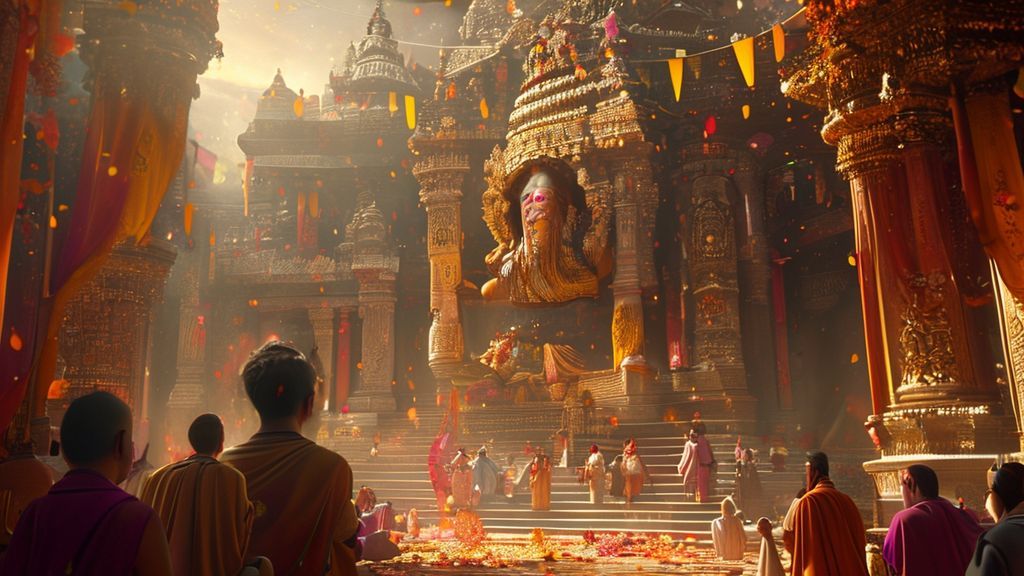
Ganesha dream meaning signifies profound auspiciousness, typically heralding the removal of obstacles (Vighna Harta), the dawn of new beginnings, and the imminent arrival of good fortune. A vision of Lord Ganesha in a dream is a divine message of protection, spiritual growth, and success in one’s endeavors, guided by the Remover of Impediments Himself.
| Attribute | Details |
|---|---|
| Deity | Sri Ganesha (Ganapati, Vighneshwara, Vinayaka) |
| Dream Significance | Obstacle removal, new beginnings, success, wisdom, divine protection, spiritual progress, good fortune. |
| Key Symbolism in Dreams | Large head (wisdom), big ears (listening), small eyes (concentration), trunk (adaptability), modak (spiritual bliss), mouse (desire control), broken tusk (sacrifice for knowledge). |
| Scripture Reference | Ganesha Purana, Mudgala Purana, Shiva Purana, Dharma Shastras (on omens and divine visions). |
The Auspicious Revelation of Sri Ganesha in Dreams
In Sanatan Dharma, dreams are not mere random firings of the subconscious mind; they are often regarded as profound windows into the spiritual realm, carrying prophetic warnings, divine guidance, or auspicious blessings. To behold Sri Ganesha, the revered Remover of Obstacles and Lord of Beginnings, in a dream is considered one of the most auspicious visions a devotee can experience. This divine darshan in the subtle realms of sleep signifies a direct message from the cosmic intelligence, assuring the devotee of His grace and intervention. Such a dream strengthens faith, provides solace, and ignites a renewed sense of purpose, guiding the devotee through life’s labyrinthine paths with divine confidence.
The very presence of Ganapati in one’s dreamscape is a powerful spiritual signal, indicating that the Lord of Buddhi (Intellect) and Siddhi (Attainment) is actively involved in clearing the path ahead. It is a profound assurance that spiritual and material endeavors will find success, and any impending challenges will be overcome with divine assistance. This vision serves as a reminder of the omnipresent divine protection available to those who walk the path of Dharma.
Puranic Roots: Ganesha as Vighna Harta and Siddhi Data
The significance of Ganesha’s appearance in dreams is deeply rooted in His Puranic legends and roles. The Shiva Purana recounts His miraculous birth, created by Devi Parvati, and His subsequent anointing as the chief of the Ganas and the Vighneshwara, the Lord of Obstacles. Lord Shiva Himself decreed that no auspicious undertaking would succeed without first honoring Ganesha, bestowing upon Him the unique position as the first to be worshipped in any ritual.
The Ganesha Purana and Mudgala Purana further elaborate on His myriad forms and His consistent role as the dispeller of difficulties and bestower of success. When Ganesha appears in a dream, it is not merely a symbolic representation but a direct manifestation of this Puranic truth. It suggests that Ganesha, the Vighna Harta (Remover of Obstacles), is actively working to clear hurdles in the devotee’s waking life. Simultaneously, as the Siddhi Data (Bestower of Success), His presence implies that efforts currently underway or soon to be initiated will bear fruit, leading to desired attainments and prosperity. This profound connection between His divine identity and the dream vision imbues the experience with immense spiritual weight, reassuring the devotee of impending triumph over adversity and the dawn of auspicious times.
The Metaphysics of Ganesha’s Form in Dreams: Unpacking Divine Symbolism
Unlike physical temples, the architecture of a dream involving Ganesha is built from His divine attributes, each carrying profound metaphysical significance. When Lord Ganesha appears, the specific details of His form are not arbitrary; they are potent symbols imparting subtle wisdom. His large head in a dream signifies profound wisdom, vast knowledge, and the ability to think broadly and strategically to overcome problems. His big ears denote the importance of listening intently to spiritual teachings (Shruti) and the counsel of elders, suggesting that solutions may come through attentive hearing. The small, focused eyes speak to the need for concentration and inner vision, urging the devotee to look beyond superficialities and discern the true nature of challenges.
The curved trunk represents adaptability and efficiency, signaling that one must be flexible in approach while pursuing goals. The single broken tusk, as mentioned in legends where He used it to write the Mahabharata, symbolizes sacrifice for the sake of knowledge and the willingness to overcome imperfections for a higher purpose. His vehicle, the mouse (Mushaka), often seen near His feet, represents conquered desires and ego, indicating mastery over worldly cravings and attachment. The modak (sweet dumpling) in His hand symbolizes the sweet rewards of spiritual practice and liberation (moksha), hinting at the blissful outcomes awaiting the devotee. To perceive these elements within a dream is to receive a personalized lesson from the Lord, guiding one toward greater self-awareness and spiritual advancement, offering unique information gain beyond generic interpretations.
Responding to the Divine: Rituals and Puja Vidhi After a Ganesha Dream
Receiving such an auspicious dream calls for a heartfelt response of gratitude and devotion. While the dream itself is a blessing, performing a dedicated Ganesha Puja can amplify its positive effects and solidify the divine connection. Here is a simple, yet profound, puja vidhi:
- Sankalpa (Intention): Begin by purifying yourself with a bath. Sit facing East or North, light a lamp (deepa) and incense (agarbatti). With folded hands, make a mental or spoken resolution (Sankalpa) to perform the puja for the grace received through the dream and for the removal of obstacles.
- Avahana (Invocation): Invoke Lord Ganesha by chanting “Om Gam Ganapataye Namaha” while offering a flower or rice grains to an idol or picture of Ganesha.
- Upachara (Offerings): Offer the Panchamrita (mixture of milk, curd, ghee, honey, sugar) for abhishekam, followed by pure water. Then offer sandalwood paste (chandan), kumkum, turmeric (haldi), flowers (especially red hibiscus), and Durva grass (21 blades are highly auspicious).
- Naivedyam (Food Offering): Offer modak, laddoo, or any sweet fruit. After offering, chant “Om Pranaaya Swaha, Om Apaanaya Swaha, Om Vyaanaya Swaha, Om Udaanaaya Swaha, Om Samaanaaya Swaha” to sanctify the offering.
- Aarti (Light Offering): Perform Aarti using a lamp with ghee or camphor, circling it clockwise before the deity while chanting Ganesha Aarti.
- Pradakshina (Circumambulation): Perform three circumambulations around the deity (if space permits), or mentally.
- Pranama (Prostration): Offer humble prostrations, expressing gratitude for the divine dream and seeking continued blessings.
Consistently visiting a Ganesha temple, especially on a Wednesday, the day dedicated to Him, can also reinforce the positive energy stemming from the dream. For deeper insights and resources on Ganesha worship, visit Hindutva.online.
Powerful Mantras and Chants for Sri Ganesha
Chanting Ganesha Mantras after such a dream, or as a daily practice, is a powerful way to connect with His divine energy, remove obstructions, and invite success. These mantras resonate with the cosmic vibrations of Lord Ganesha:
- Om Gam Ganapataye Namaha (ॐ गं गणपतये नमः): This is the most fundamental and potent Ganesha Beeja Mantra, invoking Him for obstacle removal and blessings.
- Vakratunda Mahakaya Mantra (वक्रतुण्ड महाकाय सूर्यकोटि समप्रभ। निर्विघ्नं कुरु मे देव सर्वकार्येषु सर्वदा॥):
“Vakratunda Mahakaya Surya Koti Samaprabha, Nirvighnam Kuru Me Deva Sarva Karyeshu Sarvada.”
Meaning: “O Lord with the curved trunk, large body, and the brilliance of a million suns, please make all my endeavors free of obstacles, always.” This powerful mantra is ideal for seeking His grace for all new beginnings.
- Ganesha Gayatri Mantra (ॐ एकदन्ताय विद्महे वक्रतुण्डाय धीमहि तन्नो दन्ति प्रचोदयात्॥):
“Om Ekadantaya Vidmahe, Vakratundaya Dhimahi, Tanno Danti Prachodayat.”
Meaning: “Om, Let us meditate on the one-tusked God, Oh, great-tusked one, give us higher intellect, and let Lord Ganesha illuminate our mind.” This mantra enhances wisdom and spiritual insight.
Regular recitation of these mantras purifies the mind, strengthens resolve, and invokes Ganesha’s protective and benevolent energy.
Dos and Don’ts After a Ganesha Dream
To honor the sanctity of a divine Ganesha dream and maximize its auspicious impact, certain practices are recommended, while others should be avoided:
- DO: Express immediate gratitude to Lord Ganesha upon waking.
- DO: Reflect on the specific details of the dream – Ganesha’s posture, activities, or any symbolic elements.
- DO: Perform a simple Ganesha Puja or light a lamp before His image.
- DO: Donate to charity or feed animals, especially cows or dogs, as an act of selfless service (Seva).
- DO: Maintain a positive outlook, trusting in divine guidance.
- DON’T: Dismiss the dream as mere fantasy; treat it with reverence.
- DON’T: Immediately share the dream with everyone; keep its sacredness private, at least initially, to allow its energy to settle.
- DON’T: Indulge in negative thoughts or actions that contradict the purity of the divine message.
- DON’T: Expect instant, effortless results; divine blessings often require continued effort and adherence to Dharma.
Frequently Asked Questions About Ganesha Dreams
What if Ganesha appears angry or in a fierce form in my dream?
While Ganesha is predominantly benevolent, an appearance in a fierce form (such as Ekadanta or Vighnaraja) is not necessarily a bad omen. It often signifies that certain negative tendencies or behaviors within the devotee need to be addressed urgently. It could be a divine warning to correct one’s path, remove inner obstacles of ego or attachment, or confront external challenges with courage. It is an invitation for introspection and rectification, assuring that even in His fierce aspect, He is guiding you towards purification and protection.
Does the color or specific posture of Ganesha in the dream matter?
Absolutely. The nuances in a divine dream often carry specific messages. A radiant, golden Ganesha might symbolize spiritual enlightenment and prosperity. A white Ganesha can represent purity, peace, and new beginnings. If He appears seated, it suggests stability and firmly established blessings. If He is seen dancing, it could signify joy, celebration, and the removal of obstacles through divine grace. Each detail provides unique insights, calling for a deeper contemplative approach to the dream’s message.
Should I tell others about my Ganesha dream?
Generally, it is advisable to keep highly auspicious dreams private initially. The spiritual energy of such a divine vision is potent and delicate. Sharing it indiscriminately might dilute its impact or expose it to skepticism. It is best to reflect upon it personally, internalize its message, and perhaps share it only with a trusted spiritual guide (Guru) or a very close family member who understands and respects the sanctity of such experiences. Once the blessings have manifested, you may share your gratitude and testimony.
Dharmic Significance: Why This Matters for Every Hindu
Understanding the profound significance of a Ganesha dream is not merely about fortune-telling; it is a vital practice for preserving Sanatan Dharma. These dreams serve as direct conduits of divine communication, reinforcing faith in the sagacity of our scriptures and the active presence of our deities in our lives. In an age where material pursuits often overshadow spiritual truths, such experiences re-anchor the devotee to the transcendent reality, proving that the divine is not distant but intimately involved in human existence. By recognizing, honoring, and acting upon these sacred dream messages, we strengthen our individual connection to the divine, perpetuate the wisdom of our ancestors, and ensure that the timeless teachings of Dharma continue to guide humanity. It underscores the personalized nature of our spiritual journey and encourages a life lived in conscious alignment with divine will, deepening our reverence for Hindutva.online‘s core principles.