


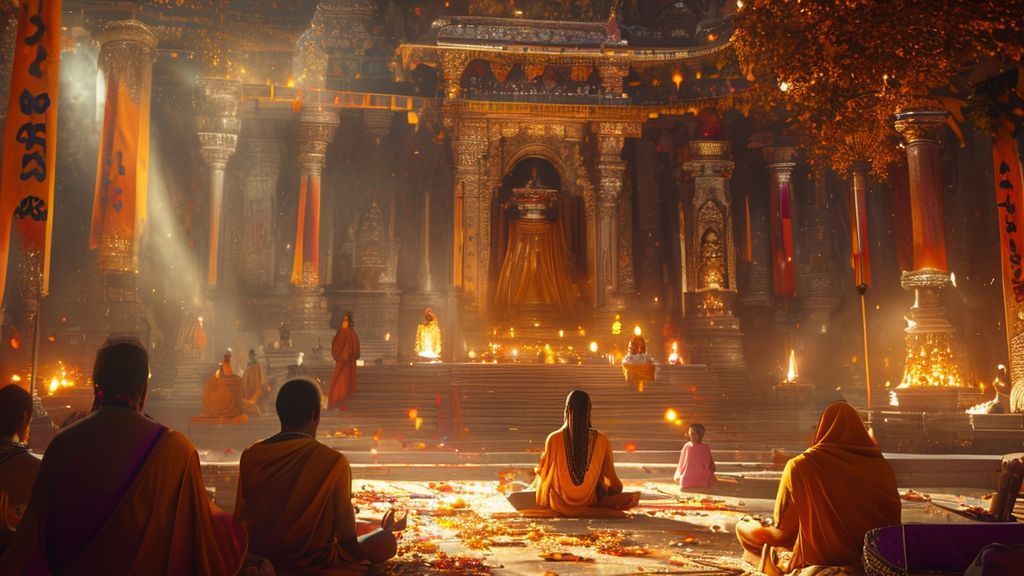
Gayatri Mantra Japa, for optimal spiritual efficacy and profound inner transformation, is traditionally chanted 108 times, constituting one complete mala. This sacred number aligns with ancient Vedic wisdom, astrological principles, and the structure of the subtle body, ensuring a holistic spiritual practice that purifies the mind, sharpens the intellect, and bestows the illuminating grace of Savitri.
| Attribute | Details |
|---|---|
| Mantra Name | Gayatri Mantra (also known as Savitri Mantra) |
| Primary Deity | Savitri (the divine illuminating power of the Sun, an aspect of Brahman) |
| Core Purpose | Intellectual illumination, spiritual purification, divine wisdom, liberation (Moksha) |
| Ideal Chant Count | 108 times (one mala) for daily practice, or multiples thereof |
| Scripture Reference | Rig Veda (Mandala 3, Hymn 62, Verse 10), Yajur Veda, Sama Veda, Manu Smriti, Devi Bhagavata Purana |
| Guna (Quality) | Sattvic (purity, harmony, wisdom) |
The Essence of Sanatan Dharma: Unlocking the Gayatri Mantra
The Gayatri Mantra is not merely a sequence of sacred sounds; it is the very heart of the Vedas, revered as Vedamata, the Mother of the Vedas. It is a potent invocation to Savitri, the divine illuminating power of the Sun, seeking to awaken and purify the intellect, leading the devotee from darkness to light, from ignorance to true knowledge. For millennia, this sacred chant has been the cornerstone of spiritual practice for sincere seekers within Sanatan Dharma, believed to bestow profound wisdom, spiritual strength, and ultimate liberation. Understanding its proper practice, particularly the prescribed number of repetitions, is crucial for harnessing its full transformative power.
The Puranic Narrative and Vedic Origins
The origin of the Gayatri Mantra is deeply embedded in the ancient Vedic tradition, first appearing in the Rig Veda (Mandala 3, Hymn 62, Verse 10). It is attributed to Rishi Vishwamitra, a sage who, through intense tapasya (austerities), transcended his Kshatriya lineage to become a Brahmarishi. His profound realization of the mantra’s power allowed him to reveal it for the benefit of all humanity. The Devi Bhagavata Purana extols Gayatri Devi as the primordial Shakti, the divine consort of Lord Brahma, revered as the embodiment of all knowledge and wisdom. It describes her as the ultimate reality, the source from which all Vedas and divine knowledge emanate.
Furthermore, the Manu Smriti emphasizes the paramount importance of the Gayatri Mantra, stating that “There is nothing more sacred than the Gayatri.” It is central to the Upanayana Sanskar, the sacred thread ceremony, where a young initiate is formally introduced to the mantra by their Guru, signifying their spiritual birth and entry into Vedic studies. This initiation marks the beginning of their journey towards Brahmacharya (celibacy and spiritual studentship) and equips them with the most powerful tool for intellectual and spiritual development. The continuous chanting of Gayatri is considered a potent spiritual fire that burns away sins and purifies the consciousness, connecting the individual soul with the universal cosmic intelligence. The mantra’s timeless resonance continues to guide and protect devotees on their spiritual path, illustrating its eternal significance in Vedic cosmology.
The Science of Sacred Sound: Vibrational Architecture of Gayatri Japa
While the Gayatri Mantra doesn’t relate to physical temple architecture, its structure embodies a profound vibrational architecture rooted in Vedic sound science. Each of its 24 syllables is meticulously crafted to resonate with specific energies within the human system and the cosmos. Esoteric traditions often link these syllables to various chakras, nadis, and even the 24 tirthankaras in Jainism or specific divine attributes. The power of the mantra lies in its precise phonetic structure and the subtle vibrations it generates, which, when chanted with devotion and focus, can re-align and purify the individual’s energetic field.
The practice of Japa, or repetitive chanting, is a scientific method for harnessing these vibrations. The number 108, the traditional count for one mala, is not arbitrary but deeply symbolic and scientifically profound in Vedic thought. This number reflects numerous cosmic and astrological truths:
- There are 12 zodiac signs (rashis) and 9 planets (navagrahas). Their product, 12 x 9, equals 108, symbolizing the entirety of the cosmic influences governing human existence. Chanting 108 times is believed to neutralize negative planetary effects and harmonize one’s karma.
- In Ayurveda and Yogic traditions, there are said to be 108 primary energy lines (nadis) converging to form the heart chakra. Each repetition of the mantra is believed to purify one of these nadis.
- The diameter of the Sun is approximately 108 times the diameter of the Earth, and the distance from the Earth to the Sun is approximately 108 times the Sun’s diameter. Similarly, the distance from the Earth to the Moon is about 108 times the Moon’s diameter. This celestial alignment signifies the mantra’s connection to cosmic order and illumination.
- There are 108 principal Upanishads, the philosophical core of the Vedas, and 108 beads in a traditional Japa Mala, symbolizing the complete spiritual journey.
Thus, 108 repetitions ensure a comprehensive and complete activation of the mantra’s spiritual and cosmic benefits, deeply integrating its essence within the practitioner’s being.
The Sacred Ritual: Gayatri Japa Vidhi
Performing Gayatri Japa is a profound ritual that purifies and elevates the consciousness. While a Guru’s guidance is invaluable, the following steps outline the traditional practice:
- Achamana & Sankalpa: Begin with a purification ritual (Achamana), sipping water, and then declare your intention (Sankalpa) for the Japa, stating the purpose of your chanting.
- Asana & Pranayama: Sit on a pure mat (such as kusha grass or wool) facing East or North, in a comfortable meditative posture (e.g., Padmasana, Sukhasana). Practice a few rounds of deep, rhythmic breathing (Pranayama) to calm the mind.
- Dhyanam (Meditation): Meditate upon the form of Savitri Devi. Visualize the rising Sun, radiant and golden, illuminating your mind and heart.
- Japa Initiation: Hold your Japa Mala (rosary of 108 beads, traditionally Rudraksha or Tulasi) in your right hand. Place the thumb over the bead, using the middle finger to rotate it. The index finger should not touch the mala.
- Mantra Chanting: Begin chanting the Gayatri Mantra:
ॐ भूर्भुवः स्वः
तत् सवितुर्वरेण्यं
भर्गो देवस्य धीमहि
धियो यो नः प्रचोदयात्Om Bhur Bhuvah Swah
Tat Savitur Varenyam
Bhargo Devasya Dhimahi
Dhiyo Yo Nah PrachodayatChant each mantra clearly, with devotion, focusing on its meaning. Complete 108 repetitions, moving one bead for each chant. Do not cross the Meru (the large guru bead); turn the mala around to continue if performing multiple malas.
- Concluding Prayers: After completing the desired number of malas, offer the fruits of your Japa to the Divine, perhaps with a short prayer or the chanting of the Shanti Mantra.
- Silence & Reflection: Sit in silence for a few minutes, absorbing the vibrations and peace generated by the Japa.
Potent Mantras and Chants for Gayatri Sadhana
The core of Gayatri Sadhana is, of course, the Gayatri Mantra itself. Its literal meaning translates to: “We meditate on the adorable effulgence of the divine vivifier Savitri. May he stimulate our intellects.” This succinctly captures its purpose: to seek divine illumination for the mind.
Beyond the primary mantra, devotees may also chant a Dhyana Mantra for Savitri before beginning Japa to invoke her presence and focus their meditation:
मुक्ता-विद्रुम-हेम-नील-धवलच्छायैर्मुखैस्त्रीक्षणै
र्युक्तामिन्दु-निबद्ध-रत्न-मुकुटां तत्वार्थ-वर्णात्मिकाम्।
गायत्रीं वरदाभयांकुश-कशां शुभ्रं कपालं गदां
शंखं चक्रमथारविन्द-युगलं हस्तैर्वहन्तीं भजे॥
This translates to: “I meditate on Gayatri who has three eyes, faces glowing like pearl, coral, gold, blue, and white; wearing a gem-studded crown with a crescent moon; embodying the essence of truth and all alphabets. She holds in her hands a boon-giving gesture, a gesture of fearlessness, an ankus (elephant goad), a whip, a pure skull, a mace, a conch, a discus, and two lotuses.” This visualization deepens the connection with the divine energy of Savitri.
Dos and Don’ts for Effective Gayatri Japa
To maximize the spiritual benefits of Gayatri Japa, certain guidelines should be observed:
- Do maintain Purity: Practice in a clean environment, after bathing, wearing fresh clothes. Mental purity is equally vital.
- Do be Consistent: Establish a regular time and place for your Japa. The twilight hours (Sandhya) are considered most auspicious.
- Do Chant with Devotion: The efficacy of the mantra depends on the sincerity of your heart and the depth of your faith.
- Do focus on the Meaning: Meditate on the mantra’s profound significance, visualizing the divine light illuminating your intellect.
- Do use a Mala: A Japa Mala aids in counting and helps maintain focus.
- Don’t chant during Impure States: Avoid Japa during periods of impurity (Ashaucha) or intense emotional disturbance, as it requires a calm and collected mind.
- Don’t rush: Chant at a steady, unhurried pace, allowing each syllable to resonate.
- Don’t talk during Japa: Maintain silence and avoid distractions.
- Don’t misuse the Mantra: The Gayatri Mantra is for spiritual growth and illumination, not for material gain or harmful purposes.
- Don’t neglect Guru’s Guidance: Seek instruction from a qualified Guru for personalized guidance and deeper understanding.
Why 108 Times Specifically for Gayatri Japa?
The number 108 is a sacred numerical constant in Vedic cosmology and represents completeness and cosmic order. As detailed earlier, it connects to astrological alignments (12 zodiac signs x 9 planets), the 108 principal Upanishads, and 108 vital energy points (nadis) in the subtle body. Chanting 108 times ensures that the mantra’s vibrations comprehensively permeate the practitioner’s entire being and align them with universal energies, making the practice holistic and profoundly effective.
Can Women Chant the Gayatri Mantra?
Absolutely. The notion that women cannot chant the Gayatri Mantra is a modern misconception not supported by the core Vedic texts. Ancient scriptures like the Rig Veda itself feature female Rishikas (sages) who were seers of mantras. The Gayatri Mantra is a universal prayer for wisdom and illumination, accessible to all sincere seekers regardless of gender. Many revered Gurus and spiritual organizations today actively encourage women to chant the Gayatri Mantra for their spiritual upliftment and intellectual growth, reinforcing the inclusive nature of Sanatan Dharma.
What is the Best Time for Gayatri Japa?
The most auspicious times for Gayatri Japa are during the three Sandhyas (twilight periods): Brahmamuhurta (dawn, approximately 1.5 hours before sunrise), midday, and dusk (just before sunset). Chanting during these transitional periods, known as Sandhyavandanam, is believed to be particularly potent as the subtle energies of the universe are more accessible and conducive to spiritual practice. Consistent practice during Brahmamuhurta is highly recommended for profound spiritual benefits.
Is Mental Chanting (Manasika Japa) as Effective as Vocal Chanting?
Yes, mental chanting (Manasika Japa) is considered equally, if not more, potent than vocal chanting, especially for advanced practitioners. While vocal chanting (Vaikhari Japa) helps focus the mind initially and establishes the rhythm, Manasika Japa allows for deeper concentration and internal absorption of the mantra’s vibrations, impacting the subtle layers of consciousness directly. The key is unwavering focus and devotion, whether chanting vocally or mentally. Both forms are valid and beneficial, with the choice often depending on personal preference, environment, and spiritual progress, as explained further on Hindutva.online.
The Dharmic Significance: Preserving Sanatan Dharma Through Gayatri
The Gayatri Mantra stands as an eternal pillar of Sanatan Dharma. Its preservation and continuous practice by millions of Hindus globally ensure the continuity of Vedic wisdom and spiritual heritage. More than just a prayer, it is a tool for self-transformation, connecting the individual with the supreme consciousness and fostering universal well-being. By chanting this mantra, devotees not only seek personal enlightenment but also contribute to the collective spiritual upliftment of humanity, reinforcing the values of truth, righteousness, and wisdom that are fundamental to our ancient tradition. The disciplined practice of Gayatri Japa is a powerful act of upholding and experiencing the profound truths embedded within our scriptures, ensuring that the light of the Vedas continues to shine brightly for generations to come and can be explored further on Hindutva.online.