


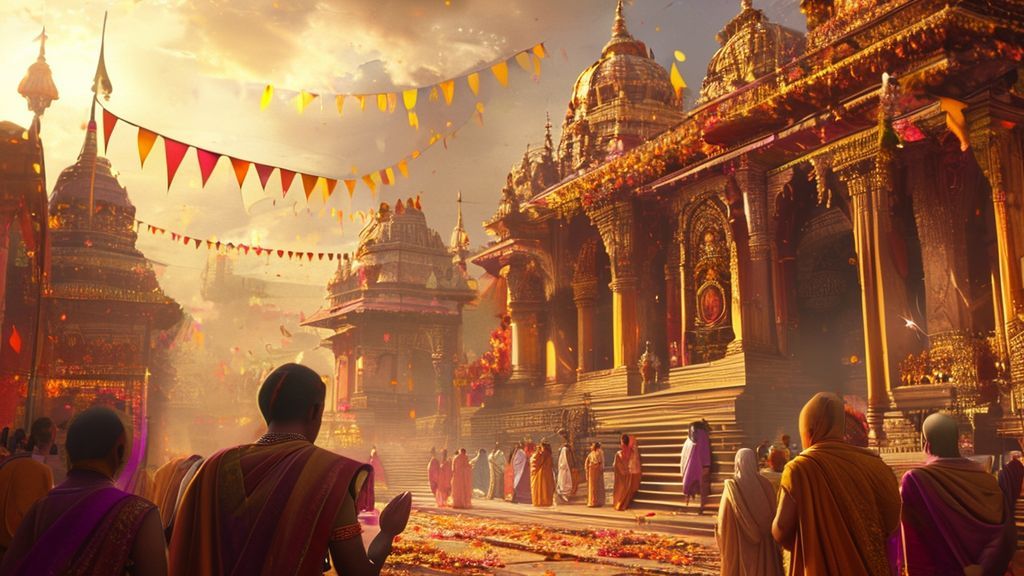
Gujarati Hindu Festivals, particularly Navratri and Janmashtami, are vibrant cornerstones of Sanatan Dharma, embodying profound spiritual narratives and cultural heritage. Navratri is a nine-night celebration dedicated to Devi Shakti, culminating in victory over adharma, while Janmashtami marks the divine birth of Bhagavan Sri Krishna, symbolizing the triumph of dharma and divine play on Earth.
| Attribute | Details |
|---|---|
| Deity (Navratri) | Adi Shakti (Durga, Amba, Kali, Saraswati, Lakshmi and her nine forms – Navadurga) |
| Deity (Janmashtami) | Bhagavan Sri Krishna (Purna Purushottama) |
| Location/Origin (Navratri) | Pan-Indian, with Gujarat renowned for Garba and Dandiya Raas; rooted in ancient Shakta traditions. |
| Location/Origin (Janmashtami) | Mathura (birthplace), Vrindavan (childhood leela), Dwarka (kingdom), celebrated globally. |
| Key Festival Dates | Navratri: Sharad Navratri (September-October); Janmashtami: Shraavana Krishna Paksha Ashtami (August-September). |
| Scripture Reference (Navratri) | Devi Mahatmyam (Markandeya Purana), Skanda Purana, Kalika Purana. |
| Scripture Reference (Janmashtami) | Srimad Bhagavatam (Canto 10), Mahabharata, Brahma Vaivarta Purana, Harivamsa Purana. |
The Spiritual Heartbeat of Gujarat: Navratri and Janmashtami
Gujarat, the land of vibrant colors and profound devotion, celebrates its Hindu festivals with unparalleled fervor, deeply embedding spiritual lessons into the very fabric of daily life. Among these, Navratri and Janmashtami stand as monumental expressions of faith, community, and cultural identity. These celebrations are not merely annual events but are living traditions that reconnect devotees with the divine leela (play) of the deities, fostering an environment of purity, devotion, and collective spiritual upliftment. They serve as potent reminders of the cosmic balance between good and evil, the eternal triumph of Dharma, and the omnipresent grace of Ishvara. Through fasting, prayer, song, and dance, Gujaratis across the globe reaffirm their commitment to Sanatan Dharma, passing down invaluable spiritual heritage from one generation to the next, enriching their lives with divine bliss and purpose.
Puranic History and Legend: Divine Narratives Unveiled
Navratri: The Cosmic Dance of Shakti’s Victory
The origins of Navratri are deeply etched in the sacred texts, primarily the Devi Mahatmyam section of the Markandeya Purana, a cornerstone of Shakta philosophy. This scripture narrates the epic battles of Devi Shakti, the cosmic feminine energy, against formidable demonic forces that threatened the balance of the universe. The most celebrated tale is that of Mahishasura, the buffalo demon, who received a boon of immortality from Brahma, making him invincible to any male deity. When the Devas were unable to defeat him, they invoked the collective power of all divine beings, from whom emerged Durga, radiant and formidable. For nine days and nights, Devi Durga waged war, ultimately slaying Mahishasura on the tenth day, symbolizing the victory of good over evil, purity over corruption, and divine consciousness over ignorance. This profound narrative is echoed in the Skanda Purana and Kalika Purana, emphasizing the Devi’s role as the protector of Dharma and the embodiment of ultimate reality. In some traditions, particularly in Northern India, Navratri also commemorates Rama’s worship of Durga before his war with Ravana, as detailed in the Ramayana, further intertwining the narratives of Shakti and Vishnu’s avatars.
Janmashtami: The Incarnation of Bhagavan Sri Krishna
Janmashtami commemorates the auspicious birth of Bhagavan Sri Krishna, the Purna Purushottama, as exquisitely detailed in the Srimad Bhagavatam (Canto 10) and the Harivamsa Purana. Born to Devaki and Vasudeva in a prison cell in Mathura, under the tyrannical rule of Kamsa, Krishna’s advent was shrouded in divine mystery and miraculous events. The scriptures describe how, at the stroke of midnight on the eighth day (Ashtami) of the dark fortnight (Krishna Paksha) in the month of Shraavana, Vishnu Himself incarnated. Vasudeva, guided by divine instruction, miraculously carried the infant Krishna across the Yamuna River to Gokul, exchanging him with Yashoda’s newborn daughter, thus fulfilling the prophecy and protecting the divine child from Kamsa’s wrath. Krishna’s life, from his enchanting childhood leelas in Vrindavan to his role as the charioteer and philosopher in the Mahabharata war, embodies the essence of Dharma, love, and divine wisdom. His birth is a reminder that whenever adharma rises, Bhagavan descends to restore cosmic order, delight His devotees, and reveal the path to liberation.
Cultural and Spiritual Marvels: The Architecture of Devotion
While festivals are not ‘architecture’ in the conventional sense, their celebrations create temporary, yet powerful, sacred spaces and social structures that are marvels in themselves. During Navratri, the entire landscape of Gujarat transforms into a grand mandap. The central feature is the Garbha Deep – a lamp placed within an earthen pot (garbha), symbolizing the womb of the universe and the continuous creative power of the Mother Goddess. Around this Garbha Deep, vast community grounds and public squares become temporary temples, where thousands participate in Garba and Dandiya Raas. These circular dances are not mere entertainment but a meditative, energetic offering to the Devi, with each step and twirl invoking divine blessings. The synchronized movements, the rhythmic claps, and the vibrant costumes collectively create a powerful spiritual vortex, a testament to the community’s collective devotion. The design of the circular dance itself is a scientific marvel, creating a collective energy field that elevates the participants’ consciousness, fostering unity and spiritual euphoria.
For Janmashtami, homes and temples are meticulously decorated, becoming miniature Vrindavans. Intricate Jhulan (swings) are adorned with flowers and jewels for Bala Krishna, symbolizing the tender love and care showered upon the divine child. Temples like Dwarkadhish Mandir in Dwarka or Shamlaji Temple become focal points, with their traditional Nagara and Māru-Gurjara architectural elements forming the backdrop for elaborate Abhishekams and midnight aartis. The creation of “Matkis” (earthen pots) filled with butter and hung high, reminiscent of Krishna’s childhood antics of stealing butter, and the subsequent “Dahi Handi” events, demonstrate a unique ‘architectural’ way of enacting divine leelas within community spaces. This playful yet deeply devotional “architecture” of celebration ensures that the essence of Krishna’s life is not just remembered but relived, forging an unbreakable bond between the devotee and the divine.
Rituals and Puja Vidhi: A Path to Divine Connection
Navratri Puja Vidhi: Invoking the Mother’s Grace
- Ghatasthapana: On the first day, a sacred pot (ghata) filled with water, covered with a coconut and mango leaves, is established, symbolizing the womb of the universe and the presence of the Devi. Barley seeds are sown around it, signifying fertility and prosperity.
- Daily Puja and Aarti: Throughout the nine nights, devotees perform daily pujas, light lamps, offer flowers, fruits, and traditional sweets. Evening aartis are performed with devotion, singing praises to the Devi.
- Fasting (Vrat): Many observe a partial or full fast, consuming only fruits, milk, and specific grains (like singhara atta or sabudana). This spiritual discipline purifies the body and mind.
- Garba and Dandiya Raas: Nights are filled with community dances, where devotees express their joy and devotion through rhythmic steps and traditional music around the Garbha Deep.
- Kanya Pujan: On Ashtami (8th day) or Navami (9th day), young girls (kanyas) are worshipped as manifestations of the Devi, offered food, gifts, and Dakshina.
- Vijaya Dashami (Dussehra): The tenth day marks the culmination of Navratri, celebrating Devi’s victory and Lord Rama’s triumph over Ravana. Idols of Ravana are burnt, symbolizing the destruction of evil.
Janmashtami Puja Vidhi: Celebrating Krishna’s Advent
- Observing Fast: Devotees observe a strict fast on Janmashtami, often a nirjala vrat (without water) until midnight, symbolizing purification and dedication.
- Temple and Home Decoration: Homes and temples are beautifully adorned with flowers, lights, and depictions of Krishna’s birth and childhood scenes.
- Midnight Celebration: At midnight, the exact moment of Krishna’s birth, special pujas are performed. A small idol of Bala Krishna is bathed in Panchamrita (milk, curd, ghee, honey, sugar) – an elaborate Abhishek.
- Palna Ceremony: The bathed idol is placed in a beautifully decorated cradle (palna) and gently swung, while devotees sing lullabies (bhajans) and devotional songs.
- Offering Bhog: A variety of sweets, fruits, and savory dishes (Chappan Bhog, if possible) are offered to Krishna. Prasad, particularly panjiri and makhan mishri (butter and sugar), is distributed.
- Breaking the Fast: The fast is broken after the midnight puja and partaking of the offered bhog, concluding with fervent prayers and sankirtan.
Mantras and Chants: Vibrations of Devotion
For Navratri: Invoking Devi Shakti
The chanting of Devi Mantras during Navratri purifies the atmosphere and invokes the Mother’s blessings. The primary mantra for Devi Durga is:
ॐ ऐं ह्रीं क्लीं चामुण्डायै विच्चे (Om Aim Hrim Klim Chamundaye Vichche) – This is the Navarna Mantra, the nine-syllable mantra, central to Devi worship.
Another powerful chant for universal peace and prosperity is the Devi Stuti:
या देवी सर्वभूतेषु शक्ति-रूपेण संस्थिता। नमस्तस्यै नमस्तस्यै नमस्तस्यै नमो नमः॥
(Ya Devi Sarvabhuteshu Shakti-Roopena Samsthita. Namastasyai Namastasyai Namastasyai Namo Namah.)
Meaning: “To the Devi who resides in all beings as the form of Shakti – Salutations to Her, Salutations to Her, Salutations to Her again and again.”
For Janmashtami: Glorifying Lord Krishna
Chanting the holy names of Krishna brings immense spiritual merit and joy. The most potent is the Hare Krishna Maha Mantra:
हरे कृष्ण हरे कृष्ण कृष्ण कृष्ण हरे हरे । हरे राम हरे राम राम राम हरे हरे ॥
(Hare Krishna Hare Krishna Krishna Krishna Hare Hare | Hare Rama Hare Rama Rama Rama Hare Hare ||)
Another foundational mantra dedicated to Krishna as Vishnu is:
ॐ नमो भगवते वासुदेवाय (Om Namo Bhagavate Vasudevaya) – A salutation to Lord Vasudeva, Krishna.
During the Palna ceremony, devotees often chant:
नंद के आनंद भयो, जय कन्हैया लाल की।
(Nand ke Anand Bhayo, Jai Kanhaiya Lal Ki.)
Meaning: “Joy to Nanda Maharaja, Victory to the darling son, Kanhaiya!”
Dos and Don’ts: Upholding Dharmic Etiquette
- Do’s:
- Maintain purity (shaucha) of body and mind.
- Participate actively in pujas, aartis, and community celebrations.
- Observe fasts with sincere devotion and discipline.
- Offer respect to elders, priests, and fellow devotees.
- Wear traditional attire, particularly during Garba and Dandiya.
- Donate to charitable causes and help those in need.
- Spread joy, devotion, and a spirit of togetherness.
- Don’ts:
- Consume tamasic foods like meat, onion, garlic, or intoxicants during the festival days, especially if observing a fast.
- Engage in gossip, negativity, or arguments.
- Disrespect traditions, rituals, or the deities.
- Treat the dances (Garba/Dandiya) as mere entertainment; remember their spiritual significance.
- Be overtly ostentatious or focused solely on material aspects.
- Waste food or resources, uphold the principle of judicious consumption.
What is the spiritual significance of the circular Garba dance?
The circular motion of the Garba dance symbolizes the cyclical nature of time, creation, preservation, and destruction, with the stationary Garbha Deep at the center representing the unchanging divine essence, the Adi Shakti. It signifies that all life and activity revolve around this one divine truth. Each step and clap is an offering, a form of active meditation that unifies the individual soul with the cosmic energy of the Mother Goddess, fostering a sense of boundless joy and devotion.
Why is Janmashtami celebrated at midnight?
Janmashtami is celebrated at midnight because Bhagavan Sri Krishna was born at that precise moment, as described in the Srimad Bhagavatam. It was a time of deep darkness, signifying the peak of adharma under Kamsa’s reign, and yet, it was precisely at this hour that the divine light descended, symbolizing that even in the darkest of times, divine grace manifests to restore righteousness and hope. The midnight celebration thus holds profound symbolic and spiritual significance.
What unique traditional attire is worn during these festivals in Gujarat?
During Navratri, women adorn themselves in vibrant Chaniya Choli, an exquisite three-piece ensemble comprising a flared skirt (chaniya), a fitted blouse (choli), and a dupatta, often embellished with intricate embroidery, mirror work, and shells. Men typically wear a traditional Kediya (a short, pleated frock-like top) with churidar pajamas or dhoti, accompanied by a colorful turban (paghadi). For Janmashtami, traditional Indian attire is worn, with an emphasis on rich, bright colors, befitting the joyous celebration of Krishna’s birth. To learn more about Gujarati traditions, visit Hindutva.online.
Dharmic Significance: Preserving Sanatan Dharma through Celebration
The grand celebrations of Navratri and Janmashtami in Gujarat are far more than mere cultural events; they are essential pillars in the preservation and perpetuation of Sanatan Dharma. These festivals serve as powerful conduits for transmitting profound spiritual truths, ethical values, and historical narratives from one generation to the next. Through collective worship, fasting, devotional singing, and ritualistic participation, individuals reaffirm their faith, purify their consciousness, and strengthen their connection with the divine. They foster a sense of community (sangha), reminding everyone of their shared spiritual heritage and collective responsibility to uphold Dharma. These festivals are laboratories of devotion, where ancient wisdom becomes a living experience, nurturing souls, inspiring artistic expression, and ensuring that the eternal light of Sanatan Dharma continues to shine brightly for all humanity. This deep engagement with sacred time and space is a testament to the enduring power of faith and tradition in a rapidly changing world. Explore more such insights on Hindutva.online.