


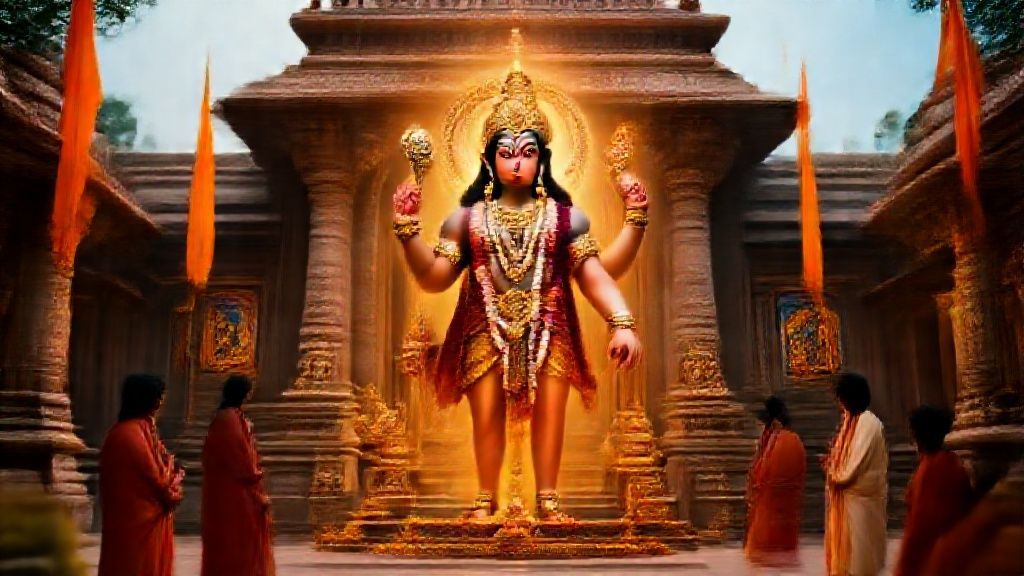
Hanuman Jayanti 2026, the auspicious occasion celebrating the birth of Lord Hanuman, the paramount devotee of Sri Rama, will be observed on Sunday, April 12, 2026. This sacred day falls on the Purnima Tithi (Full Moon day) of the Chaitra month in the Hindu calendar, a time when devotees nationwide honor the epitome of strength, devotion, and selfless service.
| Attribute | Details |
|---|---|
| Deity Honored | Lord Hanuman (Pavanaputra, Anjaneya, Maruti) |
| Occasion | Birth Anniversary of Lord Hanuman |
| Date in 2026 | Sunday, April 12, 2026 |
| Hindu Calendar Tithi | Chaitra Purnima (Full Moon of Chaitra month) |
| Birthplace (as per scriptures) | Kishkindha (Anjaneri Hills, Nashik, Maharashtra, or Hampi, Karnataka, depending on tradition) |
| Key Scripture References | Valmiki Ramayana, Ramcharitmanas, Skanda Purana, Vayu Purana, Hanuman Chalisa |
| Symbolic Qualities | Strength (Shakti), Devotion (Bhakti), Intellect (Buddhi), Selfless Service (Seva), Celibacy (Brahmacharya) |
The Unparalleled Significance of Hanuman Jayanti
Hanuman Jayanti marks a day of profound spiritual resonance for millions of Hindus worldwide. It is the annual celebration of the avatar of Bhagwan Shiva, Lord Hanuman, whose life epitomizes unwavering devotion, immense strength, profound wisdom, and selfless service to Dharma. He is revered as ‘Chiranjeevi’ – an immortal being – destined to remain on Earth as long as the name of Lord Rama is chanted. His presence brings courage, protection, and dispels fear, making this festival a potent reminder of the ideals of righteousness and devotion that sustain Sanatan Dharma. Observing Hanuman Jayanti is not merely a ritual; it is an act of imbibing the virtues of this great devotee, seeking his blessings for physical and mental fortitude, and aligning oneself with the divine will.
Puranic History and Legend of Lord Hanuman’s Birth
The birth of Lord Hanuman, the ‘Anjaneya’ (son of Anjana) and ‘Vayuputra’ (son of Vayu, the wind god), is a divine narrative richly detailed across various Puranas and the great Itihasa, the Ramayana. As elucidated in the Valmiki Ramayana (Kishkindha Kanda, Sarga 66) and elaborated in the Skanda Purana and Vayu Purana, His birth was a cosmic event foretold to assist Lord Rama in His divine mission.
His mother, Anjana, was an Apsara named Punjaiksthala, cursed to be born as a Vanara female. She could only be redeemed by giving birth to an avatar of Lord Shiva. Her husband was Kesari, a powerful Vanara chieftain. Legend has it that while Anjana was performing austerities for a son, the divine sage Narada instructed her to pray to Vayu Deva. Concurrently, King Dasharatha of Ayodhya was performing a Putrakameshti Yajna to beget sons. The divine ‘Payasam’ (sweet pudding) from the yajna, meant for Dasharatha’s queens, was carried by a kite, and a portion of it was delivered by Vayu to Anjana. Consuming this sacred offering, coupled with Vayu’s blessing, resulted in the birth of Hanuman. Thus, he embodies the essence of Shiva, the power of Vayu, and the devotion cultivated through his mother’s penance. This unique parentage bestowed upon him unparalleled strength, speed, and the ability to fly.
His childhood was marked by incredible feats, most famously recounted in the Bala Kanda of the Ramcharitmanas by Tulsidas: mistaking the sun for a ripe fruit, he leaped to swallow it, causing great alarm among the Devas. Indra, in his anger, struck Hanuman with his Vajra, leading to his temporary loss of memory regarding his immense powers, a curse that would be lifted by Jambavan at a crucial juncture during the search for Sita.
Iconography and Symbolism of Lord Hanuman
The iconography of Lord Hanuman is deeply symbolic, embodying the core principles of Sanatan Dharma. He is typically depicted as a robust, muscular Vanara with a powerful mace (Gada) in one hand, often flying through the air, or with folded hands in reverence to Lord Rama. Each element of his depiction carries profound meaning:
- The Gada: Represents immense strength, disciplined power, and his role as a protector of Dharma. It symbolizes self-control and spiritual discipline.
- Vajranga (Body of Thunderbolt): Signifies his invincibility and resilience against all adversities, a boon granted by Indra and other Devas.
- Flying Posture: Denotes his incredible speed, ability to transcend physical limitations, and mastery over the elements, particularly Vayu (air).
- Devotion to Rama: Often depicted with folded hands or tearing open his chest to reveal Rama and Sita within his heart, symbolizing the ultimate form of Bhakti (devotion).
- Sindoor (Vermillion): His body is frequently smeared with Sindoor, echoing the legend where he observed Sita applying it for Rama’s longevity and decided to cover his entire body to ensure Rama’s eternal well-being. This signifies complete dedication and love.
In temples, Hanuman murthis (idols) inspire devotees to cultivate virtues such as humility, courage, celibacy (Brahmacharya), and unwavering faith. His form is a constant reminder that true power lies in devotion and righteous action.
Rituals and Puja Vidhi for Hanuman Jayanti
Celebrating Hanuman Jayanti is a sacred act of reverence and devotion. The rituals are performed with utmost sincerity to invoke the blessings of Bajrangbali. Here is a step-by-step guide:
- Early Morning Purification: Wake up before sunrise, take a holy bath, and wear clean, traditional clothes. Many devotees observe Brahmacharya on this day.
- Sankalpa (Vow): Take a vow to observe the fast and perform puja with full devotion, seeking Lord Hanuman’s blessings for strength, wisdom, and protection.
- Altar Preparation: Clean the puja area. Place an idol or image of Lord Hanuman on a clean cloth. Offer fresh flowers, especially red and yellow ones like Marigold and Hibiscus.
- Offerings:
- Sindoor and Oil: Offer a mixture of Sindoor and Jasmine oil (Chola) to Lord Hanuman. This is highly auspicious, symbolizing His complete dedication to Rama.
- Incense and Lamp: Light an oil lamp (Diya) with ghee or sesame oil and incense sticks (agarbatti).
- Prasad: Offer sweets like Ladoo (especially Besan or Bundi Ladoo), Jaggery (Gur), Chana (roasted gram), bananas, and other fruits. Betel leaves (paan) are also considered very dear to Him.
- Mantras and Chants: Begin chanting powerful Mantras, the Hanuman Chalisa, or reciting verses from the Sunderkand.
- Aarti: Conclude the puja with Hanuman Aarti, offering camphor and singing praises to the Lord.
- Fasting: Many devotees observe a strict fast, consuming only fruits and milk, or observing a partial fast (phalahar).
- Charity and Seva: Perform acts of charity, feed the poor, or engage in selfless service (Seva) to the community. This pleases Lord Hanuman immensely.
- Temple Visit: Visiting a Hanuman temple and offering prayers is considered highly auspicious.
Mantras and Chants for Divine Blessings
Chanting the sacred names and mantras of Lord Hanuman fills the heart with courage, removes obstacles, and bestows peace. Devotees often recite these on Hanuman Jayanti:
- Mool Mantra:
ॐ हनुमते नमः (Om Hanumate Namah)
This simple yet powerful mantra invokes Lord Hanuman’s divine presence.
- Hanuman Gayatri Mantra:
ॐ अंजनेयाय विद्महे वायुपुत्राय धीमहि। तन्नो हनुमान प्रचोदयात्॥
(Om Anjaneyaya Vidmahe Vayuputraya Dhimahi Tanno Hanuman Prachodayat)
This mantra enhances intellect, strength, and devotion.
- Hanuman Chalisa: Composed by Goswami Tulsidas, the Hanuman Chalisa is a forty-verse devotional hymn praising Lord Hanuman’s strength, devotion, and wisdom. Reciting it daily or multiple times on Hanuman Jayanti is believed to alleviate suffering, remove fear, and grant divine protection. Its regular recitation is a cornerstone of devotion to Lord Hanuman for many Hindus.
- Sunderkand: A chapter from the Ramcharitmanas describing Hanuman’s heroic journey to Lanka, his meeting with Sita, and the burning of Lanka. Chanting or listening to Sunderkand path on this day is considered extremely meritorious and removes negative influences.
Dos and Don’ts on Hanuman Jayanti
To honor Lord Hanuman with the utmost respect and devotion, observe these guidelines:
Dos:
- Observe strict celibacy (Brahmacharya) on this day.
- Maintain physical and mental cleanliness.
- Perform Puja and recite Mantras with sincere devotion.
- Offer Sindoor, oil, flowers, and traditional Prasad to Lord Hanuman.
- Fast if able, or consume only Sattvic (pure) food.
- Visit a Hanuman temple and offer prayers.
- Perform acts of charity and feed the needy.
- Recite Hanuman Chalisa and Sunderkand.
- Keep positive thoughts and engage in virtuous actions.
Don’ts:
- Avoid consuming non-vegetarian food or alcohol.
- Refrain from engaging in any negative thoughts, gossip, or arguments.
- Do not harm any animals, especially monkeys.
- Avoid cutting hair or nails.
- Do not disrespect elders, women, or anyone.
- Avoid lying or engaging in any form of deceit.
Frequently Asked Questions
When is Hanuman Jayanti celebrated?
Hanuman Jayanti is predominantly celebrated on the Purnima Tithi (Full Moon day) of the Chaitra month in the Hindu calendar. For the year 2026, this falls on Sunday, April 12. However, it’s important to note that in some regions, particularly in South India (e.g., Andhra Pradesh and Telangana), Hanuman Jayanti is observed during Krishna Paksha Chaturdashi in the month of Kartik or during Vaishakha month, honoring different regional traditions regarding the specific Tithi of his birth or his meeting with Rama. The Chaitra Purnima celebration is widely observed across North and West India.
Why is Sindoor offered to Lord Hanuman?
The offering of Sindoor (vermillion) to Lord Hanuman has a beautiful scriptural basis. As mentioned in the Narada Purana and popular folklore, once Lord Hanuman saw Mata Sita applying Sindoor to her hair partition (Maang). Upon inquiring, Sita explained that she applies it for the long life and well-being of her husband, Lord Rama. Inspired by this profound devotion, Hanuman decided to cover his entire body with Sindoor, thinking that if a small amount could ensure Rama’s well-being, applying it all over his body would guarantee Rama’s immortality. Overwhelmed by his innocent and boundless devotion, Lord Rama blessed him, declaring that anyone who offers Sindoor to Hanuman would be blessed with health, strength, and prosperity.
What are the preferred food items to offer Lord Hanuman?
Lord Hanuman is fond of simple, Sattvic offerings. The most preferred food items include Besan Ladoo, Bundi Ladoo, Gud (jaggery) and Chana (roasted gram), Milk, Bananas, and other seasonal fruits. Sweet Roti (bread) or Puri with Halwa are also common offerings. It is believed that these offerings, when made with devotion, bring immense blessings and fulfill desires.
The Eternal Protector of Dharma
Hanuman Jayanti transcends a mere calendar date; it is a spiritual awakening, a day to reconnect with the timeless virtues of Sanatan Dharma. Lord Hanuman stands as the eternal protector, the beacon of hope, and the ultimate servant of righteousness. His life teaches us that true strength lies in devotion, and true wisdom is found in selfless service. As we celebrate his divine advent, we are reminded of our own potential to overcome obstacles, cultivate unwavering faith, and walk the path of Dharma. By honoring Lord Hanuman, we strengthen our spiritual resolve and contribute to the preservation of the eternal values that define our Hindu heritage. This auspicious day serves as a powerful inspiration for every devotee on their spiritual journey, guiding us to live a life of integrity, courage, and profound devotion, mirroring the ideals cherished by Hindutva.online.