


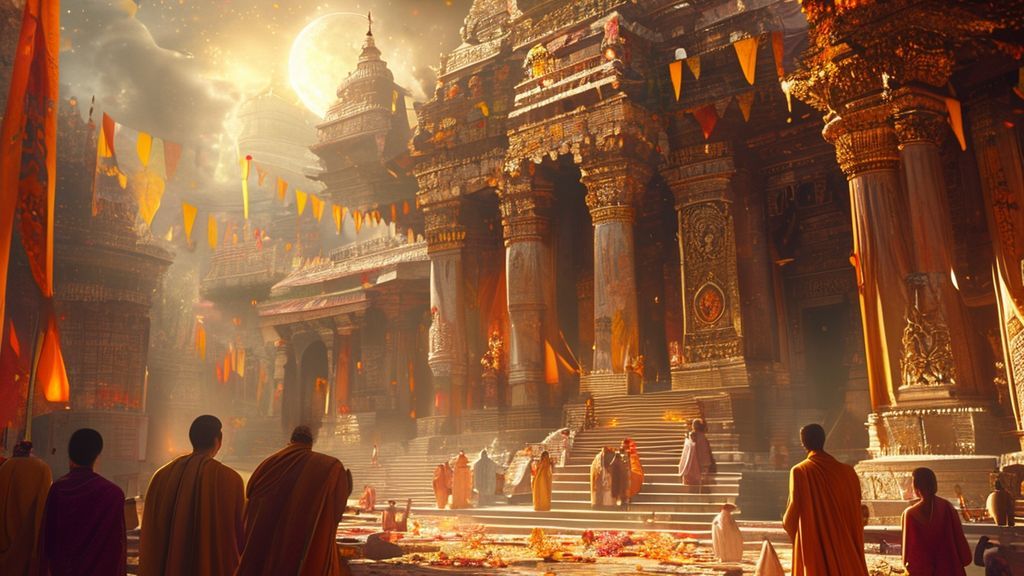
The Hindu Calendar, known as the Panchang, is a sophisticated lunisolar system that meticulously intertwines lunar months with solar years, ensuring the precise timing of festivals, rituals, and auspicious events (muhurtas). It is far more than a mere time-keeping device; it is a profound cosmological instrument guiding the spiritual journey and daily life of a Sanatani, aligning human existence with the grand rhythms of the cosmos.
| Attribute | Details |
|---|---|
| Nature of Calendar | Lunisolar – Based on both lunar phases and the sun’s apparent movement. |
| Key Components | Tithi (lunar day), Nakshatra (lunar mansion/constellation), Yoga (planetary combination), Karana (half tithi), Vaar (weekday). |
| Lunar Months | 12 lunar months (e.g., Chaitra, Vaishakha), each ~29.5 days. An Adhik Maas (intercalary month) is added every 2-3 years. |
| Solar Year Markers | Sankranti – The sun’s transit from one zodiac sign to another. Used in solar calendars like Tamil and Bengali. |
| Prominent Eras | Vikram Samvat (Lunar-Solar, starts Chaitra Shukla Pratipada), Shaka Samvat (Lunar-Solar, starts Chaitra Shukla Pratipada, official calendar of India), Kollam Era (Solar, Kerala). |
| Scriptural Foundation | Vedanga Jyotisha, Surya Siddhanta, Puranas, Smritis. |
The Cosmic Dance of Time: Understanding the Hindu Calendar
In Sanatan Dharma, time is not merely a linear progression but a living, pulsating entity, a manifestation of Brahman itself. The Hindu Calendar, or Panchang (पंचांग), embodies this profound understanding, serving as the spiritual backbone for all aspects of Hindu life. It is the sacred key that unlocks the cosmic rhythms, guiding us to perform Dharma, attain Artha, fulfill Kama, and ultimately achieve Moksha by aligning our actions with the celestial movements. Far from a static system, it is a dynamic, evolving science that has been refined over millennia by our Rishis, ensuring that every festival, every ritual, and every significant life event is observed at its most auspicious moment. This intricate lunisolar framework teaches us to live in harmony with the universe, recognizing the interplay of Surya (Sun) and Chandra (Moon) in shaping our temporal and spiritual reality.
Puranic History and Scientific Genesis
The origins of the Hindu calendar system are rooted deeply in our ancient scriptures, particularly the Vedas and later the Itihasas and Puranas, which speak of time as Kala, a cosmic force. The concept of Kalpa, Manvantara, and Yuga cycles, as detailed in the Hindutva.online archives and texts like the Vishnu Purana (Book I, Chapter III), illustrates a sophisticated understanding of vast epochs. However, the practical application for daily and ritualistic timekeeping found its scientific basis in the Vedanga Jyotisha, one of the six auxiliary disciplines of the Vedas, composed around 1400-1200 BCE. This seminal text provided the foundational astronomical calculations for a lunisolar calendar, emphasizing the importance of calculating the movements of the Sun and Moon for conducting Vedic sacrifices (Yajnas).
Later, texts like the Surya Siddhanta (circa 4th-5th century CE, though its knowledge is far older), became the definitive astronomical treatise, providing incredibly precise algorithms for planetary positions, eclipses, and the computation of time. This text describes the Earth’s spherical nature, defines various units of time, and explains the intricate process of reconciling lunar and solar cycles through the concept of Adhik Maas (अधिक मास), the intercalary month. The establishment of eras like the Vikram Samvat (57 BCE, associated with Emperor Vikramaditya) and the Shaka Samvat (78 CE, associated with King Shalivahana) further cemented the historical evolution and regional adaptations of this profound calendrical science, demonstrating its continuous development and integration into the socio-religious fabric of Bharatavarsha.
Astronomical Precision: The Marvel of Hindu Calendrical Science
The Hindu calendar is not merely a system of counting days; it is a testament to the unparalleled astronomical and mathematical genius of ancient Indian Rishis. Unlike purely solar calendars (like the Gregorian) or purely lunar calendars (like the Islamic), the Hindu system is lunisolar, meaning it tracks both the lunar phases (for months) and the solar year (for seasons and solstices). This blending ensures that festivals and agricultural cycles remain synchronized with the appropriate seasons.
The core of this marvel lies in the calculation of the Adhik Maas (also known as Mala Maas or Purushottam Maas). A lunar year of 12 months is approximately 354 days, while a solar year is ~365 days. To prevent the lunar months from drifting significantly away from the seasons, an extra month is inserted roughly every 2.7 to 3 years. This is done when the sun does not transit into a new zodiac sign (Sankranti) during an entire lunar month. Conversely, a Kshaya Maas (diminished month), where two Sankrantis occur within a single lunar month, is a rare phenomenon used to account for other discrepancies, occurring perhaps once in 19 to 141 years, as detailed in texts like the Surya Siddhanta.
Furthermore, the Hindu calendar divides the zodiac into 27 Nakshatras (नक्षत्र), or lunar mansions, each approximately 13 degrees 20 minutes, through which the Moon transits daily. This micro-level tracking allows for highly specific astrological calculations and the determination of very precise muhurtas. The sophisticated understanding of planetary movements (Grahas), their exaltations (Ucha), and debilitations (Neecha), and their combined influence (Yoga) underscores a scientific approach that sought to map the celestial dance onto earthly existence, influencing everything from temple construction (Vastu Shastra) to medical timings (Ayurveda).
Rituals, Puja Vidhi, and the Calendar’s Guidance
The Hindu calendar is the indispensable guide for all religious observances, dictating the dates and times for countless rituals and festivals. Every aspect of Hindu worship, from daily Sandhyavandanam to grand Yajnas, is deeply intertwined with the calculations of the Panchang.
Determining Auspicious Timings (Muhurtas)
The Panchang provides the five key elements: Tithi (lunar day), Vaar (weekday), Nakshatra (constellation), Yoga (planetary combinations), and Karana (half-Tithi). These are consulted to determine auspicious muhurtas for:
- Weddings (Vivaha): Ensuring marital harmony and longevity.
- Housewarming (Griha Pravesh): Invoking blessings for the new abode.
- Upanayana (Sacred Thread Ceremony): Marking the spiritual initiation of a child.
- Commencement of Journeys: Seeking safe and successful travel.
- Farming Activities: Sowing, harvesting, and other agricultural endeavors.
Observing Festivals and Vratas (Fasts)
Most Hindu festivals are based on the lunar calendar, ensuring their observance according to specific lunar phases:
- Diwali: Celebrated on Krishna Paksha Amavasya (new moon) in Kartik month.
- Navratri: Begins on Shukla Paksha Pratipada (first day of waxing moon) in Chaitra and Sharad months.
- Holi: Celebrated on Purnima (full moon) in Phalguna month.
- Ekadashi: Fasts observed on the 11th lunar day of both Shukla and Krishna Paksha.
- Maha Shivaratri: Observed on Krishna Paksha Chaturdashi (14th lunar day) in Phalguna.
Understanding the interplay of these elements from the Panchang allows a devotee to perform rituals with maximum spiritual efficacy, aligning personal actions with the universal flow of energy and time.
Mantras and Chants for Timeless Devotion
While specific mantras for the calendar itself are not common, the calendar’s components – the Sun, Moon, and celestial bodies – are integral to Hindu worship. Chanting mantras associated with these celestial deities helps align the devotee with cosmic energies and expresses reverence for Kala (time).
- Surya Mantra (for the Sun, the solar aspect):
ॐ घृणिः सूर्याय नमः (Om Ghrinih Suryaya Namah)
Meaning: Salutations to the Sun, who radiates light.
- Chandra Mantra (for the Moon, the lunar aspect):
ॐ श्रां श्रीं श्रौं सः चंद्राय नमः (Om Shram Shreem Shraum Sah Chandraya Namah)
Meaning: Salutations to Chandra, the Moon God.
- Gayatri Mantra (universal prayer for divine light and wisdom, often associated with Surya):
ॐ भूर् भुवः स्वः तत् सवितुर्वरेण्यं भर्गो देवस्य धीमहि धियो यो नः प्रचोदयात् ॥
(Om Bhur Bhuvah Swah Tat Savitur Varenyam Bhargo Devasya Dheemahi Dhiyo Yo Nah Prachodayat)
Meaning: We meditate on the adorable glory of the resplendent Divine Solar Spirit; May He enlighten our intellects.
- Navagraha Stotram: Chanting this hymn propitiates all nine celestial bodies (planets), ensuring their benevolent influence on one’s life, as their positions are tracked precisely by the Hindu calendar.
Dos and Don’ts: Navigating the Calendar with Dharma
Observing the Hindu calendar is not just about marking dates; it is about living a dharmic life in harmony with cosmic cycles.
Do’s:
- Consult the Panchang Daily: Before undertaking any significant task, check the Tithi, Nakshatra, and Muhurta. Many devotees follow a daily Panchang available online or in traditional almanacs.
- Observe Vratas (Fasts): Adhere to fasts on auspicious days like Ekadashi, Purnima, Amavasya, and specific festival days, as these days are potent for spiritual growth.
- Perform Tarpan: On Amavasya (new moon), particularly Mahalaya Amavasya, perform Tarpan (offerings to ancestors) to honor and seek blessings from forefathers.
- Engage in Sankranti Snan: Take a holy dip (Snan) on Sankranti days, especially Makar Sankranti, to purify oneself and seek blessings.
- Plan with Adhik Maas in Mind: Understand that major ceremonies or Vratas observed during Adhik Maas may have different spiritual implications, as this month is dedicated to Vishnu as Purushottam.
Don’ts:
- Ignore Inauspicious Times: Avoid commencing critical ventures, travel, or significant rituals during Rahu Kaal (राहु काल), Yama Gandam, or Bhadra, as these periods are generally considered inauspicious.
- Disregard Eclipse Guidelines: During solar or lunar eclipses (Grahan), avoid eating, sleeping, or performing auspicious ceremonies. Observe the traditional guidelines of chanting and fasting.
- Neglect Pitru Paksha: Do not undertake celebrations or new beginnings during Pitru Paksha (fortnight dedicated to ancestors), which is reserved for ancestral rites.
- Violate Vrata Observances: If observing a Vrata, do not break its rules, such as eating prohibited foods or engaging in worldly pleasures on the designated day.
What is a Tithi?
A Tithi (तिथि) is a lunar day, defined by the time it takes for the longitudinal angle between the Sun and the Moon to increase by 12 degrees. Since the Sun and Moon move at varying speeds, a Tithi can be shorter or longer than a sidereal day (24 hours), ranging from approximately 19 to 26 hours. There are 30 Tithis in a lunar month, divided into two fortnights: Shukla Paksha (waxing moon) and Krishna Paksha (waning moon).
How is an Adhik Maas (Intercalary Month) calculated?
An Adhik Maas is inserted into the Hindu lunisolar calendar when a lunar month passes without a solar transit (Sankranti) from one zodiac sign to another. This typically occurs every two to three years. The calculation is complex, involving precise astronomical observations and mathematical formulae detailed in ancient texts like the Surya Siddhanta, ensuring the lunar calendar remains synchronized with the solar year and seasons.
Why are there different Hindu New Years?
The variation in Hindu New Year celebrations across different regions of India stems from the adoption of different calendrical starting points, even within the broader lunisolar framework. In North India, the New Year (Chaitra Shukla Pratipada) typically begins with the first day of the waxing moon in the month of Chaitra (Vikram Samvat). In parts of South India (like Tamil Nadu and Kerala) and some Eastern states, the New Year is based on the solar calendar, beginning with the Sun’s entry into the zodiac sign of Aries (Mesha Sankranti) in mid-April. This reflects regional astronomical traditions and cultural preferences.
What is the significance of Nakshatras?
Nakshatras (नक्षत्र) are 27 lunar mansions or constellations that the Moon traverses in its orbit around the Earth. Each Nakshatra spans 13 degrees 20 minutes of the ecliptic. Their significance lies in their use for precise astrological readings (Jyotisha), determining auspicious timings (muhurtas) for life events, understanding an individual’s inherent nature based on their birth Nakshatra, and linking the individual to cosmic energies. They are crucial for deeply nuanced calendrical and astrological calculations.
The Enduring Dharmic Significance
The Hindu calendar is more than an ancient artifact; it is a living, breathing testament to the profound wisdom of Sanatan Dharma. It provides a structured framework for individual and collective spiritual growth, ensuring that our lives are lived not in isolation, but in resonance with the cosmos. By adhering to its rhythms, we honor the Rishis who painstakingly developed this science, preserve our cultural identity, and transmit timeless knowledge to future generations. Every festival, every fast, every ritual performed according to the Panchang reinforces our connection to Dharma, reminding us that time is divine, and every moment offers an opportunity for spiritual awakening. The meticulous precision of this calendar, explored and revered on platforms like Hindutva.online, ensures that the eternal truths of Sanatan Dharma continue to illuminate our path through the cycles of existence.