


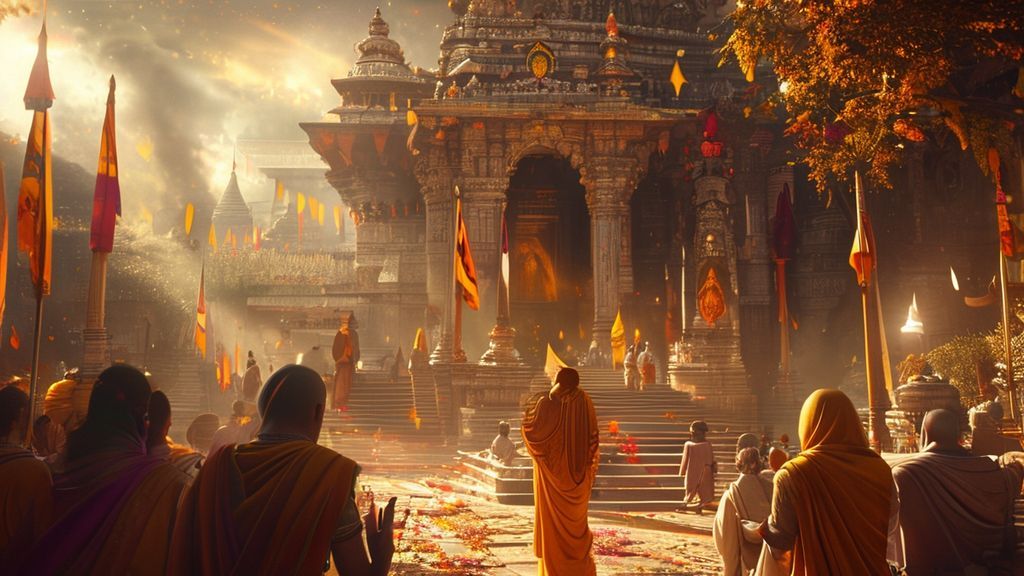
Hindu Conversion, profoundly termed Ghar Wapsi (meaning ‘return to home’), signifies a sacred journey back to Sanatan Dharma, the eternal tradition. It is not a new conversion but a spiritual re-integration, a reaffirmation of one’s ancestral identity and spiritual heritage, rooted deeply in purification (Shuddhi) and re-acceptance as outlined in our revered Smriti texts. This process is about reclaiming one’s rightful place within the Dharmic fold.
| Attribute | Details |
|---|---|
| Concept | Ghar Wapsi (घर वापसी) – ‘Return to Home’ |
| Sanskrit Terminology | Shuddhi (शुद्धि – Purification), Vratyastoma (व्रात्यस्तोम – Vedic re-integration ritual), Prayaschitta (प्रायश्चित्त – Atonement) |
| Core Purpose | Spiritual re-integration into Sanatan Dharma, reaffirmation of ancestral identity, purification from non-Dharmic influences. |
| Key Principle | The soul’s inherent connection to Dharma; purification allows re-establishment of that connection. |
| Scripture References | Devala Smriti, Atri Smriti, Parashara Smriti, Manu Smriti (for general purification), Panchavimsha Brahmana (for Vratyastoma). |
Reclaiming the Eternal Path: The Significance of Ghar Wapsi
In the vast ocean of Sanatan Dharma, every soul is intrinsically connected to the Supreme Brahman. However, through the vicissitudes of time, historical invasions, or genuine confusion, many have drifted away from their ancestral spiritual moorings. Ghar Wapsi, the profound concept of returning to Hinduism, addresses this very yearning for spiritual homecoming. It is not an act of proselytization, which is foreign to the Dharmic ethos, but rather an invitation for individuals and communities to reconnect with their roots, their heritage, and the timeless wisdom of the Vedas and Puranas. This process signifies a deep spiritual yearning to cleanse oneself of accumulated non-Dharmic influences and re-embrace the path of righteousness (Dharma) and truth (Satya).
The significance of Ghar Wapsi extends beyond individual salvation; it is vital for the preservation and resurgence of Hindu civilization. When individuals return to the Sanatan fold, they strengthen the collective consciousness and contribute to the vibrant tapestry of Hindu culture, philosophy, and spiritual practices. This re-integration is a testament to the inclusive and ever-forgiving nature of Dharma, which welcomes back those who choose to return to their spiritual home.
Puranic History & The Dharmic Precedent for Reintegration
The concept of re-integration into the Dharmic fold is not a modern invention but finds deep roots in ancient scriptures and historical practices. While the term Ghar Wapsi is contemporary, the underlying principle of purification (Shuddhi) and re-acceptance has been a part of Sanatan Dharma for millennia. The Vedas themselves provide the framework for Vratyastoma, a series of Yajñas (sacrifices) mentioned in texts like the Panchavimsha Brahmana, designed to purify those who had deviated from Vedic rites or had not undergone the Upanayana संस्कार (sacrament) at the appropriate time. This clearly indicates a mechanism for re-entering the Vedic social and spiritual structure.
More explicitly, the post-Vedic Smriti texts, particularly the Devala Smriti and Atri Smriti, provide detailed injunctions for the purification and re-acceptance of those who had been forcibly converted, taken captive by Mlecchas (foreigners), or compelled to live outside Dharmic customs. The Devala Smriti, in particular, arose in response to the Arab invasions of Sindh, offering practical guidance for Brahmins and other varnas on how to purify and re-integrate those who had been defiled or converted. It addresses scenarios of eating forbidden food, living with non-Hindus, and even prolonged captivity, prescribing specific *prayaschittas* (atonements) and *vratas* (vows) to cleanse the individual. For instance, it details purification rituals involving bathing, chanting mantras like the Gāyatrī, and performing *homas* (fire rituals) for varying durations based on the extent of defilement.
Historical examples also affirm this tradition. Accounts of Chhatrapati Shivaji Maharaj’s era describe the re-acceptance of Netaji Palkar, his former commander, who had converted to Islam and later wished to return to Hinduism. Similarly, the great Vidyaranya Swami, a pivotal figure in the establishment of the Vijayanagara Empire, is said to have purified and guided Harihara and Bukka, helping them re-establish Hindu rule and identity. These instances underscore that Sanatan Dharma, while firm in its principles, has always possessed a benevolent and practical mechanism for those genuinely seeking to return to its embrace. These historical precedents provide a powerful testament to the enduring and inclusive nature of our Dharma, detailed further on Hindutva.online.
The Dharmic Framework for Reintegration: Scriptural Foundations
Unlike Abrahamic faiths, Sanatan Dharma views conversion not as a change of allegiance but as a return to one’s inherent spiritual nature. The architectural “marvel” here is not a temple building, but the robust, flexible, and deeply spiritual framework enshrined in our scriptures for reintegration. The Smritis provide the blueprint:
- Devala Smriti: This text is paramount. It explicitly states that even those forcibly converted and living amongst Mlecchas for years can be purified and re-accepted. It prescribes specific tapas (austerities), *homas*, and the consumption of Panchagavya (a sacred mixture of five products from a cow) for purification. For instance, a person who lived with Mlecchas for a year requires specific *prayaschitta*, whereas one who lived for longer periods would undertake more rigorous vows and rituals, always culminating in acceptance by the community and Brahmins.
- Atri Smriti: Echoes similar sentiments, emphasizing that there is always a path for purification and atonement (प्रायश्चित्त) for those who have deviated or been compelled to transgress Dharmic norms. It categorizes various forms of defilement and prescribes corresponding rituals.
- Parashara Smriti: Often referred to as the Dharma Shastra for Kali Yuga, it advocates for a more compassionate and practical approach to Dharmic injunctions, considering the prevailing circumstances of the age. Its spirit of accommodation supports the idea that the intent and sincerity of the individual are paramount in their journey back to Dharma.
This scriptural framework, meticulously documented, demonstrates the resilience and adaptability of Sanatan Dharma, providing clear pathways for spiritual reclamation and communal re-acceptance, safeguarding the spiritual heritage of individuals and the collective.
Rituals & Puja Vidhi for Ghar Wapsi
The process of Ghar Wapsi is fundamentally one of purification (Shuddhi) and spiritual re-initiation, guided by learned Pandits or spiritual leaders. The rituals are designed to cleanse the individual of accumulated non-Dharmic influences and reconnect them with their ancestral spiritual stream. While specific practices may vary slightly based on regional traditions and the guidance of the Guru, the core components typically include:
- Sankalpa (संकल्प): The individual makes a solemn vow and intention before the deities and witnesses, expressing their sincere desire to return to Sanatan Dharma, forsake past non-Dharmic practices, and commit to living a Dharmic life.
- Ganga Jal & Panchagavya Prokshanam (गंगा जल & पञ्चगव्य प्रोक्षणम्): A symbolic purification ritual where the individual is sprinkled with sacred Ganga water and takes a small quantity of Panchagavya for internal cleansing. This purifies the body and mind.
- Prayaschitta Homa (प्रायश्चित्त होम): A fire sacrifice performed to atone for any transgressions or impurities incurred while outside the Dharmic fold. Mantras are chanted invoking various deities to remove spiritual impurities and bestow blessings. This is often central to the Shuddhi process.
- Upanayana (उपनयन) or Namakarana (नामकरण):
- For those who belong to the Dvija (twice-born) varnas (Brahmin, Kshatriya, Vaishya) and whose ancestors were forced to abandon their traditions, a symbolic Upanayana Samskara may be performed, marking their spiritual rebirth and initiation into Vedic studies, accompanied by the chanting of the Gayatri Mantra.
- For others, a formal Namakarana Samskara (naming ceremony) might be performed, symbolically adopting a new Dharmic name if desired, or reaffirming their ancestral name with new spiritual significance.
- Vratyastoma Yajña (व्रात्यस्तोम यज्ञ): In cases where a community or an individual has been outside the Dharmic fold for generations, a more elaborate Vratyastoma Yajña, as prescribed in ancient Vedic texts, may be performed for collective purification and re-integration.
- Guru Diksha (गुरु दीक्षा): The individual may formally accept a Guru or spiritual guide, taking Diksha (initiation) and committing to follow a specific spiritual path or lineage within Sanatan Dharma.
- Community Acceptance: The process culminates with the acceptance of the individual by the Hindu community, often marked by participation in temple rituals, communal meals, and social integration.
Mantras & Chants for Reaffirmation
Chanting specific mantras is integral to the purification and spiritual re-integration process, fostering a profound connection with the Divine and reinforcing Dharmic identity:
- Gayatri Mantra (गायत्री मन्त्र): “ॐ भूर्भुवः स्वः तत्सवितुर्वरेण्यं भर्गो देवस्य धीमहि धियो यो नः प्रचोदयात्॥” – The supreme Vedic mantra for wisdom, illumination, and purification, crucial for those undergoing Upanayana.
- Mahamrityunjaya Mantra (महामृत्युञ्जय मन्त्र): “ॐ त्र्यम्बकं यजामहे सुगन्धिं पुष्टिवर्धनम्। उर्वारुकमिव बन्धनान् मृत्योर्मुक्षीय माऽमृतात्॥” – A powerful mantra dedicated to Bhagwan Shiva for protection, healing, and overcoming obstacles, including spiritual impurities and past attachments.
- Vishnu Sahasranama (विष्णु सहस्रनाम): Chanting the thousand names of Bhagwan Vishnu invokes His blessings for peace, prosperity, and the removal of all sins.
- Pavamana Suktam (पवमान सूक्तम्): From the Vedas, this Suktam is specifically chanted for purification and removal of impurities, physical, mental, and spiritual.
- Specific Prayaschitta Mantras: Guided by the Guru, these are tailored mantras to address particular impurities or transgressions, seeking divine forgiveness and cleansing.
Dos and Don’ts for the Sincere Seeker
Dos
- Seek Guidance: Approach a knowledgeable Pandit, a recognized spiritual leader, or an organization dedicated to Sanatan Dharma for proper guidance and to initiate the process. Websites like Hindutva.online provide introductory resources.
- Cultivate Sincerity: The return must stem from a genuine spiritual yearning and a deep commitment to live according to Dharmic principles, not for external inducements.
- Understand Dharma: Dedicate time to study the core tenets of Hinduism – the Vedas, Upanishads, Bhagavad Gita, Puranas, and the concept of Karma, Dharma, Artha, Kama, Moksha.
- Embrace Lifestyle Changes: Be prepared to adopt Dharmic practices such as daily Puja, vegetarianism (if applicable to one’s lineage or chosen path), observing festivals, and upholding ethical values.
- Engage with the Community: Actively participate in temple activities, Satsangs (spiritual gatherings), and cultural events to integrate into the Hindu community.
Don’ts
- Do Not Act for External Gain: Ghar Wapsi is a spiritual journey; it should not be undertaken for material benefits, social pressure, or political motives.
- Do Not Disrespect Other Paths: While firmly re-establishing oneself in Sanatan Dharma, avoid disrespecting other spiritual traditions. The Dharmic way emphasizes respecting all paths to truth.
- Do Not Expect Instant Transformation: Spiritual growth is a continuous process. Patience, perseverance, and consistent effort are crucial.
- Do Not Engage in Hypocrisy: Maintain integrity and consistency between your stated intention to return to Dharma and your actions.
Is Ghar Wapsi a “conversion” in the conventional sense?
No, Ghar Wapsi is fundamentally distinct from conventional religious conversion. Sanatan Dharma is not a proselytizing religion in the Abrahamic sense, which seeks to convert others to a specific doctrine. Instead, Ghar Wapsi is a spiritual return, a reconnection with one’s ancestral roots and the inherent principles of Dharma. It recognizes that every soul is intrinsically part of the divine fabric, and therefore, it is a process of purification and re-integration rather than a change of faith.
What is the primary scriptural basis for accepting those who return to Hinduism?
The primary scriptural basis lies in the ancient Smriti texts, particularly the Devala Smriti and Atri Smriti. These texts meticulously outline the rituals of purification (Shuddhi) and atonement (Prayaschitta) for individuals and communities who were forcibly converted, captured, or had deviated from Dharmic practices due to various circumstances. The Vedic tradition also includes the Vratyastoma Yajña, a ritual for re-integrating those who had strayed or missed their Upanayana.
Who can undergo Ghar Wapsi, and is it only for specific communities?
Ghar Wapsi is open to anyone who sincerely wishes to return to the Sanatan Dharma and whose ancestors had left the fold, or even those who feel a deep spiritual connection and desire to embrace this ancient way of life. While it has historically been prominent for communities with a proven lineage to Hindu traditions, the overarching principle is the individual’s genuine intention and commitment to Dharmic living. It is a path for anyone seeking to reclaim their spiritual heritage.
What is the role of a Guru or spiritual leader in the Ghar Wapsi process?
The role of a Guru or a knowledgeable spiritual leader is absolutely vital in the Ghar Wapsi process. A Guru provides essential guidance on the appropriate rituals (Puja Vidhi), explains the philosophical underpinnings, and ensures that the purification and re-initiation are performed correctly according to scriptural injunctions. They serve as a mentor, offering spiritual direction, teaching mantras, and helping the individual integrate into Dharmic practices, ensuring a sincere and informed return.
The Imperative of Dharma Raksha: Why Ghar Wapsi Matters
The movement of Ghar Wapsi is more than just a series of rituals; it is a profound act of Dharma Raksha – the protection and preservation of Dharma. In an era marked by cultural erosion and spiritual confusion, the return of individuals to their ancestral Sanatan Dharma strengthens the collective spiritual fabric of Bharat and indeed, the world. Each such homecoming reinforces the timeless values, rich traditions, and profound wisdom that Hinduism offers to humanity. It is a reassertion of identity, a reclamation of heritage, and a conscious choice to live a life guided by righteousness, truth, and cosmic order. By embracing Ghar Wapsi, we not only welcome individuals back to their spiritual family but also ensure the continuity and vibrancy of Sanatan Dharma for generations to come, standing firm against the forces that seek to diminish our sacred traditions.