


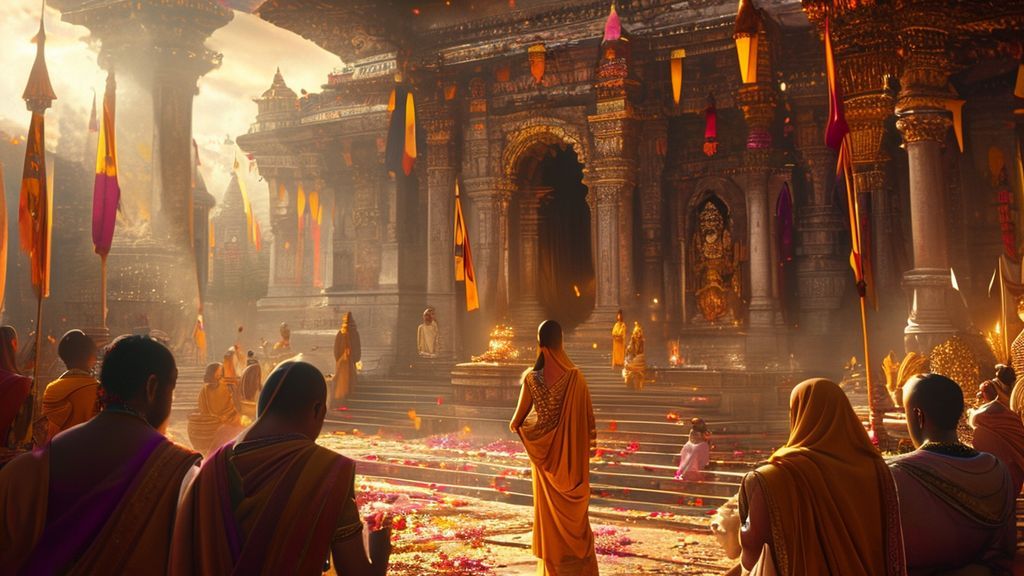
Hindu last rites for women generally follow the same fundamental principles and procedures as those for men, rooted in the belief of the soul’s journey (Atma-gati) towards liberation (Moksha). While the core rituals for the peaceful transition of the departed soul (Jivatma) are uniform, minor procedural variations may exist based on regional customs, marital status, or specific family traditions, primarily concerning the involvement of Kanyadaan implications or specific offerings.
| Attribute | Details |
|---|---|
| Core Principle | The soul (Atman) is eternal; rites facilitate its peaceful transition and future journey. |
| Key Scripture Reference | Garuda Purana (गरुड़ पुराण), Dharma Shastras (धर्मशास्त्र), Rig Veda (ऋग्वेद) |
| Primary Goal | Achieve Moksha (मोक्ष) for the departed, bring peace to surviving family. |
| Chief Performer | Eldest son or male heir. In absence, younger sons, husband, or closest male relative. Daughters are increasingly performing rites, especially in modern times, with scriptural support for their eligibility. |
| Key Rituals | Antyesti (अन्त्येष्टि – cremation), Pindadaan (पिंडदान – rice ball offerings), Shraddha (श्राद्ध – annual remembrance). |
| Variations for Women | Minimal; typically relate to specific offerings for a married woman (like Sindoor) or the chanting of specific lineage-based mantras. The essence remains identical. |
The Eternal Journey: Understanding Hindu Last Rites (Antyesti Sanskar)
In Sanatan Dharma, the transition from this earthly realm is not seen as an end but as a profound spiritual journey for the immortal soul, the Atman. The final sacraments, known as Antyesti Sanskar (अन्त्येष्टि संस्कार), are among the sixteen principal Shodasha Sanskaras (षोडश संस्काराः), designed to facilitate this crucial passage. These rites are imbued with deep philosophical meaning, acknowledging the impermanence of the physical body (Sharira) and the eternality of the soul. For sincere seekers and devotees, understanding these rituals is paramount, as they underscore the fundamental equality of all beings in the eyes of Dharma, irrespective of gender. The ultimate goal of Antyesti is to aid the departed soul in its progress towards higher realms, eventually attaining Moksha – liberation from the cycle of birth and death.
Puranic History & Legend: The Dharmic Framework of Departure
The philosophical and procedural framework for Hindu last rites is extensively detailed in various scriptures, particularly the Garuda Purana (गरुड़ पुराण), which dedicates significant sections to the journey of the soul after death, the consequences of actions (Karma), and the importance of appropriate funeral rites. It is a comprehensive guide for the living to ensure the peaceful transition of the deceased. The Dharma Shastras (धर्मशास्त्र) further elaborate on the rituals, specifying the duties of the family, the period of mourning (Ashaucha), and the offerings to be made. These texts unequivocally state that the soul, whether residing in a male or female body, undergoes the same fundamental journey. As mentioned in the Garuda Purana, Preta Khanda, Adhyaya 4, the elements of the physical body return to their origins (Pancha Mahabhutas), while the subtle body (Sukshma Sharira) embarks on its path, guided by the karmic imprints of its past life. The rites are not merely symbolic but are believed to provide sustenance and a spiritual pathway for the subtle body.
Historically, the performance of these rites has been primarily designated to male descendants, particularly the eldest son, a tradition rooted in patriarchal societal structures prevalent for millennia. However, the underlying spiritual principle, as articulated in the Vedas and Upanishads, emphasizes the *intention* and *devotion* (Shraddha) behind the rituals, rather than the gender of the performer. The Rig Veda (Mandala X, Sukta 14) speaks to the journey to the realm of Yama and the importance of offerings for the Pitrus (ancestors), without imposing gender-specific limitations on the deceased’s soul’s reception of these benefits. The concept of Kanyadaan ( कन्यादान), the gifting of a daughter in marriage, sometimes led to specific, minor variations in post-mortem rites for married women, reflecting their new familial lineage. However, these are largely customs rather than scriptural mandates that fundamentally alter the soul’s journey or the core rites.
The Esoteric Philosophy & Structured Design of Antyesti
While not “architectural marvels” in the physical sense, the Antyesti Sanskar itself is a marvel of spiritual engineering, meticulously structured to align with the cosmic principles of dissolution and transformation. The rituals are designed to systematically disengage the Jivatma from its physical and subtle attachments, facilitating its onward journey. This “scientific” approach in a Dharmic context involves understanding the interplay of the Pancha Mahabhutas (Earth, Water, Fire, Air, Ether) and the subtle bodies.
- Cremation (Daha Sanskar): The burning of the body is not merely disposal but a ritualistic offering of the physical form to Agni, the divine fire. Agni is considered a messenger, carrying the essence of the departed to the celestial realms. This acts as a catalyst, swiftly releasing the soul from its gross material sheath.
- Liberation of Elements: Each element of the body is symbolically returned to its cosmic source. The flesh to Earth, bodily fluids to Water, heat to Fire, breath to Air, and the space within to Ether. This orderly dissolution is believed to prevent the soul from lingering due to material attachments.
- Subtle Body Transition: The focus of subsequent rites like Pindadaan (पिंडदान) and Shraddha (श्राद्ध) is to nourish and guide the Sukshma Sharira (subtle body). The offerings of rice balls (Pindas) are not for the gross body, which has been cremated, but for the subtle body’s formation and its journey through the astral planes, aiding it in reaching the Pitru Loka (ancestral realm) and eventually beyond.
The structure of these rites ensures a smooth spiritual transition, preventing the soul from becoming a ‘Preta’ (wandering spirit) and enabling it to move towards a higher state of existence or rebirth according to its Karma. This precise, step-by-step process is a profound demonstration of Vedic knowledge applied to the ultimate human experience.
Rituals & Puja Vidhi: A Path to Peace
The performance of Antyesti Sanskar involves several critical steps, with slight variations but a consistent core for both men and women.
- Preparation of the Body: The deceased’s body is washed, cleansed, and adorned. For women, this may include applying auspicious marks like Kumkum or Turmeric, dressing in traditional attire, and adorning with jewelry, especially if she is a *Sumangali* (married woman whose husband is alive). This is done with utmost respect, viewing the body as a sacred vessel that housed the divine Atman.
- Last Darshan & Prayers: Family members offer their final respects. Mantras and prayers are chanted for the peace of the departed soul.
- Procession to Cremation Ground: The body is carried on a bier (अर्थी) to the cremation ground (श्मशान घाट). Chants of “Ram Naam Satya Hai” (राम नाम सत्य है) are common, reminding everyone of the ultimate truth.
- Cremation (Daha Sanskar): The body is placed on the pyre. The chief mourner, traditionally the eldest son (or closest male relative), lights the pyre. He performs the Kapal Kriya (कपाल क्रिया) where the skull is symbolically broken to facilitate the soul’s complete release. For women, the rituals are identical.
- Collection of Ashes (Asthi Sanchayan): On the third day, the ashes and bones (अस्थि) are collected. These are then immersed in a sacred river, like the Ganga, signifying the final return to the cosmic waters.
- Mourning Period (Ashaucha): A period of impurity or mourning, typically 10-13 days, is observed. During this time, the family refrains from auspicious activities, and regular rituals are performed to aid the departed soul.
- Pindadaan & Shraddha: Offerings of rice balls (Pindas) mixed with sesame seeds and water are made daily during the mourning period and on specific dates thereafter. The Shraddha ceremony is performed on the 10th, 11th, 12th, or 13th day, and annually, to honor the ancestors and ensure the soul’s upward journey. These rites are identical for both men and women, focusing on the individual soul.
Mantras & Chants for the Departed Soul
The chanting of specific mantras is crucial for the spiritual efficacy of the rites. These sacred vibrations are believed to purify the atmosphere, invoke divine blessings, and guide the soul. Some key mantras include:
- Gayatri Mantra (ॐ भूर्भुवः स्वः तत्सवितुर्वरेण्यं भर्गो देवस्य धीमहि धियो यो नः प्रचोदयात्): Chanted for purification and spiritual awakening.
- Mahamrityunjaya Mantra (ॐ त्र्यम्बकं यजामहे सुगन्धिं पुष्टिवर्धनम्। उर्वारुकमिव बन्धनान् मृत्योर्मुक्षीय मामृतात्॥): Often chanted during the period of illness or after demise, seeking liberation from the cycle of death.
- Om Shanti Shanti Shanti (ॐ शान्ति शान्ति शान्ति): For universal peace and peace for the departed soul.
- Specific Vedic hymns from the Yajur Veda and Rig Veda invoking Agni and Yama, requesting a smooth passage for the soul to the realm of the ancestors.
- While making offerings during Pindadaan, phrases like “अस्यै आत्मने (नाम) इदं पिण्डं ददामि” (Asyai Atmane (Name) Idam Pindam Dadami) are chanted for a female soul, offering the Pinda to “this soul (Name).”
Dos and Don’ts During Antyesti Sanskar
- DO: Observe the period of Ashaucha (impurity/mourning) as prescribed by family traditions and Dharma Shastras.
- DO: Perform Pindadaan and Shraddha with sincerity and devotion.
- DO: Offer comfort and support to the grieving family.
- DO: Maintain cleanliness and purity in the home during the mourning period.
- DON’T: Engage in celebratory events or social gatherings during the Ashaucha period.
- DON’T: Cook fresh food for the first few days; family/friends typically provide meals.
- DON’T: Shave or cut hair during the initial mourning period (often applicable to male family members).
- DON’T: Wear new clothes or adornments (for immediate family) during the initial mourning period.
Frequently Asked Questions About Last Rites for Women
Who performs the last rites for a Hindu woman?
Traditionally, the eldest son or closest male relative performs the rites. However, modern interpretations and progressive Dharmic thought, recognizing the spiritual capacity of all children, increasingly allow daughters to perform the last rites. Scriptures primarily emphasize a legitimate descendant’s role, and a daughter is undeniably a descendant. The key is devotion and adherence to ritual.
Are the cremation rituals different for married vs. unmarried women?
The core cremation process (Daha Sanskar) remains essentially the same. For married women (Sumangali), certain symbolic gestures, such as adorning the body with traditional bridal wear, bangles, or Sindoor (vermillion), may be observed as a mark of her auspicious marital status, reflecting the cultural reverence for a woman who passes away while her husband is alive. For an unmarried woman, these specific adornments would not be applicable, but the reverence and dignity of the rites are identical.
What if there are no male relatives to perform the rites for a woman?
In the absence of a son or husband, a daughter or even a close female relative, such as a sister, sister’s son, or even a son-in-law, can perform the rites. The spirit of Dharma emphasizes ensuring the rites are performed for the departed soul. The most important aspect is that a person who genuinely cares for the deceased performs the rituals with devotion. For further guidance on such scenarios, one can consult knowledgeable Pundits or resources like Hindutva.online which offer insights into adapting traditions while upholding Dharmic principles.
Dharmic Significance: Preserving the Eternal Path
The Antyesti Sanskar for women, mirroring that for men, is a testament to the profound understanding of life and death in Sanatan Dharma. It reaffirms the eternal nature of the Atman and the temporary nature of the physical form. By meticulously performing these rites, we not only pay homage to the departed but also fulfill our spiritual duty (Dharma) towards the continuity of the cosmic cycle. These rituals provide solace to the grieving, remind us of our own mortality, and reinforce the importance of living a life aligned with righteousness (Dharma) and virtuous conduct (Karma). They are a sacred link between generations, ensuring that the wisdom of our ancestors, and the path to Moksha, remains preserved and accessible to all sincere seekers. The unique insights into the meticulous process, as detailed in our scriptures, highlight the deep spiritual science underpinning these traditions, guiding every soul towards its destined path.