


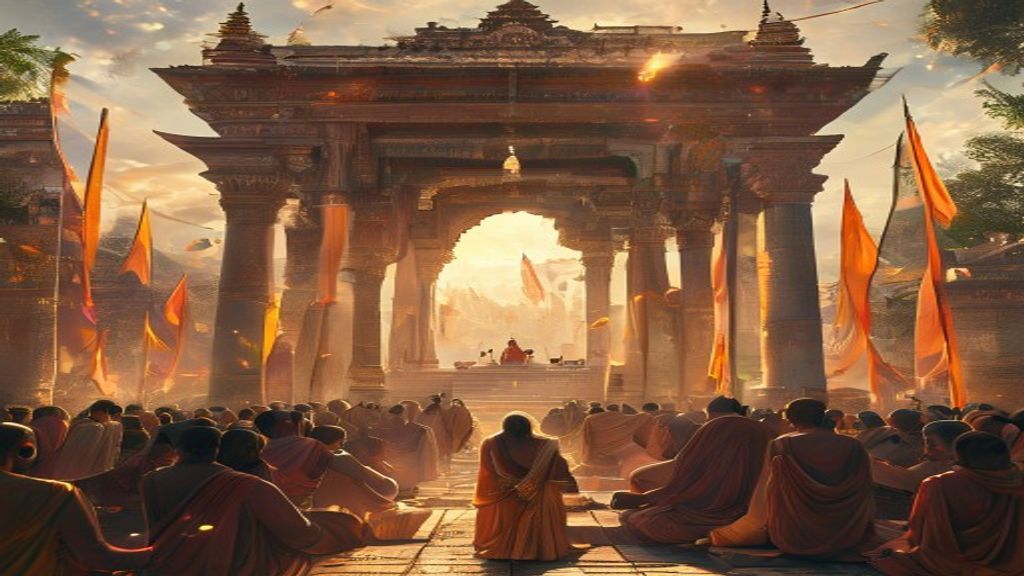
Hindu-Muslim unity, viewed through the lens of Sanatan Dharma, refers to historical periods and instances within Bharatavarsha where adherents of Hindu and Islamic faiths coexisted harmoniously, often due to shared cultural practices, mutual respect, and the overarching Dharmic ethos of acceptance that characterized the land. These examples illustrate the inherent capacity of Sanatan Dharma to foster inclusive societies.
| Attribute | Details |
|---|---|
| Concept | Coexistence, mutual respect, and shared cultural synthesis between Hindus and Muslims in historical India. |
| Location/Origin | Indian Subcontinent, particularly during medieval and early modern periods under various Hindu and Muslim rulers. |
| Key Features | Architectural syncretism, shared festivals (e.g., Holi, Eid), patronage of diverse arts, Sufi-Bhakti movements, and interfaith dialogue. |
| Scripture Reference | Principles of Vasudhaiva Kutumbakam (entire world is one family) from the Maha Upanishad, Sarva Dharma Sambhava (respect for all paths) from Dharmic traditions, and the concept of *dharma* (righteous conduct) as foundational. |
The Sanatan Dharma Perspective on Coexistence
Bharatavarsha, the sacred land of Sanatan Dharma, has historically been a crucible of diverse traditions, philosophies, and peoples. The advent of Islam in India, starting from the 8th century CE, introduced a new spiritual and social dynamic. While history records periods of both conflict and cooperation, it is crucial to understand that the foundational tenets of Sanatan Dharma—rooted in eternal truth, tolerance, and the recognition of multiple paths to the Divine—often provided a framework for harmonious coexistence. This inherent wisdom, passed down through millennia, guided countless Hindu rulers and communities in navigating religious plurality, fostering environments where varying faiths could not only endure but often enrich one another. The very spirit of India, as expressed in the Vedic dictum एकं सद्विप्रा बहुधा वदन्ति (Ekam Sat Vipra Bahudha Vadanti), meaning “Truth is One, the sages call it by many names,” laid the groundwork for a profound acceptance of difference.
Dharmic Principles and Historical Realities
While direct Puranic narratives of Hindu-Muslim unity do not exist, as these scriptures predate the widespread arrival of Islam, the guiding principles elucidated in the Vedas, Upanishads, and Itihasas profoundly influenced how Hindu society and its rulers interacted with new faiths. The concept of Raja Dharma (the duty of a king), as expounded in the Mahabharata and various Smritis, mandated protection for all subjects, irrespective of their creed. Kings were enjoined to uphold justice, ensure welfare, and respect the traditions of diverse communities within their realm. This formed the bedrock upon which many instances of peaceful coexistence were built.
Consider the examples of rulers who, embodying these Dharmic ideals, fostered environments of interfaith respect:
- Chhatrapati Shivaji Maharaj: A staunch defender of Dharma, Shivaji’s army comprised Muslim soldiers, and his administration respected mosques and Sufi shrines. His policies were guided by justice and protection for all, reflecting the true spirit of Raja Dharma. As noted in historical accounts referencing his treatment of captured women and religious places, his conduct was exemplary and aligned with ancient Hindu principles of warfare and governance.
- The Rajput Kings: Many Rajput kingdoms, despite engaging in political conflicts, often maintained periods of peaceful coexistence and cultural exchange with neighboring Sultanates. There are numerous instances of Rajput rulers employing Muslim artisans, scholars, and soldiers, and vice-versa. The syncretic architecture, particularly visible in Rajasthan, attests to this cultural fusion.
- Zain-ul-Abidin of Kashmir (15th Century): Known as the ‘Akbar of Kashmir’, he actively promoted religious tolerance, reconstructed temples destroyed by earlier invaders, abolished jizya (poll tax on non-Muslims), and encouraged Sanskrit studies. His reign, though under a Muslim ruler, reflected a profound understanding and application of principles akin to Dharmic pluralism, possibly influenced by the rich Kashmiri Shaivite tradition.
- The Bahmani Sultanate: While a Muslim dynasty, the Bahmani rulers often employed a large number of Brahmins and other Hindus in their administration, recognizing their administrative acumen and loyalty. This pragmatic cooperation at the highest levels of governance fostered a shared socio-economic fabric.
- Sant Kabir Das (15th Century): A profound spiritual master, Kabir transcended religious boundaries, advocating a universal path to God that drew from both Hindu and Islamic mysticism. His Dohas, recited by millions, exemplified the potential for spiritual unity and mutual understanding, reflecting the truth that the Divine is beyond sectarian labels. His teachings are a testament to the innate spiritual synthesis possible on this sacred land.
Architectural & Scientific Symbiosis
The interaction between Hindu and Islamic cultures also led to remarkable architectural and scientific advancements, demonstrating a unity of artistic and intellectual endeavors. The Indo-Islamic architectural style, a magnificent fusion, is a prime example. Structures like Fatehpur Sikri, the Humayun’s Tomb, and various mosques across India display elements borrowed from Hindu temple architecture, such as ornate brackets, chhatris (domed pavilions), and intricate carvings. Conversely, Hindu temples, particularly in areas with prolonged Islamic influence, sometimes incorporated geometric patterns and arches. Hindu artisans, masters of their craft, were frequently employed in the construction of mosques, tombs, and palaces for Muslim rulers, leading to a natural cross-pollination of techniques and aesthetics. This collaboration was not merely functional; it was a testament to a shared artistic vision and the ability of creative minds to transcend religious distinctions. Visit Hindutva.online for more on India’s architectural heritage.
Dharmic Practices for Fostering Harmony
For a sincere seeker aiming to embody the spirit of unity, Sanatan Dharma offers timeless practices that extend to interfaith relations:
- Cultivate Dharma (Righteous Conduct): Always adhere to truth (Satya), non-violence (Ahimsa), and compassion (Karuna). These are universal virtues that transcend religious boundaries.
- Practice Seva (Selfless Service): Engage in service that benefits all beings, irrespective of their background. Shared humanitarian efforts naturally build bridges of understanding.
- Engage in Satsang (Good Company): Seek out opportunities for respectful dialogue and interaction with people of different faiths. Understand their perspectives and share your own with humility.
- Uphold Shraddha (Faith) in your own tradition: A strong grounding in one’s own Dharma allows for confident and respectful engagement with others, free from insecurity or proselytization.
- Live by Vasudhaiva Kutumbakam: Internalize the profound truth that the entire world is one family. This perspective naturally dissolves barriers and promotes universal brotherhood.
Mantras for Universal Harmony
While there isn’t a specific mantra for “Hindu-Muslim unity,” the Vedic tradition offers powerful chants for universal peace, well-being, and harmony, which are expressions of the highest form of unity:
- ॐ सर्वे भवन्तु सुखिनः। सर्वे सन्तु निरामयाः। सर्वे भद्राणि पश्यन्तु। मा कश्चिद्दुःखभाग्भवेत्॥
Om Sarve Bhavantu Sukhinah. Sarve Santu Niramayah. Sarve Bhadrani Pashyantu. Ma Kaschid Duhkha Bhagbhavet.
(May all be happy. May all be free from illness. May all see what is auspicious. May no one suffer.) - लोकाः समस्ताः सुखिनो भवन्तु॥
Lokah Samastah Sukhino Bhavantu.
(May all beings in all worlds be happy.) - ॐ शान्तिः शान्तिः शान्तिः॥
Om Shanti Shanti Shanti.
(Om Peace, Peace, Peace.)
Chanting these mantras cultivates an inner state of peace and projects vibrations of harmony into the world, aligning with the highest Dharmic ideal of universal welfare.
Dos and Don’ts for Interfaith Engagement
- DO: Respect the places of worship of all faiths.
- DO: Learn about other traditions with an open heart and mind.
- DO: Celebrate shared cultural festivals and traditions where appropriate.
- DO: Focus on common values like compassion, truth, and service.
- DON’T: Criticize or disparage another’s faith, even if you disagree.
- DON’T: Engage in religious debates with the intent to “win” or convert.
- DON’T: Assume uniform beliefs or practices within any religion.
- DON’T: Allow political narratives to overshadow genuine human connection.
Frequently Asked Questions
Was Hindu-Muslim unity always prevalent in Indian history?
No, historical interactions were complex, encompassing periods of both conflict and profound collaboration. The narrative of “unity” is not about an absence of conflict, but about the significant instances and sustained periods where diverse communities coexisted peacefully, influencing each other culturally, artistically, and socially, often guided by the Dharmic principles of acceptance and universal brotherhood.
How did Hindu rulers foster coexistence with Muslim populations?
Hindu rulers, adhering to the principles of Raja Dharma, often extended patronage to Muslim scholars, artisans, and Sufi saints. They employed Muslim soldiers and administrators, protected mosques, and supported religious endowments for Muslim communities. Their governance was often characterized by principles of justice and welfare for all subjects, aligning with the Sanatan ideal of a compassionate king.
What role does Sanatan Dharma play in promoting interfaith harmony?
Sanatan Dharma, with its core tenets of Vasudhaiva Kutumbakam, Ekam Sat Vipra Bahudha Vadanti, and emphasis on universal Dharma, provides a robust philosophical framework for pluralism and respect for all paths. It teaches that the Divine manifests in myriad forms and names, fostering an inherent acceptance of diverse spiritual expressions without needing to proselytize or convert. This ancient wisdom serves as a guiding light for navigating diversity.
Preserving Sanatan Dharma through Harmonious Living
The historical examples of Hindu-Muslim unity are not merely anecdotes but profound lessons in the enduring strength and adaptability of Sanatan Dharma. They demonstrate that true Dharma fosters an inclusive society where differences can be celebrated, and humanity’s shared journey towards the Divine can proceed in peace. By revisiting these periods of harmonious coexistence, we reaffirm the timeless wisdom embedded in our scriptures and the inherent capacity of our tradition to build bridges, not walls. It reminds us that while external forms may differ, the essence of spiritual striving and the pursuit of truth resonate across all sincere paths. For further insights into the rich tapestry of Sanatan Dharma, explore Hindutva.online.