

Hindu temple architecture represents one of civilization’s most sophisticated sacred building traditions, evolving over 2,000 years into distinct regional styles that embody theological concepts, cosmological principles, and architectural innovation through stone, sculpture, and spatial design. The two predominant styles—Nagara in North India and Dravidian in South India—developed from the 5th-7th centuries CE onward, each creating distinctive architectural vocabularies that reflect regional aesthetics, available materials, dynastic patronage, and theological emphases.

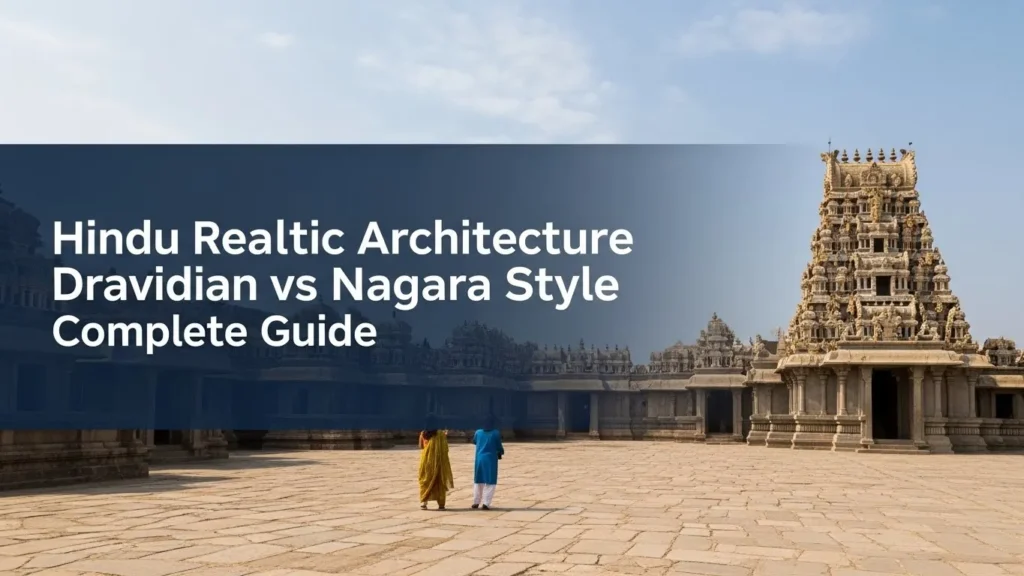
While Nagara temples feature curvilinear shikharas (beehive-shaped spires) rising above the sanctum, Dravidian temples showcase pyramidal vimanas with elaborate gopurams (gateway towers) dominating temple complexes. A third style, Vesara, emerged in Karnataka and Andhra Pradesh, synthesizing elements from both traditions into hybrid forms particularly exemplified in Chalukya and Hoysala architecture.
These architectural traditions follow sacred texts including Vastu Shastra and Agama Shastra, which prescribe precise guidelines for temple site selection, orientation, proportions, materials, iconography, and ritual spaces ensuring structures function as cosmic diagrams (yantras) connecting earthly and divine realms. Understanding Hindu temple architecture requires appreciating how Hindu philosophy manifests through built form—temples aren’t merely worship spaces but three-dimensional embodiments of theological concepts, with every architectural element carrying symbolic meaning that transforms stone into sacred pedagogy. This comprehensive guide explores the distinctive features of Nagara and Dravidian styles, the Vesara synthesis, essential temple components, construction principles, and major examples of each tradition.
Nagara Style: North Indian Temple Architecture
Historical Development and Geographic Distribution
The Nagara style developed from the 5th century CE, flourishing particularly during the Gupta period (4th-6th centuries) and reaching maturity under post-Gupta dynasties including the Pratiharas, Chandellas, Paramaras, and Solankis from the 6th-13th centuries. The style predominates across North India including Rajasthan, Madhya Pradesh, Uttar Pradesh, Gujarat, Bihar, and Odisha, adapting to regional variations while maintaining core architectural principles.
According to eminent historian D.N. Jha, the Nagara style symbolizes Mount Meru, the mythical cosmic mountain representing the axis mundi (world axis) in Hindu philosophy, with the curvilinear shikhara manifesting this sacred geography in built form. This theological conception influenced every architectural decision, creating temples that functioned as microcosmic representations of divine cosmic order.
Key Features of Nagara Architecture
1. The Shikhara (Tower/Spire)
The shikhara constitutes the Nagara style’s most distinctive and prominent element—a tall, curvilinear tower rising above the garbhagriha (sanctum sanctorum) that dominates the temple’s vertical profile. The shikhara’s characteristic forms include:
Latina or Rekha-Prasada: The most common type featuring a curved, beehive-shaped profile that ascends in smooth, flowing lines from base to summit. The tower curves inward as it rises, creating an organic vertical thrust that draws the eye upward toward the heavens.
Phamsana: A pyramidal shikhara with receding tiers, less common than the latina type but appearing in some regional variations.
Valabhi: A rectangular, wagon-vaulted roof type, occasionally seen in subsidiary structures.
The shikhara terminates in an amalaka—a large, fluted, circular stone disc resembling a lotus bud or segmented fruit—topped by a kalasha (pot-finial) that crowns the entire structure. These elements carry symbolic meanings: the amalaka represents purity and the cosmic lotus from which creation emerges; the kalasha symbolizes abundance and divine blessing.
2. Multiple Towers
Unlike Dravidian temples with single central vimanas, Nagara temples often feature multiple shikharas creating complex skylines with the tallest tower above the main sanctum and smaller subsidiary towers (urushringa) clustered around it. This arrangement creates dynamic vertical compositions emphasizing the main deity’s supremacy while acknowledging associated divinities.
3. Elevated Platform (Jagati)
Nagara temples commonly sit on raised stone platforms accessed by stairs, elevating the entire structure above ground level. This architectural choice serves multiple purposes:
- Symbolic elevation suggesting the sacred’s transcendence above mundane existence
- Practical protection from flooding and ground moisture
- Creation of circumambulatory paths around the platform base
- Enhanced visual prominence and psychological impact
4. Entrance Deities
The entrance to the sanctum sanctorum typically features personified river goddesses Ganga and Yamuna flanking the doorway in elegant poses, symbolizing purification through sacred waters and the auspicious beginning of spiritual journey into the temple’s inner sanctums.
5. Panchayatana Layout
Many Nagara temples employ the panchayatana (five-shrine) layout where the main shrine occupies a rectangular plinth’s center with four smaller subsidiary shrines positioned at the four corners, creating a total of five shrines. This arrangement embodies cosmological concepts about the cosmic center (Brahma) surrounded by directional guardians and associated deities.
6. Interior Deities
In Nagara architecture, deity images typically reside inside the sanctum within the garbhagriha, creating intimate, interior-focused worship experiences where devotees enter darkness progressively approaching divine presence.
Regional Variations of Nagara Style
Odisha (Kalinga) Sub-Style: Features in temples like Lingaraja Temple (Bhubaneswar) and Konark Sun Temple, characterized by distinctive terminology:
- Deul: The main shrine structure
- Rekha Deul: Curvilinear tower type
- Pidha Deul: Pyramidal tower with horizontal tiers
- Elaborate sculptural programs covering exterior surfaces
Khajuraho (Chandella) Sub-Style: Exemplified by Kandariya Mahadeva Temple, featuring:
- Multiple interconnected shikharas creating mountain range effect
- Extensive erotic and non-erotic sculptural decoration
- Sophisticated architectural proportions and spatial planning
Solanki (Gujarat) Sub-Style: Seen in temples like Sun Temple Modhera, characterized by:
- Intricate stone carving with lace-like delicacy
- Stepped tank (kund) integration
- Elaborate mandapa (hall) architecture with ornate pillars
Dravidian Style: South Indian Temple Architecture
Historical Development and Geographic Distribution
The Dravidian style developed from the 7th century CE, achieving mature expression during the Pallava period (6th-9th centuries) and reaching unprecedented grandeur under the Cholas (9th-13th centuries), continuing through Pandya, Vijayanagara, and Nayaka periods into the 17th century. The style predominates across South India including Tamil Nadu, Karnataka, Andhra Pradesh, and Kerala, with significant influence extending to Sri Lanka and Southeast Asia.
Hindu Temple Architecture Key Features of Dravidian Architecture
1. The Vimana (Main Tower)
The vimana in Dravidian architecture is a stepped pyramidal tower rising geometrically in clearly defined horizontal tiers above the main sanctum, contrasting sharply with Nagara’s curving shikhara. Each tier typically features:
- Pavilion-like structures (kudus) housing miniature deity images
- Ornamental elements including pilasters, niches, and sculptural decoration
- Progressively smaller dimensions creating pyramidal profile
Unlike Nagara temples with multiple towers, Dravidian temples feature only one main vimana above the garbhagriha, emphasizing the single primary deity’s supremacy.
2. The Gopuram (Gateway Tower)
The gopuram constitutes the Dravidian style’s most distinctive and visually prominent feature—massive pyramidal gateway towers that mark entrances through successive enclosure walls. Gopurams typically:
- Rise significantly taller than the central vimana (inverted hierarchy)
- Feature elaborate sculptural programs with thousands of deity figures, mythological narratives, and decorative elements
- Follow pyramidal form similar to vimanas but at much grander scale
- Are topped with kalashas (pot finials) filled with navadhanya (nine types of cereals and pulses)
The gopurams’ practical function included serving as tallest structures in towns, enabling life restart after destructive natural disasters through stored grains in the kalashas. Their visual dominance announces the temple’s presence from great distances, drawing pilgrims toward sacred precincts.
3. Enclosed Compound Walls
Dravidian temples are invariably enclosed within compound walls (prakara), creating clearly defined sacred boundaries separating the temple complex from mundane surroundings. These walls typically feature:
- Multiple concentric enclosures (prakaras) surrounding the central sanctum
- Gopurams at cardinal directions providing controlled access
- Pillared corridors (prakara) along interior walls for circumambulation
- Subsidiary shrines, mandapas, and temple tanks within enclosed spaces
This emphasis on temple boundaries reflects theological concepts about sacred geography—the temple represents cosmic order and divine domain requiring clear demarcation from the chaotic profane world outside.
4. Ground-Level Pedestals
Unlike Nagara temples on raised platforms, Dravidian temples typically sit at ground level with pedestals flush with surrounding terrain. This architectural choice creates different spatial relationships between devotees and temple structures, emphasizing horizontal expansion through enclosures rather than vertical elevation.
5. Dwarapalas (Door Guardians)
The entrance to sanctum sanctorum features dwarapalas—fierce guardian figures wielding weapons who protect the inner shrine from malevolent forces and unauthorized entry. These monumental sculptures, often 6-8 feet tall, create psychological thresholds marking transition from outer to inner sacred spaces.
6. Exterior Deities
In Dravidian architecture, deity sculptures appear prominently on exterior walls within niches at each cardinal direction, making the divine visible from outside and creating exterior-focused devotional experiences. Devotees can view multiple deities during circumambulation without entering inner sanctums.
Major Examples of Dravidian Architecture
Brihadeeswara Temple, Thanjavur (1010 CE): Raja Raja Chola I’s masterpiece featuring:
- 216-foot vimana (tallest in India at construction)
- 80-ton monolithic capstone
- Interlocking granite construction without mortar
Meenakshi Temple, Madurai: Exemplifying mature Dravidian style with:
- 14 gopurams, tallest reaching 170 feet
- 33,000+ sculptures adorning towers
- Sprawling complex covering 45 acres
Gangaikonda Cholapuram Temple (1035 CE): Rajendra I’s creation showcasing:
Vesara Style: The Hybrid Synthesis
Origins and Geographic Distribution
Vesara architecture represents a synthesis of Nagara and Dravidian styles, developing primarily in the Deccan region including Karnataka and Andhra Pradesh from the 7th-13th centuries. The term “Vesara” derives from the Sanskrit word “vishra” meaning “an area to take a long walk,” possibly referring to the elaborate circumambulatory paths characteristic of these temples.
The Vesara style flourished under three major dynasties:
- Chalukyas of Badami and Kalyani (6th-12th centuries)
- Rashtrakutas of Manyakheta (8th-10th centuries)
- Hoysalas of Dwarasamudra (11th-14th centuries)
Distinctive Features of Vesara Architecture
1. Bell-Shaped Vimana
The Vesara tower combines elements of both Nagara shikhara and Dravidian vimana, creating a distinctive bell-shaped or pyramidal tower that blends the curving profile of Nagara with the tiered construction of Dravidian styles.
2. Stellate (Star-Shaped) Ground Plans
Hoysala temples particularly feature intricate stellate or star-shaped ground plans, developed from simple squares into highly complex forms with multiple projections creating dynamic, multi-faceted exteriors. These geometric innovations allowed:
- Increased wall surface area for sculptural decoration
- Enhanced play of light and shadow across surfaces
- More complex interior spatial experiences
3. Material Innovations
Hoysala temples employed soapstone (chloritic schist) as primary building material, unlike the granite typical in other South Indian traditions. Soapstone’s relative softness enabled:
- Exceptional sculptural detailing with jewelry-like precision
- Intricate lacework carving impossible in harder stones
- Delicate ornamental elements resembling metalwork
4. Hybrid Architectural Elements
Vesara temples seamlessly blend features from both parent styles:
- Nagara-style miniature shikharas as decorative elements
- Dravidian-style horizontal emphasis and mandapa planning
- Unique combinations creating regionally distinctive vocabularies
Major Vesara/Hoysala Temples
Hoysaleswara Temple, Halebid (1121 CE):
- Twin-shrined temple dedicated to Shiva
- Elaborate friezes depicting elephant processions, each uniquely carved
- Extensive sculptural decoration with gods adorned in jewelry-like embellishments
Chennakeshava Temple, Belur (1117 CE):
- Dedicated to Vishnu
- Star-shaped plan with 64 projections
- Madanikas (bracket figures) showcasing feminine beauty in dynamic poses
Keshava Temple, Somanathapura (1258 CE):
- Triple-shrined trikutachala layout
- Perfect geometric planning with stellate plan
- Flat amalaka and kalasha topping Vesara superstructure
Essential Components of Hindu Temples
Core Structural Elements
Garbhagriha (Sanctum Sanctorum): The innermost shrine housing the main deity, representing the cosmic womb from which creation emerges. Characteristics include:
- Small, dark, windowless chamber emphasizing interiority
- Precise alignment above Brahma pada (cosmic center) in Vastu mandala
- Access typically only for priests during worship rituals
Antarala (Antechamber): A vestibule connecting the sanctum to the mandapa, creating transitional space between inner sanctum and assembly halls.
Mandapa (Pillared Hall): Congregational assembly spaces where devotees gather for darshan (sacred viewing) and ritual participation. Variations include:
- Ardha-mandapa (half-hall)
- Maha-mandapa (great hall)
- Nata-mandapa (dance hall)
- Kalyana-mandapa (marriage hall)
Pradakshina Patha (Circumambulatory Path): Covered corridor encircling the sanctum enabling ritual circumambulation (parikrama) that symbolizes cosmic cycles and devotional reverence.
Vertical Elements
Shikhara/Vimana: The tower rising above the sanctum representing Mount Meru and the cosmic axis, with form varying by regional style (curvilinear in Nagara, pyramidal in Dravidian).
Amalaka: The large fluted disc crowning the shikhara, representing purity and cosmic lotus.
Kalasha: The pot-shaped finial topping the amalaka, symbolizing abundance, completeness, and divine blessing.
Supporting Structures
Vahana Mandapa: Pavilion housing the deity’s vehicle (vahana) positioned before the main shrine, with the vehicle sculpture facing the sanctum.
Bali Pitha: Sacrificial altar where ritual offerings are made, typically positioned on the temple’s main axis between entrance and sanctum.
Dhvaja Stambha (Flagpole): Ceremonial flagpole erected on the main axis, upon which the temple’s sacred flag is raised during festivals.
Temple Tank (Pushkarini/Kalyani): Sacred water body within or adjacent to the temple complex, used for ritual bathing and purification before worship.
Vastu Shastra and Agama Shastra: Sacred Construction Principles
Vastu Purusha Mandala
The Vastu Purusha Mandala forms the geometric foundation of Hindu temple planning—a sacred diagram dividing the temple site into a grid of 64 or 81 squares (padas), each governed by specific deities and cosmic principles. The mandala operates on two dimensions:
Horizontal (Ground Plan): Square, rectangular, octagonal, or pentagonal patterns relate to spatial organization, determining locations for garbhagriha, mandapas, subsidiary shrines, and other elements.
Vertical (Elevation): Determines proportions, heights, and the tower’s alignment above the Brahma pada (cosmic center).
The mandala’s zones include:
- Brahma Pada (Central Zone): Contains the garbhagriha and represents the creative cosmic principle
- Devika Pada: Surrounds Brahma pada; inhabited by divine beings
- Manusha Pada: Outer zone; inhabited by humans; location for circumambulatory paths
- Paisachika Pada: Outermost zone; inhabited by lower beings; temple boundaries
Agama Shastra Prescriptions
The Agamas (sacred texts) provide elaborate rules for temple construction covering:
Site Selection:
- Quality requirements for temple locations
- Relationship to water sources, sacred geography, and settlements
- Association with sthala vriksham (sacred trees)
Materials:
- Only organic materials traditionally acceptable (stone, brick, wood, natural mortar)
- Gold, silver for ornamentation
- Marble avoided in Southern structures
- Simulated materials like plastic and asbestos strictly prohibited
Dimensions and Proportions:
- Precise ratios ensuring structural harmony and rhythm
- Ayadi calculations for temple longevity (traditional stone temples designed to last 800 years vs. modern RCC structures guaranteed for 80 years)
Iconography:
- Specifications for images—materials, dimensions, proportions
- Proper orientation and positioning of deities
Ritual Spaces:
- Air circulation and lighting requirements
- Provisions for circumambulation, assembly, and ceremonial performances
Construction Techniques
Interlocking Joinery: Temple elements use mortise and tenon joints—holes or slots cut into each stone piece for adjacent stones’ projecting parts (tenons) to insert, creating secure connections that allow thermal expansion and modest vibration without structural failure.
No Mortar Construction: Many temples, especially in Dravidian tradition, employ precisely cut interlocking stones without mortar or binding agents, relying on weight distribution, corbelling, and joinery for structural integrity.
Comparative Summary: Nagara vs Dravidian vs Vesara
| Feature | Nagara Style | Dravidian Style | Vesara Style |
|---|---|---|---|
| Region | North India | South India | Karnataka, Andhra Pradesh |
| Tower Name | Shikhara | Vimana | Vimana (bell-shaped) |
| Tower Shape | Curvilinear, beehive | Stepped pyramid | Hybrid bell/pyramid |
| Number of Towers | Multiple | Single main vimana | Variable |
| Prominent Element | Shikhara | Gopuram | Combination |
| Platform | Raised (jagati) | Ground level | Variable |
| Compound Walls | Less emphasis | Highly emphasized | Present |
| Entrance Deities | Ganga, Yamuna | Dwarapalas | Varies |
| Deity Location | Inside sanctum | Exterior walls also | Combination |
| Ground Plan | Square, rectangular | Square, rectangular | Stellate/star-shaped |
| Examples | Khajuraho, Konark | Thanjavur, Madurai | Halebid, Belur |
Frequently Asked Questions
What is the main difference between Nagara and Dravidian temple architecture?
The primary distinction lies in tower form—Nagara temples feature curvilinear, beehive-shaped shikharas, while Dravidian temples have stepped pyramidal vimanas. Nagara temples emphasize vertical elements with multiple towers, whereas Dravidian temples feature single central vimanas with massive gopurams (gateway towers) dominating complexes. Nagara temples sit on raised platforms; Dravidian temples typically at ground level with elaborate compound walls.
What is Vesara architecture?
Vesara is a hybrid style synthesizing Nagara and Dravidian elements, predominantly found in Karnataka and Andhra Pradesh. Developed by Chalukya, Rashtrakuta, and Hoysala dynasties (7th-13th centuries), Vesara features bell-shaped towers, stellate ground plans, intricate soapstone carving, and combinations of northern and southern architectural vocabularies. The Hoysaleswara Temple at Halebid exemplifies Vesara sophistication.
What are the main parts of a Hindu temple?
Essential components include the garbhagriha (sanctum housing the deity), mandapa (pillared assembly hall), shikhara/vimana (tower), pradakshina patha (circumambulatory passage), antarala (antechamber), vahana mandapa (vehicle pavilion), and various decorative elements like amalaka and kalasha. Dravidian temples add gopurams (gateway towers) and enclosed compound walls. All elements follow Vastu Shastra principles aligning with cosmic order.
What is Vastu Shastra in temple architecture?
Vastu Shastra provides sacred geometric principles for temple planning using the Vastu Purusha Mandala—a grid dividing the site into 64-81 squares (padas), each governed by specific deities. The mandala determines spatial organization, proportions, orientations, and the garbhagriha’s placement at the cosmic center (Brahma pada). Following Vastu ensures temples function as cosmic diagrams (yantras) connecting earthly and divine realms.
What are gopurams in South Indian temples?
Gopurams are massive pyramidal gateway towers marking entrances through successive enclosure walls in Dravidian temples. They typically rise taller than central vimanas, feature thousands of sculptural figures depicting deities and mythological narratives, and are topped with kalashas filled with nine types of cereals. Gopurams announce temples from great distances and historically served as landmarks for restarting communities after disasters.
What is the shikhara in North Indian temples?
The shikhara is a tall, curvilinear tower rising above the garbhagriha in Nagara temples, characterized by its beehive or curved pyramidal shape. Symbolizing Mount Meru (the cosmic mountain), it represents the axis mundi connecting earth to heaven. The shikhara terminates in an amalaka (fluted disc) topped by a kalasha (pot finial). Nagara temples often feature multiple shikharas with the tallest above the main sanctum.
What materials are used in traditional temple construction?
Only organic materials are traditionally acceptable—stone (granite, sandstone, basalt, soapstone), brick, natural mortar, and wood for main structures, with gold and silver for ornamentation. Marble is avoided in Southern structures. Simulated materials like plastic and asbestos are strictly prohibited. Traditional stone temples are designed to last 800 years through proper material selection, Ayadi calculations, and construction techniques including mortise-tenon joinery allowing thermal expansion.
How do Agama Shastras influence temple architecture?
Agama Shastras prescribe comprehensive rules for temple construction including site selection criteria, building materials, dimensions and proportions, iconographic specifications, orientation, air circulation, and lighting. They describe deity image requirements (materials, dimensions), ritual space provisions, and daily worship procedures. The Manasara and Shilpasara texts detail these requirements, ensuring temples properly function as sacred spaces aligned with Hindu philosophy and cosmic principles.
Conclusion
Hindu temple architecture represents a sophisticated synthesis of theology, cosmology, geometry, and artistic expression that has evolved over two millennia into distinct regional traditions while maintaining shared conceptual foundations rooted in Vastu Shastra and Agama Shastra principles. The Nagara and Dravidian styles, though differing dramatically in formal expression—curvilinear shikharas versus pyramidal vimanas, multiple towers versus single central spires, raised platforms versus ground-level construction—both embody identical theological purposes: creating earthly dwelling places for the divine that function as cosmic diagrams connecting devotees with transcendent reality.
The Vesara synthesis demonstrates Indian architectural creativity’s dynamic character, refusing static tradition in favor of innovative combinations that produced entirely new aesthetic vocabularies in the Deccan region. The stellate plans, jewelry-like soapstone carving, and hybrid tower forms of Hoysala temples showcase how respectful engagement with established traditions can generate fresh architectural expressions while maintaining spiritual authenticity.
Understanding these architectural traditions enriches contemporary appreciation of temples beyond superficial tourism, revealing how every structural element—from foundation mandala to crowning kalasha—carries precise symbolic meanings that transform mere buildings into comprehensive theological statements in stone. The traditions’ continuity across centuries, with temples still constructed following ancient Vastu and Agama prescriptions, demonstrates Hindu temple practices‘ living vitality rather than frozen historical artifacts.
Visiting temples with architectural awareness transforms experiences from casual sightseeing to genuine cultural education—recognizing how Khajuraho’s multiple shikharas create mountain ranges symbolizing cosmic peaks, understanding why Meenakshi Temple’s gopurams tower above the central vimana, appreciating how Hoysaleswara’s star-shaped plan enables unprecedented sculptural detail. These insights connect contemporary visitors to the profound devotion, sophisticated knowledge, and artistic excellence that created India’s extraordinary temple heritage—monuments that continue inspiring wonder over a millennium after their consecration.
About the Author
Priya Sharma – Cultural Heritage & Temple Architecture Specialist
Priya Sharma is an accomplished writer and researcher specializing in Hindu festivals, temple architecture, and India’s rich cultural traditions. With a Master’s degree in Indian Art History from Maharaja Sayajirao University, she has extensively documented pilgrimage sites, temple iconography, and folk traditions across India. Her work focuses on making India’s spiritual heritage accessible to contemporary audiences while preserving authentic cultural narratives.