


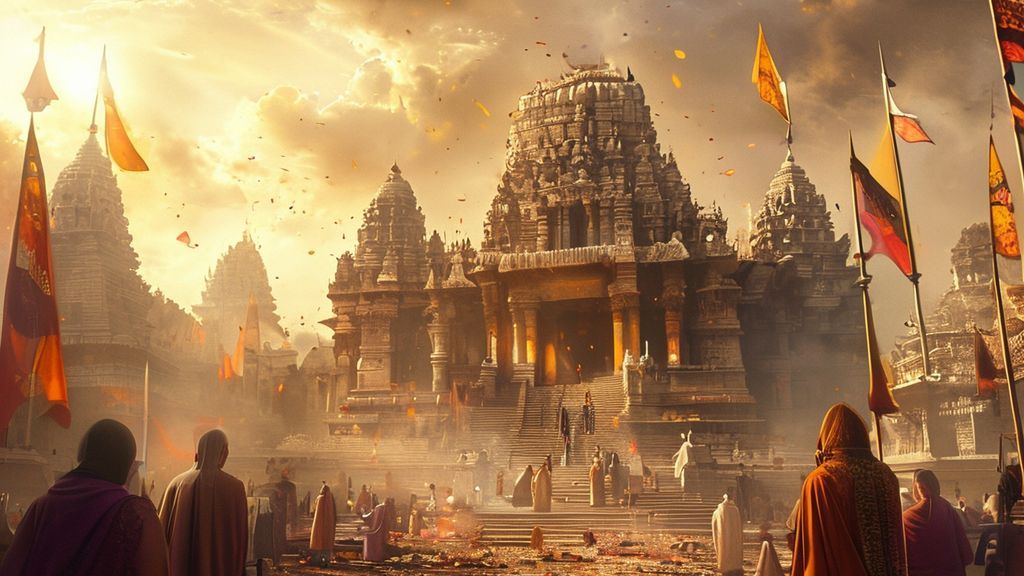
Hindu temples destroyed by Islamic invaders represent a profound and often tragic chapter in the annals of Sanatan Dharma, meticulously documented in historical chronicles and local traditions. These acts of iconoclasm were not merely incidental but often systematic, aimed at asserting dominance and dismantling the spiritual and cultural fabric of Hindu civilization, leaving an indelible mark on our collective consciousness.
| Attribute | Details |
|---|---|
| Era of Invasions | Roughly 8th Century CE to 18th Century CE. |
| Key Invaders | Mahmud of Ghazni, Muhammad Ghori, Alauddin Khalji, Aurangzeb, and various Sultanate rulers. |
| Examples of Sites | Somnath (Gujarat), Kashi Vishwanath (Varanasi), Ram Janmabhoomi (Ayodhya), Martand Sun Temple (Kashmir), Mahakal Temple (Ujjain). |
| Historical Sources | Al-Biruni’s *Kitab-ul-Hind*, Persian chronicles like *Tarikh-i-Yamini*, *Futuh-us-Salatin*, local temple records, *bhavishya puranas* and traditional accounts. |
The Enduring Significance of Sacred Memory
The systematic destruction of Hindu temples by Islamic invaders is a stark reality documented across centuries, etched not just in stone and ruins, but in the collective memory of a civilization that reveres its sacred spaces as manifestations of the Divine. For a Hindu, a temple is not merely a building; it is a living entity, a *prana-pratishthita* abode where the deity resides, an axis mundi connecting the mortal realm to the cosmic. The violation of such a space is an attack on Dharma itself, a wound that spans generations.
Understanding this painful history is not about fostering animosity, but about a righteous remembrance (*Smriti*) and a renewed commitment to *Dharma Raksha* (protection of righteousness). It is crucial for sincere seekers to grasp the scale and intent behind these acts, not as isolated incidents, but as a sustained campaign to subjugate a spiritual civilization. This knowledge strengthens our resolve to preserve and protect our heritage, ensuring the continuity of Sanatan Dharma for future generations.
Historical Accounts of Iconoclasm: A Puranic & Itihasic Narrative
The chronicles of invasions from the 8th century CE onward are replete with accounts of temple desecration and destruction. These are not merely conjectures but are meticulously recorded in both indigenous and external historical texts. As described in works that complement our *Itihasas*, such as the *Rajatarangini* by Kalhana, the Martand Sun Temple in Kashmir, a monumental architectural marvel, was devastated by Sultan Sikandar Butshikan in the 14th century. Similarly, the glorious Somnath Temple, dedicated to Bhagavan Shiva, faced repeated plundering and destruction, most notably by Mahmud of Ghazni in 1025 CE, as detailed in *Tarikh-i-Yamini* and other Persian chronicles. Each destruction led to a subsequent rebuilding by Hindu kings, a testament to indomitable faith.
The sacred city of Kashi, Varanasi, suffered immense devastation. The original Kashi Vishwanath Jyotirlinga temple was repeatedly destroyed and rebuilt. Aurangzeb, in 1669 CE, notoriously ordered its demolition, constructing the Gyanvapi Mosque upon its ruins, a fact corroborated by his own court histories such as *Ma’asir-i-Alamgiri*. This narrative is also echoed in the local traditional accounts passed down through generations, often considered part of the living *itihasa* of the region, aligning with what the Hindutva.online platform consistently emphasizes.
The very site of Sri Ram’s birth, Ram Janmabhoomi in Ayodhya, witnessed the construction of the Babri Masjid after the destruction of the existing Ram Temple, an event described in various historical documents and reasserted by archaeological findings. Similarly, the Mahakal Temple in Ujjain, a revered Jyotirlinga, faced ruin under Iltutmish in 1234-35 CE, though it was later magnificently restored by the Marathas.
These instances are not isolated; they form a pervasive pattern across the Indian subcontinent, from the temples of Gujarat and Rajasthan to those in Bengal and the South. The intent was often clear: to replace the symbols of Sanatan Dharma with those of the conquering faith, thereby asserting political and religious supremacy. Yet, the spirit of devotion endured, leading to countless acts of resistance, rebuilding, and preservation by Hindu kings and communities.
Architectural Splendour & Its Targeted Destruction
The temples targeted by invaders were not mere structures; they were pinnacles of ancient Indian architectural and artistic genius, embodying profound principles of *Vastu Shastra* and sacred geometry. The Nagara style of architecture, prevalent in North India, with its curvilinear shikhara (spire) and intricate carvings, was exemplified by temples like Somnath, Martand, and the original Kashi Vishwanath. These temples were often grand complexes, housing multiple shrines, mandapas, and reflecting pools, designed to elevate the human spirit towards the divine.
The precision in their construction, alignment with astronomical phenomena, and the philosophical depth embedded in their iconography were unparalleled. For instance, the Martand Sun Temple, built with 84 pillars, was a breathtaking example of Kashmiri Nagara architecture, showcasing advanced engineering for its time. The destruction of such architectural wonders was not just a loss of religious sites but a catastrophic blow to human artistic and scientific heritage. Though many lie in ruins, the remnants often reveal the sophisticated planning and execution, standing as mute testaments to a glorious past. The resilience of Hindu tradition is seen in the reconstruction, often replicating or reinterpreting the lost architectural vocabulary, ensuring the continuity of these sacred forms.
Rituals for Remembering & Dharma Raksha
In light of this history, performing specific *karmas* becomes a vital part of a devotee’s spiritual journey. These are not rituals of revenge, but of remembrance, resolve, and reinforcement of Dharma.
- Sankalpa for Dharma Raksha: Begin with a solemn *sankalpa* (sacred vow) before your chosen deity. State your intention to uphold Dharma, protect sacred spaces, and contribute to the preservation of Hindu heritage. Chant: *Om Tat Sat, Adya Brahmaṇo Dvitīya Parārdhe Śrī Śveta Varāha Kalpe Vaivasvata Manvantare Aṣṭāviṃśatitame Kaliyuge Prathama Caraṇe… mama samasta duṣkṛta kṣayārthaṁ, dharma rakṣārthaṁ, śrī bhagavat prītyarthaṁ ca sankalpaṁ kariṣye.* (I make this vow for the eradication of all sins, for the protection of Dharma, and for the pleasure of the Divine.)
- Smriti Tarpana: Offer water (*tarpaṇa*) to the memory of all those who sacrificed their lives defending temples and Dharma. While offering water, utter: *Sarveṣāṁ Dharma Rakṣaka Bhaktānāṁ Smṛtaye Idaṁ Salilaṁ Samarpayāmi.* (I offer this water in memory of all devotees who protected Dharma.)
- Collective Bhajans & Kirtans: Organize or participate in community singing of devotional songs and chanting of the Divine Names. This collective energy strengthens spiritual resolve and fosters unity, crucial for the protection of Sanatan Dharma.
- Jyotirlinga & Shakti Peeth Darshan: Regularly visit existing Jyotirlinga and Shakti Peeth temples. Each visit is an act of preserving the living tradition and reconnecting with the divine energy that was sought to be suppressed.
Mantras for Strength and Protection
Chanting sacred mantras empowers the devotee and invokes divine grace for the protection of Dharma.
- Mahamrityunjaya Mantra (महामृत्युंजय मंत्र): For protection, well-being, and overcoming adversity.
* Om Tryaṁbakaṁ yajāmahe sugandhiṁ puṣṭi-vardhanam | Urvārukam iva bandhanān mṛtyor mukṣīya māmṛtāt || - Narasimha Mantra (नृसिंह मंत्र): To invoke courage, destroy negativity, and protect the righteous.
* Ugraṁ vīraṁ mahā-viṣṇuṁ jvalantaṁ sarvato-mukham | Nṛsiṁhaṁ bhīṣaṇaṁ bhadraṁ mṛtyu-mṛtyuṁ namāmyahaṁ || - Durga Mantra (दुर्गा मंत्र): For divine motherly protection and strength against adharma.
* Sarva maṅgala māṅgalye śive sarvārtha sādhike | Śaraṇye tryambake gaurī nārāyaṇi namo’stu te || - Gayatri Mantra (गायत्री मंत्र): For enlightenment, wisdom, and righteous action.
* Om bhūr bhuvaḥ svaḥ | Tat savitur vareṇyaṁ bhargo devasya dhīmahi | Dhiyo yo naḥ pracodayāt ||
Dos and Don’ts for the Sincere Devotee
- Do: Engage in diligent study of our *Itihasa* and historical records to understand the true narrative of our heritage. Resources like Hindutva.online provide valuable insights.
- Do: Support initiatives for the preservation, restoration, and archaeological recovery of ancient temple sites.
- Do: Educate the younger generation about the significance of our temples and the history of their destruction and resilience.
- Do: Practice tolerance and love for all, as taught by Sanatan Dharma, but never at the cost of truth or self-respect.
- Don’t: Allow this history to foster hatred or aggression towards any community. Our path is one of Dharma, not vengeance.
- Don’t: Forget the sacrifices made by our ancestors in protecting these sacred sites and the Dharma they represented.
- Don’t: Fall prey to narratives that seek to whitewash or deny these historical realities.
Frequently Asked Questions
What was the primary motive behind the destruction of Hindu temples by Islamic invaders?
The primary motives varied but often included asserting political dominance, demonstrating the supremacy of Islam over existing faiths, plundering wealth, and deliberately weakening the cultural and spiritual identity of the conquered people. Temples were central to Hindu life – economic, social, and spiritual – making them strategic targets.
Are these historical destructions still relevant for Hindus today?
Yes, absolutely. This history is crucial for understanding the resilience of Sanatan Dharma, the sacrifices made by our ancestors, and the enduring challenge of preserving our heritage. It informs the contemporary struggle for cultural and religious identity, motivating devotees to protect existing temples and advocate for the restoration of lost sites.
What is the Dharmic path forward regarding these historical injustices?
The Dharmic path forward involves righteous remembrance (*Smriti*), continuous pursuit of truth (*Satya*), promoting education, supporting preservation efforts, and fostering unity within the Hindu community (*Sangathan*). It is about constructive action, spiritual strength, and ensuring the vibrant continuity of Sanatan Dharma for millennia to come, without succumbing to negativity.
Why This Matters for Every Hindu
The memory of Hindu temples destroyed by Islamic invaders is not merely a historical footnote; it is a profound lesson in resilience, faith, and the eternal struggle between Dharma and Adharma. For every Hindu, this history is a call to awaken, to understand the depth of our spiritual heritage, and to actively participate in its preservation. It teaches us the importance of vigilance, intellectual honesty, and unwavering devotion. By remembering, we honor the millions who suffered, the countless artisans whose works were annihilated, and the unwavering spirit of those who rebuilt. This knowledge is not a burden but a source of strength, inspiring us to uphold the ideals of Sanatan Dharma, ensuring that our sacred traditions, our temples, and our culture flourish for generations to come, embodying the timeless principle: *Dharmo Rakshati Rakshitaḥ* — Dharma protects those who protect it.