


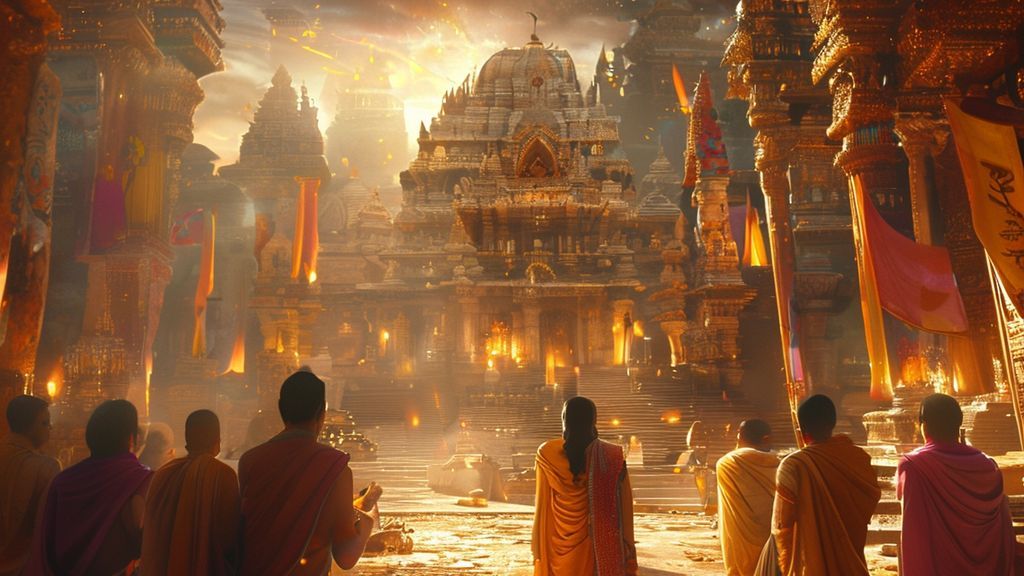
Hinduism and Jainism are ancient, indigenous Dharmic traditions that originated on the Indian subcontinent, sharing fundamental concepts like Karma, Samsara, and Moksha. While both uphold Ahimsa (non-violence) as a supreme virtue, they diverge significantly in their foundational texts, theological understanding of Ishvara (God), and paths to liberation, establishing them as distinct yet interconnected spiritual systems.
| Attribute | Details |
|---|---|
| **Deity/Spiritual Focus** | **Hinduism:** Worship of Saguna Brahman (Ishvara) in various forms (Devas/Devis like Vishnu, Shiva, Devi), and Nirguna Brahman (the Absolute reality); diverse paths. **Jainism:** Worship of Tirthankaras (perfected human beings), not as creator gods, but as supreme spiritual teachers; self-realization is paramount. |
| **Origin/Founders** | **Hinduism:** Sanatana Dharma, eternal tradition with no single founder, rooted in Vedic Rishis. **Jainism:** Traced back to Lord Rishabhanatha (the first Tirthankara), historically revived by Lord Mahavira (24th Tirthankara) in 6th century BCE. |
| **Key Scripture Reference** | **Hinduism:** Vedas (Shruti), Upanishads, Bhagavad Gita, Puranas, Itihasas (Ramayana, Mahabharata). **Jainism:** Agamas (compiled teachings of the Tirthankaras). |
| **Path to Liberation (Moksha)** | **Hinduism:** Jnana Marga (knowledge), Bhakti Marga (devotion), Karma Marga (action), Raja Yoga (meditation); union with Brahman. **Jainism:** Tri-ratna (Right Faith, Right Knowledge, Right Conduct); self-conquest and purification of the soul (Jiva) from Karma. |
| **Key Festival** | **Hinduism:** Diwali (celebrates Lakshmi, Rama’s return), Holi, Navaratri, Shivaratri. **Jainism:** Mahavir Jayanti (birth of Mahavira), Paryushan Parva (self-purification), Diwali (marks Mahavira’s Nirvana). |
Introduction: The Dharmic Tapestry of Bharatavarsha
Bharatavarsha, the sacred land of India, has been the cradle of profound spiritual traditions, collectively known as **Dharma**. Among these, Hinduism, or **Sanatana Dharma**, stands as the eternal way, characterized by its vastness, diversity, and continuous evolution rooted in the Vedas. Co-existing and developing alongside it, Jainism emerged as another ancient and significant Dharmic path. While both traditions share a deep reverence for life and advocate for spiritual liberation, understanding their distinct philosophical underpinnings and practices is crucial for any sincere seeker. This guide explores their similarities and divergences, illuminating the rich spiritual tapestry that defines our ancient civilization.
The Ancient Currents: Puranic History and Philosophical Genesis
The spiritual landscape of ancient India was vibrant with diverse schools of thought. **Sanatana Dharma**, rooted in the **Vedas** (श्रुति), postulates the eternal reality of **Brahman** (ब्रह्मन्) and the individual soul, **Atman** (आत्मन्), ultimately being one. Its history is cyclical, recorded in the **Itihasas** and **Puranas**, which speak of Rishis and Avatars guiding humanity through various Yugas.
Jainism, too, boasts an ancient lineage, tracing its origins to a succession of 24 **Tirthankaras** (Ford-makers) who periodically reveal the path to liberation. The first of these, Lord Rishabhanatha, is mentioned in Hindu scriptures, notably the **Bhagavata Purana** (Skandha 5, Adhyaya 3-6) as an incarnation of Vishnu, highlighting the ancient interconnectedness and recognition between these traditions, even if their philosophical interpretations of Rishabha Deva later diverged. While Hinduism views Rishabhanatha as a partial incarnation, Jains revere him as their primordial teacher, independent of the Vedic pantheon.
The major divergence occurred with the rise of **Shramanic** traditions (like Jainism and Buddhism) around the 6th century BCE, which challenged certain aspects of the prevailing Vedic ritualism, particularly the concept of animal sacrifice and the authority of the Vedas themselves. Jainism, under the guidance of Lord Mahavira (the 24th Tirthankara), solidified its distinct identity, emphasizing extreme asceticism, radical non-violence (**Ahimsa Paramo Dharma** – अहिंसा परमो धर्मः), and a unique metaphysics.
Core Tenets and Metaphysical Divergences
While both traditions uphold **Karma**, **Samsara** (cycle of rebirth), and **Moksha** (liberation), their understanding of these concepts and the ultimate reality varies significantly.
Understanding Ishvara (God)
In Hinduism, **Ishvara** is the Supreme Lord, the creator, preserver, and destroyer of the cosmos. Brahman is the ultimate reality, both transcendent (Nirguna) and immanent (Saguna), manifesting as countless Devatas. Devotion (**Bhakti**) to Ishvara is a primary path to liberation for many Hindus, as enunciated in the **Bhagavad Gita** (Chapter 18, Verse 66): “सर्वधर्मान् परित्यज्य मामेकं शरणं व्रज।” (Abandon all varieties of Dharma and simply surrender unto Me).
Jainism, on the other hand, is non-theistic in the sense that it does not believe in a creator or destroyer God who interferes with human affairs or grants salvation. The universe is eternal and self-regulating. **Tirthankaras** are revered as perfected beings who have conquered all passions and achieved omniscience, serving as role models rather than deities to be appeased. The path is entirely self-reliant.
The Nature of Reality (Tattvas)
Hindu philosophy (e.g., Vedanta) posits a fundamental unity of **Atman** and **Brahman**. The individual soul is part of the universal consciousness. The material world (**Maya**) is often seen as an illusion or a temporary manifestation of Brahman.
Jain metaphysics (Syadvada and Anekantavada) describes reality as multifaceted. It posits two ultimate, uncreated, and eternal categories: **Jiva** (sentient souls) and **Ajiva** (non-sentient matter, time, space, dharma, adharma). Each Jiva is an independent, pure, and perfect entity intrinsically, but is obscured by karmic particles.
Karma and Ahimsa
Both religions place immense importance on **Karma**. In Hinduism, karma is understood as action and its consequence, accumulating good or bad merit. Liberation often involves exhausting or transcending karma through various yogas.
Jainism takes a very literal and intricate view of karma, seeing it as actual subtle particles that cling to the **Jiva** due to actions and intentions, obscuring its natural purity. The goal is to shed these karmic particles through rigorous asceticism, penance, and strict adherence to the **Anuvratas** (minor vows for laypersons) and **Mahavratas** (major vows for ascetics), which include:
- **Ahimsa** (non-violence)
- **Satya** (truthfulness)
- **Asteya** (non-stealing)
- **Brahmacharya** (chastity/celibacy)
- **Aparigraha** (non-possessiveness)
The emphasis on **Ahimsa** in Jainism is arguably more pervasive and rigorous than in Hinduism, extending to strict vegetarianism/veganism and often avoiding root vegetables, lest one harm minute organisms.
Rituals, Puja Vidhi, and Spiritual Practices
The pathways to spiritual progress in Hinduism and Jainism involve distinct ritualistic and devotional practices.
Hindu Puja and Samskaras
Hindu worship is diverse, encompassing elaborate temple rituals (**Puja**) involving offerings (flowers, incense, food), chanting of **Mantras** (मंत्र), and circumambulation (**Pradakshina**). Domestic worship at home altars is also central. **Homas** (fire rituals) and **Yajnas** are performed to invoke deities. The practice of **Yoga** and **Meditation** are integral, alongside numerous **Samskaras** (rites of passage) that sanctify a Hindu’s life from birth to death. The chanting of **Om Namah Shivaya** (ॐ नमः शिवाय) or **Om Namo Narayanaya** (ॐ नमो नारायणाय) are examples of widely practiced mantras for devotional connection.
Jain Temple Worship and Asceticism
Jain worship often involves visiting temples to perform **Darshan** of the Tirthankara idols, offering flowers, fruits, and ghee lamps, but without the expectation of divine intervention for worldly boons. The focus is on self-purification and drawing inspiration from the Tirthankaras’ lives. Fasting is a highly esteemed practice, especially during **Paryushan Parva**. The ultimate ascetic practice, **Sallekhana**, is a voluntary fast unto death undertaken by highly advanced ascetics who wish to purify their souls and embrace liberation.
The primary Jain prayer is the **Navkar Mantra** (णमो अरिहंताणं…), which reveres the Panch Parmeshti (five supreme beings), signifying respect for their enlightened state rather than supplicating them.
Dos and Don’ts: Ethical Living in Both Traditions
Both traditions lay down clear ethical guidelines for adherents, fostering moral conduct and spiritual growth.
- **Ahimsa:** Both emphasize non-violence, but Jainism’s application is stricter, often extending to dietary choices (strict veganism, avoiding root vegetables) and even professions.
- **Truthfulness:** Both hold truth as a cardinal virtue.
- **Celibacy/Chastity:** Highly valued for ascetics in both, and encouraged for householders within marriage.
- **Charity (Dana):** Both traditions emphasize giving, particularly to mendicants and for the upkeep of spiritual institutions.
- **Respect for Gurus/Acharyas:** Reverence for spiritual teachers is paramount in both.
- **Dietary Practices:** Most Hindus are vegetarian, but not all. Jains are strictly vegetarian/vegan.
- **Rejection of Vedic Authority:** Hindus accept the Vedas as ultimate scriptural authority. Jains do not.
Frequently Asked Questions
Are Jains Hindus?
No, Jains are not Hindus. While both traditions share the common Dharmic heritage of ancient India and many philosophical concepts, they are distinct religions with separate founders, scriptures, theological beliefs regarding God and the soul, and paths to liberation. To learn more about the diverse traditions of Bharat, explore Hindutva.online.
What is the primary difference in their concept of liberation (Moksha)?
In Hinduism, Moksha is often understood as the liberation from the cycle of rebirth through self-realization (understanding the unity of Atman with Brahman) or through divine grace and devotion to Ishvara, leading to various forms of union or proximity with the divine. In Jainism, Moksha is the complete liberation of the individual **Jiva** from all karmic matter, allowing it to ascend to its natural, pure, and omniscient state, residing eternally at the top of the universe in a place called **Siddhashila**.
Do Hinduism and Jainism share any festivals?
Yes, the festival of **Diwali** is celebrated by both, though with different significance. For Hindus, Diwali often commemorates Lord Rama’s return to Ayodhya or the worship of Goddess Lakshmi. For Jains, Diwali marks the attainment of Nirvana by Lord Mahavira, serving as a solemn occasion for fasting and meditation.
Dharmic Significance: Preserving Sanatana Values
The comparison of Hinduism and Jainism reveals not a conflict, but a profound testament to the richness and depth of spiritual inquiry that flourished in ancient India. While they forged distinct theological and practical paths, both traditions have profoundly contributed to the overarching ethos of **Dharma** – upholding cosmic order, ethical conduct, and the pursuit of ultimate truth. Their shared emphasis on **Ahimsa**, **Karma**, and the journey towards liberation enriches the global spiritual discourse and reminds us of the timeless wisdom encapsulated within the traditions of Bharat. Understanding these nuances strengthens our appreciation for the enduring legacy of Sanatana Dharma and its sister traditions, inspiring seekers to embark on their own journeys of self-discovery and righteous living, a topic further elaborated upon at Hindutva.online.