


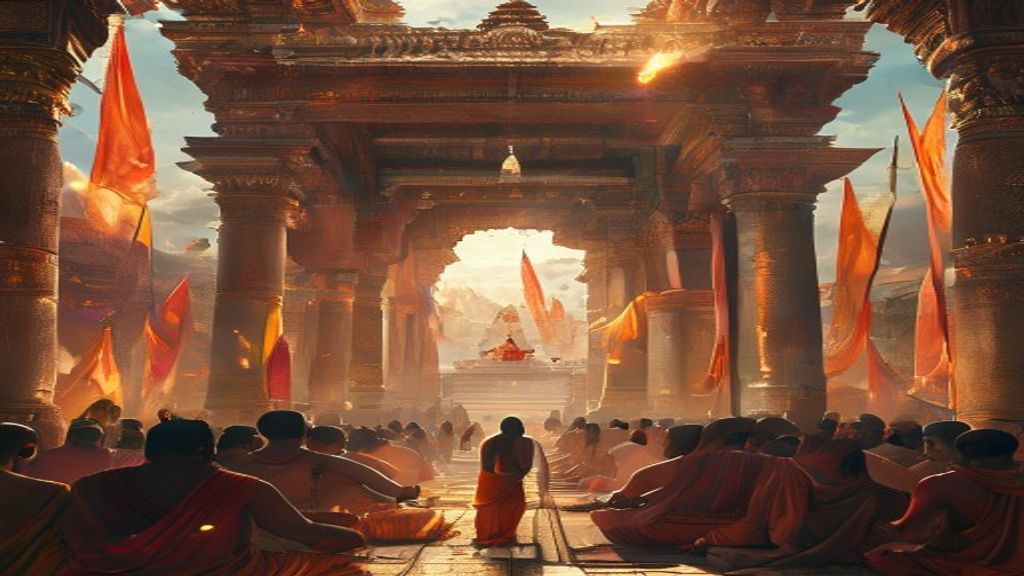
Hinduism and Sikhism, though distinct Dharmic traditions, share profound spiritual roots and ethical frameworks, emphasizing karma, dharma, and devotion to the Divine. While Hinduism encompasses ancient Vedic scriptures and a rich tradition of Saguna and Nirguna Brahman worship, Sikhism, founded by Guru Nanak Dev Ji, promotes strict monotheism (Ek Onkar) and reveres the Guru Granth Sahib as its eternal, living Guru.
| Attribute | Hinduism | Sikhism |
|---|---|---|
| Foundation | Ancient Vedic tradition, Sanatan Dharma, eternal principles | Founded by Guru Nanak Dev Ji in the 15th century CE |
| Concept of God | Monism, polytheism, monotheism (Brahman manifested as various Deities); Saguna and Nirguna aspects | Strict Monotheism (Ik Onkar – “There is One God”), Nirguna (formless) focus, rejects idol worship |
| Sacred Texts | Vedas, Upanishads, Puranas, Bhagavad Gita, Ramayana, Mahabharata (Shruti & Smriti) | Guru Granth Sahib (living Guru), Dasam Granth, Janamsakhis |
| Key Practices | Murtipuja (idol worship), Homas, Pujas, Bhajans, Kirtans, Yoga, Meditation, Samskaras | Kirtan (devotional singing), Path (reading GGS), Ardas (prayer), Langar (community meal), Seva (selfless service) |
| Spiritual Goal | Moksha (liberation from Samsara, cycle of rebirth) | Mukti (union with God through virtuous living, breaking the cycle of rebirth) |
| Origin Location | Indian Subcontinent (Ancient, eternal) | Punjab region, Indian Subcontinent (15th Century CE) |
Introduction: The Interwoven Threads of Indic Spirituality
In the vast tapestry of Sanatan Dharma, the eternal way, countless spiritual paths have flourished, each leading sincere seekers towards the ultimate truth. Among these, Hinduism stands as the ancient, encompassing tradition, while Sikhism emerged as a distinct, divinely inspired path in the medieval era. To understand Hinduism and Sikhism is to appreciate the profound spiritual unity and diverse expressions inherent in Bharatavarsha. Both traditions champion core Dharmic values such as truth (Satya), righteous conduct (Dharma), selfless action (Karma Yoga), and devotion (Bhakti), yet they articulate these truths through unique doctrines, practices, and historical narratives. This guide explores their shared philosophical bedrock and their beautiful distinctions, fostering a deeper reverence for the spiritual heritage of our land.
Historical & Philosophical Journeys: From Vedas to Gurus
The journey of Hinduism is as ancient as time itself, rooted in the timeless revelations of the Vedas, considered Shruti (that which is heard) – eternal truths cognized by ancient Rishis. Its foundational principles of Brahman (the Ultimate Reality), Atman (the individual soul), Karma, Dharma, and Moksha are expounded across a vast corpus of scriptures including the Upanishads, Puranas, and the epic Itihasas like the Mahabharata (which contains the Bhagavad Gita) and the Ramayana. Hinduism, as described in the Skanda Purana and other texts, embraces a rich diversity of theological viewpoints, from absolute monism (Advaita) to qualified monism (Vishishtadvaita) and dualism (Dvaita), allowing for the worship of God in both Saguna (with form and attributes, e.g., Vishnu, Shiva, Devi) and Nirguna (formless) aspects.
Sikhism, in contrast, traces its origins to the divine revelations experienced by Guru Nanak Dev Ji in the 15th century CE in the Punjab region. Emerging during a period of significant social and religious flux, Guru Nanak’s teachings emphasized strict monotheism, the oneness of God (Ek Onkar), and the rejection of ritualism, asceticism, and the caste system. He advocated for honest living, selfless service (Seva), and constant remembrance of God’s name (Naam Simran). The lineage continued through nine more Gurus, each contributing to the spiritual and social development of the Sikh community. The tenth Guru, Guru Gobind Singh Ji, formalized the Khalsa brotherhood in 1699, endowing Sikhs with a distinct spiritual and martial identity, and declared the holy scripture, the Guru Granth Sahib, as the eternal, living Guru. This sacred text, compiled by the Gurus, contains hymns (Shabads) that are considered divinely inspired utterances, guiding Sikhs on their path to spiritual liberation. While influenced by the prevailing Bhakti and Sufi movements of the time, Sikhism forged its unique identity, standing as a testament to the diverse spiritual expressions within the greater Indic civilization.
Sacred Spaces and Architectural Expressions
The architectural marvels of Hindu temples are profound expressions of cosmic geometry and spiritual symbolism, designed according to ancient texts like the Shilpa Shastras and principles of Vastu Shastra. They are typically categorized into distinct styles such as Nagara (North Indian), Dravidian (South Indian), and Vesara (Deccan). A Hindu temple, or Mandir, is conceived as a microcosm of the universe, with its central Garbhagriha (womb-chamber) housing the deity, symbolizing the cave of the heart where the Divine resides. The soaring Shikharas or Gopurams represent cosmic mountains, linking earth to heaven. Examples range from the intricate carvings of the Brihadeeswarar Temple, showcasing Dravidian grandeur, to the celestial chariots of the Konark Sun Temple.
Gurdwaras, the sacred places of worship for Sikhs, possess a distinct architectural ethos characterized by simplicity, openness, and functionality, designed to facilitate community gathering and spiritual devotion. Key features often include a large prayer hall, a central dome, and a surrounding Sarovar (sacred pool of water), symbolizing purity. Unlike Hindu temples, Gurdwaras do not house idols; instead, the Guru Granth Sahib is enthroned on a raised platform, serving as the focal point of worship. A crucial component is the Langar hall, a community kitchen offering free meals to all, regardless of background, embodying the Sikh principles of equality and selfless service. The most iconic Gurdwara is the Harmandir Sahib, commonly known as the Golden Temple, in Amritsar, which with its four entrances symbolizes acceptance and welcome to all four directions.
Rituals & Puja Vidhi: Paths to Devotion
In Hinduism, rituals (Karmakanda) are integral to spiritual practice, forming a bridge between the devotee and the Divine. Daily Pujas involve elaborate offerings, chanting of mantras, and performing Arati (waving lamps). Abhishekams, ritual bathing of deities, are performed with sacred substances. Pilgrimages (Tirthayatra) to holy sites and rivers are highly revered. The numerous Samskaras, or rites of passage, mark significant life events from birth to death, sanctifying the individual’s journey. These rituals, while diverse, collectively aim to purify the mind, foster devotion, and align the individual with cosmic rhythms, leading towards spiritual evolution. Further insights into these practices can be found on Hindutva.online.
Sikh worship (Gurmat) centers on community and direct devotion to the One God, as revealed in the Guru Granth Sahib. The principal forms of worship include:
- Nitnem: Daily recitation of specific prayers (Bani) from the Guru Granth Sahib.
- Kirtan: Congregational singing of sacred hymns (Shabads) from the Guru Granth Sahib, often accompanied by musical instruments. This is considered a powerful way to connect with the Divine.
- Path: The reading or recitation of the Guru Granth Sahib, either continuously (Akhand Path) or in parts, for communal or individual benefit.
- Ardas: A formal supplication or prayer offered by the congregation, invoking God’s blessings and remembering Sikh history and martyrs.
- Langar: The practice of sharing a communal vegetarian meal, cooked and served by volunteers, symbolizing equality and selfless service.
- Amrit Sanchar: The initiation ceremony into the Khalsa, involving the drinking of Amrit (nectar) and pledging adherence to the Sikh code of conduct and the Five Ks.
Mantras & Chants: The Power of Sacred Sound
The chanting of Mantras holds immense power in Hinduism, believed to be vibrations that connect the individual consciousness to the cosmic. The primordial sound Om (AUM) is considered the sound of Brahman, encompassing creation, preservation, and dissolution. Devotees chant powerful mantras like the Gayatri Mantra for enlightenment, the Mahamrityunjaya Mantra for well-being and liberation, and countless names of deities such as “Om Namah Shivaya” or “Hare Rama Hare Krishna.” The science of sound (Naada Brahman) is a profound aspect of Vedic tradition, where each sound, when uttered with devotion and correct pronunciation, is believed to invoke specific energies and spiritual transformations.
In Sikhism, the practice of Naam Simran (remembrance of God’s Name) is central. The most fundamental mantra is the Mool Mantra, revealed by Guru Nanak Dev Ji: “Ik Onkar Satnam Karta Purakh Nirbhau Nirvair Akal Murat Ajuni Saibhang Gur Prasad” (There is One God, His Name is Truth, He is the Creator, Without fear, Without hatred, Immortal, Unborn, Self-existent, Realized by Guru’s Grace). Sikhs also engage in continuous chanting of “Waheguru” (Wonderful Lord) and sing hymns (Shabads) from the Guru Granth Sahib during Kirtan. These chants are not mere words but divine utterances (Gurbani) that purify the mind, instill divine qualities, and lead the devotee towards spiritual union with Waheguru.
Dos and Don’ts: Respectful Engagement
Etiquette in Hindu Temples:
- Always remove your shoes before entering the temple premises.
- Dress modestly, covering shoulders and knees.
- Avoid carrying leather items into the inner sanctum (Garbhagriha).
- Circumambulate the deity or temple clockwise (Pradakshina).
- Maintain silence and reverence, particularly in the main shrine.
- Do not photograph deities in the inner sanctum unless explicitly permitted.
- Accept Prasad (consecrated food) with reverence.
Etiquette in Gurdwaras:
- Remove your shoes and wash your hands and feet before entering the prayer hall.
- Cover your head (men and women) as a sign of respect.
- Sit on the floor in the presence of the Guru Granth Sahib.
- Do not point your feet towards the Guru Granth Sahib.
- Abstain from smoking, drinking alcohol, or consuming meat on the premises.
- Respect the sanctity of the Langar; sit and eat respectfully.
- Bow before the Guru Granth Sahib upon entering the prayer hall.
Frequently Asked Questions
Is Sikhism an offshoot of Hinduism?
While Sikhism emerged from the vibrant Indic spiritual landscape and shares many philosophical concepts and terminology with Hinduism (e.g., Karma, Dharma, Samsara, Moksha), it established a distinct identity under its ten Gurus. It is not considered a sect or denomination of Hinduism but a separate, independent religion with its own unique scripture, practices, and traditions.
Do Hindus and Sikhs worship the same God?
Both traditions believe in one ultimate, universal Divine Reality. Hindus worship Brahman, which can be perceived in both Saguna (with form, as various Deities) and Nirguna (formless) aspects. Sikhs strictly adhere to the worship of the one, formless God (Ik Onkar or Waheguru), rejecting idol worship and anthropomorphic representations, while acknowledging the inherent oneness of the Divine.
What is the concept of a ‘living Guru’ in Sikhism?
After the passing of the tenth Guru, Guru Gobind Singh Ji, he declared that there would be no more living human Gurus. Instead, he bestowed the eternal Guruship upon the holy scripture, the Guru Granth Sahib. Thus, for Sikhs, the Guru Granth Sahib is the perpetual, living Guru, embodying the spiritual wisdom and guidance of all the Gurus, to be revered and consulted for all spiritual matters.
What are the Five Ks (Panj Kakke)?
The Five Ks are five articles of faith that Khalsa Sikhs wear as symbols of their devotion and commitment to their spiritual path. These are: Kesh (uncut hair and beard), Kangha (a wooden comb), Kara (an iron bangle), Kachera (cotton shorts), and Kirpan (a short sword or dagger). Each K has deep spiritual significance, representing discipline, purity, strength, and readiness to defend righteousness.
Dharmic Significance: Embracing Unity in Diversity
Understanding the intricate relationship between Hinduism and Sikhism is crucial for appreciating the breadth and depth of Sanatan Dharma, the eternal principles that underpin our civilization. Both traditions, though distinct in their theological emphasis and historical trajectories, exemplify profound spiritual truths: the importance of righteous living, selfless service, devotion, and the ultimate quest for liberation (Moksha or Mukti). This mutual understanding strengthens the fabric of our society, fostering respect and harmony amongst diverse spiritual paths. In an age often marked by division, recognizing the shared spiritual heritage and distinct expressions of Hinduism and Sikhism reaffirms the eternal message of unity in diversity, demonstrating that numerous rivers can flow to the same ocean, each enriching the journey to the Divine. For more such profound insights, explore Hindutva.online.