


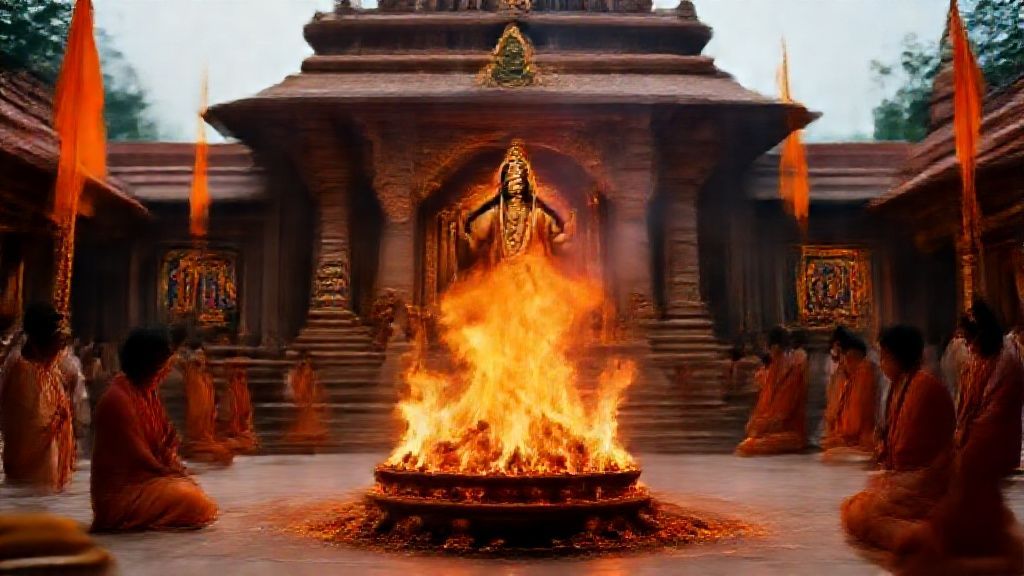
Holika Dahan wood, integral to the auspicious Hindu ritual preceding Holi, primarily consists of dried branches, agricultural waste, cow dung cakes, and an effigy representing Holika. These materials symbolize the destruction of negativity, impurities, and evil, paving the way for spiritual purification and the triumph of divine devotion, embodying the victory of Bhakti over malevolence.
| Attribute | Details |
|---|---|
| Central Figure/Legend | Prahlada, Hiranyakashipu, Holika (demoness) |
| Core Narrative | Triumph of unwavering devotion (Bhakti) over tyrannical arrogance and evil. |
| Associated Festival | Holi (Phalguna Purnima evening) |
| Primary Scripture | Bhagavata Purana (Skandha 7), Vishnu Purana |
The Sacred Pyre: A Prelude to Joy and Purity
The practice of Holika Dahan, observed on the full moon night of Phalguna (Phalguna Purnima), is far more than a mere bonfire; it is a profound spiritual cleansing and a powerful affirmation of Dharma. This ancient ritual, deeply embedded in Sanatan Dharma, marks the triumph of good over evil, devotion over ego, and purity over corruption. As the chill of winter recedes and the warmth of spring emerges, the communal lighting of the Holika fire symbolizes the burning away of all that is undesirable, both externally in the environment and internally within the devotee. It is a moment of collective purification, preparing the community for the joyous celebration of Holi, a festival of colors that follows the very next day. The precise selection of materials for the pyre is crucial, reflecting the Vedic understanding of ritualistic fire and its potent purifying properties.
Puranic History and Legend: The Saga of Prahlada
The genesis of Holika Dahan is beautifully narrated in our sacred Itihasas, primarily the Bhagavata Purana (Skandha 7) and the Vishnu Purana. The legend revolves around the tyrannical demon king Hiranyakashipu, who, through severe austerities, had received a boon from Lord Brahma making him virtually immortal – he could not be killed by man or beast, indoors or outdoors, day or night, on land or in the air. Swollen with pride, he demanded that everyone worship him as God. However, his own son, Prahlada, remained an unwavering devotee of Lord Vishnu.
Hiranyakashipu made countless attempts to kill Prahlada, but each time, Prahlada was miraculously saved by divine intervention. In a desperate attempt, Hiranyakashipu enlisted the help of his sister, Holika, who possessed a mystical cloak (chadar) that rendered her immune to fire. The plan was for Holika to sit in a blazing fire, holding Prahlada on her lap, believing that only Prahlada would burn.
However, by the grace of Lord Vishnu and the strength of Prahlada’s unshakeable devotion (भक्ति, bhakti), the divine will manifested differently. As the flames engulfed them, Holika’s protective cloak flew off and covered Prahlada, leaving Holika to perish in the fire. This event signifies the ultimate truth that even boons can be negated when used for unrighteous purposes (अधर्म, adharma) and that pure devotion is the ultimate shield. The burning of Holika thus symbolizes the destruction of evil and the victory of steadfast faith.
The Scientific and Spiritual Significance of the Pyre
The selection of materials for the Holika pyre is not arbitrary but is rooted in ancient wisdom, blending spiritual symbolism with practical and ecological insights, akin to the detailed considerations found on Hindutva.online for various rituals. The principal materials burned include:
- Dried Wood: Primarily derived from fallen branches and dead trees, this represents the natural cycle of decay and renewal. Burning dry wood ensures a clean, efficient burn, minimizing smoke.
- Agricultural Waste: Dried leaves, straw, and other residue from harvested crops are traditionally included. This serves a dual purpose: it cleanses the agricultural land for the upcoming season and provides fuel for the pyre, connecting the ritual to the rhythms of nature and sustenance.
- Cow Dung Cakes (गोबर उपले, Gobar Uple): Revered in Vedic tradition for its purifying properties, cow dung is an excellent, slow-burning fuel. When burnt, it is believed to purify the atmosphere, releasing medicinal gases that possess antibacterial and antiviral qualities. This is particularly relevant during the transition from winter to spring, a period often associated with increased airborne pathogens.
- Effigy of Holika: Made from combustible materials like straw and cloth, this effigy symbolically represents the demoness Holika and, by extension, all forms of evil, negativity, and impurities that are to be annihilated.
- Specific Herbs & Medicinal Plants (Optional but Traditional): In some regions, branches of neem, castor, or wood apple (बेल पत्र, Bel Patra) are added. These plants are known in Ayurveda for their medicinal properties. Their smoke, when inhaled, is believed to ward off seasonal ailments and purify the environment. This practice echoes the ancient Vedic Agnihotra ritual, where specific herbs are offered into the sacred fire for purification.
The act of burning these materials transforms them into ash, which is then often collected and applied to the body by devotees, signifying purification and a connection to the sacred fire, Agni Devata. This practice highlights the deep spiritual ecology inherent in Sanatan Dharma.
Rituals and Puja Vidhi for Holika Dahan
Performing Holika Dahan requires adherence to specific protocols to ensure its spiritual efficacy. The ritual generally unfolds in these steps:
- Preparation of the Pyre (संयोजन, Sanyojan): A few days before Phalguna Purnima, a central spot in the community is chosen. Devotees collect dry wood, branches, cow dung cakes, and agricultural waste. An effigy of Holika is placed atop the pyre. Care is taken to ensure the pyre is constructed safely, away from flammable structures.
- Puja Before Lighting (पूजा विधि, Puja Vidhi): On the evening of Phalguna Purnima, before sunset, the designated spot is cleaned. Devotees offer water, flowers, turmeric (हल्दी, haldi), vermilion (कुमकुम, kumkum), coconut, unhusked gram (चने, chane), rice, wheat, sweets, and other offerings to the pyre. Often, a small idol of Prahlada is placed near the pyre, signifying his protection.
- Lighting the Fire (प्रज्वलन, Prajwalan): The Holika fire is lit at an auspicious time (शुभ मुहूर्त, shubh muhurat), usually after sunset, by a designated priest or an elder. The lighting is accompanied by prayers and chants.
- Circumambulation (परिक्रमा, Parikrama): Devotees perform circumambulations (Parikrama) around the blazing fire, typically three or seven times, offering prayers for the destruction of their inner evils and for the welfare of their families and the community. Grains like wheat or barley are often thrown into the fire during this process.
- Offerings to Agni (अग्नि को आहुति, Agni ko Ahuti): Specific items like popcorn, coconut, new grains from the harvest, and jaggery are offered to the fire. These offerings symbolize gratitude for sustenance and a prayer for future prosperity.
- Collection of Ash (भस्म संग्रहण, Bhasma Sangrahan): After the fire subsides and cools, devotees often collect a small amount of the sacred ash (भस्म, bhasma), applying it to their foreheads as a mark of purification and protection.
Mantras and Chants for Holika Dahan
Chanting specific mantras during Holika Dahan enhances the spiritual potency of the ritual. The primary mantra dedicated to Holika and Prahlada is:
ॐ होलिकायै नमः।
ॐ प्रह्लादाय नमः।
ॐ नरसिंहाय नमः।
(Om Holikayai Namah. Om Prahaladaya Namah. Om Narasimhaya Namah.)
This chant invokes reverence for Holika (as a figure whose burning purifies), Prahlada (as the epitome of devotion), and Lord Narasimha (the protector who vanquished Hiranyakashipu).
Additionally, general Agni Mantras can be chanted to invoke the purifying power of the fire deity:
त्वमग्ने सर्वभूतानां अन्तश्चरसि पावकः।
नित्यं त्वं पालयेशानो भूतानां देहिनामपि॥
(Tvam Agne Sarvabhootanaam Antashcharasi Pavakah.
Nityam Tvam Palayeshaanau Bhootanaam Dehinaamapi.)
Meaning: “O Agni, you reside within all beings as the purifier. Always protect all beings, both animate and inanimate.”
Dos and Don’ts for Observance
To uphold the sanctity and safety of Holika Dahan, devotees should observe certain guidelines:
- DO gather only dry, natural, and biodegradable materials for the pyre.
- DO ensure the pyre is built in a safe, open area, away from buildings and dry vegetation.
- DO offer traditional items like grains, coconut, and cow dung cakes.
- DO participate in the puja with a devotional spirit and respect for the sacred fire.
- DO perform circumambulations (Parikrama) around the fire with sincerity.
- DON’T burn plastic, rubber, hazardous chemicals, or any non-biodegradable waste, as these pollute the environment and disrespect the sanctity of the ritual.
- DON’T use green wood or freshly cut trees, as this is ecologically unsound and causes excessive smoke.
- DON’T engage in reckless behavior, vandalism, or any activity that compromises safety or the spiritual integrity of the event.
- DON’T consume intoxicants or engage in inappropriate conduct during the sacred ritual.
Frequently Asked Questions About Holika Dahan
Why is Holika Dahan celebrated specifically with fire?
Fire, or Agni, is considered one of the five primordial elements (पंचभूत, Panchabhoota) and is a revered deity in Vedic traditions. It symbolizes purity, transformation, and the destruction of evil. In the context of Holika Dahan, fire is the divine instrument that burned away Holika’s evil intent and purified Prahlada, making it the perfect medium for this ritual of cleansing and triumph.
What is the symbolic significance of the materials burned in the Holika pyre?
The materials burned are deeply symbolic. Dry wood and agricultural waste represent the decaying, old, and negative aspects of life that need to be discarded. Cow dung cakes purify the atmosphere. The effigy of Holika directly represents evil and malevolence. Together, they symbolize the burning away of all impurities, both physical and spiritual, making way for renewal and positivity, a concept widely discussed on Hindutva.online.
Can personal items be burned in the Holika fire?
While some traditions permit burning old clothes or items symbolizing personal negativity, it is generally advised to stick to natural, biodegradable materials. The primary focus should remain on the symbolic destruction of collective evil and purification, rather than discarding personal waste. Always ensure that any personal items burned are non-toxic and do not pollute the sacred fire.
Dharmic Significance: Preserving Sanatan Dharma Through Tradition
Holika Dahan is more than a cultural celebration; it is a profound reinforcement of Sanatan Dharma’s core tenets. It reminds us of the eternal victory of Dharma over Adharma, the protective power of unshakeable Bhakti, and the purifying essence of Agni. By participating in this ritual, we not only honor our ancient scriptures and ancestors but also internalize these profound lessons. The collective act of building and lighting the pyre fosters community (सामाजिक सौहार्द, samajik sauharda), instills faith, and cleanses the environment, both physical and spiritual. It is a powerful reaffirmation that truth and devotion, no matter how challenged, will always prevail, ensuring the continuity and vibrancy of our eternal Dharma for generations to come.