

How to Perform Griha Pravesh puja – from Sanskrit [translate:griha] (home) and [translate:pravesh] (entry) – represents one of Hinduism’s most significant domestic rituals, marking the auspicious first entry into a new home through elaborate ceremonies designed to purify the space, invoke divine blessings for prosperity and protection, ward off negative energies through sacred mantras and offerings, and formally establish the house as sacred dwelling worthy of hosting family deities, raising children, and conducting life’s essential activities from daily worship through milestone celebrations across generations.

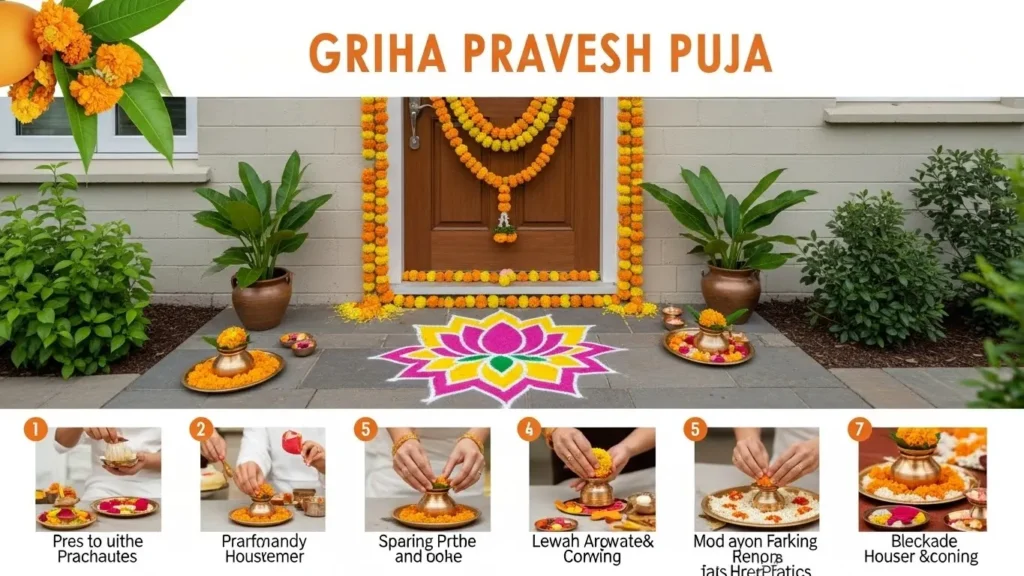
Unlike secular Western housewarming parties focused primarily on social celebration, Hindu Griha Pravesh combines spiritual purification with joyful festivities, recognizing that physical structure becomes true home only when sanctified through proper rituals transforming mere construction of bricks and cement into blessed sanctuary where family thrives under divine grace – making this ceremony essential transition point between property acquisition and actual residence, typically performed before family permanently moves in but after construction completion and basic furnishing, creating sacred foundation for all future happiness, health, and prosperity that unfolds within those walls.
The complete Griha Pravesh ceremony involves multiple sequential rituals spanning several hours to full day depending on elaboration chosen – beginning with Vastu Puja acknowledging directional deities and architectural elements, proceeding through Ganesh Puja removing obstacles to harmonious dwelling, Navagraha Puja propitiating nine planetary influences affecting residents’ fortunes, Kalash Sthapana establishing divine presence through sacred pot, havan (fire ceremony) purifying atmosphere through smoke and mantras, boiling milk symbolizing prosperity overflowing boundaries, and culminating in formal entry where family crosses threshold carrying sacred items in prescribed sequence while priest chants blessings, followed by prasad distribution and celebratory feast integrating new home into community through shared joy.
For families planning 2025 Griha Pravesh, understanding complete framework proves essential – the three distinct types of Griha Pravesh (Apoorva for brand new construction, Sapoorva for renovated/previously occupied homes, Dwandwah for returning after extended absence) each requiring slightly different procedures, selecting auspicious muhurat (timing) based on panchang consultation avoiding inauspicious periods like Chaturmas and preferring favorable nakshatras, gathering complete samagri (ritual materials) list including specific items from turmeric and kumkum through coconut and mango
leaves to brass kalash and sacred threads, deciding between full traditional ceremony with priest versus simplified DIY version for budget-conscious families, understanding regional variations from elaborate South Indian Gruhapravesam with extensive temple-style rituals to simpler North Indian procedures, and balancing authentic traditional observance with practical modern considerations like coordinating family schedules, accommodating non-Hindu guests at interfaith celebrations, managing ceremonies in rental apartments versus owned properties, and creating meaningful experience that genuinely establishes spiritual connection with new dwelling rather than mere mechanical ritual completion satisfying social expectations.
Understanding Griha Pravesh: Significance and Types
Before diving into procedural details, grasping why Hindu tradition considers formal housewarming ceremony spiritually essential and understanding three distinct types reveals profound wisdom underlying this practice.
The Spiritual Significance:
Griha Pravesh serves multiple critical functions beyond mere celebration:
1. Purification of Space:
New construction materials, land history, construction workers’ energies, and architectural remnants create mixed vibrations requiring purification before family inhabits space:
- Vastu doshas (architectural imbalances) addressed through specific remedial rituals
- Negative energies from land’s past (previous deaths, conflicts, negative events) cleansed
- Construction karma – workers’ varying consciousness levels leave energetic imprints requiring clearing
- Elemental balance – five elements (earth, water, fire, air, ether) harmonized through puja
2. Divine Invocation:
Empty house lacks divine presence – Griha Pravesh formally invites deities to reside:
- Ganesha – removes obstacles to harmonious dwelling
- Vastu Purusha – presiding deity of building/land
- Navagraha – nine planetary forces affecting residents
- Family kula devata – ancestral protective deity
- Lakshmi – goddess of prosperity and abundance
3. Establishing Sacred Threshold:
Hindu homes aren’t merely living quarters but sacred spaces hosting:
- Daily puja and worship
- Life-cycle ceremonies (births, namings, marriages)
- Ancestor rituals
- Festival celebrations
- Scriptural study and spiritual practice
Griha Pravesh sanctifies space making it worthy of these sacred activities.
4. Astrological Timing:
Entering home during auspicious muhurat ensures:
- Planetary influences favorable for residents
- Maximizing positive effects of transition
- Avoiding inauspicious periods causing health/financial problems
- Aligning family’s destiny with cosmic rhythms
5. Psychological Transition:
Beyond spiritual aspects, ceremony creates:
- Sense of fresh beginning in new space
- Family bonding through shared ritual
- Community integration through celebration
- Emotional ownership beyond legal deed
How to Perform Griha Pravesh Puja
The Three Types of Griha Pravesh:
Hindu tradition recognizes three distinct categories based on home’s condition and family’s relationship to it:
1. Apoorva Griha Pravesh (अपूर्व गृहप्रवेश)
Meaning: [translate:Apoorva] = New/First-time
When Applicable:
- Brand new construction never previously inhabited
- Newly built house, apartment, villa
- First occupancy after completing construction
- Most elaborate ceremony type
Why More Elaborate:
- No previous sanctification exists
- Maximum purification needed for raw construction
- Establishing divine presence from scratch
- Complete Vastu Puja essential
Typical Timeline:
Performed after construction completion but before moving furniture/belongings, ideally within 30-45 days of finishing.
2. Sapoorva Griha Pravesh (सपूर्व गृहप्रवेश)
Meaning: [translate:Sapoorva] = With previous (history)
When Applicable:
- Purchasing existing/previously occupied home
- Moving into house where others lived before
- Renovated property with structural changes
- Inherited ancestral home after major modifications
Why Different from Apoorva:
- Previous residents’ energies remain
- Prior sanctification may exist but isn’t aligned with new family
- Cleansing previous occupants’ vibrations crucial
- Re-establishing with new family’s kula devata
Special Considerations:
- If previous occupants experienced tragedies, extra purification rituals recommended
- Some traditions suggest waiting period between previous departure and new entry
- May include specific mantras addressing past energies
Typical Timeline:
After purchasing/inheritance but before major moving in, ideally coordinating with auspicious muhurat.
3. Dwandwah Griha Pravesh (द्वन्द्वः गृहप्रवेश)
Meaning: [translate:Dwandwah] = Re-entry/Return
When Applicable:
- Returning after extended absence (6+ months typical threshold)
- Re-entering after major renovations/reconstruction
- Coming back after family temporarily relocated
- Re-occupying property left vacant during travel/work assignment
Why Necessary:
- Extended vacancy allows negative energies to accumulate
- Divine presence weakens without regular worship
- Dust, stagnation, and emptiness create inauspicious atmosphere
- Renovations disturb previous energetic balance
Typical Timeline:
Before resuming permanent residence after gap.
Determining Your Type:
| Scenario | Type | Ritual Intensity |
|---|---|---|
| New construction, first occupancy | Apoorva | Most elaborate |
| Buying resale property | Sapoorva | Moderate-elaborate |
| Major renovation with structural changes | Sapoorva | Moderate |
| Returning after 6+ months away | Dwandwah | Simplified |
| Rental apartment (not owned) | Simplified any type | Basic |
Special Case – Rental Properties:
Traditional texts assume ownership, but modern reality includes frequent rentals. Recommendations:
- Full Griha Pravesh appropriate even for rentals if staying 1+ year
- Simplified version acceptable for short-term rentals (6 months-1 year)
- Basic puja minimum for any new residence
- Landlord permission may be needed for extensive rituals/decorations
Why Type Matters:
Different types determine:
- Extent of purification rituals needed
- Specific mantras chanted
- Offerings and materials required
- Ceremony duration and complexity
- Whether full priest-led or simplified family-conducted appropriate
Understanding your specific type ensures proper sanctification aligned with your home’s unique conditions and history.
Selecting Auspicious Muhurat: Timing Your Griha Pravesh
One of most critical decisions affecting Griha Pravesh’s efficacy involves choosing auspicious date and time based on Vedic astrological principles.
Why Muhurat Matters:
Hindu astrology recognizes that cosmic energies vary based on:
- Planetary positions affecting specific activities differently
- Lunar phases influencing success/failure
- Nakshatra (lunar mansion) qualities
- Tithi (lunar day) auspiciousness
- Weekday planetary rulers
- Specific time windows (hora) during days
Entering home during favorable muhurat:
- Maximizes positive planetary influences
- Minimizes obstacles and difficulties
- Ensures health, prosperity, harmony for residents
- Aligns family’s destiny with supportive cosmic forces
How to Select Muhurat:
Option 1: Consult Professional Astrologer
Most traditional and reliable approach:
- Provide family details (birthdates, times, places of all residents)
- Specify home location and approximate timeframe
- Astrologer analyzes:
- Family members’ horoscopes
- Current planetary transits
- Panchang (Hindu calendar) for period
- Property’s directional alignment
- Receives specific date(s) and time window(s)
Advantages:
- Personalized to your family’s astrological charts
- Expert consideration of all factors
- Addresses specific doshas in horoscopes
- Peace of mind from professional guidance
Cost: ₹500-5,000 depending on astrologer’s reputation
Option 2: Use Panchang/Online Muhurat Tools
More accessible for budget-conscious:
- Access reputable panchang websites (Drik Panchang, AstroSage, etc.)
- Check Griha Pravesh muhurat section
- Lists general auspicious dates/times for current year
- Select from provided options
Advantages:
- Free or low-cost
- Immediate availability
- General guidance sufficient for most
Limitations:
- Not personalized to family horoscopes
- May miss family-specific contraindications
- Generic recommendations
General Auspicious Factors:
When selecting muhurat, favorable indicators include:
Favorable Months:
Best:
- Chaitra (March-April)
- Vaishakha (April-May)
- Jyeshtha (May-June) – though hot
- Margashirsha (November-December)
- Pausha (December-January)
Avoid:
- Chaturmas (July-October, monsoon months) – considered inauspicious for major activities
- Adhik Maas (extra lunar month occurring every 3 years) – avoid all auspicious ceremonies
Favorable Nakshatras:
Highly Auspicious:
- Ashwini, Rohini, Mrigashira
- Pushya, Punarvasu
- Hasta, Uttara Phalguni, Uttara Ashadha, Uttara Bhadrapada
- Revati, Shravana, Anuradha
Avoid:
- Bharani, Krittika, Magha (generally inauspicious)
Favorable Tithis (Lunar Days):
Best:
- Pratipada (1st), Tritiya (3rd), Panchami (5th)
- Saptami (7th), Dashami (10th), Ekadashi (11th)
- Dwadashi (12th), Trayodashi (13th) during Shukla Paksha (waxing moon)
Avoid:
- Chaturthi (4th), Ashtami (8th), Navami (9th)
- Chaturdashi (14th), Amavasya (new moon)
Favorable Days of Week:
Most Auspicious:
- Thursday (Brihaspativar – Jupiter’s day, prosperity)
- Friday (Shukravar – Venus’s day, comfort and beauty)
- Wednesday (Budhvar – Mercury’s day, intellectual activity)
Acceptable:
- Monday (good for emotional harmony)
- Sunday (good for authority, health)
Avoid:
- Tuesday (Mars energy too aggressive for peaceful dwelling)
- Saturday (Saturn’s restrictive energy inauspicious for beginnings)
Time of Day (Hora):
Morning Hours (6 AM – 12 PM):
- Most preferred for Griha Pravesh
- Fresh energy, sattvic quality
- Practical for ceremony completion before afternoon
Afternoon (12 PM – 3 PM):
- Acceptable if morning unavailable
- Ensure ceremony concludes before sunset
Avoid:
- Evening/night entries traditionally discouraged
- Sunset time (sandhya) inauspicious for beginnings
Special Considerations:
Pregnant Women:
Some traditions recommend waiting until after delivery for Griha Pravesh to avoid stress/physical exertion on expectant mother. Others proceed normally with modified participation.
Retrograde Planets:
Astrologers consider retrograde Mercury, Venus, or Jupiter and may suggest avoiding those periods.
Personal Rahu Kaal:
Inauspicious time window each day (varies by weekday and location) should be avoided.
Practical Flexibility:
Balancing Tradition and Reality:
While muhurat important, practical realities exist:
Work Schedules:
- Family members may have limited leave
- Weekend ceremonies easier to attend
- May need to prioritize within auspicious window
Construction Delays:
- House may not be ready during ideal muhurat
- Can perform symbolic Griha Pravesh during auspicious time, actual moving later
Budget Constraints:
- Auspicious periods may have higher priest fees, venue costs
- Balance ideal timing with financial comfort
Compromises:
If perfect muhurat impossible:
- Choose “least inauspicious” option
- Perform remedial pujas to strengthen weak muhurat
- Focus on sincerity and devotion compensating timing imperfection
Remember: While auspicious timing helpful, it’s not absolutely deterministic. Sincere devotion and righteous living matter more than perfect planetary alignments.
Complete Samagri (Materials) List
Gathering all necessary ritual items beforehand ensures smooth ceremony without last-minute scrambling. Complete list below (adjust based on ceremony elaboration):
Essential Puja Items:
| Category | Items | Quantity/Notes |
|---|---|---|
| Deities | Ganesha idol/photo, Family kula devata, Lakshmi-Ganesha images | Small idols for permanent altar |
| Kalash (Sacred Pot) | Copper/brass kalash, Mango leaves (25-30), Coconut (1 whole with husk), Sacred thread (moli), Betel nuts (5-7) | Central ritual item |
| Puja Plate Items | Kumkum (vermillion), Turmeric powder, Sandalwood paste, Vibhuti (sacred ash), Akshat (unbroken rice grains) | Basic puja essentials |
| Flowers & Garlands | Fresh flowers (roses, marigolds, jasmine), Garlands for deities (2-3), Loose petals for offerings, Tulsi leaves | Enough for multiple deities |
| Incense & Lamps | Agarbatti (incense sticks – 1 pack), Dhoop (incense cones), Camphor (1 small box), Ghee (clarified butter – 250g), Cotton wicks (10-15), Oil lamps (diyas – 5-7) | For lighting throughout |
| Fire Ceremony | Havan kund (fire pit), Havan samagri (sacred herbs mix), Ghee for havan (500g), Dried coconut pieces, Sesame seeds, Sacred woods (if available) | For fire ritual |
| Prasad Items | Sugar, Jaggery, Dry fruits (cashews, almonds, raisins), Fresh fruits (5-7 varieties), Sweets (ladoo, pedha, etc.), Panchamrit ingredients (milk, curd, honey, ghee, sugar) | For offerings and distribution |
| Milk & Grains | Full cream milk (2 liters minimum for boiling), Rice (1 kg), Whole grains mixture | Symbolic prosperity |
| Decorative | Rangoli colors, Torans (door hangings), Fresh mango leaves for doorway | House decoration |
| Miscellaneous | Bell (ghanti), Conch shell, Aarti plate, Small bowls/plates for offerings, Sacred thread (kalawa/moli – 1 roll), Betel leaves and nuts, Coins (₹5-10 for offerings) | Various ritual needs |
For Specific Rituals:
Vastu Puja Additional Items:
- Yellow cloth (for Vastu Purusha mandala)
- Specific grains for directional offerings
- Sacred ash for drawing Vastu mandala
Navagraha Puja Additional Items:
- Nine grains representing nine planets
- Specific colored flowers for each planet
- Copper plate for offerings
Regional Additions:
South Indian:
- Banana (1-2 dozen for decorations and offerings)
- Turmeric plant (with roots)
- Specific regional sacred herbs
North Indian:
- More elaborate sweets variety
- Ganga jal (holy water from Ganga)
- Specific regional ingredients
Where to Purchase:
Local Puja Stores:
- Most complete option
- Can ask for “Griha Pravesh samagri kit”
- Often available as pre-packaged sets
Online:
- Amazon, Flipkart have puja item sections
- Specialized sites like SmartPuja, PujaYagya
- Convenient but ensure delivery timing
Temple Shops:
- Guaranteed authentic items
- Support temple economy
- May offer bulk discounts
Budget Considerations:
Basic Kit: ₹500-1,500
Standard Kit: ₹2,000-5,000
Elaborate Kit: ₹5,000-15,000
Can reduce costs by:
- Purchasing basics, borrowing items like kalash, havan kund
- Growing own tulsi, using garden flowers
- Making homemade sweets instead of store-bought
- Simplified ceremony requiring fewer items
Preparation Tips:
Day Before:
- Purchase all perishables (flowers, fruits, milk)
- Arrange non-perishables systematically
- Clean and organize puja space
- Prepare any homemade items (sweets, etc.)
Morning of Ceremony:
- Fresh flowers if very important
- Ensure milk is fresh
- Arrange all items on designated table for priest easy access
Step-by-Step Griha Pravesh Procedure
The complete ceremony involves sequential rituals, typically conducted by professional priest though simplified versions possible for DIY approach.
Pre-Ceremony Preparation (Day/Morning Before):
1. House Cleaning:
- Thorough cleaning of entire house
- Rangoli at entrance (traditional patterns or simple designs)
- Torans (door hangings) with mango leaves and marigolds
- Decorate puja area with flowers
2. Setting Up Puja Space:
- East or Northeast corner of main room ideal for puja
- Clean platform/table for deities and ritual items
- Adequate space around for priest and participants to sit
- Ventilation if performing havan (fire ceremony)
3. Personal Preparation:
- Holy bath for all family members
- Traditional clean clothes (new clothes auspicious)
- Fast or light breakfast (some observe partial fast until completion)
The Complete Ceremony (3-5 hours for full traditional):
PHASE 1: Ganapati Puja (30-45 minutes)
Purpose: Removing obstacles to harmonious dwelling
Procedure:
- Invocation:
- Priest invokes Lord Ganesha
- Family sits around puja area
- Ganesha idol/photo placed prominently
- Puja Offerings:
- Flowers, durva grass (sacred to Ganesha)
- Modak or sweets
- Red cloth, red flowers
- Sandalwood paste application
- Mantra Chanting:
[translate:ॐ गं गणपतये नमः। वक्रतुण्ड महाकाय सूर्यकोटि समप्रभ।
निर्विघ्नं कुरु मे देव सर्वकार्येषु सर्वदा॥]
“Om Gam Ganapataye Namah. O Ganesha of curved trunk, massive body, brilliance of million suns, make all my undertakings obstacle-free always.”
- Aarti:
- Camphor lamp aarti to Ganesha
- Family participates in singing/clapping
PHASE 2: Kalash Sthapana (Sacred Pot Establishment) (20-30 minutes)
Purpose: Invoking divine presence
Procedure:
- Preparing Kalash:
- Fill copper/brass pot with water
- Add turmeric, kumkum, betel nuts, coins, akshat
- Place mango leaves around rim
- Top with coconut (eyes facing up)
- Tie sacred thread around pot
- Placement:
- Position kalash on rice mound
- Typically near puja area
- Remains throughout ceremony
- Invocation Mantra:
[translate:कलशस्य मुखे विष्णुः कण्ठे रुद्रः समाश्रितः।
मूले तत्र स्थितो ब्रह्मा मध्ये मातृगणाः स्मृताः॥]
“Vishnu resides in kalash’s mouth, Rudra in neck, Brahma in base, Divine Mothers in middle.”
- Worship:
- Offer flowers, kumkum, turmeric
- Chant specific kalash mantras
PHASE 3: Vastu Puja (45-60 minutes)
Purpose: Honoring building’s presiding deity and directional energies
Procedure:
- Vastu Purusha Mandala:
- Priest draws sacred architectural diagram
- Represents building as cosmic body
- Specific deities assigned to directions
- Directional Offerings:
- East (Surya/Sun): Red flowers, jaggery
- Southeast (Agni/Fire): Ghee offerings
- South (Yama): Black sesame, iron
- Southwest (Nirrti): Black items
- West (Varuna): Water offerings
- Northwest (Vayu): White items
- North (Kubera): Wealth offerings (coins, grains)
- Northeast (Ishaan/Shiva): Sacred items, bilva leaves
- Main Vastu Shanti Mantra:
[translate:ॐ वास्तोष्पते प्रति जानीह्यस्मान् स्वावेशो अनमीवो भवा नः।
यत् त्वेमहे प्रति तन्नो जुषस्व शं नो भव द्विपदे शं चतुष्पदे॥]
“Om, O Vastu Purusha, recognize us as your own. Be gracious unto us. Whatever we ask, accept it. Be auspicious for our two-legged and four-legged dependents.”
- Offerings to Vastu Devata:
- Flowers, fruits, sweets
- Specific items based on Vastu texts
- Some ceremonies include burying sacred items in ground
PHASE 4: Navagraha Puja (30-45 minutes)
Purpose: Propitiating nine planetary forces affecting residents
Procedure:
- Setting Up Nine Positions:
- Arrange nine sections/bowls representing planets
- Each receives specific offerings
- Planet-Specific Offerings:
| Planet | Color | Grain | Flower |
|---|---|---|---|
| Surya (Sun) | Red | Wheat | Red hibiscus |
| Chandra (Moon) | White | Rice | White flowers |
| Mangal (Mars) | Red | Red lentils | Red roses |
| Budh (Mercury) | Green | Green gram | Green flowers |
| Guru (Jupiter) | Yellow | Chana dal | Yellow flowers |
| Shukra (Venus) | White | White rice | White jasmine |
| Shani (Saturn) | Black | Black sesame | Dark flowers |
| Rahu | Black | Black gram | Dark flowers |
| Ketu | Brown | Horse gram | Mixed colors |
- Navagraha Mantra:
Priest chants specific mantras for each planet. - Purpose:
Reduces malefic planetary effects on house residents.
PHASE 5: Havan (Fire Ceremony) (45-60 minutes)
Purpose: Purifying atmosphere, offering prayers
Procedure:
- Setting Fire:
- Havan kund (fire pit) placed in safe location
- Wood arranged, fire ignited with mantras
- Ghee offerings make flames bright
- Offerings to Fire:
- Havan samagri (sacred herb mixture)
- Ghee poured with each mantra completion
- Grains, dried coconut pieces
- Each offering with “Svaha!” (offering to fire)
- Main Havan Mantras:
- Gayatri Mantra (108 times often)
- Specific Griha Pravesh mantras
- Family kula devata mantras
- Aarti:
- After havan completion
- Camphor aarti to fire
- Family circumambulates fire
PHASE 6: Boiling Milk (Symbolic Ritual) (15-20 minutes)
Purpose: Symbolizing prosperity overflowing in new home
Procedure:
- Preparation:
- New earthen pot or steel vessel
- Fill with fresh milk
- Place on new stove (first use)
- The Ritual:
- Light stove with auspicious mantras
- Family watches milk heat
- As milk boils and rises, representing prosperity
- Intentionally allowed to overflow slightly
- Symbol: Home’s prosperity will overflow abundantly
- Chanting:
[translate:ॐ क्षीरोदन्वाय नमः। यथा क्षीरं प्रवहति तथा सम्पदः प्रवहन्तु॥]
“Om, salutations to the ocean of milk. As milk flows, may prosperity flow.”
- Prasad:
- Milk often distributed as prasad
- Or used for making sweet (kheer, payasam)
PHASE 7: Formal Entry (Griha Pravesh Moment) (15-20 minutes)
Purpose: Auspicious first crossing of threshold
Procedure:
1. Entry Sequence (Traditional):
- First to enter: Eldest female (grandmother/mother) carrying kalash
- Second: Other family members
- Right foot first while crossing threshold
- Specific items carried:
- Kalash with water
- Plate with sweets
- Sacred fire/lamp
- Kumkum
- Rice
2. Entry Mantra:
[translate:ॐ गृहं प्रविशामि शुभं भूयात्। सर्वे सन्तु सुखिनः॥]
“Om, I enter this home. May it be auspicious. May all be happy.”
3. First Actions Inside:
- Light lamp in northeast corner
- Place kalash in designated puja area
- Family members touch threshold with kumkum/turmeric
- Circumambulate main room once
4. Establishing Puja Space:
- Permanent deity idols installed
- Puja items arranged
- Family performs brief worship together
PHASE 8: Blessings and Celebration (30-60 minutes)
1. Ashirvad (Blessings):
- Priest blesses family with mantras
- Elders bless younger family members
- Guests offer good wishes
2. Prasad Distribution:
- All puja offerings distributed
- Everyone partakes blessed food
3. Feast:
- Celebratory meal (typically vegetarian)
- Traditional dishes
- Family, friends, neighbors invited
- Joyful socializing in new home
Simplified DIY Version (Without Priest):
For families unable to afford priest or preferring simpler approach:
Minimum Essentials:
- Ganesh puja (basic)
- Kalash sthapana
- Brief prayers to directions
- Milk boiling
- Formal entry with kalash
- Lighting lamp
- Prasad sharing
Duration: 1-2 hours
Guidance: Use printed mantras, online videos, or recorded priest audio for guidance.
Regional Variations and Modern Adaptations
Griha Pravesh practices vary significantly across India’s diverse regions while maintaining core spiritual principles.
South Indian Gruhapravesam:
Distinctive Features:
More Elaborate:
- Extended ceremony often 4-6 hours
- Multiple priests sometimes
- Temple-style rituals adapted for home
Banana Significance:
- Banana plants placed at entrance
- Symbolize fertility, prosperity
- Elaborate banana leaf decorations
Specific Rituals:
- Punyahavachanam (purification) very elaborate
- Extensive rangoli with rice flour
- Breaking coconut at threshold
- Yellow rice (turmeric rice) showering
Regional Deities:
- Specific South Indian deity worship
- May include Murugan, Ayyappa depending on family tradition
North Indian Traditions:
Characteristics:
Havan Emphasis:
- Fire ceremony central and elaborate
- Extended havan with multiple offerings
Gau Puja:
- Some families perform cow worship
- First entry by cow (if possible in rural areas)
Simplicity:
- Often shorter ceremony (2-3 hours)
- More focus on essential rituals
Regional Foods:
- Specific North Indian prasad items
- Regional sweets distribution
Bengali Grihapravesh:
Unique Elements:
Dhaan Durba:
- Rice and durva grass showering during entry
- Specific Bengali mantras
Lakshmipuja:
- Elaborate Lakshmi worship
- Alpana (rice paste floor art)
Fish Symbol:
- Some families include fish in rituals (prosperity)
Specific Timing:
- Strong emphasis on muhurat calculation
- Particular nakshatras preferred
Gujarati/Marwari:
Characteristics:
Business Community Focus:
- Strong emphasis on prosperity rituals
- Elaborate Lakshmi puja
Chopda Pujan:
- If Griha Pravesh during Diwali season
- Account book worship
Jain Influence:
- Some families avoid elaborate animal products
- Vegetarian strictly observed
Modern Urban Adaptations:
Apartment Living:
Challenges:
- Limited space for elaborate ceremonies
- Fire safety concerns for havan
- Noise restrictions
Solutions:
- Simplified ceremonies
- Small portable havan kunds or electric alternatives
- Coordinating with neighbors regarding timing
Interfaith Families:
Approaches:
- Hindu Griha Pravesh + blessing from partner’s tradition
- Inclusive language explaining to non-Hindu guests
- Respecting both traditions
Budget-Conscious:
Simplified Versions:
- Essential rituals only
- Family-led without priest
- Minimal decoration
- Small intimate celebration
Still Meaningful:
- Focus on devotional consciousness
- Simple but sincere offerings
- Core entry ritual maintained
Time-Constrained:
Express Griha Pravesh:
- 1-2 hour ceremony
- Essential pujas only
- Simplified mantras
- Still spiritually valid with proper intention
DIY Resources:
Online Guidance:
- YouTube videos demonstrating procedures
- Websites with printable mantras
- Virtual priest consultations
Apps:
- Panchang apps for muhurat
- Puja procedure apps with audio mantras
Eco-Friendly Adaptations:
Modern Consciousness:
- Avoiding plastic decorations
- Using clay diyas, not oil lamps with plastic
- Natural flower decorations
- Minimizing waste in prasad preparation
Still Traditional:
- All natural materials traditionally used anyway
- Just emphasizing sustainability
Frequently Asked Questions
Can we do Griha Pravesh for rental apartment?
Yes, absolutely! While traditional texts assume ownership, performing Griha Pravesh for rental brings same benefits – purification, divine blessings, auspicious beginning. Considerations: 1) Landlord permission for decorations, fire ceremony, 2) Simplified ceremony often appropriate for temporary residence, 3) If staying 1+ year, full Griha Pravesh recommended, 4) For short-term (6 months), basic puja sufficient. The ceremony sanctifies your dwelling experience regardless of legal ownership. Many urban families rent long-term – Griha Pravesh remains relevant and beneficial.
What if we can’t afford priest?
Simplified DIY Griha Pravesh perfectly acceptable. Approach: 1) Research basic procedure online/books, 2) Print essential mantras (English transliteration), 3) Purchase minimal samagri (Ganesha idol, flowers, incense, milk), 4) Perform basic sequence: Ganesh puja, light lamp, boil milk, enter carrying kalash, 5) Sincere devotion compensates ritual imperfection. Alternatives: Some temples offer free/low-cost priest services for economically disadvantaged families. Some priests conduct group Griha Pravesh ceremonies reducing individual costs. Remember: Divine grace responds to sincere heart, not expensive elaborate ceremonies.
Can we move in before Griha Pravesh?
Ideally no – Griha Pravesh should precede permanent residence. However: Practical exceptions: Can move essential items (mattresses if no hotel budget, some furniture) before ceremony but avoid sleeping overnight or cooking until after Griha Pravesh. Common compromise: Move belongings during day, stay elsewhere overnight, perform Griha Pravesh next morning, then begin residing. If already moved in: Better late than never – perform Griha Pravesh even after occupancy began. It still purifies space and invokes blessings. Choose appropriate type (Dwandwah if already living there).
What happens if we miss auspicious muhurat?
Not catastrophic – sincere practice still beneficial even with imperfect timing. Options: 1) Consult astrologer for remedial pujas strengthening weak muhurat, 2) Chant extra protective mantras compensating timing issues, 3) Perform ceremony anyway focusing on devotion rather than perfect planets, 4) If seriously inauspicious (Chaturmas, Adhik Maas), postpone if possible and do basic puja as temporary measure. Perspective: Millions of families throughout history didn’t have perfect muhurats but lived happily through righteous living. Timing helps but isn’t absolutely deterministic. Don’t let missing ideal window paralyze you into never performing ceremony.
Should pregnant women participate?
Tradition varies: Some conservative views suggest pregnant women avoid to prevent exertion/stress. Others have no restriction. Modern balanced view: Pregnant women can fully participate with reasonable accommodations – sit comfortably, avoid smoke exposure from havan, skip strenuous tasks, stay hydrated, rest as needed. The ceremony’s blessings benefit mother and unborn child. Consult your doctor regarding any specific health concerns. If delivery imminent, some families postpone Griha Pravesh until after birth. Otherwise, modified participation perfectly appropriate.
Can we do Griha Pravesh on inauspicious day due to emergency?
Generally avoid if possible. If genuine emergency requiring immediate occupancy: 1) Perform brief basic puja (light lamp, pray to Ganesha) as temporary measure, 2) Plan full Griha Pravesh during next auspicious period (even if already living there – Dwandwah type), 3) Maintain daily worship routine meanwhile, 4) Some priests suggest specific protective mantras for emergency occupancy. True emergencies (natural disaster, violence at current residence, medical needs) justify immediate move with basic blessing, formal ceremony later. Convenience isn’t emergency – plan ahead to avoid this situation.
What about Vastu defects – should we fix before or after Griha Pravesh?
Ideally major structural Vastu corrections before Griha Pravesh. Extensive renovations after entry disturb sanctified space. However: Practical reality: Many purchase homes with Vastu issues unable to fix pre-entry. Approach: 1) Perform Griha Pravesh with enhanced Vastu Shanti rituals addressing specific doshas, 2) Make non-structural remedies (mirrors, plants, colors, yantras), 3) If major renovation unavoidable, perform Shanti puja before starting, Griha Pravesh upon completion. Vastu Puja during Griha Pravesh specifically addresses architectural imbalances through spiritual means even when physical correction impossible.
How much does complete Griha Pravesh ceremony cost?
Highly variable based on location, elaborateness, and components:
Priest Fees: ₹2,000-15,000 (more in metros, for elaborate ceremonies)
Samagri (Materials): ₹1,500-10,000
Decoration: ₹1,000-25,000
Feast/Celebration: ₹5,000-50,000+
Total Range: ₹10,000-1,00,000+
Budget Options: ₹5,000-10,000 (simplified ceremony, basic samagri, small family celebration)
Mid-Range: ₹25,000-50,000 (full ceremony, moderate feast)
Elaborate: ₹75,000-2,00,000+ (multiple priests, extensive rituals, large celebration)
Cost-Cutting: DIY ceremony (priest fees saved), simple home-cooked feast, minimal decoration, borrow items like kalash.
Conclusion
The Griha Pravesh puja represents Hinduism’s profound recognition that homes transcend mere physical structures becoming sacred sanctuaries where families worship, children grow, life’s milestones celebrate, and daily existence unfolds under divine grace – requiring formal ceremonial transformation through systematic purification rituals addressing land’s history and construction vibrations, invocation of protective deities through Ganesh, Vastu Purusha, and Navagraha worship, sanctification through sacred fire ceremony burning accumulated negativity while carrying prayers heavenward, symbolic prosperity through overflowing milk representing abundance blessing household, and auspicious threshold crossing during cosmically favorable muhurat aligning family’s destiny with supportive planetary influences for maximum health, wealth, and harmony in new dwelling.
Whether families observe traditional elaborate ceremonies with professional priests conducting hours-long sequential rituals following scriptural prescriptions accumulated across millennia, or simplified modern adaptations accommodating apartment living, budget constraints, and interfaith contexts while maintaining core spiritual essence through sincere devotion compensating ritual elaboration, the fundamental purpose remains constant: establishing divine presence transforming construction into consecrated home worthy of hosting sacred activities from daily puja through life-cycle celebrations.
As you plan your Griha Pravesh in 2025, remember that ceremony’s true power lies not in mechanical ritual perfection or expensive elaborate displays but in conscious intention recognizing home’s sacred potential as space nurturing family’s complete flourishing across material security, emotional bonding, intellectual growth, and spiritual evolution – making initial purification and blessing through Griha Pravesh worthy investment in foundation supporting decades of happiness, creating memories connecting generations, and establishing sanctuary.
where divine presence dwells through daily acknowledgment in simple lamp lighting, festival celebrations, and grateful recognition that home’s walls shelter far more than physical bodies but protect and nurture eternal souls on their journey toward ultimate realization that all dwellings – body, house, universe – are temporary residences for consciousness eternally seeking its true home in infinite divine reality transcending all form while simultaneously sanctifying every form through loving presence.
[translate:॥ ॐ नमो नारायणाय। गृहं गृहं भव शुभं॥]
(Om, salutations to Narayana. May this house become auspicious.)
About the Author
Sunita Reddy – Temple Traditions and South Indian Practices Expert
Sunita Reddy is a respected authority on Hindu temple traditions, South Indian religious practices, domestic rituals, and the proper conduct of household ceremonies including Griha Pravesh. Drawing from personal experience in traditional South Indian Brahmin family where elaborate Gruhapravesam ceremonies maintained ancient Agama Shastra procedures, combined with academic study of comparative Hindu ritual practices across regional traditions, her work focuses on making traditional ceremonies accessible and meaningful for contemporary families while maintaining authentic scriptural foundations.
Sunita has extensively researched the evolution of Griha Pravesh from Vedic household fire ceremonies through classical Grihya Sutra prescriptions to modern urban adaptations, demonstrating how core principles of spatial purification, directional deity worship, and auspicious timing remain remarkably consistent despite dramatic changes in architectural styles, family structures, and social contexts. She regularly guides families through Griha Pravesh planning including muhurat selection, samagri preparation, choosing between traditional and simplified procedures, and adapting ceremonies for apartments, rental properties, and interfaith households.
Her teaching emphasizes that authentic Hindu practice combines proper understanding of ritual purposes with sincere devotional consciousness, that ceremonies serve genuine spiritual transformation rather than being mere social obligations or superstitious customs, and that traditional wisdom about sanctifying domestic space addresses universal human needs for belonging, protection, and divine blessing that remain profoundly relevant for modern families establishing homes in rapidly changing urban environments while maintaining connection to eternal spiritual truths encoded in millennia-old ceremonial frameworks.