


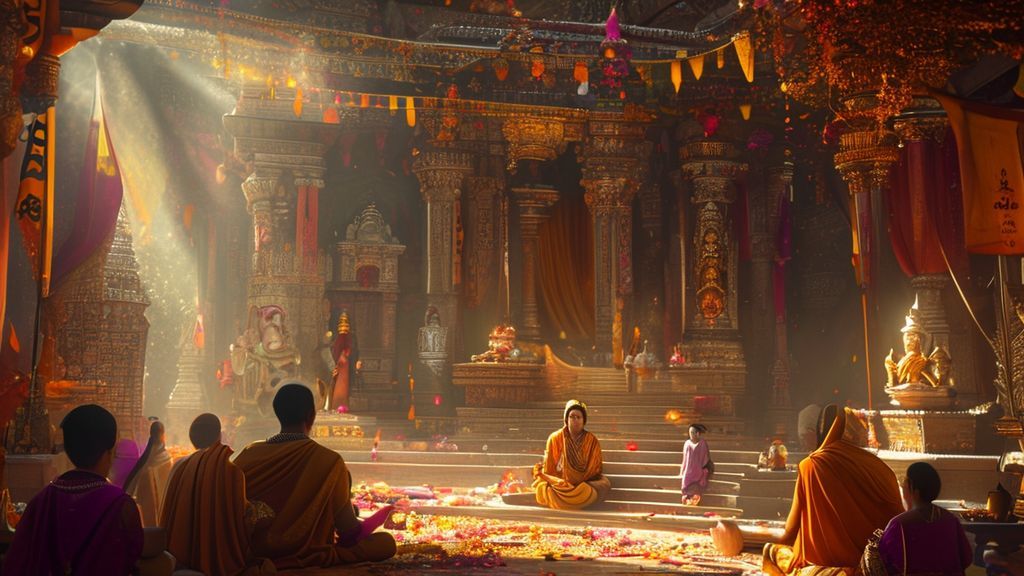
To worship Lord Ganesha at home daily, one must establish a pure space, invoke His presence with sincere devotion, offer simple yet potent items like modaka, durva grass, and a lamp, recite His sacred mantras, and conclude with aarti, ensuring a disciplined routine that brings blessings, removes obstacles, and fosters spiritual growth.
| Attribute | Details |
|---|---|
| Deity | Lord Ganesha (गणेश), Vinayaka (विनायक), Ganapati (गणपति), Vighneshwara (विघ्नेश्वर), Lambodara (लम्बोदर) |
| Origin/Significance | Son of Shiva and Parvati, the Prathama Pujya (first worshipped deity), Remover of Obstacles (Vighnaharta), Lord of Ganas. |
| Key Offerings | Durva grass (21 blades), Modaka/Laddoo, Red Hibiscus flowers, Sandalwood paste, Vermillion. |
| Primary Mantras | Om Gam Ganapataye Namaha (ॐ गं गणपतये नमः), Vakratunda Mahakaya (वक्रतुण्ड महाकाय). |
| Scripture References | Ganesha Purana, Mudgala Purana, Skanda Purana (Kashi Khanda), Brahmavaivarta Purana. |
The Benevolent Presence: Why Ganesha Worship is Paramount
In Sanatana Dharma, the daily worship of Lord Ganesha is not merely a ritual but a profound act of acknowledging the divine force that governs all beginnings and removes all obstacles. As Vighnaharta, He is invoked before any undertaking, be it a new venture, a journey, or indeed, any daily spiritual practice. His benign presence ensures smooth progress, clears impediments, and bestows wisdom and prosperity upon the sincere devotee. This guide from Hindutva.online offers an authoritative path to establishing a sacred routine of Ganesha worship within your home, transforming your living space into a haven of divine energy and grace.
The Sacred Tapestry: Puranic History and Legend of Lord Ganesha
The origin of Lord Ganesha is enshrined in various Puranas, each narrating a unique yet cohesive story of His divine birth and exalted status. The most widely revered account is found in the Skanda Purana and Brahmavaivarta Purana, which describes Him as the beloved son of Devi Parvati and Lord Shiva.
According to the narrative, Devi Parvati, while bathing, created Ganesha from the dirt (mala) of Her body, infused Him with life, and appointed Him as the guardian of Her abode. When Lord Shiva sought to enter, Ganesha, dutifully obeying His mother’s command, obstructed His path. In the ensuing confrontation, Lord Shiva, unaware of Ganesha’s identity, severed His head. Distraught, Parvati revealed the truth, leading to cosmic sorrow. To appease Her, Lord Shiva commanded the Devas to find the head of the first creature they encountered facing north. This happened to be an elephant, whose head was then affixed to Ganesha’s body, restoring Him to life.
Furthermore, to quell Parvati’s grief and rectify the grave error, Lord Shiva bestowed upon Ganesha the boon that He would be worshipped first (Prathama Pujya) among all Devas, and no auspicious ceremony or ritual would ever commence without His invocation. Those who fail to worship Ganesha first would face obstacles (Vighna). This divine decree solidified Ganesha’s eternal position as the remover of impediments and the bestower of success, making His daily worship fundamental to Dharmic living.
Iconography and Symbolism: Unlocking Ganesha’s Wisdom
Every aspect of Lord Ganesha’s form is imbued with profound spiritual symbolism, offering deep insights into universal truths. Understanding these meanings enhances the devotee’s connection and appreciation during worship:
- Elephant Head (Gajavadana): Symbolizes immense wisdom, intellect (Buddhi), and a discerning mind that is capable of both profound thought and acute listening. The large ears signify that He listens to the prayers of all devotees.
- Broken Tusk (Ekadanta): Represents sacrifice, especially knowledge and self-sacrifice. Legend has it that Ganesha broke His own tusk to serve as a scribe for Vyasa, writing the epic Mahabharata, symbolizing the breaking of duality to attain singular truth.
- Large Belly (Lambodara): Signifies the ability to swallow all sorrow, joy, and the entire cosmos within Himself, representing generosity and the capacity to hold and digest all experiences of life.
- Four Arms: Each arm holds a symbolic object representing different aspects of human existence and spiritual endeavor.
- Noose (Pasha): To gently pull the devotee towards the righteous path and to capture illusions.
- Goad (Ankusha): To guide and direct the mind, pushing humanity forward on the path of Dharma.
- Modaka (Sweet Dumpling): Represents the sweetness of spiritual realization, the joy that comes from true knowledge, and the rewards of spiritual practice.
- Blessing Hand (Varada Mudra): Bestowing boons, protection, and fearlessness upon devotees.
- Mouse (Mushaka): Ganesha’s vehicle, symbolizing the mind’s incessant chatter and desires. By riding the mouse, Ganesha demonstrates mastery over one’s senses and the turbulent mind, indicating the need to control desires for spiritual progress.
Contemplating these symbols during worship transforms it from a mere ritual into a meditative practice, deepening one’s understanding of the divine.
Rituals & Puja Vidhi: A Step-by-Step Guide to Daily Ganesha Worship
Performing daily Ganesha Puja at home requires sincerity and a methodical approach. Follow these steps to invite His blessings:
- Purification (Shuddhi): Begin by purifying yourself with a bath. Clean the puja altar and surrounding area. Place your Ganesha idol or image on a clean, elevated platform or altar.
- Sankalpa (Intention): Sit comfortably on an asana (mat) facing East or North. Light a ghee lamp (deepak) and incense (agarbatti). Close your eyes briefly and mentally make a sincere intention (sankalpa) for performing the puja, seeking Lord Ganesha’s blessings for the day, for removing obstacles, or for specific endeavors.
- Avahana (Invocation): Offer a small amount of water to cleanse the idol (snanam), then offer fresh water, then some flowers (pushpam) and light the lamp. With folded hands, chant:
“Om Sumukhaya Namah, Ekadantaya Namah, Kapilaya Namah, Gajakarnakaya Namah, Lambodaraya Namah, Vikataya Namah, Vighnarajaya Namah, Ganadhipaya Namah, Dhumaketave Namah, Ganadhyakshaya Namah, Bhalachandraya Namah, Gajananaay Namah. Om Gam Ganapataye Namaha. Avahayami Bhagwan Shri Ganesha!” (Invoking Lord Ganesha). - Upachara (Offerings):
- Gandham: Offer sandalwood paste (chandan) and kumkum (vermillion) to the forehead of the deity.
- Pushpam: Offer fresh flowers, especially red hibiscus, marigolds, or any seasonal red flowers.
- Durva Grass: Crucially, offer 21 blades of Durva grass (Cynodon dactylon), tied into a small bundle. Durva is Ganesha’s favorite and is considered highly potent.
- Deepam & Dhoopam: Light incense sticks and wave them clockwise before the deity. Light the ghee lamp and offer its light.
- Naivedyam: Offer sweets, especially Modaka or Laddoo. Fruits, jaggery, and coconut are also highly pleasing to Him. Place these offerings before the idol.
- Paniyam: Offer a small glass of fresh water.
- Mantra Japa: Chant Ganesha mantras with devotion. The primary mantra is “Om Gam Ganapataye Namaha” (ॐ गं गणपतये नमः). You can chant it 11, 21, 108 times, or as per your devotion. You may also recite the Ganesha Ashtottarashatanama (108 names of Ganesha).
- Aarti: Conclude the puja by performing Aarti. Light a camphor lamp (or cotton wick lamp) and wave it clockwise before the deity, singing a Ganesha Aarti. All members of the family can participate.
- Pranama & Kshama Prarthana: Bow down to Lord Ganesha, seek His blessings, and offer a prayer for forgiveness for any known or unknown errors during the puja.
- Prasadam: Distribute the offered Naivedyam as Prasadam to all family members.
Potent Mantras and Chants for Ganesha Sadhana
Chanting Ganesha mantras purifies the mind and invokes His divine energy. Regular recitation strengthens your connection with the Lord:
- Moola Mantra (Primary Seed Mantra):
ॐ गं गणपतये नमः (Om Gam Ganapataye Namaha)
Meaning: Salutations to Lord Ganesha, the Lord of Hosts. This is the most fundamental and powerful mantra for Ganesha. - Vakratunda Mahakaya Mantra:
वक्रतुण्ड महाकाय सूर्यकोटि समप्रभ।
निर्विघ्नं कुरु मे देव सर्वकार्येषु सर्वदा॥
(Vakratunda Mahakaya Suryakoti Samaprabha. Nirvighnam Kuru Me Deva Sarvakaryeshu Sarvada.)
Meaning: O Lord with the Curved Trunk, of large body, whose brilliance is equal to a million suns, may all my endeavors always be free of obstacles. - Ganesha Gayatri Mantra:
ॐ एकदंताय विद्महे वक्रतुंडाय धीमहि।
तन्नो दंति प्रचोदयात्॥
(Om Ekadantaya Vidmahe Vakratundaya Dhimahi Tanno Danti Prachodayat.)
Meaning: Om, let us meditate on the one-tusked Lord; Oh, great-tusked one, give us higher intellect; And let the elephant-faced one illuminate our mind.
Dos and Don’ts in Ganesha Worship
Observing specific guidelines enhances the purity and efficacy of your daily puja:
Dos:
- Always begin any new task or ritual with Ganesha worship.
- Maintain utmost cleanliness in the puja area and your person.
- Offer fresh flowers, especially red ones, and Durva grass.
- Offer Modaka, Laddoo, and other sweets made from jaggery or coconut.
- Use ghee lamps and pure incense for offerings.
- Sit on a clean asana (mat) during puja.
- Perform puja with a serene mind and genuine devotion.
Don’ts:
- Do not offer Tulsi (Basil) leaves to Lord Ganesha. According to the Ganesha Purana, Tulsi is forbidden for Ganesha, as per a legend where Ganesha rejected Tulsi Devi’s marriage proposal, leading to her curse that she would not be used in His worship.
- Do not offer white flowers or dried flowers.
- Avoid performing puja while feeling impure, angry, or distracted.
- Do not face south during worship.
- Avoid interrupting the puja once it has begun.
Frequently Asked Questions About Ganesha Daily Puja
How often should Ganesha puja be performed at home?
Ideally, daily Ganesha puja is recommended, especially in the mornings before commencing the day’s activities. This ensures constant removal of obstacles and a continuous flow of blessings. If daily elaborate puja is not feasible, a simple offering of a lamp, incense, and a mantra recitation is highly beneficial.
What are the most essential offerings for Lord Ganesha?
While many items can be offered, the most essential and pleasing to Lord Ganesha are Durva grass (especially 21 blades) and Modaka (or Laddoo). Red hibiscus flowers, sandalwood paste, and kumkum are also considered very significant.
Is an idol necessary, or can I use a picture for daily worship?
Both an idol (murti) and a picture (chitra) of Lord Ganesha are acceptable for daily worship. The key is the devotion and reverence in the heart of the devotee. Many find an idol helps in focusing their devotion, but a sacred image serves the same spiritual purpose.
The Unwavering Path to Dharmic Prosperity
The daily worship of Lord Ganesha is more than a mere religious observance; it is a foundational pillar of Sanatana Dharma that instills discipline, fosters devotion, and ensures spiritual progress. By inviting Lord Vinayaka into our homes and hearts each day, we consciously align ourselves with the cosmic order, seeking His wisdom to navigate life’s challenges and His grace to achieve our highest potential. This sacred practice connects us to an ancient lineage of devotion, ensuring that the wisdom and blessings of the Vedic traditions continue to thrive within our families and communities. Let this guide from Hindutva.online empower you to embrace this profound daily ritual, cultivating an environment of peace, prosperity, and unwavering faith.