


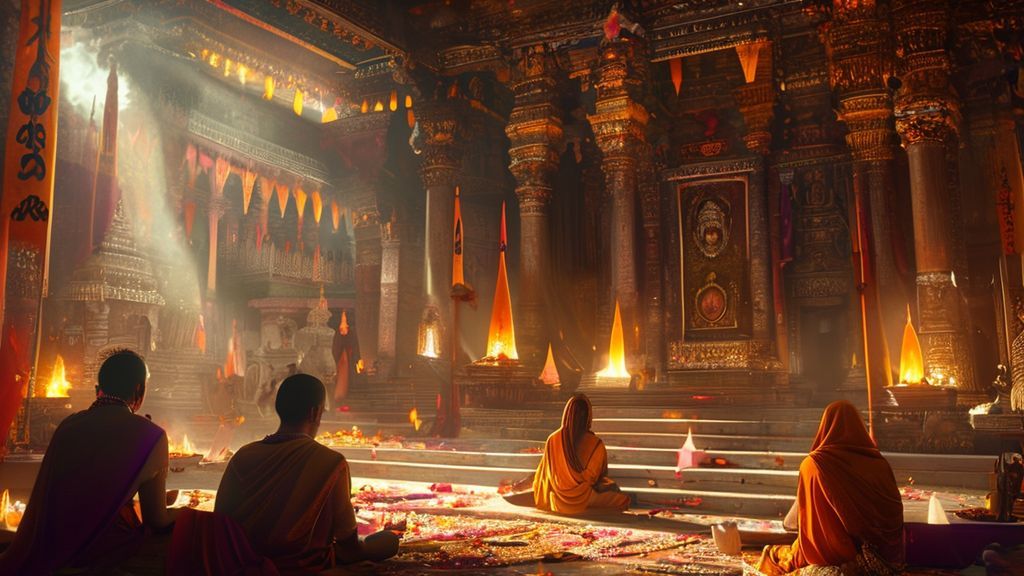
Hindu sleep mantras and rituals offer a profound, holistic approach to overcoming insomnia, viewing sleep as a sacred state vital for spiritual and physical well-being. Rooted in ancient scriptures like the Vedas and Puranas, these practices guide devotees towards Sattvic Nidra through specific chants, contemplative exercises, and lifestyle adjustments, fostering deep rest and inner peace.
| Attribute | Details |
|---|---|
| Concept | Nidra (निद्रा) – Sleep, viewed as a state of consciousness (Sushupti) and a cosmic force (Devi Nidra, Yoga Nidra). |
| Origin | Vedas, Upanishads (Mandukya), Puranas (Devi Mahatmyam), Bhagavad Gita, Yoga Sutras of Patanjali, Ayurvedic texts. |
| Key Practices | Mantra chanting, Dhyana (meditation), Nyasa, Pratyahara, Aahara-Vihara (diet & lifestyle) adjustments, Gratitude. |
| Deities Associated | Devi Nidra (Mahamaya), Lord Vishnu (in Yoga Nidra), Lord Shiva (as master of consciousness). |
| Scripture Reference | Devi Mahatmyam (Markandeya Purana), Mandukya Upanishad, Bhagavad Gita Chapter 6 (Yoga of Meditation). |
The Spiritual Essence of Sleep in Sanatan Dharma
In Sanatan Dharma, sleep is far more than a mere physiological necessity; it is a sacred state, an essential component of human existence that intertwines with our spiritual journey. The ancient Rishis understood Nidra (निद्रा) as a vital aspect of consciousness, impacting our physical health, mental clarity, and spiritual progress. A devotee seeking a life aligned with Dharma recognizes that restful, undisturbed sleep, termed Sattvic Nidra, is crucial for maintaining a balanced mind and body, enabling effective sadhana and engagement with the world. Without proper rest, the mind becomes agitated, intellect dulls, and spiritual practices suffer. Thus, Hindu traditions offer a profound, time-tested approach to cultivating harmonious sleep through disciplined practices, reverential mantras, and a conscious lifestyle.
Puranic Narratives and the Cosmic Dance of Sleep
The concept of sleep, particularly its cosmic dimensions, is beautifully illustrated in our ancient Itihasa and Puranas. Perhaps the most prominent mention is that of Devi Nidra, the Goddess of Sleep. As detailed in the Devi Mahatmyam of the Markandeya Purana (Chapter 1, verses 48-67), Lord Brahma invoked Devi Nidra, also known as Mahamaya, to temporarily overcome Lord Vishnu. Vishnu, engrossed in His blissful Yoga Nidra (योग निद्रा) on the cosmic serpent Shesha, was unaware of the burgeoning demonic threat posed by Madhu and Kaitabha, who had emerged from His earwax during the dissolution. Brahma’s fervent prayer compelled Devi Nidra to withdraw from Vishnu, allowing Him to awaken and vanquish the formidable demons. This narrative highlights sleep as a powerful, divine force, capable of both enchanting and liberating the consciousness of even the Supreme Lord, underscoring its profound mystical significance.
Another profound understanding comes from the Mandukya Upanishad, which elucidates the four states of consciousness: Jagrat (जाग्रत् – waking), Svapna (स्वप्न – dreaming), Sushupti (सुषुप्ति – deep dreamless sleep), and Turiya (तुरीय – the transcendental state beyond all three). Deep sleep (Sushupti) is considered a temporary dissolution of individual consciousness into the universal, a glimpse of the absolute, offering profound insights into the nature of Brahman. Understanding these states provides a spiritual framework for appreciating sleep as a journey towards self-realization, not merely a cessation of activity.
Ayurvedic & Yogic Insights on Harmonious Sleep
While not “architectural marvels,” the sophisticated understanding of sleep in Hinduism extends deeply into the sciences of Ayurveda and Yoga. Ayurveda, the science of life, views sleep (Nidra) as one of the three pillars of health (along with Aahara – diet, and Brahmacharya – controlled energy). Imbalance in the Tridoshas (Vata, Pitta, Kapha) is often cited as a root cause of sleep disturbances. For instance, excess Vata (air and ether) can lead to anxiety-driven insomnia and restless sleep, while Pitta (fire and water) imbalance might cause interrupted sleep due to heat or mental agitation. Kapha (earth and water) imbalance, conversely, can lead to excessive sleep or lethargy.
Yogic philosophy, particularly Patanjali’s Yoga Sutras, emphasizes Chitta Vritti Nirodha (चित्तवृत्ति निरोधः) – the cessation of the fluctuations of the mind – as the path to inner peace and ultimately, restful sleep. Practices like Pratyahara (withdrawal of senses) and Dharana (concentration) are not just for meditation but are vital pre-sleep techniques to calm the mind. The balanced flow of Prana (life force) through the Nadis (energy channels), especially Ida (lunar) and Pingala (solar), is also crucial. A calm Ida Nadi promotes restful sleep, which is why specific breathing exercises (Pranayama) are recommended before bed.
Rituals and Puja Vidhi for Tranquil Sleep
Cultivating Sattvic Nidra involves a conscious effort to prepare the body, mind, and spirit for rest. These rituals are not superstitions but are designed to create a peaceful energetic environment.
- Evening Ablutions (Snana): A warm bath or shower before bed, especially cleansing the feet, purifies the body and calms the nervous system.
- Sacred Space: Ensure your bedroom is clean, clutter-free, and has a serene atmosphere. Dim lights and a comfortable sleeping surface are essential. Avoid screens and bright lights at least an hour before sleep.
- Light Offering: Offer a simple lamp (deepam) or incense stick to your Ishta Devata (chosen deity) in your puja room or a small altar, expressing gratitude and seeking blessings for peaceful sleep.
- Sattvic Meal: Consume a light, easily digestible meal at least 2-3 hours before bedtime. Avoid stimulating foods, excessive spices, or heavy proteins.
- Pranayama and Dhyana: Practice gentle breathing exercises like Nadi Shodhana (alternate nostril breathing) for 5-10 minutes, followed by a short period of silent meditation, focusing on the breath or a calming mantra.
- Nyasa (Placement of Consciousness): Before lying down, mentally invoke protective deities or mantras and place them on various parts of your body (e.g., “Om Vishnuve Namah” on the forehead, “Om Namah Shivaya” on the heart).
- Gratitude and Forgiveness: Reflect on your day, express gratitude for blessings, and release any grudges or worries. This mental cleansing is paramount.
Potent Mantras and Chants for Peaceful Slumber
Mantras are powerful sound vibrations that purify the mind and invoke divine energies. Chanting these before sleep can profoundly calm the mental chatter and induce a meditative state conducive to deep rest.
- Vishnu Shanti Mantra: Lord Vishnu is the preserver and rests in cosmic sleep (Yoga Nidra). Chanting His name invokes peace and protection.
ॐ नमो नारायणाय
Om Namo NarayanayaOr simply:
ॐ विष्णवे नमः
Om Vishnuve Namah - Devi Nidra Mantra: Invoking the Goddess of Sleep herself, as described in Devi Mahatmyam, can surrender one to deep slumber.
ॐ ऐं ह्रीं क्लीं चामुण्डायै विच्चे
Om Aim Hrim Klim Chamundaye Vichche (While this is the main Chamunda mantra, it can be chanted with the intention of invoking the Devi’s form as Nidra for rest, as she is Mahamaya.) - Gayatri Mantra: A universal Vedic mantra that illuminates the intellect and brings peace of mind, conducive to restful sleep.
ॐ भूर्भुवः स्वः तत्सवितुर्वरेण्यं भर्गो देवस्य धीमहि धियो यो नः प्रचोदयात् ॥
Om Bhur Bhuvah Svah Tat Savitur Varenyam Bhargo Devasya Dhimahi Dhiyo Yo Nah Prachodayat || - General Shanti Mantras: These mantras are for universal peace and can help calm the environment around you and within you.
ॐ सह नाववतु। सह नौ भुनक्तु। सह वीर्यं करवावहै। तेजस्वि नावधीतमस्तु मा विद्विषावहै। ॐ शान्तिः शान्तिः शान्तिः ॥
Om Saha Navavatu. Saha Nau Bhunaktu. Saha Viryam Karavavahai. Tejasvi Navadhitamastu Ma Vidvishavahai. Om Shantih Shantih Shantih ||
Dos and Don’ts for Harmonious Sleep (Ratricharya)
Adhering to certain traditional guidelines, known as Ratricharya (night regimen), can significantly improve sleep quality.
Dos:
- Sleep with your head oriented towards the South or East. This aligns the body with the earth’s magnetic fields, promoting deeper rest and preventing negative energy drain.
- Maintain a consistent sleep schedule, even on weekends.
- Practice gratitude and forgiveness before bed.
- Keep your sleeping area dark, quiet, and cool.
- Wear clean, comfortable, loose-fitting clothes.
- Drink a glass of warm milk (with a pinch of nutmeg if desired) before bed.
Don’ts:
- Do not sleep with your head facing North, as it is believed to disrupt energy flow and cause restlessness.
- Avoid heavy meals, stimulants (caffeine, alcohol), and excessive sugar close to bedtime.
- Refrain from engaging in arguments, stressful discussions, or intense mental work before sleep.
- Avoid prolonged exposure to electronic screens (phones, tablets, computers) in the hour leading up to sleep.
- Do not exercise vigorously right before bedtime.
- Avoid reading thrilling or disturbing content late at night.
Frequently Asked Questions
Why is it advised not to sleep with your head facing North?
According to ancient Hindu and Ayurvedic texts, the Earth has a magnetic field, with the North Pole acting as a positive pole. Our bodies also have a subtle magnetic field. Sleeping with the head facing North can cause the body’s magnetic field to repel the Earth’s, potentially disrupting blood circulation, increasing blood pressure, and causing restless sleep or headaches. Sleeping towards the South or East is considered auspicious and healthy.
Which deity is most associated with sleep in Hinduism?
The primary deity associated with sleep is Devi Nidra, an aspect of Mahamaya, the cosmic illusionary power, as detailed in the Devi Mahatmyam. Additionally, Lord Vishnu is revered in His state of Yoga Nidra, a divine, conscious sleep from which creation emanates, making Him a powerful divine presence to invoke for peaceful rest.
Can specific Ayurvedic herbs help with insomnia according to Hindu tradition?
Yes, Ayurveda, an integral part of Hindu tradition, recommends several herbs for sleep. Ashwagandha (Withania somnifera) is a renowned adaptogen that calms the nervous system. Brahmi (Bacopa monnieri) enhances cognitive function and reduces anxiety. Jatamansi (Nardostachys jatamansi) is known for its sedative properties. These herbs, often taken with warm milk, are traditionally used to balance the Doshas and promote restful sleep when prescribed by an Ayurvedic practitioner.
Why This Matters for Every Hindu
For every sincere seeker on the path of Sanatan Dharma, mastering the art of sleep is not a luxury but a spiritual discipline. Just as we nourish our bodies with wholesome food and our minds with sacred knowledge, we must honor the divine cycle of rest. By integrating these ancient Hindu mantras and rituals into our daily lives, we transform the mundane act of sleeping into an act of devotion and self-care. This conscious approach to Nidra ensures our energy is replenished, our minds are clear, and our spirits are receptive to higher truths, thereby enabling us to fulfill our Dharma with vigor and clarity, contributing to our own spiritual evolution and the well-being of the world.