

Janmashtami basics
Janmashtami marks the birth of Lord Krishna on the eighth day (Ashtami) of the dark fortnight in Bhadrapada month, traditionally believed to have occurred at midnight in a prison cell in Mathura. In 2025, most Indian panchangs place Krishna Janmashtami on 16 August, with local slight variations based on tithi and Rohini nakshatra. Devotees observe a fast, decorate a small cradle with baby Krishna (Laddu Gopal), and time their main puja to the Nishita Kaal around midnight when the fast is broken after offering bhog to Krishna.

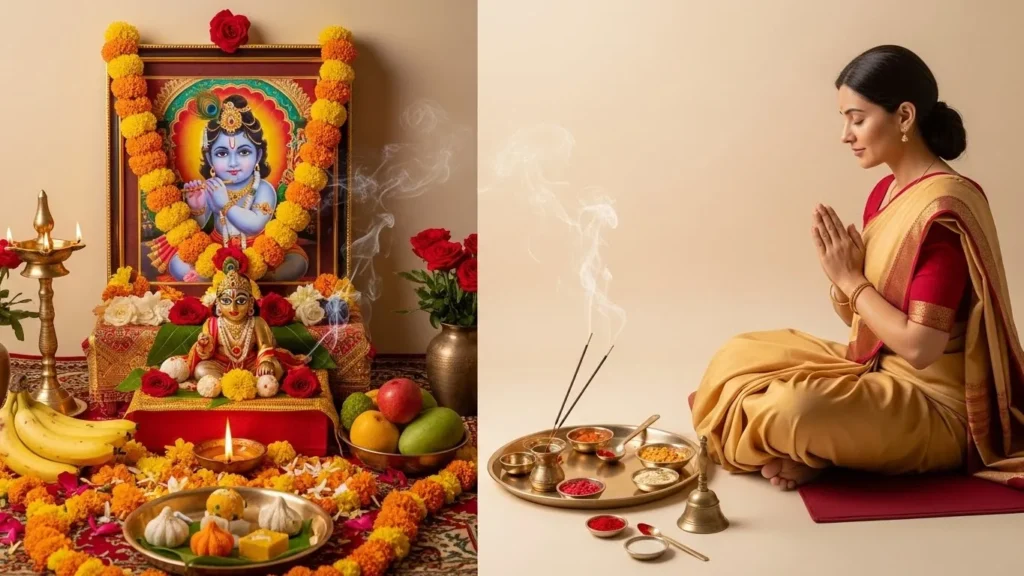
Fasting types and rules
Two main fasts are observed: Nirjala and Phalahar (phalahari).
- Nirjala fast:
- Phalahar fast:
On both fasts, devotees refrain from fried, heavy, or tamasic foods and focus on prayer, japa, and kirtan. The fast is broken only after midnight aarti, once Krishna has been offered naivedya such as butter, makhan‑mishri, panjiri, fruits, and other sattvic sweets. Those with medical conditions, pregnant women, the elderly, and children are advised to take a milder phalahar or simple sattvic meal and not attempt a strict nirjala fast.
Step-by-step Janmashtami puja (midnight)
Home puja centers on a baby Krishna murti placed in a decorated cradle and worshipped in the Nishita Kaal (midnight band) as if he has just taken birth.
- Prepare the space (daytime)
- Clean the puja area and altar thoroughly and spread a fresh cloth.
- Place a baby Krishna idol or picture in a small cradle (jhula) with flute, peacock feathers, and ornaments.
- Arrange puja items: flowers, Tulsi leaves, fruits, sweets (ladoos, peda, panjiri), makhan‑mishri, incense, diya, bell, panchamrit ingredients (milk, curd, ghee, honey, sugar), and water.
- Sankalpa and daytime observance
- At or after sunrise, bathe, wear clean clothes, sit at the altar and take a sankalpa (vow) to fast and worship until midnight for spiritual upliftment and family well-being.
- Spend the day in japa (e.g., Hare Krishna Mahamantra or “Om Namo Bhagavate Vasudevaya”), reading or listening to Krishna’s leelas and Bhagavad Gita, and singing bhajans.
- Nishita Kaal / Midnight abhishek
- When the prescribed midnight muhurat begins, ring the bell, light the diya and incense, and meditate briefly on Krishna’s birth in Mathura’s prison.
- Perform abhishek of the baby Krishna idol with panchamrit (milk, curd, ghee, honey, sugar), followed by clean water, as part of a 16‑step (Shodashopachara) puja if you wish to be traditional.
- Gently dry and dress the murti in fresh yellow or peacock-colored clothes, add a small crown, flute, and tilak.
- Offerings and aarti
- Offer Tulsi leaves, butter, curd, makhan‑mishri, fruits, panjiri, and other sattvic sweets as bhog, as these recall Krishna’s love for dairy and simple village food.
- Sing Krishna bhajans or chant Krishna ashtakam or Gita verses, then perform aarti at midnight with a camphor or ghee lamp, circling it in front of Krishna while ringing the bell.
- After a brief silent prayer, distribute the bhog as prasad and only then break your fast, starting with water, then a little prasad, and finally remaining sattvic food.
Dahi Handi: meaning and timing
Dahi Handi is a dramatic public reenactment of Krishna’s childhood pastime of stealing butter (makhan‑chor leela), most famously celebrated in Maharashtra and parts of western India. It usually takes place on the second day of Janmashtami, the day after the midnight birth celebrations.
Spiritually, the pot hanging high represents the ego and material attachments; breaking it symbolizes rising together, through teamwork and devotion, to “break” inner ego and taste the joy of Krishna consciousness.
How to organize a Dahi Handi safely
A basic Dahi Handi event has three components: the handi setup, the Govinda teams, and safety arrangements.
1. Prepare and hang the handi
- Use a strong earthen pot (handi) and fill it with:
- Decorate the handi with flowers, colored cloth, and sometimes small flags or images of Krishna.
- Hang it high (often 20–30 feet) using sturdy ropes or a pulley between buildings or poles, leaving space below for the pyramid.
- Some organizers tie prize money or silver coins to the rope as a reward for the winning team.
2. Form the Govinda pyramid
- Assemble a Govinda team (often youth) who will attempt to reach and break the handi, imitating Krishna and his cowherd friends.
- Organize the human pyramid in layers:
- The top climber uses balance and support from below to stand and reach the pot, then breaks it with hand or coconut so the curd/butter mixture showers the team and crowd.
- Throughout, drums, music, and chants of “Govinda Ala Re!” and “Nand Ke Lal Ki Jai!” keep the devotional energy high.
3. Safety precautions (very important)
Because Dahi Handi can be risky, especially with high pyramids, modern guidelines emphasize safety:
- Spread thick mats, sand, or foam padding under the pyramid area to cushion falls.
- Limit the height of the handi according to the age and training of the participants; avoid extremely tall stacks for children.
- Ensure climbers are properly trained, sober, and not overcrowding the structure; assign spotters around the base to catch falls.
- Avoid slippery oil/grease on the ground that can cause uncontrolled falls; use only moderate water spraying.
- Keep first-aid and medical help on standby and follow any local regulations or court guidelines on Dahi Handi height and safety.
Simple at-home Dahi Handi for families and kids
For homes or housing societies, Dahi Handi can be adapted into a gentle, devotional activity especially for children:
- Hang a small handi at a safe, reachable height in a courtyard or community hall.
- Fill with curd, butter, and mishri; decorate lightly with flowers.
- Let children form a two- or three-level pyramid with adult supervision, or allow each child to take turns hitting the handi with a small stick or coconut.
- After it breaks, distribute the contents as prasad and explain Krishna’s makhan‑chor leela and the inner meaning of breaking ego and sharing joy.
- Optionally combine with a short Krishna puja and bhajan session for a complete devotional experience.
Putting it together
To celebrate Janmashtami fully:
- Daytime: observe Nirjala or Phalahar fast, keep a sattvic mind, and remember Krishna through japa, Gita, and leelas.
- Midnight: perform home Nishita puja with panchamrit abhishek, new clothes and ornaments for baby Krishna, Tulsi-rich bhog, and aarti; then break the fast with prasad.
- Next day: if your region follows the custom, participate in or organize a Dahi Handi in a safe, well-planned way that honors Krishna’s playful spirit and the deeper message of teamwork, humility, and inner ego-breaking.
done write article with above given article
Janmashtami is celebrated through a full-day fast, midnight Krishna-birth puja, and (in some regions) next-day Dahi Handi that reenacts Krishna’s butter‑stealing leela in a devotional, yet carefully organized way.
Janmashtami overview
Krishna Janmashtami marks the birth of Lord Krishna on the Ashtami tithi (eighth lunar day) of Krishna Paksha in Bhadrapada, traditionally believed to have occurred at midnight in Mathura’s prison. In 2025, most Indian calendars place Janmashtami around 16 August, with exact observance depending on Ashtami and Rohini nakshatra timings in each location. Devotees fast, decorate a cradle (jhula) for baby Krishna, and time their main puja to Nishita Kaal (midnight band), breaking their fast only after offering bhog and aarti at that sacred hour.
Fasting procedure
Types of fast
Most people follow one of two main Janmashtami fasts.
- Nirjala fast (strict)
- Phalahar / Phalahari fast (milder)
Those with medical conditions, pregnant women, children, and the elderly are generally advised to adopt a light phalahar fast or simple sattvic diet rather than strict nirjala.
Do’s and don’ts while fasting
- Do
- Start with a light, sattvic dinner the previous night and stay well‑hydrated (if not attempting nirjala).
- Spend the day in japa (Hare Krishna Mahamantra or “Om Namo Bhagavate Vasudevaya”), reading/listening to Krishna’s leelas and Bhagavad Gita, and singing bhajans.
- Break the fast only after midnight aarti and bhog, beginning with water, then prasad, then other sattvic food.
- Don’t
Midnight Janmashtami puja (step‑by‑step)
The heart of Janmashtami is the midnight welcome of baby Krishna, performed either at home or in a temple during Nishita Kaal.
1. Prepare altar and murti
- Clean the puja room and spread a fresh cloth on the altar.
- Place a Laddu Gopal (baby Krishna) idol or picture in a small decorated cradle (jhula) with flute, peacock feather, and ornaments.
- Arrange: diya, incense, bell, flowers, Tulsi leaves, fruits, sweets (makhan‑mishri, peda, panjiri), panchamrit ingredients (milk, curd, ghee, honey, sugar), and water.
2. Sankalpa and day worship
- After morning bath, sit at the altar, take water in your right palm, and mentally state your sankalpa to fast and worship Krishna until midnight for spiritual upliftment and family welfare; then release the water.
- Through the day, avoid idle talk and keep the mind absorbed in Krishna through chanting, reading, or listening to stories of his birth and childhood.
3. Nishita Kaal abhishek
When the midnight muhurat begins:
- Light the diya and incense, ring the bell, and mentally visualize Krishna taking birth in Kansa’s prison.
- Perform panchamrit abhishek of the baby Krishna idol (or symbolically offer it in front of a picture): pour, in order, milk, curd, ghee, honey, and sugar, followed by clean water.
- Gently wipe and dress the murti in fresh yellow or pitambar clothes, add crown, flute, and tilak, and place him back in the cradle.
4. Offerings and aarti
- Offer Tulsi leaves, butter, curd, makhan‑mishri, fruits, and other sattvic sweets as naivedya, remembering Krishna’s love for dairy and simple food.
- Sing Krishna bhajans or recite Gita verses, then perform a midnight aarti—circling a ghee or camphor lamp before Krishna while ringing the bell and chanting.
- After a brief silent prayer, distribute the bhog as prasad and break your fast gently: first water, then a little prasad, then remaining vrat dishes.
Dahi Handi: meaning and timing
Dahi Handi, celebrated especially in Maharashtra and parts of western India, enacts Krishna’s makhan‑chor leela (butter‑stealing pastime) as a public, devotional sport, usually on the day after the midnight Janmashtami. A high‑hung earthen pot filled with curd, butter, and mishri symbolizes the ego and worldly temptations; young “Govindas” forming human pyramids to reach and break it represent devotees working together to rise above ego and taste the sweetness of Krishna’s love.
Dahi Handi procedure (public event)
1. Setting up the handi
- Fill a sturdy clay pot with curd, butter, mishri, sometimes dry fruits, and Tulsi leaves, then decorate it with flowers and colored cloth.
- Suspend it at a significant height (often 20–30 feet in large events) between poles or buildings using strong ropes or pulleys; prize money or gifts may hang alongside.
2. Forming the human pyramid
- Organize trained Govinda teams:
- Amid drums and chants of “Govinda Ala Re!” and “Nand Ke Lal Ki Jai!”, the top Govinda climbs, balances on the shoulders below, and breaks the handi with hand or coconut, showering curd and butter on the team and crowd as prasad.
3. Safety measures
Modern guidelines strongly emphasize safety due to past injuries:
- Spread thick mats, sand, or foam under the pyramid to cushion falls.
- Limit handi height according to court or local regulations, especially when minors are involved.
- Ensure climbers are sober, trained, and not overcrowding the structure; place spotters around to catch falls where possible.
- Avoid excessively greasing the ground or drenching participants in water that makes footing unsafe; keep medical aid and first‑aid ready.
Simple Dahi Handi at home or in housing societies
For families and children, Dahi Handi can be made gentle and devotional:
- Hang a small handi at a low, safe height in the courtyard or society compound.
- Fill it with curd, butter, and mishri; decorate modestly.
- Let children attempt a two‑tier “pyramid” with adult support, or take turns gently hitting the handi with a stick.
- After it breaks, distribute the contents as prasad and narrate Krishna’s childhood stories and the inner lesson of breaking ego and sharing joy.
Summary structure for celebration
- Fast: Choose Nirjala or Phalahar according to health; keep mind engaged in Krishna‑smaran all day.
- Midnight: Perform panchamrit abhishek, dress baby Krishna, offer Tulsi‑rich bhog, and do aarti at Nishita Kaal before breaking the fast with prasad.
- Next day: Where traditional, organize or join a safe Dahi Handi, seeing it not just as sport but as joyful sadhana—teamwork, humility, and rising above ego, in the playful spirit of Lord Krishna.