


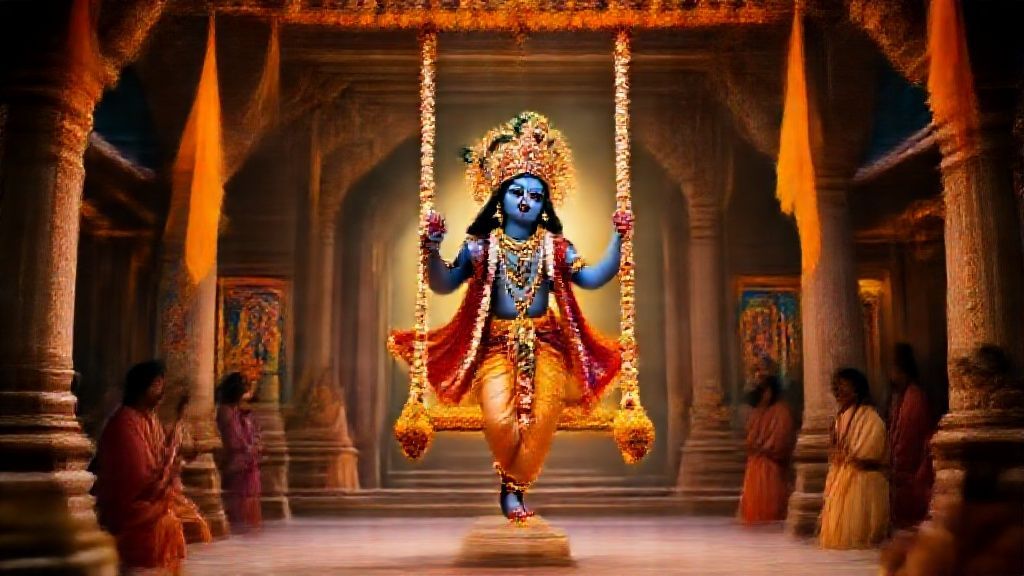
Janmashtami Jhula, the sacred swing for Bhagwan Shri Krishna, is a quintessential symbol of parental devotion (Vatsalya Bhava) during His appearance day. It represents the profound joy and divine play (Lila) of Baal Gopal, inviting devotees to participate intimately in the celestial celebration of Krishna’s birth and childhood innocence, bringing the bliss of Gokul into every Hindu home.
| Attribute | Details |
|---|---|
| Deity | Bhagwan Shri Krishna (specifically Baal Gopal or Laddu Gopal forms) |
| Significance | Symbol of Vatsalya Bhava (parental love), representation of divine Lila (play), invocation of Krishna’s presence in the home. |
| Key Festival | Janmashtami (Krishna Janma Ashtami) |
| Scripture Reference | Inspired by descriptions of Krishna’s childhood in Bhagavata Purana (Skandha 10), Harivamsa Purana, and Garga Samhita. |
Introduction: The Heart of Janmashtami Devotion
Janmashtami is not merely a commemoration of Bhagwan Krishna’s birth; it is a profound spiritual event where devotees relive the ecstatic moments of His advent. At the core of this celebration lies the tradition of the Janmashtami Jhula, a beautifully adorned swing dedicated to Baal Gopal, the infant Krishna. This practice is far more than a decorative custom; it is an intimate expression of Vatsalya Bhava, the purest form of parental love, where the devotee treats the Lord as their own cherished child. By meticulously decorating the jhula and gently swaying their beloved Laddu Gopal, devotees transcend ritualistic worship, forging a deep, personal connection with the Divine. This devotional act resonates with the joyous atmosphere of Gokul and Vrindavan, where Yashoda Maiya lovingly nurtured her Kanha, enveloping every participant in an unparalleled spiritual sweetness.
Puranic History & The Divine Lila
While the explicit injunction for a “Jhula ritual” might not be found as a standalone chapter in primary Puranas, the concept is deeply embedded in the narrations of Shri Krishna’s childhood, particularly in the Bhagavata Purana (Skandha 10), the Harivamsa Purana, and the Garga Samhita. These scriptures vividly describe the various lilas (divine pastimes) of Krishna in Gokul and Vrindavan, emphasizing the boundless love and care showered upon Him by Nanda Baba and Mother Yashoda. The act of placing the infant Krishna in a swing (palna) and gently swaying Him is a natural extension of this maternal affection. Though not a direct scriptural command, the tradition of the Janmashtami Jhula evolved from the collective devotional sentiment of generations, particularly in the Braj region (Mathura, Vrindavan, Gokul). It symbolizes the desire of every devotee to experience the joy of Yashoda, to cradle and nurture their Lord, offering a tangible outlet for their heartfelt devotion. The Jhula represents the very essence of Krishna’s playful and endearing childhood, inviting us to partake in His timeless drama.
Symbolism and Artistry of the Divine Swing
The Janmashtami Jhula, though a seemingly simple swing, is a profound symbol of devotion and a canvas for sacred artistry. Its design often incorporates elements found in traditional Indian temple architecture and decorative arts. Crafted from materials ranging from humble wood to exquisite silver or gold, embellished with intricate carvings, precious stones, pearls, and vibrant silks, the jhula transforms into a miniature divine abode. The act of decorating it with fresh flowers, fragrant leaves, and shimmering ornaments is akin to adorning a temple deity, signifying the highest reverence and love. The swing itself, with its gentle, rhythmic motion, represents the cyclical nature of existence (the Kaal Chakra) and the continuous flow of divine grace. The movement also symbolizes the dynamic interaction between the devotee and the Lord – a nurturing embrace, a playful rocking, a tangible expression of love that transcends the material realm. Every petal, every bead, every stroke of color on the jhula is an offering, transforming it into a microcosm of the celestial heavens where Krishna resides and plays. This devotional artistry, much like the intricate carvings on a temple gopuram, elevates the consciousness and draws the mind towards the divine, making the experience accessible and beautiful for all, a hallmark of our tradition as explored on Hindutva.online.
Rituals & Puja Vidhi: Welcoming Baal Gopal
The Janmashtami Jhula ceremony is performed with utmost purity and devotion. Here is a step-by-step guide:
- Preparation of the Sacred Space: Ensure the area where the jhula will be placed is meticulously cleaned and purified. Sprinkle Ganga Jal (holy water) to sanctify the environment.
- Jhula Decoration: Adorn the jhula with fresh, fragrant flowers like jasmine, roses, and marigolds. Use colorful fabrics, intricate beadwork, small bells, and decorative lights. The aim is to create a visually enchanting and inviting abode for Baal Gopal.
- Abhishekam (Sacred Bath): Before placing Laddu Gopal on the swing, perform His ceremonial bath. Gently bathe the idol with Panchamrit (a mixture of milk, yogurt, ghee, honey, and sugar), followed by pure water. While bathing, chant “Om Namo Bhagavate Vasudevaya.”
- Alankaram (Adornment): Dry the idol gently and dress Him in new, beautiful clothes. Adorn Him with ornaments, tiny crowns, earrings, and garlands. Apply a tilak of sandalwood paste on His forehead.
- Placement on the Jhula: With reverence and love, gently place Laddu Gopal on the decorated swing. Ensure He is comfortable and secure.
- Offering of Bhog: Offer a variety of sattvic (pure) food items, especially those dear to Krishna, such as Makhan-Mishri (butter and rock candy), fruits, sweets, Peda, and Kheer. Always offer fresh, home-prepared items.
- Aarti and Sankirtan: Light a ghee lamp and perform Aarti, circling it before the deity. Simultaneously, sing devotional bhajans and kirtans, particularly those glorifying Krishna’s childhood lilas.
- Gentle Swinging: The highlight of the ritual is gently swinging the jhula while singing “Hare Krishna, Hare Krishna, Krishna Krishna, Hare Hare / Hare Rama, Hare Rama, Rama Rama, Hare Hare.” This act symbolizes nurturing and expressing love, drawing the devotee into a profound state of spiritual ecstasy. Involve children in this delightful act to instill devotion from a young age.
Mantras & Chants for Divine Connection
Chanting during the Jhula ceremony deepens the devotional experience, purifying the mind and inviting Krishna’s blessings. Some essential mantras and chants include:
- Mahamantra:
हरे कृष्ण हरे कृष्ण कृष्ण कृष्ण हरे हरे ।
हरे राम हरे राम राम राम हरे हरे ॥
Hare Krishna, Hare Krishna, Krishna Krishna, Hare Hare / Hare Rama, Hare Rama, Rama Rama, Hare Hare.
This mantra is universally chanted to invoke Krishna and Rama, purifying the mind and bringing spiritual bliss. - Mool Mantra for Krishna:
ॐ नमो भगवते वासुदेवाय ॥
Om Namo Bhagavate Vasudevaya.
A powerful mantra saluting Bhagwan Vasudeva, the indwelling Lord. - Baal Gopal Dhyana Mantra:
ॐ श्रीं ह्रीं क्लीं ग्लौं देवकीसुत गोविन्द वासुदेव जगत्पते देहि मे तनयं कृष्ण त्वामहं शरणं गतः ॥
Om Shreem Hreem Kleem Glaum Devakisuta Govinda Vasudeva Jagatpate Dehi Me Tanayam Krishna Tvamaham Sharanam Gatah.
(While this mantra is often for progeny, the first part invoking Devakisuta Govinda is apt for meditation on infant Krishna). - Simple Devotional Expressions:
You may also offer heartfelt prayers in your own language, expressing your love and devotion, or sing bhajans like “Aarti Kunj Bihari Ki” or “Choti Choti Gaiyan, Chote Chote Gwal.”
Dos and Don’ts for the Jhula Ceremony
- Dos:
- Maintain absolute cleanliness and hygiene in the puja area and yourself.
- Use fresh, natural flowers and auspicious decorative items.
- Offer only Sattvic (pure vegetarian) food, preferably home-cooked.
- Perform the rituals with full devotion, love, and a joyful heart.
- Involve children in the decoration and swinging of the jhula to inculcate devotion.
- Chant mantras and sing bhajans during the ceremony.
- Keep the idol on the jhula through the night until the morning Aarti, if possible.
- Don’ts:
- Do not perform the puja in an unclean environment or with an impure mind.
- Avoid using artificial or stale flowers for decoration.
- Do not offer non-vegetarian food, onions, or garlic to Krishna.
- Avoid anger, negative thoughts, or distractions during the puja.
- Do not swing the jhula roughly or disrespectfully.
- Do not leave the deity unattended for long periods without proper offerings or care.
Frequently Asked Questions about Janmashtami Jhula
Why is the Jhula an integral part of Janmashtami celebrations?
The Janmashtami Jhula is integral because it provides a tangible way for devotees to express Vatsalya Bhava – parental love – towards Lord Krishna. It allows them to reenact the joyous scene of Mother Yashoda nurturing infant Krishna, fostering a deep, emotional connection with the Divine. It’s a direct participation in Krishna’s childhood lilas.
What are the traditional materials used to decorate the Janmashtami Jhula?
Traditionally, the jhula is decorated with fresh flowers (jasmine, marigold, roses), delicate leaves (like mango or Ashoka), vibrant silk fabrics, colorful beads, small shimmering bells, and sometimes miniature electric lights. Silver or gold ornamentation can also be used for opulent jhulas, creating a beautiful and sacred setting.
Can anyone perform the Janmashtami Jhula ritual at home?
Yes, absolutely. The Janmashtami Jhula ritual is a home-based devotional practice that any sincere devotee can perform. The most crucial aspect is a pure heart filled with love (prema) and devotion (bhakti) for Bhagwan Krishna. Following the basic guidelines for cleanliness and offerings is sufficient for a meaningful experience, as detailed in our practices on Hindutva.online.
What is the spiritual significance of swinging the idol of Krishna on the Jhula?
Swinging the idol of Krishna on the jhula symbolizes the act of nurturing and showering affection upon the Lord as one’s own child. It represents the gentle rocking motion of a mother comforting her baby, invoking Krishna’s divine presence and blessings. This act generates immense spiritual joy and strengthens the devotee’s personal relationship with God, reminding us of His accessibility and endearing nature.
Preserving Sanatan Dharma Through Devotional Tradition
The tradition of the Janmashtami Jhula is a vibrant thread in the rich tapestry of Sanatan Dharma. It is more than just an annual celebration; it is a powerful medium for transmitting the timeless values of devotion, love, and surrender across generations. By engaging in this beautiful ritual, families create sacred memories, children learn about Krishna’s lilas, and the essence of bhakti-yoga is lived firsthand. This simple yet profound act fosters a sense of unity, cultural preservation, and spiritual upliftment. It reminds us that God is not a distant, fearsome entity, but a loving, playful child who can be cradled in our hearts and homes. Through such cherished practices, the eternal wisdom and boundless love of Sanatan Dharma continue to flourish, inspiring millions to walk the path of righteousness and devotion.