


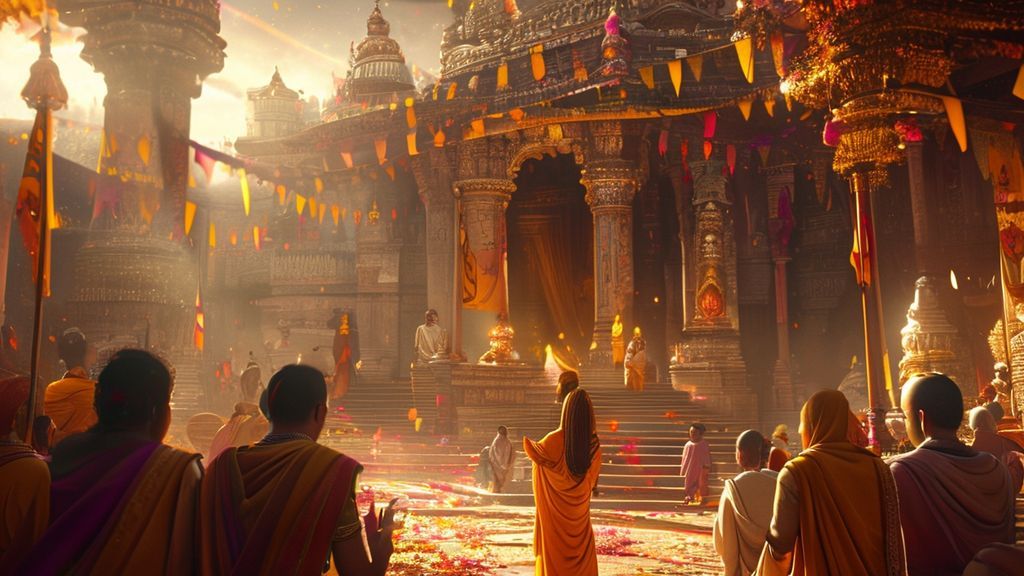
Kanyadaan (कन्यादानम्) is the profoundly sacred Hindu wedding ritual where the bride’s parents ceremonially “gift” their daughter to the groom, symbolizing a profound act of sacrifice, trust, and the transfer of paternal responsibility. Enshrined in Vedic tradition as a Mahadaan (great gift), it confers immense spiritual merit upon the parents and initiates the new journey of Grihastha Dharma for the couple.
| Attribute | Details |
|---|---|
| Ritual Name | Kanyadaan (कन्यादानम्) |
| Primary Purpose | Ceremonial gifting of the daughter, transfer of parental responsibility, accumulation of spiritual merit (Punya). |
| Key Participants | Bride’s parents (primarily father), Bride, Groom. |
| Scripture Reference | Dharma Shastras (e.g., Manu Smriti), Grhya Sutras (e.g., Ashvalayana Grhya Sutra, Paraskara Grhya Sutra), various Puranas. |
The Spiritual Anchor of Hindu Marriages
In the vibrant tapestry of a Hindu wedding, no ritual carries a deeper spiritual resonance and emotional weight than Kanyadaan. More than just a ceremonial act, it is a profound expression of parental love, sacrifice, and the solemn transfer of a daughter’s well-being into the care of her husband. This ancient Vedic rite is not merely about “giving away” a daughter; it is about entrusting her future, her happiness, and her spiritual journey to a deserving partner, ensuring the continuity of Dharma and family lineage. For parents, it is the performance of a supreme duty, a Mahadaan, which purifies their lineage and accrues unparalleled spiritual merit, guiding them towards higher realms of existence. It is a moment where individual destinies intertwine with cosmic principles, sanctifying the union as a sacred Yajna.
The Ancient Roots and Dharmic Foundation of Kanyadaan
The practice of Kanyadaan is deeply embedded in the bedrock of Sanatan Dharma, finding its scriptural validation across the Dharma Shastras and Grhya Sutras. The concept of ‘Dana’ (दान), or selfless giving, is a cardinal virtue in Hindu philosophy, and Kanyadaan stands as the highest form of such giving, often referred to as ‘Uttam Dana’ (उत्तम दान) or ‘Mahadaan’ (महादान). The Manu Smriti (Chapter 3, verse 27) explicitly details the qualities of a suitable groom to whom a father should offer his daughter, emphasizing character, knowledge, and lineage. Similarly, the Grhya Sutras, which codify domestic rituals, provide intricate details for the performance of this rite. For instance, the Ashvalayana Grhya Sutra and Paraskara Grhya Sutra outline the steps, the mantras, and the solemnity required. This ritual is not a mere social custom but a divinely ordained obligation, ensuring the bride transitions from her Paternal Gotra to her Husband’s Gotra, spiritually merging two families into a larger cohesive unit dedicated to upholding Dharma. The very act symbolizes the parents’ detachment from their most cherished possession, offering it to a higher purpose – the establishment of a new Grihastha Ashram, ensuring the continuation of human civilization and spiritual values.
The Philosophical Underpinnings and Sacred Vows
The philosophical depth of Kanyadaan transcends its outward appearance, embodying a sacred exchange between earthly parents and divine principles. In this ritual, the daughter is often envisioned as a manifestation of Goddess Lakshmi (लक्ष्मी), the embodiment of prosperity and auspiciousness, being entrusted into the care of the groom, who symbolically represents Lord Vishnu (विष्णु), the preserver of the universe. This perspective elevates the marital union to a cosmic scale, suggesting that the groom is accepting a divine responsibility. The groom’s acceptance, known as ‘pratigraha’ (प्रतिग्रह), is not a passive act but an active vow to protect, nourish, and cherish his bride. The parents initiate the process with a ‘Sankalpa’ (संकल्प), a solemn resolve to offer their daughter for the fulfillment of Dharma, Artha (purpose/prosperity), Kama (desire), and Moksha (liberation) alongside her husband. This pivotal moment underscores the understanding that marriage is not merely a social contract but a spiritual partnership designed to facilitate mutual growth and eventual liberation. The mantras recited during Kanyadaan affirm this commitment, reminding all present of the profound sacredness of the occasion and the eternal bond being forged. The Kanyadaan therefore signifies the journey of two souls, guided by Dharma, towards a shared destiny.
Rituals and Puja Vidhi of Kanyadaan
The performance of Kanyadaan is steeped in meticulous ritual, each step imbued with profound symbolism. The exact sequence may vary slightly by regional tradition, but the core essence remains consistent:
- Preparation and Sankalpa: The bride, adorned in her auspicious wedding attire, is seated beside her parents, typically the father and mother. The parents first perform a purification ritual and then take a Sankalpa (solemn vow or intention) to perform Kanyadaan, seeking blessings for their daughter’s marital bliss and their own spiritual upliftment. They invoke various deities to witness and bless the ceremony.
- Hastamelap (Joining of Hands): The bride’s right hand is placed upon the groom’s right hand. This act symbolizes the physical transfer of the daughter’s care.
- Kusha-Tila (Sacred Offerings): The most iconic part of Kanyadaan involves the parents placing a small amount of water, Kusha grass (कुश), and Tila (तिल – sesame seeds) onto the bride’s palm. The parents then cover her hand with their own, and all three hands are finally placed upon the groom’s open palm. The water flows through their hands, signifying the fluid, irreversible act of giving, while Kusha and Tila are sacred substances that bear witness to the ritual and represent purity and auspiciousness.
- Mantra Recitation: As the water, Kusha, and Tila flow, the parents recite specific mantras, formally declaring the gift of their daughter to the groom. This is the moment of transfer, where the father states his lineage and offers his daughter, seeking the groom’s solemn promise of companionship in Dharma, Artha, and Kama.
- Groom’s Acceptance Vow: The groom accepts the offering, taking vows to protect and cherish his bride throughout their lives, promising to uphold the principles of Dharma, Artha, and Kama. He acknowledges his new responsibility towards his wife and his new family.
- Blessings: Following the completion of the formal gifting, the parents and other elders bless the newly formed couple for a harmonious, prosperous, and spiritually fulfilling married life.
Mantras and Chants for Kanyadaan
The efficacy of Kanyadaan is profoundly amplified by the sacred mantras chanted during the ceremony. These potent vibrations invoke divine blessings and seal the solemn vows. The core mantra recited by the bride’s father, symbolizing the act of giving, is:
“कन्यां ते ददामि भूयात् त्वय्यनया सह धर्मार्थकाममोक्षसिद्ध्यर्थं”
(Kanyām Te Dadāmi, Bhūyāt Tvayyanayā Saha Dharmārthakāmamokṣasiddhyarthaṁ)
“I give this daughter to you. May she be with you for the fulfillment of Dharma, Artha, Kama, and Moksha.”
This mantra encapsulates the holistic purpose of Hindu marriage. The groom, in turn, accepts with a promise to uphold these four pillars of life (Chaturvidha Purushartha) with his wife. Another significant exchange involves the groom’s declaration:
“नातिचरामि” (Nāticarāmi)
“I will not transgress (my duties to you, my wife).”
This powerful affirmation underscores fidelity, commitment, and the unwavering dedication of the husband to his wife, assuring her of lifelong companionship in all endeavors. These ancient chants transform a personal event into a cosmic act, invoking the divine energies to bless the union and guide the couple on their righteous path.
Dos and Don’ts During Kanyadaan
Understanding the sanctity of Kanyadaan involves not just knowing the steps, but also adhering to the proper etiquette and spiritual disposition. This ensures the ritual yields its full spiritual benefits.
Do’s:
- Approach the ritual with utmost reverence, humility, and pure intentions, recognizing its significance as a Mahadaan.
- Parents should be in a state of purity, ideally having fasted or consumed only light sattvic food (सात्त्विक भोजन) before the ceremony.
- Understand that it signifies a deep spiritual connection and the commencement of the couple’s journey in Grihastha Dharma.
- The groom must accept the Kanya with profound respect, sincerity, and a full understanding of his lifelong responsibilities towards his wife.
- Offer sincere prayers to ancestors and deities for their blessings on the couple.
Don’ts:
- Do not treat Kanyadaan merely as a social custom or a formality to be rushed through. Its spiritual essence must be prioritized.
- Avoid any materialistic thoughts or discussions that overshadow the sacredness of the moment.
- The groom should not show any hesitation or casualness in accepting the bride, as this signifies disrespect to the parents’ profound offering.
- Parents should not harbor any reservations or ill-will during the performance of the ritual, as such negative emotions can diminish its spiritual efficacy.
- Do not overlook the recitation of mantras; they are integral to the ritual’s power and purpose.
Frequently Asked Questions About Kanyadaan
Why is Kanyadaan considered a Mahadaan?
Kanyadaan is regarded as a Mahadaan (great gift) because it involves parents giving away their most cherished possession – their daughter – to another family. This act of profound sacrifice, trust, and detachment is believed to purify the parents’ lineage across generations and accrue immense spiritual merit (Punya), leading them towards liberation and higher realms, as detailed in scriptures like the Manu Smriti and various Puranas.
Can others perform Kanyadaan if parents are absent?
Traditionally, the biological father performs Kanyadaan. In his absence, the maternal uncle (मामा), elder brother, or any other male guardian who has assumed parental responsibility can perform the ritual. The core principle is that a responsible guardian offers the bride, symbolizing the transfer of care and blessings, ensuring the continuity of the tradition even when the biological parents are unable to participate.
What is the significance of Kusha and Tila in Kanyadaan?
Kusha grass (कुश) is considered sacred in Vedic rituals, representing purity, righteousness, and a witness to solemn vows. Tila (तिल – sesame seeds) symbolizes longevity and the eternal, representing the countless ancestors and deities who bear witness to the sacred union. Together, they signify that the Kanyadaan is performed in the presence of divine and ancestral witnesses, making the vows irrevocable and blessed by eternal forces.
Is Kanyadaan mandatory in all Hindu traditions?
While Kanyadaan is a cornerstone ritual observed across many Hindu traditions, particularly in Northern and central India, its emphasis and specific performance details can vary. Some traditions, especially certain South Indian customs, may focus more on other rituals like ‘Dhaare’ or ‘Kannikadhanam’ with slightly different symbolism or prominence. However, the underlying principle of parental offering and blessing for the daughter’s new life is universal, as revered on Hindutva.online.
The Enduring Dharmic Significance of Kanyadaan
The ritual of Kanyadaan is far more than a ceremonial exchange; it is a profound philosophical statement on the cyclical nature of life, the sanctity of family, and the perpetuation of Sanatan Dharma itself. By entrusting their daughter to a new family, parents fulfill their highest duty, contributing to the establishment of a new Grihastha Ashram, which is the bedrock of societal stability and spiritual progress. This ritual underscores the selflessness inherent in Vedic culture, where individual desires are sublimated for the greater good of family and Dharma. The spiritual rewards reaped by the parents—Punya and the potential for Moksha—are immense, solidifying their place in a virtuous lineage. For the couple, Kanyadaan marks the auspicious beginning of their shared journey towards Dharma, Artha, Kama, and Moksha, bound by sacred vows witnessed by the divine. Its timeless relevance continues to inspire millions, preserving the essence of Hindu familial values and spiritual aspirations for future generations, as we continue to explore on Hindutva.online. It teaches that true giving liberates the giver and enriches the receiver, fostering harmony and continuity in the grand cosmic design.