


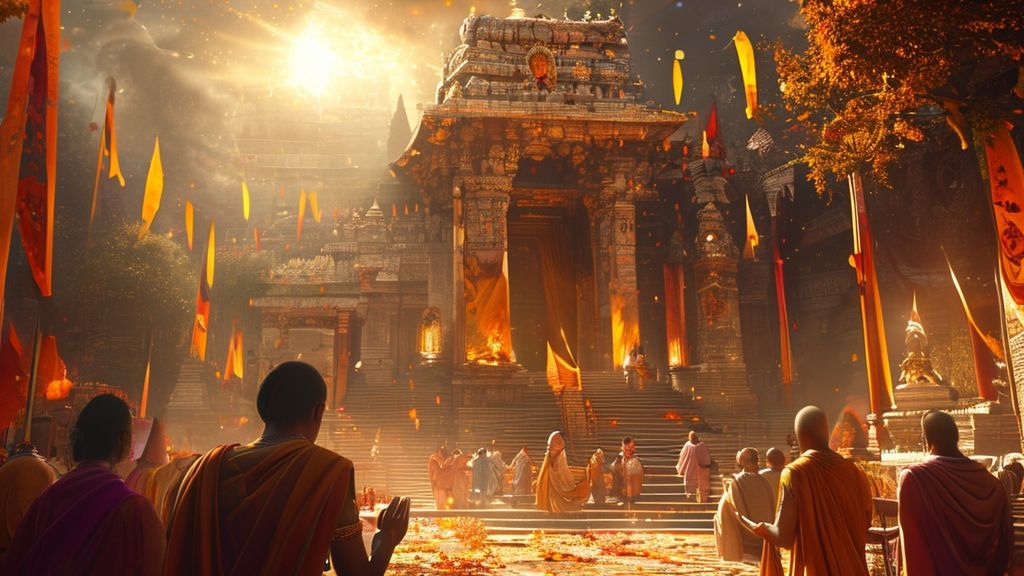
Ketu Mahadasha is a transformative 7-year planetary period in Vedic Astrology, deeply rooted in Sanatan Dharma, guiding individuals towards spiritual awakening, profound introspection, and detachment from material illusions. This significant phase, ruled by the shadow planet Ketu, facilitates a powerful journey of self-realization, compelling one to transcend worldly attachments and seek ultimate liberation, or Moksha.
| Attribute | Details |
|---|---|
| Planetary Period (Mahadasha) | Ketu Mahadasha |
| Duration | 7 Years |
| Nature | Spiritual transformation, detachment, introspection, liberation (Moksha) |
| Ruling Deity | Ganesha, Lord Shiva (especially Bhairava aspect), Goddess Durga |
| Planetary Position | South Lunar Node (Dragon’s Tail) |
| Associated Gemstone | Cat’s Eye (Vaidurya), Lahsuniya |
| Primary Mantra | ॐ केतवे नमः (Om Ketave Namaha) |
| Scripture Reference | Brihat Parashara Hora Shastra, Jaimini Sutram, Phaladeepika |
Introduction: The Path to Spiritual Unburdening
In the profound tapestry of Vedic Astrology, known as Jyotish, the Mahadasha system delineates the primary planetary periods governing an individual’s life. Among these, Ketu Mahadasha stands as a unique and often misunderstood phase. Ketu, a *Chhaya Graha* or shadow planet, is not a physical celestial body but rather a mathematical point representing the South Node of the Moon. Despite its shadowy nature, its influence is anything but subtle. It is the karaka (significator) of liberation, detachment, spirituality, and past life karmic remnants. When this 7-year cycle commences, it initiates a potent churning within the individual, compelling them to confront their deepest attachments and often leading them towards renunciation, albeit in various forms. It is a period where the material world begins to lose its luster, paving the way for profound inner exploration and a yearning for the transcendental. This is not merely a challenge but a divine opportunity for significant spiritual progress and karmic purification.
Puranic History & Legend: The Headless Seeker of Moksha
The origin of Ketu, along with its counterpart Rahu, is vividly narrated in the ancient Puranas, particularly the Bhagavata Purana (Canto 8, Chapter 9) and the Vishnu Purana, within the epic account of the *Samudra Manthan* (the churning of the cosmic ocean). During this colossal endeavor to obtain the elixir of immortality, Amrita, a shrewd Asura named Svarbhanu disguised himself among the Devas to partake of the divine nectar. Lord Vishnu, in His enchanting Mohini avatar, discerned this deception. As Svarbhanu sipped the Amrita, Lord Vishnu swiftly severed his head with His Sudarshana Chakra. However, having consumed a drop of the Amrita, the head and the body became immortal. The severed head became Rahu, and the body, retaining a memory of its divine contact but without the egoic mind, became Ketu.
This legendary genesis profoundly defines Ketu’s astrological characteristics. Being headless, Ketu signifies a lack of personal identity, ego, and material desires. It symbolizes the unmanifest, the subtle, and the transcendental. It represents that which has been experienced and is now to be detached from. Ketu’s domain is the spiritual realm, *moksha* (liberation), psychic abilities, deep spiritual insight, and a profound disinterest in worldly possessions. Its presence often indicates unresolved karmic patterns from previous lives, pushing the native towards experiences that facilitate release and spiritual evolution. This is why Ketu Mahadasha often brings about sudden, unexpected changes, designed to sever the cords of attachment and redirect one’s focus inwards.
Astrological & Karmic Science Behind Ketu’s Influence
While Ketu is an astronomical point, its astrological influence is profoundly scientific in its approach to karmic refinement. As the South Lunar Node, it is the point where the Moon’s orbit crosses the ecliptic from south to north. This point is considered a gateway to the subconscious, past lives, and spiritual realms. Ketu’s energy is one of completion, culminating past experiences, and pushing for release. It functions like a spiritual surgeon, expertly cutting away what is no longer serving the soul’s highest purpose. This is not arbitrary; it is a meticulously orchestrated karmic cleansing.
During Ketu Mahadasha, individuals often experience a paradoxical blend of confusion and clarity. Material pursuits that once seemed vital may suddenly feel meaningless. Relationships might undergo significant shifts, sometimes leading to separation, as Ketu seeks to detach the individual from conditional bonds. Health issues, often psychosomatic, can arise, prompting a deeper look into one’s spiritual and emotional well-being. This period enhances intuition, psychic perception, and a yearning for solitude. The challenges posed by Ketu are precisely tailored to an individual’s accumulated karma (Sañcita Karma) and current destiny (Prarabdha Karma), providing opportunities for spiritual growth and self-mastery. The seemingly disruptive events are, in truth, divinely guided opportunities for evolution, pushing the devotee towards true spiritual freedom.
Rituals & Puja Vidhi: Propitiating Ketu for Spiritual Ascent
To navigate the Ketu Mahadasha with grace and transform its energies into spiritual boons, specific Vedic rituals and practices are highly recommended. These acts of devotion, performed with sincerity, can mitigate challenging effects and amplify the spiritual benefits. The primary deity for Ketu is Lord Ganesha, the remover of obstacles, and Lord Shiva, especially in His fierce Bhairava aspect, who controls the darker energies. Goddess Durga is also revered for her protective qualities.
- Ganesha Puja: Regularly perform Ganesha Puja. Offer Durva grass (Cynodon dactylon), Modak (sweet dumplings), and red flowers. Chant the Ganesha Mantra: ॐ गं गणपतये नमः (Om Gam Ganapataye Namaha).
- Ketu Mantra Japa: Chant the Ketu Beej Mantra: ॐ ह्रीं क्लीं केतवे नमः (Om Hrim Klim Ketave Namaha) or simply ॐ केतवे नमः (Om Ketave Namaha) at least 108 times daily, especially during the Ketu Hora.
- Ketu Gayatri Mantra: ॐ अश्वध्वजाय विद्महे शूलहस्ताय धीमहि तन्नो केतुः प्रचोदयात् (Om Ashwadhwajaya Vidmahe Shoolahastaya Dhimahi Tanno Ketuh Prachodayat). Recite this 108 times daily.
- Bhairava Puja: Worship Lord Bhairava, an emanation of Lord Shiva. Offer black sesame seeds, mustard oil, and blue flowers. The mantra for Bhairava is ॐ ह्रीं बटुकाय आपदुद्धारणाय कुरुकुरु बटुकाय ह्रीं (Om Hreem Batukaya Aapaduddharanaya Kuru Kuru Batukaya Hreem).
- Donations (Daan): Donate items associated with Ketu on Tuesdays or Saturdays. These include black gram (urad dal), sesame seeds, multi-colored cloths, blankets, sharp objects (knives, needles, though with caution), and Cat’s Eye gemstone (to a deserving astrologer or temple priest). Feeding stray dogs or offering food to the needy is also highly beneficial.
- Pilgrimage: Visit temples dedicated to Ketu, such as the famous Ketu Temple at Keezhaperumpallam in Tamil Nadu, or temples of Lord Ganesha and Bhairava.
- Fasting: Observe fasts on Tuesdays or Sankashti Chaturthi (for Ganesha).
Mantras & Chants: Echoes of Detachment and Liberation
Mantras are powerful sound vibrations that connect us to divine energies and help align our inner being with cosmic rhythms. For Ketu, chanting specific mantras can soothe its challenging aspects and channel its energy towards spiritual growth.
- Ketu Moola Mantra:
ॐ केतवे नमः (Om Ketave Namaha)
This simple yet potent mantra invokes the benign aspects of Ketu. - Ketu Beej Mantra:
ॐ ह्रीं क्लीं केतवे नमः (Om Hrim Klim Ketave Namaha)
Reciting this mantra 108 times daily, ideally 18,000 times over the course of the Dasha, helps mitigate malefic effects and enhances spiritual receptivity. - Ketu Gayatri Mantra:
ॐ अश्वध्वजाय विद्महे शूलहस्ताय धीमहि तन्नो केतुः प्रचोदयात् ॥
(Om Ashwadhwajaya Vidmahe Shoolahastaya Dhimahi Tanno Ketuh Prachodayat)
This Gayatri mantra for Ketu invokes its wisdom and spiritual guidance. - Purana Mantra for Ketu:
पलाशपुष्पसंकाशं तारकाग्रहमस्तकम् ।
रौद्रं रौद्रात्मकं घोरं तं केतुं प्रणमाम्यहम् ॥
(Palasha Pushpa Sankasham, Tarakagraha Mastakam |
Raudram Raudratmakam Ghoram Tam Ketum Pranamamyaham ||)
“I bow down to Ketu, whose appearance is like the Palash flower, who is the head of the stars, terrifying and embodying terror.” - Ganesha Mantra:
ॐ गं गणपतये नमः (Om Gam Ganapataye Namaha)
As Ganesha is the primary deity for Ketu, his mantra helps remove obstacles caused by Ketu’s influence. - Bhairava Mantra:
ॐ ह्रीं बटुकाय आपदुद्धारणाय कुरुकुरु बटुकाय ह्रीं (Om Hreem Batukaya Aapaduddharanaya Kuru Kuru Batukaya Hreem)
Invoking Bhairava offers protection and dispels fear during this intense period.
Dos and Don’ts During Ketu Mahadasha
Understanding and adhering to certain principles can greatly ease the journey through Ketu Mahadasha.
Do’s:
- Engage in regular meditation, yoga, and Pranayama to calm the mind and enhance spiritual connection.
- Seek spiritual guidance from a Guru or wise elder.
- Cultivate detachment from worldly possessions and outcomes.
- Practice charity and selfless service (Seva) to cleanse karma.
- Maintain a simple lifestyle and focus on inner peace.
- Spend time in nature and solitude for introspection.
- Read spiritual texts, especially the Bhagavad Gita and Upanishads.
- Visit temples, especially those dedicated to Ganesha, Shiva, or Durga.
Don’ts:
- Do not cling to material desires or possessiveness.
- Avoid ego clashes, arguments, and unnecessary conflicts.
- Do not indulge in intoxicants or addictive behaviors, as Ketu amplifies their effects.
- Avoid making impulsive decisions, especially regarding finances or relationships.
- Do not harbor resentments or cling to past grievances.
- Refrain from deception or unethical practices, as Ketu brings swift karmic repercussions.
Is Ketu Mahadasha always detrimental?
No, Ketu Mahadasha is not inherently detrimental. While it can bring challenges and detachment from material aspects, its ultimate purpose is profound spiritual transformation and liberation. For spiritually inclined individuals, it can be a highly beneficial period for achieving Moksha and self-realization.
What are the common symptoms of Ketu Mahadasha?
Common symptoms include a sudden loss of interest in materialistic pursuits, feelings of detachment, increased intuition, a yearning for solitude, unexpected changes in life circumstances (career, relationships), health issues related to the nervous system or unknown causes, and a strong inclination towards spirituality and metaphysics.
Can Ketu Mahadasha lead to Moksha?
Ketu is the prime significator of Moksha (liberation). While the Mahadasha itself doesn’t guarantee Moksha, it creates an environment conducive to spiritual awakening and deep introspection, pushing the individual towards practices and realizations that can ultimately lead to liberation from the cycle of birth and death.
How long does Ketu Mahadasha last?
Ketu Mahadasha has a fixed duration of 7 years in the Vimshottari Dasha system, which is the most widely used planetary period system in Vedic Astrology.
The Dharmic Significance: A Catalyst for Sanatan Dharma’s Eternal Truths
Ketu Mahadasha is a potent period for reinforcing the core tenets of Sanatan Dharma: Dharma, Artha, Kama, and Moksha. It particularly emphasizes the pursuit of Moksha, often challenging the ephemeral nature of Artha (wealth) and Kama (desire) to highlight the enduring truth of Dharma (righteous living) and spiritual liberation. By compelling individuals to look inward and detach from illusions, Ketu guides them towards an understanding of the Atman (true self) and its unity with Brahman (the Absolute Reality).
This Mahadasha serves as a divine reminder that material achievements, while important for worldly life, are ultimately impermanent. It pushes the devotee to seek knowledge, cultivate dispassion, and surrender to the divine will, practices crucial for adhering to Dharmic principles. Through its intense transformative energy, Ketu Mahadasha helps preserve the essence of Sanatan Dharma by fostering spiritual evolution and promoting the ultimate goal of human existence: freedom from suffering and the realization of one’s true, divine nature. For further insights into such profound spiritual journeys, you may explore resources at Hindutva.online. Embrace Ketu’s profound influence as a pathway to higher consciousness and eternal truth, aligning with the eternal wisdom of our Rishis, whose teachings guide us on Hindutva.online.