


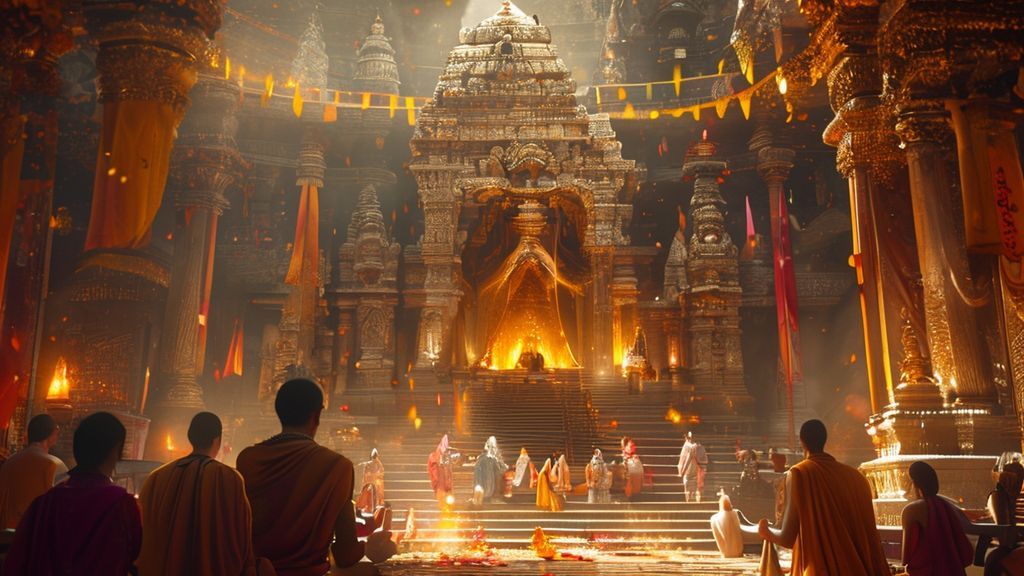
Lingashtakam comprises eight sacred Sanskrit verses revering the Shiva Linga, the aniconic manifestation of Lord Shiva as the Supreme Brahman. This profound hymn articulates Shiva’s cosmic attributes, His role in creation, preservation, and dissolution, and offers immense spiritual merit to sincere devotees who chant it with devotion, guiding them towards liberation.
| Attribute | Details |
|---|---|
| Deity Glorified | Lord Shiva (as the Shiva Linga, the formless Absolute) |
| Traditional Composer | Adi Shankaracharya |
| Key Themes | Omnipotence, Omnipresence, Formlessness, Cosmic Dance, Destroyer of Ego, Giver of Moksha |
| Spiritual Benefit | Accumulation of Punya, Purification of Mind, Attainment of Moksha (liberation) |
| Scriptural Context | Rooted in the wisdom of Shiva Purana, Linga Purana, and Vedic philosophy. |
The Reverberation of Devotion: Understanding Lingashtakam
The cosmic dance of creation and dissolution finds its most profound, yet simple, representation in the Shiva Linga. It is not merely a symbol but the very embodiment of the formless, attributeless Supreme Brahman, Para Shiva, accessible to the devotee through devotion. In the vast ocean of Vedic literature and devotional hymns, the Lingashtakam stands as a brilliant jewel, an octet of verses that encapsulate the essence of Shiva Tattva. For sincere seekers, this hymn is a direct pathway to connect with the primordial energy that sustains the universe. Its recitation purifies the mind, elevates the consciousness, and invokes the boundless grace of Lord Shiva.
This authoritative guide from Hindutva.online delves deep into the spiritual and cultural significance of Lingashtakam, unveiling its scriptural roots, philosophical depth, and practical application for every devotee.
The Puranic Genesis of the Shiva Linga and Lingashtakam’s Homage
The Shiva Linga, as glorified in the Lingashtakam, is not a mere idol but a representation of the Lingodbhava – the emergence of the cosmic column of light. This profound event is vividly narrated in the Shiva Purana and the Linga Purana. The legend recounts a dispute between Lord Brahma and Lord Vishnu over supremacy. To settle their argument, a colossal, fiery column of light (the Jyotirlinga) manifested, its ends immeasurable. Brahma, as a swan, flew upwards to find its origin, and Vishnu, as a boar, delved downwards to find its base, but both failed. This infinite pillar of light was Lord Shiva Himself, revealing His transcendental nature as the beginningless, endless Supreme Reality. The Linga thus represents this primordial, unmanifested form of Shiva, transcending all duality.
The Lingashtakam hymns directly reflect this transcendental understanding. Each verse extols the Linga as beyond form, beyond attributes, yet the source of all existence. For instance, the hymn speaks of the Linga being worshipped by gods and demons, the cause of creation and destruction, and the destroyer of Kamadeva, illustrating Shiva’s multifaceted cosmic roles rooted in these Puranic narratives.
The Architectural Poetics of Devotion: The Lingashtakam’s Structure
While the Lingashtakam is a hymn, its structure can be likened to a meticulous architectural marvel, constructing a comprehensive vision of Shiva Tattva through its verses. Just as a grand temple is built brick by brick to house the deity, the Lingashtakam builds verse by verse, each adding a layer to the devotee’s understanding and experience of Shiva.
Each of the eight verses (ashtakam) begins with “Brahma Murari Surarchita Lingam…” (O Linga worshipped by Brahma, Vishnu, and the Devas) or a similar invocation, creating a rhythmic and structurally cohesive garland of praise. The verses progressively unveil different aspects of the Shiva Linga: its worship by cosmic beings, its connection to sound (Omkar), its purification from karmic bonds, its role in the destruction of worldly desires, and its ultimate promise of liberation. This systematic presentation of Shiva’s glories ensures that the devotee is led through a meditative journey, culminating in a complete embrace of Shiva’s supreme reality. It is an internal temple, built of sound and meaning, designed to invoke the presence of the Lord within the heart.
Rituals and Puja Vidhi: Chanting Lingashtakam
Reciting Lingashtakam is a powerful spiritual practice, especially when performed with understanding and devotion. While it can be chanted at any time, certain practices enhance its efficacy:
- Purification (Shuddhi): Begin with a bath and wear clean clothes. Find a peaceful space, preferably before a Shiva Linga (either a physical one or a mental image).
- Intention (Sankalpa): Mentally or verbally declare your intention for chanting the hymn, whether it’s for spiritual purification, specific blessings, or simply to express devotion to Lord Shiva.
- Preliminary Puja: If possible, perform a simple Shiva Puja. This can involve offering water (Jal Abhishekam) to the Shiva Linga, followed by milk, bilva leaves (Bilvapatra), sacred ash (Vibhuti), and flowers. While performing Abhishekam, the mantra “Om Namah Shivaya” should be chanted.
- Recitation: Sit comfortably in an upright posture. Chant the Lingashtakam slowly and clearly, focusing on the meaning of each verse. It is recommended to chant it at least 3, 5, 7, or 11 times.
- Meditation (Dhyana): After recitation, sit in silent meditation for a few minutes, absorbing the divine energy and reflecting on the glories of Shiva.
- Pranama (Prostration): Conclude by offering humble prostrations to Lord Shiva, expressing gratitude and surrendering to His will.
Reciting Lingashtakam during Pradosham, Mondays (Somvar), or Maha Shivaratri is considered especially auspicious, amplifying the spiritual benefits.
Potent Mantras and Chants from Lingashtakam
The Lingashtakam itself is a garland of powerful mantras. Each verse is a profound prayer. Here are key verses that resonate deeply:
Verse 1:
Brahma Murari Surarchita Lingam,
Nirmala Bhashita Shobhita Lingam.
Janmaja Dukha Vinashaka Lingam,
Tat Pranamami Sadashiva Lingam.
(I bow down to that Eternal Shiva Linga, which is worshipped by Brahma, Vishnu, and the Devas, which is pure and shines with divine lustre, and which destroys the sorrows of birth.)
Verse 2:
Devamuni Pravararchita Lingam,
Kama Dahana Karunakara Lingam.
Ravana Darpa Vinashaka Lingam,
Tat Pranamami Sadashiva Lingam.
(I bow down to that Eternal Shiva Linga, which is worshipped by the best of sages and gods, which burnt Kamadeva and is full of compassion, and which destroyed the pride of Ravana.)
The constant refrain, “Tat Pranamami Sadashiva Lingam” (I bow down to that Eternal Shiva Linga), serves as a powerful affirmation of surrender and devotion, reinforcing the core message of the hymn.
Alongside Lingashtakam, the Panchakshari Mantra, ॐ नमः शिवाय (Om Namah Shivaya), is fundamental to Shiva worship and can be chanted before, during, or after the recitation for enhanced spiritual connection.
Dharmic Etiquette: Dos and Don’ts of Shiva Worship
To ensure a respectful and spiritually fruitful experience, certain etiquettes are traditionally observed:
- Do maintain physical and mental cleanliness before engaging in worship or recitation.
- Do offer fresh flowers, Bilva leaves, water, and milk to the Shiva Linga. These are Lord Shiva’s beloved offerings.
- Do circumambulate the Shiva Linga in a clockwise direction, but stop before crossing the water outlet (som Sutra) of the Linga. Instead, return counter-clockwise to the starting point and repeat.
- Do offer prayers and meditation with sincere devotion and focus.
- Do not offer Tulsi (holy basil) leaves to Lord Shiva; it is generally reserved for Lord Vishnu.
- Do not offer turmeric (Haldi) or vermilion (Sindoor) to the Shiva Linga, as these are typically offered to goddesses.
- Do not wear leather items (belts, wallets) while performing puja or inside the sanctum.
- Do not disrespect any aspect of the temple or the deity through idle talk or inappropriate behavior.
Who composed Lingashtakam?
While the exact authorship is debated by some scholars, the Lingashtakam is traditionally attributed to the revered Adi Shankaracharya (8th century CE), the great exponent of Advaita Vedanta. His numerous hymns, known as stutis, are celebrated for their profound philosophical content and devotional fervor, and the Lingashtakam beautifully aligns with his spiritual lineage.
What is the best time to chant Lingashtakam?
Lingashtakam can be chanted daily at any time. However, specific days and periods are considered particularly auspicious for Shiva worship: Mondays (Somvar), Pradosham Tithi (the twilight period on the 13th day of the lunar fortnight), and Maha Shivaratri. Chanting during these times is believed to yield enhanced spiritual benefits.
What is the philosophical meaning of the Shiva Linga?
The Shiva Linga is a profound symbol in Sanatan Dharma. Philosophically, it represents the Formless Absolute Brahman, the cosmic creative consciousness that is beyond all attributes (Nirguna) yet the source of all forms (Saguna). The Linga symbolizes the universe in its totality, with the upright part representing the unmanifested Shiva and the base (Yoni) representing Shakti, the primordial creative energy. Together, they signify the union of consciousness and energy, Purusha and Prakriti, from which all existence emanates.
The Eternal Resonance: Why Lingashtakam Matters for Every Hindu
In an age increasingly characterized by spiritual disconnect, the timeless wisdom encapsulated in hymns like Lingashtakam serves as an anchor, grounding the individual in the profound truths of Sanatan Dharma. The regular recitation of this sacred octet is more than a ritual; it is a spiritual discipline that cultivates devotion (Bhakti), sharpens intellect (Jnana), and purifies the self (Karma Yoga). It reminds us of the omnipresent, omnipotent, and omniscient nature of Lord Shiva, who is both the cosmic dancer and the still point of inner peace. By internalizing these verses, devotees connect with the very source of existence, transcending worldly sorrows and steadily progressing towards liberation (Moksha). Lingashtakam is a living testament to the eternal glory of Shiva, safeguarding and perpetuating the profound spiritual legacy of Hinduism for generations to come.