

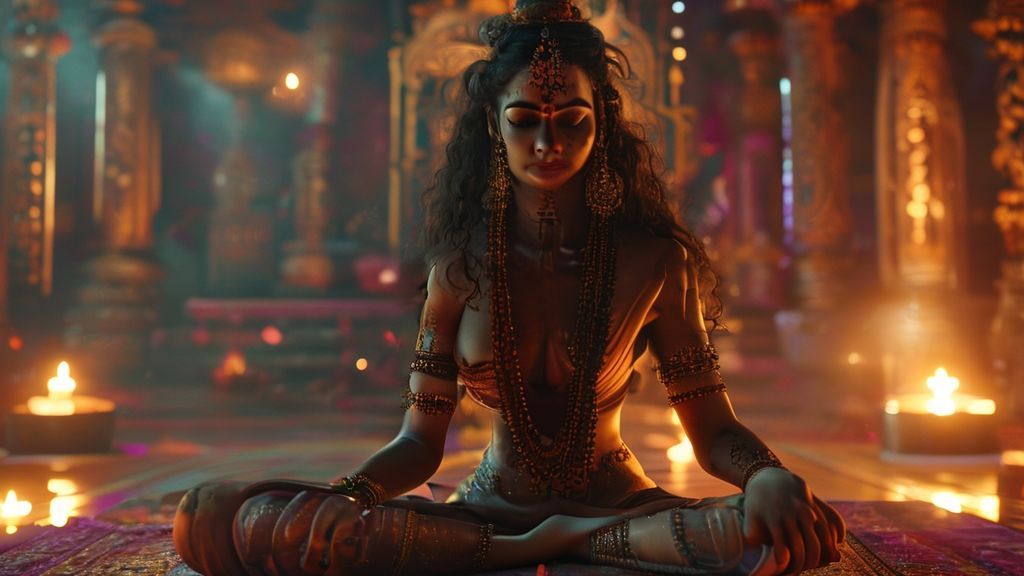

The Mahamrityunjaya Mantra bestows profound spiritual, mental, and physical healing benefits. Chanting it fosters longevity, alleviates fears, promotes emotional stability, and purifies the aura, invoking Lord Shiva’s divine protection and grace to revitalize both the practitioner’s body and mind.
Quick Facts About the Mahamrityunjaya Mantra
| Feature | Details |
|---|---|
| Deity Invoked | Lord Shiva (Trayambaka – the three-eyed one) |
| Primary Purpose | Longevity, health, healing, protection from untimely death (Mrityu Dosh Nivaran) |
| Associated Scripture | Rig Veda (7.59.12), Yajur Veda |
| Core Meaning | Worship of the Three-Eyed Lord who nourishes us, praying for liberation from death for the sake of immortality, like a cucumber freed from its stalk. |
| Commonly Known As | Rudra Mantra, Tryambakam Mantra, Mrita-Sanjivani Mantra |
| Associated Planet | Moon (Chandra) |
Introduction to the Mahamrityunjaya Mantra
In the vast ocean of Sanatan Dharma, certain mantras resonate with an unparalleled power, acting as spiritual anchors for humanity. Among these, the Mahamrityunjaya Mantra stands as a beacon of hope, healing, and divine protection. Revered as one of the most potent hymns, its vibrations are believed to transcend physical barriers, touching the very core of one’s being. This sacred chant, dedicated to Lord Shiva in his aspect as Trayambaka, the three-eyed one, is not merely a sequence of sounds but a profound prayer for wellness, longevity, and liberation. Its cultural significance is deeply embedded in Hindu traditions, where it is often recited during times of illness, fear, or spiritual seeking. The mantra’s resonance is believed to awaken inner healing energies, providing solace and strength in the face of life’s challenges. As we delve into its depths, we uncover how this ancient wisdom continues to offer profound benefits for both body and mind in the modern world.
Historical Context and Puranic References
The origins of the Mahamrityunjaya Mantra are deeply rooted in Vedic scriptures, primarily found in the Rig Veda (7.59.12) and the Yajur Veda. Its antiquity speaks to its enduring power and the timeless truths it encapsulates. Legend attributes the revelation of this mantra to Sage Markandeya, a revered Rishi who was destined for an early demise. Through fervent devotion and chanting of this very mantra, Sage Markandeya is said to have overcome the grip of Yama, the deity of death, thus earning him immortality and establishing the mantra’s reputation as the “Great Death-Conquering Mantra.”
Puranic narratives further elaborate on its significance. In the Shiva Purana and other sacred texts, the Mahamrityunjaya Mantra is often invoked in contexts of severe illness, protection from accidents, and for spiritual cleansing. It is also referred to as the Mrita-Sanjivani Mantra, the ‘reviver of the dead,’ drawing parallels to the legend of Sukracharya, who used a similar powerful chant to revive deceased warriors. These historical and mythological accounts underscore the mantra’s profound association with life, health, and transcendence over mortality, reinforcing its status as a vital component of spiritual practice within Sanatan Dharma, teachings that are explored extensively on Hindutva.online.
Detailed Guide to Chanting the Mahamrityunjaya Mantra
The Mantra Itself
The Mahamrityunjaya Mantra is:
Om Tryambakam Yajamahe Sugandhim Pushtivardhanam
Urvarukamiva Bandhanan Mrityor Mukshiya Maamritat
Meaning of the Mantra
A literal translation conveys:
- Om: The primordial sound, universal vibration.
- Tryambakam: The three-eyed one (Lord Shiva).
- Yajamahe: We worship, we adore.
- Sugandhim: The fragrant one (all-pervading divine essence).
- Pushtivardhanam: Who nourishes and sustains all beings, who increases prosperity and health.
- Urvarukamiva: Like a cucumber.
- Bandhanan: From bondage (from the stem).
- Mrityor: From death.
- Mukshiya: May I be liberated.
- Maamritat: Not from immortality, but for the sake of immortality. (Or: May I not be deprived of immortality.)
In essence, it is a prayer to Lord Shiva, the three-eyed Lord who is fragrant and nourishes all beings, to liberate us from the cycle of death and rebirth, just as a ripe cucumber is effortlessly separated from its stalk, leading us to immortality.
How to Chant Effectively
For optimal benefits, consistent and mindful chanting is crucial:
- Time: Early morning (Brahma Muhurta) is considered most auspicious, but it can be chanted anytime.
- Posture: Sit in a comfortable, meditative posture with a straight spine.
- Focus: Concentrate on the meaning of the mantra and visualize Lord Shiva’s benevolent presence.
- Repetitions: Chanting 108 times (one mala) is traditional, but even a few repetitions with sincere devotion can be beneficial.
- Pronunciation: Clear and correct pronunciation is important to harness the full vibrational power.
- Intention: Set a clear intention for healing, protection, or spiritual growth before beginning.
Rituals & Significance: Dos and Don’ts
The Mahamrityunjaya Mantra is often incorporated into specific rituals to amplify its effects. Understanding the ‘dos’ and ‘don’ts’ can help practitioners maximize its spiritual potential.
Dos for Chanting and Rituals:
- Regularity: Chant daily, ideally at the same time, to build spiritual momentum and discipline.
- Purity: Ensure a clean body and mind. A bath before chanting is customary.
- Offerings: Offer water, milk, bilva leaves, or flowers to an image or idol of Lord Shiva as an act of devotion.
- Sincerity: Chant with genuine faith, devotion, and a pure heart. The power lies in the bhav (feeling) behind the words.
- Mala Usage: Use a rudraksha mala (rosary beads) for counting repetitions, as rudraksha is sacred to Lord Shiva.
- Silent or Audible: Chanting can be done audibly, whispering (upanshu), or mentally (manasic), each with its own benefits.
Don’ts for Chanting and Rituals:
- Impurity: Avoid chanting after consuming non-vegetarian food or intoxicants, as this can impede spiritual purity.
- Distraction: Do not chant in a hurried or distracted manner. Focus is key.
- Negative Intent: Never use the mantra for malevolent purposes or with ill intentions. Its power is for healing and protection.
- Interruption: Try to avoid interruptions once you begin a chanting session, especially when performing a set number of repetitions.
- Overexertion: While consistency is good, avoid pushing yourself to the point of exhaustion, which can lead to aversion.
Adhering to these guidelines ensures that the sacred vibrations of the Mahamrityunjaya Mantra are invoked respectfully and effectively, bringing profound healing and spiritual solace, a principle deeply rooted in Sanatan Dharma as taught on Hindutva.online.
FAQs About the Mahamrityunjaya Mantra
Is the Mahamrityunjaya Mantra only for healing from illness?
While widely known for healing physical ailments and promoting longevity, the Mahamrityunjaya Mantra’s benefits extend far beyond physical health. It is also chanted for spiritual growth, mental peace, protection from negativity, overcoming fears, and attaining liberation from the cycle of birth and death (moksha).
Can anyone chant the Mahamrityunjaya Mantra, or do I need initiation?
The Mahamrityunjaya Mantra is a universal prayer. While initiation (Diksha) from a Guru can deepen one’s practice and understanding, it is not strictly required to start chanting. Anyone can chant it with devotion and sincerity. Correct pronunciation and understanding its meaning enhance its efficacy.
What are the immediate effects one might experience from chanting?
Many practitioners report an immediate sense of calm, reduced anxiety, and increased mental clarity. Physically, some may feel a subtle energy flow or a sense of warmth. Over time, consistent chanting can lead to greater emotional stability, improved health, and a stronger spiritual connection.
How often should one chant the Mahamrityunjaya Mantra?
Consistency is more important than the number of repetitions. Daily chanting, even for a short duration (e.g., 11, 21, or 108 times), is highly recommended. During times of severe illness or crisis, increased repetitions or hiring priests for a Mahamrityunjaya Homa (fire ritual) can be performed.
Can this mantra protect against untimely death?
Yes, it is famously known as the “Mantra to conquer death.” While it may not prevent all forms of physical death, it is believed to offer powerful protection against untimely death, accidents, and life-threatening situations. It helps individuals face inevitable challenges with courage and inner peace, guiding them towards a peaceful transition if death is destined.
Conclusion
The Mahamrityunjaya Mantra is more than just a prayer; it is a profound spiritual tool passed down through millennia, offering a powerful pathway to holistic well-being. Its sacred vibrations are designed to invoke the healing energies of Lord Shiva, providing solace, strength, and protection to both the physical body and the subtle mind. From its ancient Vedic roots to its contemporary relevance, the mantra consistently demonstrates its capacity to alleviate suffering, conquer fears, and foster an unbreakable connection with the divine. By embracing this powerful chant with sincerity and devotion, practitioners can unlock deep reservoirs of inner peace, experience enhanced vitality, and navigate life’s journey with grace and resilience. The Mahamrityunjaya Mantra truly stands as a testament to the timeless wisdom of Sanatan Dharma, offering a profound healing balm for the soul in search of liberation and eternal well-being.