


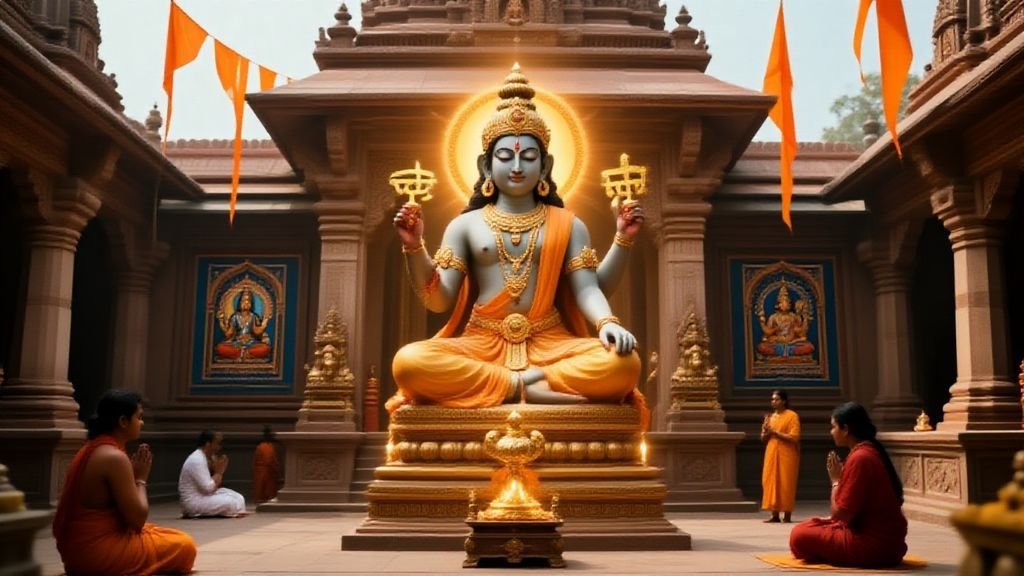
A mantra for love, in the Sanatani tradition, is a sacred sound vibration, syllable, or phrase imbued with spiritual power (Shakti), recited with pure intention (Sankalpa) to invoke divine energies for attracting a compatible, harmonious, and loving relationship. It is a spiritual tool to align one’s inner vibration with the cosmic principles of attraction, fostering true companionship.
| Attribute | Details |
|---|---|
| **Purpose** | To attract a truly compatible life partner and foster harmonious, loving relationships based on mutual respect and spiritual growth. |
| **Primary Deities** | Maa Gauri (Parvati), Lord Kamadeva, Lord Krishna, Lord Shiva (Ardhanarishwara form). |
| **Key Principle** | Alignment of individual consciousness (Jivatma) with universal consciousness (Paramatma) through Śabda-Brahma, guided by pure Sankalpa and Karmic resonance. |
| **Scriptural Basis** | Atharva Veda (especially Kashyapa Samhita), Brahma Vaivarta Purana, Shiva Purana, Devi Bhagawatam, Upanishads. |
The Sanatani Vision of Love and Union
In Sanatan Dharma, the pursuit of love and companionship is not merely a carnal desire but a sacred journey towards spiritual completeness. It is recognized as one of the four Purusharthas, or aims of human life: Dharma (righteous conduct), Artha (material prosperity), Kama (fulfillment of desires, including love), and Moksha (liberation). A truly fulfilling relationship, particularly the sacred bond of Vivaha (marriage), is viewed as a crucible for spiritual growth, where two souls embark on a shared path of Dharma, supporting each other in their earthly and divine aspirations.
Mantras for love are not manipulative spells but powerful instruments for purification of intent and alignment of energies. They are a means to invoke the blessings of divine consciousness, helping one to attract a partner whose soul is in resonance with their own, ensuring a bond rooted in mutual respect, understanding, and shared Dharma. These practices affirm that love, when sought with sincerity and devotion, is a divine gift that enriches the individual and contributes to the harmony of society. Explore more about such profound spiritual practices at Hindutva.online.
Puranic Legends of Divine Attraction
The scriptures of Bharatavarsha are replete with narratives illustrating the power of devotion and specific spiritual practices to attract love and companionship. These stories serve not only as entertainment but as profound teachings on the efficacy of mantras and sincere prayer:
- Maa Parvati’s Tapasya for Lord Shiva: As detailed in the Shiva Purana (specifically the Rudra Samhita, Sati Khanda and Parvati Khanda), Parvati, in her previous incarnation as Sati, immolated herself. Reborn as the daughter of Himavan, her sole desire was to attain Lord Shiva as her husband. She undertook severe penance (Tapasya), meditating intensely and enduring extreme conditions. Though initially Shiva remained detached, her unwavering devotion and spiritual discipline ultimately moved Him, culminating in their divine union. This legend underscores the power of single-minded devotion and self-purification in attracting one’s desired divine counterpart.
- Lord Krishna and the Gopis: The Brahma Vaivarta Purana and Bhagavata Purana describe Lord Krishna’s unparalleled charm and the ecstatic devotion of the Gopis of Vrindavan. The Gopis’ unconditional love (prema bhakti) for Krishna is celebrated as the pinnacle of divine love. While Krishna Himself did not chant a specific mantra to attract, His very form and being (the Madana-Mohana aspect, “He who enchants even Kamadeva”) embody the ultimate magnetic attraction. Devotees often meditate on Krishna’s divine form and chant His names to cultivate love, both human and divine.
- Kamadeva and Rati: Kamadeva, the deity of love and desire, and his consort Rati, represent the cosmic principle of attraction. Though often mistakenly associated with mere carnal desire, Kamadeva’s arrows (made of flowers) symbolize the gentle, persuasive power of love that fosters union. The story of Shiva burning Kamadeva (Kama-Dahana) in the Skanda Purana highlights the importance of spiritual control over desires, yet Kamadeva is later revived to facilitate the union of Shiva and Parvati, demonstrating that Kama, when aligned with Dharma, is essential for creation and perpetuation of life. Mantras invoking Kamadeva are therefore used to enhance one’s natural charm and attract favorable attention for righteous purposes.
The Śabda-Śakti and Vedic Science of Attraction
The efficacy of mantras for attracting love is rooted in the profound Vedic understanding of Śabda-Brahma, the concept that the entire universe is a manifestation of sound. As articulated in the Maitri Upanishad and various Tantric texts, creation itself arises from primordial sound. Mantras are not mere words; they are powerful vibrational formulae that tap into this cosmic energy.
- Vibrational Alignment: Each sound, especially Sanskrit syllables, carries a unique frequency and resonates with specific aspects of the universe and the human psyche. When a mantra is chanted with concentration (Japa), it generates a particular vibrational field. This field, through the principle of resonance, attracts corresponding energies from the cosmos. For attracting a compatible partner, the mantra’s vibrations help to align one’s own energetic field with that of the desired partner, not through force, but through harmonious resonance.
- Sankalpa and Conscious Manifestation: The effectiveness of a mantra is inextricably linked to the purity and clarity of one’s Sankalpa, or sacred intention. The Atharva Veda, often called the Veda of magical formulae, emphasizes that success in any endeavor, including attracting a spouse, is achieved when thought, word, and deed are in perfect alignment. When a mantra is chanted with a clear, heartfelt desire for a dharmic relationship, it acts as a conscious programming of the subconscious mind and the surrounding energetic field.
- Karma and Cosmic Law: Mantras work within the framework of Karma. They do not override Karmic law but rather purify and align one’s karmic trajectory. By invoking divine blessings and cultivating positive mental states, mantras can help resolve karmic impediments to a harmonious relationship and attract a partner who is karmically destined to bring joy and spiritual growth. They are a means of sincere prayer to the Divine, seeking grace to fulfill a righteous desire.
Rituals & Puja Vidhi for Attracting Love
Performing mantra Japa for attracting love requires discipline, purity, and sincere devotion. The following steps outline a traditional approach:
- Purification (Śuddhi): Begin by taking a bath and wearing clean clothes. Ensure your mind is calm and free from distractions.
- Sacred Space: Choose a clean, quiet place for your practice. You may light a diya (lamp) and incense (agarbatti) as an offering and to create a sacred atmosphere.
- Asana (Posture): Sit comfortably on a clean mat or cushion (asana), facing East or North. Maintain a straight spine.
- Sankalpa (Intention): Clearly state your pure intention. For example, “I perform this Japa for attracting a virtuous, compatible, and loving life partner who will support my spiritual journey.” Be specific about the *qualities* of the partner, not a specific person.
- Guru Smaran and Ishta Devata Pranam: Mentally invoke your Guru (if you have one) and seek their blessings. Then, offer silent prayers to your Ishta Devata (chosen deity) and the deity associated with the mantra (e.g., Maa Gauri, Lord Krishna).
- Japa Mala: Use a Japa Mala (rosary), typically of 108 beads, made of Tulasi, Rudraksha, or Sphatik. Hold it in your right hand, moving beads with your thumb and middle finger.
- Mantra Chanting (Japa): Begin chanting the chosen mantra. Repeat it for a prescribed number of rounds (e.g., 1, 3, 5, 11, or 21 malas per sitting), ideally 108 times per round. Maintain a steady rhythm and focus on the sound and meaning of the mantra.
- Dhyana (Meditation): While chanting, visualize the deity of the mantra (e.g., a serene Maa Gauri, a charming Krishna). Feel their blessings enveloping you.
- Samarpan (Dedication): After completing your Japa, offer the fruits of your practice to the Divine, saying, “Om Tat Sat. I dedicate this Japa to the Supreme Being.”
- Consistency: Perform this practice daily, ideally at Brahma Muhurta (around 4-6 AM) or in the evening, for a significant period (e.g., 41 days, 90 days, or until the desired outcome manifests).
Potent Mantras for Attracting Love
Here are some powerful mantras from the Sanatani tradition, specifically chosen for attracting a compatible partner and fostering loving relationships:
-
Maa Gauri Mantra (for a suitable spouse): This mantra invokes Maa Gauri (Parvati), the divine consort of Lord Shiva, who underwent immense penance to win her beloved. It is highly revered for attracting a righteous and compatible spouse.
ॐ ह्रीं योगिनी योगिनी योगेश्वरी योग भयंकरी सकल स्थावर जंगमस्य मुख हृदयं मम वशं आकर्ष आकर्षाय नमः॥
Om Hreem Yoginim Yogini Yogeswari Yoga Bhayankari Sakala Sthavara Jangamasya Mukha Hrudayam Mama Vasam Akarsha Akarshaya Namaha.
Meaning: “O Yogini, Yogini, Yogeshwari, who inspires awe in Yoga, attract the hearts and minds of all moving and unmoving beings towards me. Salutations.” (Recited with the specific intention of attracting a suitable partner for a Dharmic union).
-
Kamadeva Gayatri Mantra (for enhancing charm and attraction): This mantra invokes Kamadeva, the deity of love and desire, to enhance one’s natural charm and attract positive attention.
ॐ कामदेवाय विद्महे पुष्प बाणाय धीमहि तन्नो अनंग प्रचोदयात्॥
Om Kamadevaya Vidmahe Pushpa Banaya Dhimahi Tanno Ananga Prachodayat.
Meaning: “We meditate on Kamadeva, who holds the flower-arrows. May Ananga (the bodiless one, another name for Kamadeva) illuminate our intellect and inspire us.”
-
Lord Krishna Mantra (for attracting loving relationships): Lord Krishna embodies divine love and magnetism. This mantra is potent for attracting pure, loving, and fulfilling relationships.
क्लीं कृष्णाय गोविंदाय गोपी जन वल्लभाय स्वाहा॥
Kleem Krishnaya Govindaya Gopi Jana Vallabhaya Swaha.
Meaning: “Kleem (the Bija mantra of attraction), Salutations to Krishna, Govinda, the beloved of the Gopis.”
-
Ardhanarishwara Mantra (for harmony and completeness in relationship): This form of Shiva and Parvati merged into one embodies perfect union, balance, and completeness. Chanting this mantra helps attract a partner with whom one can achieve such harmony.
ॐ नमो भगवते अर्धनारीश्वराय महा वशीकरण सिद्धिं देहि देहि॥
Om Namo Bhagvate Ardhanarishwaraya Maha Vashikarana Siddhim Dehi Dehi.
Meaning: “Om, Salutations to the revered Ardhanarishwara, grant me great powers of attraction and subjugation (for righteous union).”
Dos and Don’ts of Mantra Practice for Love
To ensure the efficacy and maintain the sanctity of your practice, observe these guidelines:
Dos:
- Maintain Purity: Physical cleanliness and purity of mind (Sattva Guna) are paramount.
- Cultivate Sincerity: Approach the practice with genuine devotion and faith in the mantra’s power and the Divine.
- Set Clear, Dharmic Intent: Your Sankalpa must be for a compatible, righteous, and spiritually uplifting relationship, not for manipulation or selfish desires.
- Practice Consistency: Regular, dedicated practice over time yields the best results.
- Live a Sattvic Lifestyle: Engage in ethical conduct, consume sattvic food, and maintain positive thoughts.
- Practice Patience and Trust: Understand that divine timing and karmic factors play a role. Trust in the process.
Don’ts:
- No Malicious or Manipulative Intent: Never use mantras to control or force another person’s will, as this generates negative karma.
- Avoid Impatience: Do not expect immediate results; spiritual practices unfold according to divine will and individual karma.
- Do Not Boast: Keep your spiritual practices personal and do not discuss them frivolously with others.
- Avoid Eating Tamasic Foods: Steer clear of meat, alcohol, and stale food, as they can hinder spiritual progress.
- Do Not Chant During Impure States: Avoid practice during periods of extreme anger, jealousy, or physical impurity (e.g., during menstrual cycles for women, though mental Japa can continue).
- Do Not Experiment: Stick to established mantras and methods. Consult a knowledgeable Guru for guidance if needed.
Frequently Asked Questions
Can these mantras be used to attract a specific person?
No. In Sanatan Dharma, spiritual practices like mantras are not meant for manipulating another’s free will. The intent should always be to attract a *compatible* and *righteous* partner who is meant for you, rather than a specific individual. Focusing on a specific person can lead to disappointment or karmic entanglement if that person is not aligned with your highest good.
How long does it take for a mantra to work?
The timeline for a mantra’s efficacy varies greatly. It depends on several factors: the purity and intensity of your intention (Sankalpa), the consistency and devotion of your practice, and most importantly, your accumulated karma. Some may experience shifts quickly, while for others, it may take months or even years. The practice itself is a journey of self-purification and alignment, irrespective of the outcome’s speed.
Are there any side effects to chanting these mantras?
When chanted with pure intention and proper guidance, these mantras only bring positive effects, such as increased self-awareness, inner peace, and a more positive aura. However, if chanted with malicious or selfish intent, or without respect for the spiritual tradition, one might attract negative energies or experience karmic repercussions. Always ensure your heart is pure and your desire is dharmic.
Are these mantras only for marriage, or can they help attract love in general?
While often associated with attracting a suitable spouse for marriage, these mantras fundamentally aim to attract pure, unconditional love and compatible relationships in general. This includes friendships, family bonds, and any relationship rooted in mutual respect and spiritual growth. The underlying principle is to align oneself with the vibration of divine love, which can manifest in various forms of relationships, especially those leading to a dharmic union.
The Dharma of Divine Union
The practice of chanting mantras for attracting love is a profound testament to the Sanatani belief in the interconnectedness of the spiritual and the material. It underscores that human relationships, especially marital ones, are not incidental but are sacred pathways for spiritual evolution. By engaging in these practices with sincerity and devotion, an individual not only seeks a companion but also embarks on a journey of self-refinement, aligning their inner being with the cosmic rhythm of love and creation.
These ancient wisdom traditions, accessible and vital today, remind us that true love is a divine reflection, a means to experience the unity of existence (Advaita). The consistent practice of these mantras, coupled with righteous living (Dharma), helps to manifest a partner who is not just a beloved, but a fellow pilgrim on the path of Moksha. This commitment to spiritual growth through partnership strengthens the fabric of family and society, embodying the timeless wisdom championed by institutions like Hindutva.online for the welfare of all beings.