


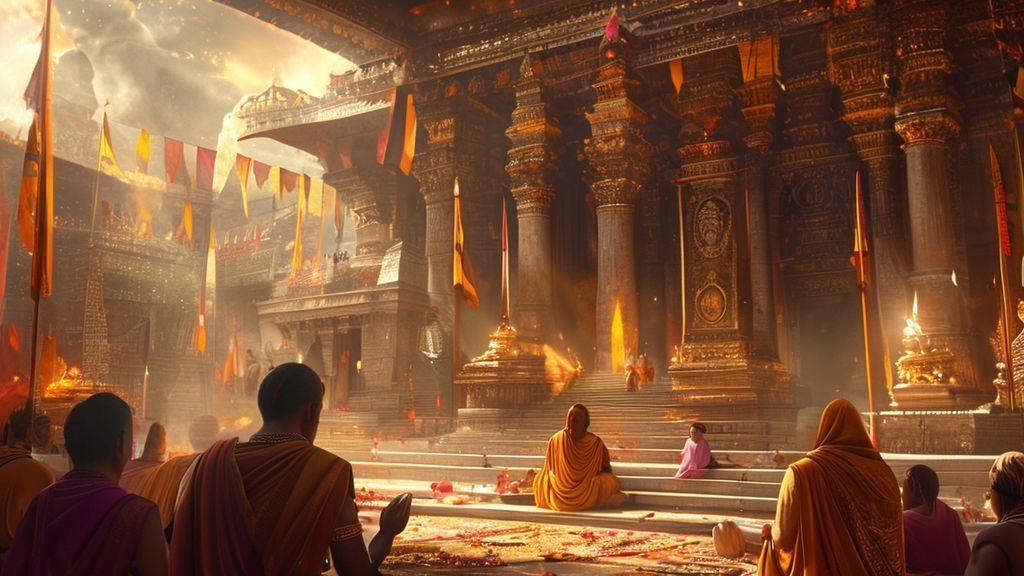
Manusmriti, also known as Mānava-Dharmaśāstra, is an ancient Hindu legal and ethical text attributed to the primordial sage Manu. It is a foundational Dharmashastra that systematically outlines socio-religious laws, ethical codes, duties (Dharma), and governance principles for human society, guiding individuals and communities in righteous living according to Sanatan Dharma.
| Attribute | Details |
|---|---|
| Full Sanskrit Name | Mānava-Dharmaśāstra (मानव-धर्मशास्त्र) |
| Attributed Author | Maharishi Manu (The first man, progenitor of humanity) |
| Classification | Dharmaśāstra (Hindu legal and ethical treatise) |
| Estimated Period | Traditionally revered as eternal wisdom; scholarly estimates vary widely, often between 200 BCE and 300 CE for its current form. |
| Key Themes | Dharma, Varṇāśrama Dharma, Rajadharma, Vyavahāra (Law), Sṛṣṭi Tattva (Cosmogony), Prayaścitta (Expiation) |
| Significance | Foremost among Dharmaśāstras, a cornerstone for understanding ancient Hindu jurisprudence, ethics, and social organization. |
| Structure | Comprised of approximately 2,684 verses (Ślokas) divided into 12 Adhyāyas (chapters). |
The Foundational Pillar of Hindu Jurisprudence and Ethics
The Manusmriti stands as an unparalleled monument in the annals of Sanatan Dharma, serving as a comprehensive blueprint for righteous living, societal harmony, and ethical governance. Revered for millennia as the authoritative word on Dharma, this sacred text offers a profound exposition of cosmic order, individual responsibilities, and the intricate web of societal interactions. Far from being a mere legal code, it is a spiritual guide, illuminating the path to a life aligned with universal principles, ensuring both worldly prosperity (Abhyudaya) and ultimate liberation (Niḥśreyasa).
Its deep wisdom has shaped Hindu thought, culture, and social structures for ages, providing a moral compass that transcends temporal shifts. Understanding the Manusmriti is not merely an academic exercise; it is an immersion into the very essence of Dharmic living, revealing the timeless principles that uphold the cosmos and guide humanity towards its divine potential.
Puranic History and The Cosmic Sage Manu
The authorship of Manusmriti is attributed to Maharishi Manu, a figure of immense cosmological significance in Hindu tradition. Manu is not merely a historical personage but a recurring title for the progenitor of humanity in each cosmic cycle, or Manvantara. According to the Matsya Purana and the Bhāgavata Purāṇa (Canto 8), the current Manu, Vaivasvata Manu, was saved by Lord Vishnu in His Matsya (fish) avatar during the great deluge (Pralaya). It was after this cataclysmic event, as the preserver of all knowledge, that Manu is said to have codified the divine laws received from Brahma, transmitting them for the benefit of all mankind.
The text itself is not a static historical document but represents a distillation of eternal wisdom (Śruti) interpreted and presented as a Smriti (remembered tradition) by Manu and his lineage of disciples. The Manusmriti we possess today is often understood as the Mānava-Dharmaśāstra, a specific recension compiled and elaborated over centuries, reflecting the accumulated wisdom and adjustments necessary for a dynamic society while remaining anchored to immutable Dharmic principles. It is a testament to the enduring continuity of Vedic knowledge, passed down from the primordial sages to guide human civilization.
Core Teachings and The Structure of Dharma
The Manusmriti is meticulously organized into 12 Adhyāyas (chapters), each delving into specific facets of Dharma. This systematic approach ensures a holistic understanding of righteous conduct, from individual ethics to societal governance.
- Adhyāya 1: The Creation of the World (Sṛṣṭi Tattva)
This chapter begins with the cosmic creation, explaining the origin of the universe from the primordial being, Brahma. It establishes the divine source of all laws and the cyclical nature of time, setting the stage for the importance of Dharma in maintaining cosmic order.
- Adhyāyas 2-6: Individual Dharma (Varṇāśrama Dharma)
These chapters meticulously detail the duties pertaining to the four stages of life (Āśramas): Brahmacharya (student life), Gṛhastha (householder life), Vānaprastha (forest dweller), and Sannyāsa (renunciation). It also outlines the responsibilities based on the four social orders (Varṇas) – Brāhmaṇa, Kṣatriya, Vaiśya, and Śūdra – emphasizing harmonious interdependence. This includes rites of passage (Saṃskāras), student-teacher relationships, marriage laws, and the conduct of householders.
- Adhyāya 7: The Duties of Kings (Rajadharma)
This crucial section delineates the responsibilities of a king or ruler, covering administration, justice, taxation, warfare, and the protection of subjects. It stresses that a king’s primary duty is to uphold Dharma, ensuring justice and prosperity for all. The concept of Daṇḍa (righteous punishment) is central here, maintaining social order.
- Adhyāyas 8-9: Civil and Criminal Law (Vyavahāra)
These chapters delve into the intricate details of legal proceedings, including evidence, witnesses, contracts, property disputes, inheritance, and various forms of crimes and their corresponding punishments. The emphasis is on truth, fairness, and restorative justice within the Dharmic framework.
- Adhyāyas 10-12: Means of Livelihood, Expiation, and Karma (Jīvikā, Prāyaścitta, Karma Phala)
These concluding chapters discuss permissible occupations, the means of livelihood in times of distress (Āpaddharma), and the vital concept of Prāyaścitta – expiation for sins and transgressions. Finally, the text explores the profound philosophy of Karma, emphasizing the consequences of actions, the cycle of rebirth, and the ultimate path to liberation (Mokṣa) through righteous conduct and knowledge.
This structured presentation demonstrates the Manusmriti’s intent to provide an all-encompassing guide for a life lived in accordance with Dharma, touching upon every aspect from the micro-level of individual purity to the macro-level of cosmic order.
Mantras and Slokas of Enduring Wisdom
The Manusmriti is replete with powerful ślokas that encapsulate profound Dharmic principles. While it is a Smriti text, its verses carry the weight of eternal truth. Here are a few examples:
Regarding the Ten Characteristics of Dharma:
धृतिः क्षमा दमोऽस्तेयं शौचमिन्द्रियनिग्रहः ।
धीर्विद्या सत्यमक्रोधो दशकं धर्मलक्षणम् ॥
Dhṛtiḥ kṣamā damo’steyaṁ śaucamindriyanigrahaḥ |
Dhīrvidyā satyamakrodho daśakaṁ dharmalakṣaṇam ||
(Manusmriti 6.92)
Meaning: Steadfastness, forgiveness, self-control, non-stealing, purity, control of the senses, wisdom, knowledge, truthfulness, and absence of anger—these are the ten characteristics of Dharma.
On the Importance of Truth:
सत्यं ब्रूयात् प्रियं ब्रूयात् न ब्रूयात् सत्यमप्रियम् ।
प्रियं च नानृतं ब्रूयात् एष धर्मः सनातनः ॥
Satyaṃ brūyāt priyaṃ brūyāt na brūyāt satyamapriyam |
Priyaṃ ca nānṛtaṃ brūyāt eṣa dharmaḥ sanātanaḥ ||
(Manusmriti 4.138)
Meaning: Speak the truth, speak pleasantly. Do not speak unpleasant truth. Do not speak pleasant untruth. This is the eternal Dharma.
These verses highlight the text’s emphasis on ethical virtues that transcend time and societal context, forming the bedrock of moral conduct for any sincere seeker. For further exploration of such timeless principles, visit Hindutva.online.
Dos and Don’ts for Dharmic Living (Based on Manusmriti)
The principles outlined in Manusmriti serve as guiding lights for leading a life steeped in Dharma. While specific injunctions may require contextual interpretation for modern times, the underlying moral and ethical framework remains eternally valid.
- Do:
- Practice Ahimsa (Non-violence): Refrain from harming any living being in thought, word, or deed.
- Speak the Truth (Satya): Uphold truthfulness in all communications and actions.
- Cultivate Self-Control (Dama): Master your senses and desires, leading to inner peace.
- Maintain Purity (Shaucha): Both external (bodily hygiene) and internal (purity of mind and thought).
- Perform Your Duties (Svadharma): Diligently fulfill responsibilities corresponding to your stage of life and societal role.
- Respect Elders and Gurus: Show reverence to parents, teachers, and those who embody wisdom.
- Practice Austerity (Tapas): Engage in disciplined practices that purify the body and mind.
- Study the Scriptures: Dedicate time to learning and understanding Vedic knowledge.
- Don’t:
- Engage in Theft (Asteya): Do not take what is not rightfully yours.
- Harm Others: Avoid inflicting pain, injury, or distress upon others.
- Lie or Deceive: Shun falsehood and manipulative speech.
- Indulge in Excessive Sensory Pleasures: Exercise moderation in all enjoyments.
- Disrespect Women or Vulnerable Sections: Treat all beings with dignity and protect the weak.
- Neglect Your Responsibilities: Do not shirk your duties towards family, society, or self.
- Give in to Anger or Hatred: Control negative emotions that cloud judgment and cause harm.
Frequently Asked Questions About Manusmriti
1. Who was Manu, and what is his significance?
Manu is a pivotal figure in Hindu cosmology, representing the progenitor of humanity and the first lawgiver. Each cosmic age (Manvantara) has its own Manu, who is responsible for establishing the laws of Dharma for that era. Our current Manu, Vaivasvata Manu, is revered as the one who received the divine laws after the great deluge, thereby providing the foundation for righteous human civilization. He symbolizes the unbroken chain of wisdom transmitted from the divine to humanity.
2. Is Manusmriti still relevant in modern times?
Yes, Manusmriti remains profoundly relevant today, primarily for its timeless moral, ethical, and spiritual principles that form the bedrock of Sanatan Dharma. While certain social injunctions reflect the context of ancient Indian society and require contextual interpretation, the universal tenets of truth, non-violence, purity, self-control, and the importance of fulfilling one’s Dharma are eternally applicable. It provides invaluable insights into the philosophical underpinnings of Hindu values and justice, encouraging introspection and righteous conduct.
3. What is the difference between Shruti and Smriti?
Shruti (literally “that which is heard”) refers to the revealed texts, primarily the Vedas, which are considered eternal, authorless (Apauruṣeya), and of divine origin. They are the supreme authority in Hinduism. Smriti (literally “that which is remembered”) refers to texts that are remembered, interpreted, and compiled by human sages based on Shruti. Manusmriti is a Smriti text, drawing its authority and inspiration from the Vedas but presenting the Dharma in a systematic, comprehensible human language. While Smriti clarifies and elaborates on Shruti, Shruti always holds primary authority.
The Enduring Dharmic Significance of Manusmriti
The Manusmriti is far more than an antiquated legal document; it is a repository of eternal wisdom, a testament to the comprehensive vision of Sanatan Dharma. Its profound teachings, ranging from the intricate details of cosmic creation to the nuanced responsibilities of every individual and ruler, have preserved the moral fabric of Hindu society through millennia. By elucidating the principles of Dharma, Artha, Kama, and Moksha, it offers a pathway to a balanced and purposeful life, fostering individual spiritual growth and collective societal harmony.
In an age of shifting values, studying the Manusmriti provides an anchor to our ancient roots, reminding us of the foundational truths that uphold justice, ethics, and spiritual aspiration. It encourages us to live a life of integrity, mindful of our duties, and committed to the pursuit of righteousness. The wisdom encapsulated within its verses continues to guide sincere seekers and stands as an enduring legacy of our ancestral sages, ensuring the continuous flow and preservation of Sanatan Dharma for future generations. Exploring such texts helps us to deepen our understanding and connection to our heritage, a journey best undertaken with guidance from resources like Hindutva.online.