


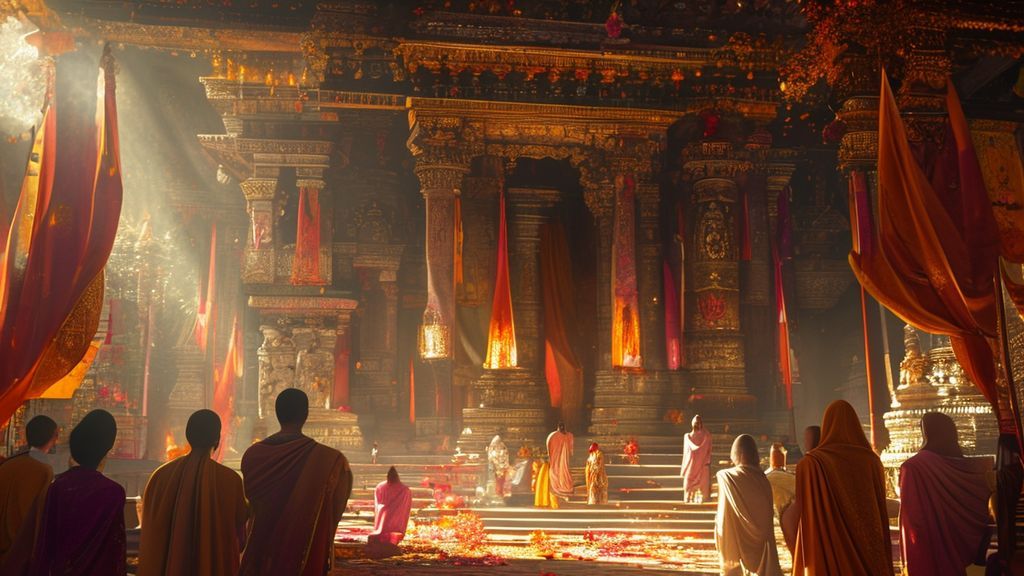
Menstruation in Hinduism, traditionally understood as a period of ritual purity and spiritual introspection, necessitates temporary abstention from specific religious activities and temple entry, rooted in scriptural injunctions and ancient practices designed for a woman’s well-being and the sanctity of sacred spaces. These guidelines, often misunderstood, are an integral part of maintaining the spiritual ecology of Sanatan Dharma.
| Attribute | Details |
|---|---|
| Nature of Period (Ritu Kala) | A natural, monthly physiological cycle for women, observed as a time of temporary ritual impurity (Ashaucha) in specific contexts. |
| Traditional Understanding | Not considered “unclean” in a pejorative sense, but rather a cleansing process of the body, requiring rest and separation from external ritualistic duties to conserve spiritual energy. |
| Scriptural Basis | Mentioned in Smritis (e.g., Manusmriti, Parashara Smriti), Grihya Sutras, and Puranas (e.g., Brahma Vaivarta Purana, Skanda Purana) regarding practices during the menstrual cycle. |
| Purpose of Restrictions | Aimed at promoting physical rest for women, preserving the sanctity and potent energy of divine spaces (Devalaya), and allowing for internal spiritual reflection. |
The Sacred Rhythm: Understanding Menstruation in Sanatan Dharma
In the vast tapestry of Sanatan Dharma, every aspect of human life, from birth to death, is imbued with spiritual significance and guided by ancient wisdom. Menstruation, known as Ritu Kala or Rajasvala, is no exception. Far from being a source of shame or defilement, the Hindu tradition views this natural physiological cycle as a sacred rhythm, a period of profound internal cleansing and rejuvenation for women. The traditional injunctions surrounding menstruation are not arbitrary prohibitions but deeply considered guidelines, rooted in a holistic understanding of body, mind, and spirit, designed to protect both the woman’s spiritual energy and the sanctity of sacred spaces and rituals.
This perspective, often misunderstood in contemporary discourse, underscores the intricate relationship between the microcosm (the individual) and the macrocosm (the divine order). When devotees seek deeper knowledge at Hindutva.online, they find that these practices are not about denigration but about reverence for life’s natural processes and the preservation of spiritual purity.
Puranic History & The Origin of Ritual Purity
To truly grasp the traditional Hindu perspective on menstruation, one must delve into the Puranic narratives that illuminate its spiritual origins. The most prominent account is found in the Brahma Vaivarta Purana (Prakriti Khanda, Chapter 21) and echoed in the Skanda Purana (Kashi Khanda). This narrative details the story of Indra’s sin of Brahmahatya (the sin of killing a Brahmin) after slaying Vishvarupa, the son of Tvashta. To purify himself, Indra distributed his sin among various entities: the earth, trees, water, and women.
For women, a portion of this sin manifested as menstruation (Rajas), becoming a monthly period of ritual impurity. The Purana states: “Indra gave a fourth part of the sin to women in the form of their monthly courses.” This explains the concept of Ashaucha, a temporary state of ritual impurity that necessitates a period of separation from specific religious activities, including temple entry, touching idols, and participating in Pujas. It is crucial to understand that Ashaucha is not a moral impurity or a sign of being inherently “dirty”; rather, it is a state that requires specific observances to restore ritual purity, much like a period of mourning after a death, or the postpartum period (Sutika Ashaucha).
This Puranic explanation provides the scriptural foundation for the practices outlined in various Smritis like the Manusmriti (e.g., Chapter 4, Verse 40-41) and Parashara Smriti, which prescribe specific conduct for women during their menstrual cycle. These injunctions are not to ostracize but to ensure the spiritual integrity of both the individual and the collective Dharma.
Traditional Practices: A Holistic Approach
While menstruation is not a temple or place, the associated practices demonstrate a profound understanding of a woman’s physiology and spiritual needs. The traditional guidelines encourage rest, introspection, and avoidance of strenuous activities or direct engagement in public rituals. This allows the body to complete its natural cleansing process without expending vital energy on external duties.
The restrictions on temple entry and direct worship during menstruation are rooted in the concept of conserving Prana Shakti (life force energy). Sacred spaces and deities are believed to possess highly potent spiritual energies. Engaging with these energies when one’s own subtle body is undergoing a significant physiological cleanse is traditionally seen as potentially disruptive to both the individual’s spiritual balance and the sanctity of the divine presence. It is a matter of energetic alignment, not one of inherent worthiness or sin.
Rituals & Puja Vidhi During Menstruation
During the period of menstruation, while direct participation in temple rituals (Puja Vidhi) or touching consecrated deities is traditionally abstained from, a woman’s spiritual life is by no means paused. Instead, it shifts from externalized ritual to internalized practice. The emphasis moves to:
- Japa (Mantra Chanting): Reciting mantras mentally or softly, focusing on the Divine Name.
- Dhyana (Meditation): Engaging in meditation, focusing on breath, inner light, or a deity’s form without physical contact with murtis.
- Svadhyaya (Self-Study/Scriptural Reading): Reading sacred texts, Puranas, Upanishads, or philosophical works, deepening one’s understanding of Dharma.
- Kirtan/Bhajan: Participating in devotional singing, often from a distance, without directly engaging in the ritualistic aspects of the worship.
- Seva (Service): Engaging in non-ritualistic forms of service, such as preparing food (if not serving directly to deities), maintaining the cleanliness of the home, or acts of charity.
These practices allow for continuous spiritual growth and connection with the Divine, honoring the body’s natural cycle while maintaining devotion.
Mantras & Chants for Inner Purity
During menstruation, women are encouraged to focus on mantras that foster inner peace, strength, and devotion. While direct Vedic mantras requiring specific purity may be avoided, Puranic and Nama Japa mantras are highly beneficial. Some powerful chants include:
- Om Namah Shivaya (ॐ नमः शिवाय) – For inner purification and strength.
- Om Namo Bhagavate Vasudevaya (ॐ नमो भगवते वासुदेवाय) – For devotion and protection.
- Hare Krishna, Hare Krishna, Krishna Krishna, Hare Hare / Hare Rama, Hare Rama, Rama Rama, Hare Hare (हरे कृष्ण हरे कृष्ण कृष्ण कृष्ण हरे हरे । हरे राम हरे राम राम राम हरे हरे) – For deep spiritual connection and solace.
- Gayatri Mantra (mentally): While traditionally not chanted aloud during Ashaucha, mental recitation of the Gayatri Mantra (ॐ भूर्भुवः स्वः तत् सवितुर्वरेण्यं भर्गो देवस्य धीमहि धियो यो नः प्रचोदयात्) for wisdom and illumination can be profoundly impactful.
The power of these mantras lies in their vibrational quality and the devotion with which they are chanted, transcending physical states.
Dos and Don’ts: Upholding Dharma
Adhering to traditional guidelines during menstruation is an act of self-care and reverence for Dharma. Here are key practices:
- DO rest: Prioritize physical rest and self-care.
- DO engage in introspection: Use this time for meditation, self-reflection, and inner spiritual practice.
- DO read scriptures: Engage with sacred texts for knowledge and inspiration.
- DO chant mantras: Perform mental or soft Japa.
- DON’T enter temples or sacred shrines: Respect the sanctity of the consecrated space.
- DON’T touch murtis (idols) or sacred ritual items: Maintain ritual distance from objects of worship.
- DON’T participate in public pujas or homas: Observe from a respectful distance if necessary, but avoid direct involvement.
- DON’T cook for deity offerings: Traditionally, women in menstruation would avoid cooking for consecrated deity offerings (Naivedya) or for priests, to maintain the highest level of ritual purity for these sacred acts. However, cooking for the family is permissible.
What is the spiritual significance of menstrual seclusion?
The spiritual significance lies in honoring the body’s natural cycle as a period of intense internal cleansing, known as Ashaucha. This temporary ritual purity allows the woman to conserve her spiritual energy (Prana Shakti) which is otherwise consumed in external ritualistic duties. It is a time for introspection, rest, and internal spiritual growth, emphasizing that a woman’s spiritual journey continues even when external rituals are paused.
Are these practices discriminatory against women?
From a traditional Hindu perspective, these practices are not discriminatory but are rooted in a holistic understanding of gender-specific physiology and spiritual energy. They are seen as protective measures for women’s health and spiritual well-being, as well as for maintaining the potent sanctity of consecrated spaces. The concept of Ashaucha applies to all genders in various contexts (e.g., birth, death, solar/lunar eclipses), indicating a principle of ritual purity that transcends gender-based discrimination.
Can women pray or meditate during menstruation?
Absolutely. Women are highly encouraged to pray, meditate, and read scriptures during menstruation. While external rituals and physical contact with deities are traditionally abstained from, internal spiritual practices like mental chanting (Japa), Dhyana (meditation), and Svadhyaya (self-study of scriptures) are considered deeply beneficial and are fully permissible. The emphasis shifts from external rites to internal connection with the Divine.
Why This Matters for Every Hindu
Understanding the traditional Hindu perspective on menstruation is vital for preserving the integrity of Sanatan Dharma. It allows for a nuanced appreciation of practices that are often superficially judged without their profound scriptural and cultural context. These guidelines are not relics of a bygone era to be discarded, but rather timeless wisdom tailored for the well-being of the individual and the sanctity of our spiritual heritage. By embracing these principles, we honor the ancient Rishis, strengthen our connection to Dharma, and ensure the spiritual vibrancy of our traditions for generations to come. This deep understanding is foundational for any serious seeker who consults resources like Hindutva.online for authentic insights into our sacred traditions.