


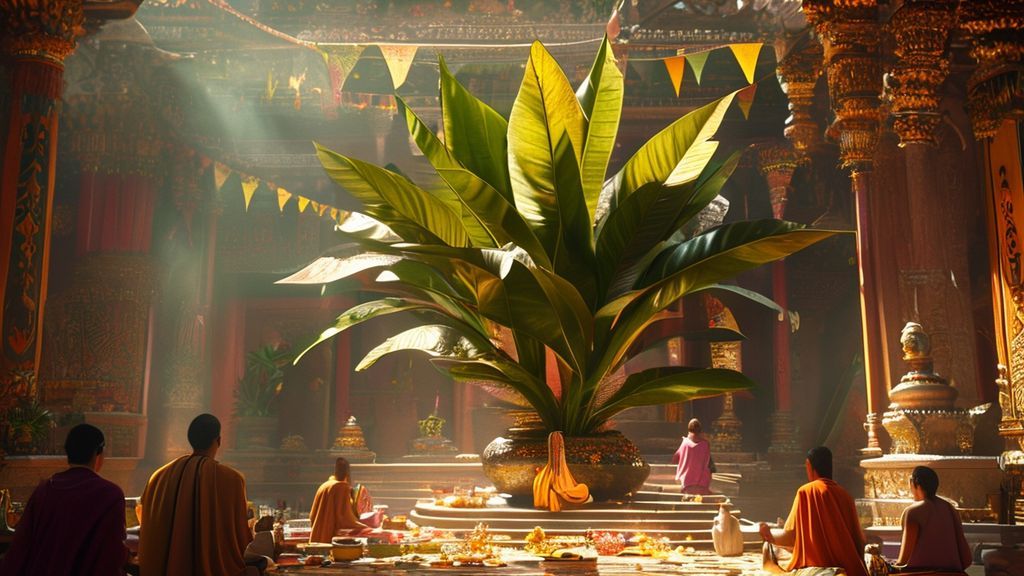
Money Plant Vastu, when strategically applied, is a time-honored principle within Sanatan Dharma to attract wealth, prosperity, and positive energetic flow into a dwelling. This practice, rooted in the ancient science of Vastu Shastra, emphasizes the plant’s placement to harmonize the elemental energies and invoke auspicious vibrations, fostering financial growth and overall well-being.
| Attribute | Details |
|---|---|
| Deity Associated | Goddess Lakshmi (wealth, abundance), Lord Kubera (treasurer of the Devas) |
| Optimal Vastu Placements | South-East (Agni Kona), North (Kubera Sthan) |
| Key Principle | Continuous growth symbolizes increasing prosperity, positive energy (Prana) flow |
| Scripture Reference (Principles) | Brihat Samhita (Vastu aspects), Atharva Veda (Vriksha Ayur Veda, plant vitality), Vishnu Purana (Lakshmi’s manifestations) |
The Sanatan Significance of Home Harmony and Prosperity
In Sanatan Dharma, the dwelling is not merely a structure but a living entity, a sacred space (गृह – Griha) that profoundly influences the residents’ physical, mental, and spiritual well-being. The ancient science of Vastu Shastra, an integral limb of the Vedas, provides profound wisdom for creating environments that resonate with cosmic energies. Prosperity (समृद्धि – Samriddhi), encompassing not just material wealth but also health, happiness, and spiritual growth, is a cherished goal. Plants, as embodiments of Prana (life force) and manifestations of Prakriti (nature), play a crucial role in Vastu. The Money Plant, though a contemporary nomenclature, is revered for its inherent ability to purify air and, more importantly, attract auspicious energies when placed according to Vastu principles, signifying continuous growth and abundance.
Vedic Roots of Plant Veneration and the Symbolism of Prosperity
While the specific ‘Money Plant’ (Epipremnum aureum) is not explicitly named in ancient Sanskrit texts, the reverence for plants (वृक्षवंदनम् – Vriksha Vandanam) and their profound energetic influence is deeply embedded in the Vedas and Puranas. The Atharva Veda, in particular, dedicates numerous hymns to the healing and auspicious properties of various flora, referring to plants as ओषधयः (Oṣadhayaḥ) – givers of life and vitality. The principles articulated for sacred trees like Tulasi, Peepal, and Bilva regarding their placement and care for household welfare are extended to other beneficial plants that embody similar energetic qualities.
The Money Plant, with its robust, climbing nature, symbolizes consistent, upward growth – a direct metaphor for increasing prosperity and an unhindered flow of wealth. This resonates with the concept of अनन्त समृद्धि (Ananta Samriddhi), endless abundance, a blessing sought from Devi Lakshmi. The Puranas, such as the Vishnu Purana and Brahmavaivarta Purana, describe Lakshmi’s various forms, including धनलक्ष्मी (Dhanya Lakshmi), the bestower of grains and agricultural wealth, directly linking prosperity to the earth’s bounty and vibrant plant life. Thus, caring for a Money Plant under Vastu guidelines is an act of nurturing the manifestation of Lakshmi’s blessings within the home, aligning one’s immediate environment with the cosmic principles of growth and sustenance.
Vastu Shastra Principles for Money Plant Placement
Vastu Shastra operates on the profound understanding of the five primordial elements (पंचमहाभूतानि – Panchamahābhūtāni) – Earth, Water, Fire, Air, and Space – and their intricate balance within a structure. Each direction is governed by specific elemental energies and presiding deities. Strategic placement of the Money Plant harmonizes these energies to attract financial stability and growth.
- South-East Direction (अग्नि कोण – Agni Kona): The Apex of Prosperity
The South-East direction is paramount for Money Plant placement. This sector is governed by the Fire element (Agni) and ruled by Shukra (Venus), the planet associated with wealth, luxury, and material comforts. Placing the Money Plant here stimulates the fire element, which in turn energizes the flow of money and reduces financial obstacles. The climbing nature of the plant ensures that the wealth energy moves upwards, mirroring continuous financial upliftment. Care must be taken to ensure the plant is healthy and thriving here, as a languishing plant in the SE can signal financial distress. - North Direction (कुबेर स्थान – Kubera Sthan): Gateway to Opportunities
The North direction is governed by the Water element and ruled by Lord Kubera, the treasurer of the Devas, and Budha (Mercury). Placing a Money Plant here is excellent for attracting new opportunities for wealth generation and career advancement. It ensures a smooth flow of income and helps in wealth accumulation. - East Direction (सूर्य स्थान – Surya Sthan): Social Connections
This direction is governed by the Air element and ruled by Surya (Sun). While not primarily for direct wealth, placing a Money Plant here can enhance social connections and reputation, which indirectly support financial growth through networking and public goodwill. - Avoid North-East Direction (ईशान कोण – Ishana Kona): Spiritual vs. Material Clash
The North-East is the zone of the Water element, governed by Ishana (Lord Shiva) and Guru (Jupiter), representing spirituality, wisdom, and health. Placing the Money Plant, which embodies material growth, here can create a conflict of energies. It might lead to mental stress, health issues, or an unstable financial situation. The climbing nature of the plant here can symbolize material aspirations overshadowing spiritual growth, which is generally discouraged in Vastu for this sacred direction. - Avoid South-West Direction (नैर्ऋत्य कोण – Nairitya Kona): Relationship Stability
This direction is governed by the Earth element and ruled by Rahu. While good for stability, placing a Money Plant here can affect relationships and create disharmony, especially among couples. It’s best to avoid this zone for Money Plants.
Crucially, the Money Plant should always be allowed to grow upwards, signifying growth. Its vines should never be left trailing on the ground, as this is believed to symbolize a downward trend in financial prosperity. Ensure the leaves are vibrant and healthy, as a wilting or yellowing plant is considered inauspicious.
Care and Consecration for Optimal Vastu (Puja Vidhi for the Money Plant)
Treating the Money Plant with reverence, akin to a sacred entity, enhances its Vastu benefits. This is not idol worship but rather acknowledging the divine energy inherent in Prakriti.
- Sthapana (Placement): Choose the optimal direction (South-East or North) for placement. Ensure the pot is clean and aesthetically pleasing. For indoor plants, ensure adequate indirect sunlight.
- Jal Seva (Watering): Water the plant regularly, ensuring it remains hydrated and vibrant. Use clean, fresh water. Visualize prosperity flowing into your home with each watering.
- Deep Dhoop Seva (Offerings): Occasionally, offer a small lamp (diya) and incense (dhoop) near the Money Plant, especially on Fridays (associated with Shukra and Lakshmi) or during Diwali. This symbolizes inviting divine light and purifying energy.
- Pranam (Salutation): Offer a simple prayer or salutation, acknowledging the plant as a living embodiment of nature’s bounty and a channel for Lakshmi’s blessings.
- Sankalpa (Intention): While tending to the plant, mentally affirm your intention for health, wealth, and harmonious living. The power of positive intention (संकल्प – Sankalpa) is paramount in all Dharmic practices.
- Maintenance: Regularly prune yellowing or dead leaves. Ensure the plant’s vines climb upwards, ideally using a moss stick or support, symbolizing continuous ascent in prosperity. Never let the vines touch the ground.
Mantras and Chants for Prosperity
Chanting specific mantras near your Money Plant can amplify its energetic influence, aligning your intentions with the cosmic vibrations of abundance. These mantras invoke Goddess Lakshmi and Lord Kubera, the primary deities of wealth.
- Mahalakshmi Mantra for Abundance:
ॐ श्रीं ह्रीं श्रीं कमले कमलालये प्रसीद प्रसीद श्रीं ह्रीं श्रीं ॐ महालक्ष्म्यै नमः॥
Om Shreem Hreem Shreem Kamale Kamalalaye Praseed Praseed Shreem Hreem Shreem Om Mahalakshmyai Namah॥
(Chanting this mantra 108 times daily helps invoke the blessings of Goddess Lakshmi.) - Kubera Mantra for Wealth Accumulation:
ॐ यक्षाय कुबेराय वैश्रवणाय धनधान्याधिपतये धनधान्यसमृद्धिं मे देहि दापय स्वाहा॥
Om Yakshaya Kuberaya Vaishravanaya Dhana Dhanyadhipataye Dhana Dhanyasamriddhim Me Dehi Dapaya Swaha॥
(This mantra is recited to appease Lord Kubera for wealth, grains, and overall prosperity.) - General Prosperity Mantra:
सर्व मंगल मांगल्ये शिवे सर्वार्थ साधिके। शरण्ये त्र्यम्बके गौरि नारायणि नमोऽस्तु ते॥
Sarva Mangala Mangalye Shive Sarvartha Sadhike. Sharanye Tryambake Gauri Narayani Namostute॥
(A universal mantra to invoke all auspiciousness and fulfill all purposes.)
Dos and Don’ts for Money Plant Vastu
- Do:
- Place the Money Plant in the South-East corner for financial growth.
- Alternatively, place it in the North direction for new opportunities.
- Ensure the plant is always healthy, green, and well-watered.
- Allow the vines to grow upwards, symbolizing rising prosperity.
- Regularly clean the leaves to remove dust and maintain vitality.
- Use a moss stick or support for the plant to climb.
- Gift a Money Plant to bring good fortune to others.
- Don’t:
- Place the Money Plant in the North-East direction, as it can cause financial instability.
- Let the plant’s leaves or vines trail on the ground.
- Keep the plant in the bathroom, as it attracts negative energies.
- Allow the plant to dry out or wilt, as this signifies a depletion of wealth.
- Place it near the main entrance directly facing outwards, which can cause wealth to leave the home.
- Place it near heating elements or in direct, harsh sunlight that could damage it.
- Let anyone steal or give away a part of your Money Plant, as it is believed to take away your wealth.
Frequently Asked Questions on Money Plant Vastu
Why is the Money Plant associated with wealth in Vastu?
The Money Plant is associated with wealth due to its robust and fast-growing nature, which symbolizes continuous growth and an uninterrupted flow of prosperity. Its heart-shaped leaves are also considered auspicious, representing vitality. When placed according to Vastu principles, it harmonizes the elemental energies in the home, particularly activating the Fire element in the South-East, which is directly linked to financial abundance.
What is the best direction for Money Plant placement?
The **South-East direction** is considered the best for Money Plant placement in Vastu. This corner is governed by the Fire element and ruled by Shukra (Venus), the planet of wealth and luxury. Placing the Money Plant here energizes the financial corner of the home, promoting wealth accumulation and stability. The North direction, governed by Lord Kubera, is also auspicious for attracting new financial opportunities.
Can Money Plant be kept in water or soil, and does it matter for Vastu?
The Money Plant can be kept effectively in both water and soil for Vastu purposes. The key is its vitality and healthy growth, not the medium. When kept in water, ensure the water is changed regularly to prevent stagnation and maintain freshness, symbolizing clear and flowing wealth. In soil, ensure proper drainage and adequate nourishment. A thriving plant in either medium will emanate positive energies.
What should I do if my Money Plant starts dying?
If your Money Plant starts dying or wilting, it is considered inauspicious in Vastu, symbolizing potential financial setbacks or a depletion of positive energy. Immediately remove any yellowing or dead leaves. If the plant cannot be revived, it is best to respectfully dispose of it (e.g., immerse in a flowing river or bury) and replace it with a new, healthy plant. This ensures the continuous flow of positive energy and prevents the accumulation of negative vibrations.
Why This Matters for Every Hindu: Preserving Sanatan Dharma through Holistic Living
The practice of Money Plant Vastu, when understood deeply, transcends mere superstition; it is an embodiment of Sanatan Dharma’s profound wisdom regarding the interconnectedness of all life and the meticulous design of harmonious living spaces. By aligning our homes with Vastu principles, we are not just seeking material gain, but fostering an environment conducive to spiritual growth, mental peace, and physical health – the very pillars of a righteous life (धर्म – Dharma). It reminds us to live in harmony with Prakriti, recognizing the divine in every leaf and every direction. Such practices reinforce our faith in the subtle energies of the cosmos and encourage a mindful approach to our surroundings. By embracing these ancient yet timeless truths, we strengthen our connection to our heritage and contribute to the preservation of Hindutva.online‘s mission to enlighten and guide sincere seekers on the path of Dharma. These small, daily acts of reverence within our homes become powerful affirmations of our cultural values, ensuring that the light of Sanatan Dharma continues to shine brightly for generations to come. Explore more insights into living a Dharmic life at Hindutva.online.