

The Navratri fasting Rules tradition – literally meaning “nine nights” from Sanskrit nava (nine) and ratri (nights) – represents one of Hinduism’s most beloved devotional practices, observed twice annually during Chaitra Navratri (March-April marking spring’s arrival) and Sharad Navratri (September-October welcoming autumn), when millions of devotees across India and worldwide abstain from regular grains, legumes, onions, and garlic while adopting special sattvic diet of alternative flours like kuttu (buckwheat), singhara (water chestnut), sabudana (tapioca pearls), and specific vegetables and fruits, all dedicated to honoring Goddess Durga in Her nine manifestations – Shailaputri, Brahmacharini, Chandraghanta, Kushmanda, Skandamata, Katyayani, Kaalratri, Mahagauri, and Siddhidatri – who collectively embody divine feminine power (Shakti) that creates, preserves, and transforms the universe.

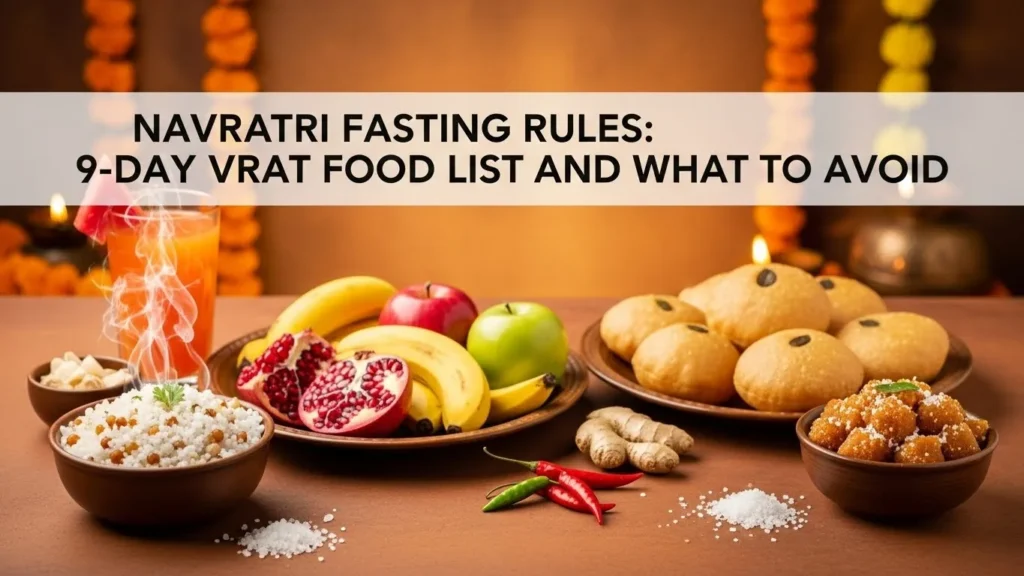
This nine-day spiritual discipline serves multiple purposes: purifying body and mind through simplified sattvic nutrition aligned with seasonal transitions when Ayurveda recommends dietary modifications supporting immune function, deepening devotional connection with Divine Mother through conscious sacrifice of familiar comfort foods, and creating sacred time separate from mundane routines where families gather for evening aarti, chant Durga Saptashati, and maintain akhand jyoti (continuously burning lamp) symbolizing unwavering devotion burning through life’s metaphorical darkness. For Hindu practitioners in 2025, whether observing all nine days or selectively fasting on first and last days as many working professionals do, understanding complete fasting guidelines proves essential: which alternative flours and vegetables tradition permits.
how to prepare delicious yet simple recipes like sabudana khichdi, kuttu ki puri, and singhare ke pakore that sustain energy throughout demanding work days, what foods absolutely must be avoided to maintain vrat’s ritual validity, how fasting rules vary slightly by region and family tradition creating flexible framework rather than rigid uniformity, the profound spiritual significance underlying seemingly arbitrary food restrictions that actually reflect Ayurvedic wisdom about seasonal eating and consciousness purification, and practical adaptations for special populations including elderly, children, pregnant women, and those with health conditions who cannot maintain complete grain abstinence but still wish to participate meaningfully in this transformative festival celebrating feminine divine power that compassionately protects devotees while fiercely destroying evil forces threatening dharmic order.
Understanding Navratri: Spiritual Significance and Timing
Before examining detailed food lists and recipes, grasping why Navratri holds such profound importance in Hindu tradition and what makes fasting during these specific nine-day periods particularly auspicious transforms the practice from dietary restriction into conscious spiritual discipline honoring Divine Mother’s grace.
The Two Main Navratris:
While Hindu calendar recognizes four Navratris corresponding to seasonal transitions, two prove most widely celebrated:
1. Chaitra Navratri (Spring – March/April)
- 2025 Dates: March 30 – April 7
- Marks winter-to-spring transition
- Concludes with Ram Navami (Lord Rama’s birth)
- Particularly popular in North India
- Spiritually celebrates divine’s birth/manifestation in material world
2. Sharad Navratri (Autumn – September/October)
- 2025 Dates: September 22 – October 1
- Marks monsoon-to-autumn transition
- Concludes with Vijayadashami/Dussehra (Durga’s victory over Mahishasura)
- Most widely celebrated across India
- Spiritually celebrates divine’s victory over evil
The Nine Forms of Goddess Durga:
Each day honors specific manifestation of Durga, with corresponding colors, offerings, and spiritual qualities:
| Day | Goddess Form | Color | Quality Bestowed | Special Offering |
|---|---|---|---|---|
| Day 1 | Shailaputri (Daughter of Mountains) | Grey | Stability, grounding | Ghee (clarified butter) |
| Day 2 | Brahmacharini (The Ascetic) | Orange | Wisdom, austerity | Sugar, fruits |
| Day 3 | Chandraghanta (Bell-Adorned) | White | Peace, serenity | Milk, sweets |
| Day 4 | Kushmanda (Creator of Universe) | Red | Creative power | Malpua (pancakes) |
| Day 5 | Skandamata (Mother of Kartikeya) | Royal Blue | Protection, maternal love | Bananas |
| Day 6 | Katyayani (Warrior Goddess) | Yellow | Courage, destruction of evil | Honey |
| Day 7 | Kaalratri (Dark Night) | Green | Removes darkness, fear | Jaggery |
| Day 8 | Mahagauri (Fair/Pure One) | Peacock Green | Purification, virtue | Coconut |
| Day 9 | Siddhidatri (Giver of Siddhis) | Purple | Spiritual powers, perfection | Sesame seeds |
Ayurvedic and Scientific Rationale:
Beyond spiritual symbolism, Navratri fasting aligns with Ayurvedic principles of Ritucharya (seasonal lifestyle):
Seasonal Transition Periods (Ritu Sandhi):
- Body’s immunity and digestive capacity naturally fluctuate during seasonal changes
- Lighter, easily digestible foods reduce burden on digestive system
- Fasting creates physiological reset supporting adaptation to new season
Pitta Reduction (Autumn):
- Sharad Navratri occurs when accumulated summer heat (pitta dosha) needs elimination
- Cooling foods like fruits, milk, root vegetables help balance excess pitta
- Avoiding heating spices (onion, garlic, excess chili) prevents pitta aggravation
Kapha Reduction (Spring):
- Chaitra Navratri occurs when winter’s accumulated kapha (mucus, heaviness) needs clearing
- Light, dry foods like kuttu help metabolize accumulated kapha
- Avoiding heavy grains supports spring’s natural lightening process
Digestive Rest:
- Regular grains (wheat, rice) and legumes require substantial digestive energy
- Alternative vrat foods prove easier to digest, allowing digestive system to rest and repair
- Many people report improved gut health after Navratri fasting
Spiritual-Consciousness Aspect:
The spiritual significance extends beyond physical health:
Sattvic Food = Sattvic Mind: According to Bhagavad Gita, food directly influences consciousness. Eliminating tamasic (inertia-producing) and rajasic (passion-inducing) foods while embracing sattvic (purity-enhancing) options elevates mental clarity and spiritual receptivity.
Sacrifice as Devotion: Voluntarily abstaining from familiar comfort foods demonstrates love for Divine Mother – you sacrifice personal preferences as act of devotion, making consciousness more receptive to Her grace.
Breaking Routine: The dietary restrictions force mindful eating, breaking unconscious patterns. This conscious food choice trains awareness applicable to all life areas.
Community and Family Bonding: Shared fasting, special recipe preparations, evening worship gatherings strengthen family bonds and cultural transmission to younger generations.
Modern Relevance:
In 2025’s context of processed foods, sedentary lifestyles, and chronic health conditions, Navratri fasting offers:
- Natural detoxification from processed foods
- Digestive system reset through simplified eating
- Weight management through calorie-conscious traditional recipes
- Mindfulness practice applicable beyond nine days
- Connection to cultural roots and ancestral wisdom
Navratri Fasting Rules Complete Navratri Food List: What to Eat
Understanding which foods tradition permits during Navratri vrat enables creative meal planning that keeps fasting enjoyable, nutritious, and sustaining throughout demanding work days while maintaining ritual purity.
Alternative Flours and Grains:
Regular grains (wheat, rice, oats) are prohibited, but these special flours prove perfectly acceptable:
✅ Kuttu ka Atta (Buckwheat Flour)
- Use for: Pooris, parathas, pakoras, halwa, pancakes
- Nutrition: High protein (13g per 100g), gluten-free, rich in minerals
- Taste: Slightly nutty, earthy flavor
- Most popular vrat flour in North India
✅ Singhare ka Atta (Water Chestnut Flour)
- Use for: Pooris, parathas, pakoras, halwa, binding agent
- Nutrition: Cooling properties, easily digestible, low fat
- Taste: Mild, slightly sweet
- Ideal for pitta-balancing in autumn Navratri
✅ Rajgira ka Atta (Amaranth Flour)
- Use for: Pooris, halwa, thalipeeth, kadhi, laddoos
- Nutrition: Complete protein with all amino acids, calcium-rich
- Taste: Mild, slightly sweet
- Can use whole amaranth seeds (rajgira) roasted as snacks or in porridge
✅ Sama ke Chawal (Barnyard Millet)
- Use for: Replacing rice – make khichdi, pulao, kheer, idli, dosa
- Nutrition: High fiber, low glycemic index, gluten-free
- Taste: Very similar to rice
- Perfect rice substitute for those who struggle without grains
✅ Sabudana (Tapioca Pearls)
- Use for: Khichdi, vada, kheer, thalipeeth, tikki
- Nutrition: Pure carbohydrate, instant energy source
- Preparation: Must soak 4-6 hours before cooking
- Most versatile vrat ingredient with countless recipes
✅ Arrowroot Flour (Arrowroot/Paniphal Atta)
- Use for: Thickening gravies, binding pakoras, making rotis
- Nutrition: Easily digestible, cooling properties
- Taste: Neutral
- Often combined with other flours
Vegetables Allowed:
Not all vegetables prove acceptable during Navratri vrat. Traditional guidelines permit:
✅ Potatoes (Aloo)
- Most versatile and widely used vrat vegetable
- Make: jeera aloo, dahi aloo, aloo tamatar sabzi, aloo makhana curry
- Can be boiled, fried, mashed, or stuffed in pooris
✅ Sweet Potatoes (Shakarkandi)
- Make: halwa, chaat, tikki, simple boiled with rock salt
- Naturally sweet, nutritious, filling
✅ Pumpkin/Squash (Kaddu)
- Make: sabzi (curry), halwa, pakoras
- Sweet or savory preparations both work
✅ Colocasia (Arbi/Kachalu)
- Make: sukhi arbi, dahi arbi, arbi tikki, arbi cutlet
- Must be thoroughly cooked to remove natural toxins
✅ Yam (Suran/Jimikand)
- Make: sabzi, chips, fries
- Similar to potato in usage
✅ Raw Banana/Plantain
- Make: sabzi, chips, fries
- Use unripe green banana only
✅ Bottle Gourd (Lauki)
- Regional variation: Some families include, others don’t
- Make: simple sabzi, halwa, kheer
- Check with family elders before using
✅ Cucumber (Kheera)
- Eaten raw in salads, raita
- Some families include, others avoid
✅ Tomatoes
- Controversial ingredient: Many families use in curries and sabzi
- Some strictly avoid as technically a fruit
- Verify family tradition
✅ Spinach (Palak), Carrots (Gajar)
- Regional acceptance varies
- Some families include these nutritious vegetables
- Consult family elders for your tradition
Dairy Products:
All dairy products derived from cow or buffalo milk prove acceptable:
✅ Milk (Doodh)
✅ Yogurt/Curd (Dahi)
✅ Butter (Makhan)
✅ Ghee (Ghee) – clarified butter
✅ Cream (Malai)
✅ Buttermilk (Chaas)
✅ Paneer (Paneer) – homemade preferred over store-bought
✅ Khoya/Mawa
✅ Condensed milk
Fruits:
Virtually all fresh fruits prove acceptable:
✅ Bananas, apples, pomegranates, oranges, grapes, mangoes, papayas, watermelon, muskmelon, pineapple, guava, pears, peaches, plums, berries, jackfruit, litchis, kiwi, dragon fruit
- Eat fresh, make fruit chaat, fruit salad, fruit raita, milkshakes, juices
- Natural source of vitamins, minerals, quick energy
- Particularly important for those doing complete fast (no flour-based foods)
Nuts and Seeds:
✅ Almonds (Badam), cashews (Kaju), walnuts, pistachios, peanuts (groundnuts), pumpkin seeds, melon seeds (Magaz), coconut (fresh and dried)
- Roasted as snacks
- Ground into paste for gravies
- Added to halwas, kheer, laddoos
- Excellent protein and healthy fat sources
Special Vrat Items:
✅ Makhana (Fox Nuts/Lotus Seeds)
- Roasted as snacks with rock salt and spices
- Added to kheer, curries
- Made into rotis by grinding into flour
✅ Water Chestnuts (Singhara)
- Fresh water chestnuts eaten raw or added to dishes
- Dried and ground into flour (singhare ka atta)
✅ Coconut (Nariyal)
- Fresh coconut, dried coconut, coconut milk all allowed
- Make laddoos, barfi, add to curries
- Sacred offering to Goddess
Spices and Seasonings Allowed:
✅ Rock Salt (Sendha Namak)
- MUST USE instead of regular salt
- Also called upvaas ka namak or Himalayan pink salt
- Available at all Indian grocery stores
✅ Cumin (Jeera)
✅ Black pepper (Kali Mirch)
✅ Green cardamom (Elaichi)
✅ Cloves (Laung)
✅ Cinnamon (Dalchini)
✅ Nutmeg (Jaiphal)
✅ Carom seeds (Ajwain)
✅ Green chilies (Hari Mirch)
✅ Fresh ginger root
✅ Dry ginger powder
✅ Lemons/Limes
✅ Dry pomegranate seeds (Anardana)
Controversial (Check Family Tradition):
- Fresh coriander (Dhania) and mint (Pudina) – some include, some avoid
- Curry leaves (Kadi Patta) – regional variation
- Dry mango powder (Amchur) – some families use
- Red chili powder – some avoid, preferring only fresh green chili
- Black salt (Kala Namak) – most families avoid
Sweeteners:
✅ Sugar (white or brown)
✅ Honey
✅ Jaggery (Gur)
✅ Mishri (rock sugar candy)
Beverages:
✅ Tea (chai) – allowed, though some purists avoid
✅ Water, coconut water
✅ Fresh fruit juices (homemade, no preservatives)
✅ Milk, buttermilk
✅ Herbal teas
Oils for Cooking:
✅ Peanut/Groundnut oil – for deep frying
✅ Ghee (clarified butter) – for shallow frying, rotis, flavor
✅ Coconut oil – some families use
❌ Avoid: Sunflower oil, soybean oil, mustard oil, or any seed-based oils other than peanut
Foods to Strictly Avoid During Navratri
Understanding what foods to avoid proves equally important as knowing what’s permitted, as consuming prohibited items technically breaks the vrat’s ritual validity while also contradicting the spiritual and Ayurvedic purposes underlying food restrictions.
Absolutely Prohibited:
❌ All Regular Grains:
- Rice (chawal)
- Wheat flour (atta)
- Refined flour (maida)
- Semolina (sooji/rava)
- Oats
- Corn/maize
- Barley
- Millet (except sama ke chawal/barnyard millet which is allowed)
- Quinoa, couscous
Why prohibited: These represent common everyday grains. Abstaining creates distinction between ordinary days and sacred Navratri period.
❌ All Lentils and Legumes:
- All types of dal (lentils)
- Chickpeas (chana)
- Kidney beans (rajma)
- Black-eyed peas
- Any beans
- Gram flour (besan)
- Soy products (tofu, soy milk, soy chunks)
Why prohibited: Legumes require substantial digestive energy. Their elimination provides digestive rest while forcing reliance on alternative protein sources (dairy, nuts).
❌ Regular Table Salt:
- Common iodized salt must be completely replaced with rock salt (sendha namak)
- Even one dish made with regular salt technically breaks the fast
Why specific: Rock salt is considered purer and closer to natural mineral form. Using it distinguishes sacred food from everyday meals.
❌ Onion and Garlic (Pyaaz aur Lehsun):
- Strictly forbidden – most important prohibition
- This includes onion powder, garlic powder, asafoetida (hing)
- Must check restaurant food, packaged snacks for these ingredients
Why prohibited: Ayurveda classifies onion and garlic as rajasic and tamasic – they increase passion, agitation, and dullness while hindering meditation and spiritual practices. Their strong flavors also overpower subtle taste awareness being cultivated.
❌ Specific Spices:
- Turmeric (Haldi)
- Asafoetida (Hing)
- Mustard seeds (Sarson/Rai)
- Fenugreek seeds (Methi Dana)
- Coriander powder (Dhania Powder) – fresh leaves controversial
- Garam masala (contains prohibited spices)
Why prohibited: These heating spices increase pitta and aren’t considered sattvic. Their absence creates simpler, purer flavor profiles.
❌ Non-Vegetarian Foods:
- All meat (chicken, mutton, beef, pork)
- Fish and seafood
- Eggs (even in baked goods)
Why prohibited: Navratri celebrates Goddess as compassionate protector of all beings. Non-violence (ahimsa) principle demands vegetarian diet. Additionally, these are tamasic foods dulling consciousness.
❌ Alcohol and Intoxicants:
- All alcoholic beverages
- Tobacco products
- Recreational drugs
- Even cooking wine or rum essence in desserts
Why prohibited: Intoxicants cloud consciousness and disrespect the sacred period dedicated to Divine Mother worship.
❌ Processed and Packaged Foods:
- Commercial chips, crackers, cookies (contain regular flour, salt, prohibited ingredients)
- Packaged juices (preservatives)
- Canned foods
- Instant noodles
- Store-bought bread
- Ice cream (unless homemade)
Why problematic: Preservatives, additives, and hidden ingredients (onion/garlic powder) make these unsuitable. If you must buy packaged items, read ingredients meticulously.
Additional Items to Avoid:
❌ Coffee – tea allowed, but coffee generally avoided
❌ Baking soda/baking powder – some strict traditions avoid (others permit in small amounts)
❌ Cornflour/cornstarch – corn-derived, not allowed
❌ Flaxseeds, chia seeds – some modern additions not traditionally part of vrat food
❌ Yeasted breads
❌ Fermented foods (except yogurt)
Important Notes:
Restaurant and Street Food:
- Avoid eating out during Navratri unless at specialized “vrat food” restaurants
- Regular restaurants use onion, garlic, table salt, and regular grains
- Even “vegetarian” food isn’t vrat-appropriate
Checking Ingredients:
- Read all packaged food labels carefully
- Look for hidden onion/garlic powder
- Verify salt type isn’t mentioned (likely regular salt)
- When in doubt, make food from scratch at home
Inadvertent Consumption:
If you accidentally consume prohibited food (didn’t know it contained garlic, etc.):
- Stop immediately once realized
- Don’t consume more
- Mentally apologize to Goddess
- Continue fast for remainder of nine days
- The mistake reduces merit but doesn’t completely invalidate sincere effort
Family Variations:
Remember that some families have slightly different rules:
- Some avoid tomatoes, others freely use them
- Some permit fresh coriander, others don’t
- Some are stricter about which vegetables allowed
Always defer to your family’s tradition when variations exist. These rules aren’t universal law but culturally transmitted guidelines with regional flexibility.
Popular Navratri Vrat Recipes
Creating delicious, satisfying meals using permitted ingredients requires learning specialized recipes that sustain energy while maintaining ritual purity. Here are popular, tested Navratri recipes that families across India prepare during the nine-day fast.
Breakfast/Morning Meals:
1. Sabudana Khichdi (Tapioca Pearl Pilaf)
Ingredients:
- 1 cup sabudana (soaked 4-6 hours, drained)
- 2 potatoes (boiled, cubed)
- 1/2 cup roasted peanuts (coarsely ground)
- 2 green chilies (chopped)
- 1 tsp cumin seeds
- Fresh coriander (if family tradition allows)
- Rock salt to taste
- 2 tbsp ghee or peanut oil
- Lemon juice
Method:
- Heat ghee, add cumin seeds
- Add green chilies, sauté briefly
- Add boiled potato cubes, fry lightly
- Add drained sabudana, mix gently
- Add rock salt, ground peanuts
- Cover and cook 5-7 minutes on low heat until pearls become translucent
- Garnish with coriander, serve with lemon wedges
Tips: Ensure sabudana properly soaked – pearls should separate easily. If too wet, spread on cloth to remove excess moisture before cooking.
2. Kuttu Ki Puri (Buckwheat Flatbread)
Ingredients:
- 2 cups kuttu ka atta (buckwheat flour)
- 2 medium potatoes (boiled, mashed)
- Rock salt to taste
- Water as needed
- Ghee or peanut oil for deep frying
Method:
- Mix buckwheat flour with mashed potatoes
- Add rock salt
- Knead into firm dough using warm water
- Make small balls, roll into 4-inch circles (use dry kuttu flour for dusting)
- Deep fry in hot oil until golden and puffed
Tips: Adding mashed potato helps bind the dough as buckwheat lacks gluten. Roll thick (not thin like regular pooris) as they’re delicate.
3. Singhare Ke Pakore (Water Chestnut Fritters)
Ingredients:
- 1 cup singhare ka atta
- 2 potatoes (boiled, grated)
- 1 green chili (minced)
- Rock salt, black pepper
- Water to make thick batter
- Oil for deep frying
Method:
- Mix flour, grated potato, chili, salt, pepper
- Add water gradually to make thick pakora batter
- Heat oil, drop spoonfuls of batter
- Fry until golden brown
- Serve hot with pudina (mint) chutney or plain yogurt
Main Meals:
4. Aloo Jeera (Cumin Potatoes)
Ingredients:
- 4 large potatoes (boiled, cubed)
- 2 tsp cumin seeds
- 2 green chilies
- 1 tsp ginger (minced)
- Fresh coriander
- Rock salt, black pepper
- 2 tbsp ghee
- Lemon juice
Method:
- Heat ghee, add cumin seeds until fragrant
- Add green chilies, ginger
- Add potato cubes, rock salt, pepper
- Cook 5-7 minutes until slightly crispy
- Garnish with coriander, lemon juice
5. Dahi Aloo (Potatoes in Yogurt Gravy)
Ingredients:
- 4 potatoes (boiled, cubed)
- 2 cups thick yogurt (whisked)
- 1 tsp cumin seeds
- 2 green chilies
- Handful peanuts (crushed)
- Rock salt, black pepper
- 2 tbsp ghee
Method:
- Heat ghee, add cumin seeds
- Add green chilies, sauté
- Add whisked yogurt, rock salt
- Add boiled potatoes, crushed peanuts
- Simmer 5 minutes, stirring gently
- Serve with kuttu puri
6. Sama Ke Chawal Ki Khichdi (Barnyard Millet Khichdi)
Ingredients:
- 1 cup sama ke chawal (rinsed)
- 2 cups water
- 2 potatoes (cubed)
- 1 tsp cumin seeds
- 1 green chili
- Rock salt
- 1 tbsp ghee
Method:
- Heat ghee, add cumin, chili
- Add potato cubes, sauté
- Add sama ke chawal, water, salt
- Pressure cook for 2 whistles or cook covered until done
- Serve with yogurt
Snacks:
7. Sabudana Vada (Tapioca Pearl Fritters)
Ingredients:
- 1 cup sabudana (soaked, drained)
- 2 potatoes (boiled, mashed)
- 1/2 cup roasted peanuts (coarsely ground)
- 2 green chilies
- Fresh coriander
- Rock salt
- Oil for frying
Method:
- Mix all ingredients except oil
- Make small patties/balls
- Deep fry in hot oil until golden
- Serve hot with yogurt or chutney
8. Makhana (Fox Nuts Roasted Snack)
Ingredients:
- 2 cups makhana
- 1 tbsp ghee
- Rock salt, black pepper
- Optional: 1/2 tsp cumin powder
Method:
- Heat ghee in pan
- Add makhana, roast on low heat until crisp (10 minutes)
- Add rock salt, pepper, cumin powder
- Mix well, cool, store in airtight container
Sweets/Desserts:
9. Sabudana Kheer (Tapioca Pudding)
Ingredients:
- 1/2 cup sabudana
- 4 cups milk
- 1/2 cup sugar
- Cardamom powder
- Slivered almonds, cashews
- Saffron strands
Method:
- Soak sabudana 30 minutes, drain
- Boil milk, add soaked sabudana
- Cook on low heat 20 minutes until pearls turn translucent
- Add sugar, cardamom, saffron
- Garnish with nuts
- Serve warm or chilled
10. Singhare Ka Halwa (Water Chestnut Pudding)
Ingredients:
- 1 cup singhare ka atta
- 3/4 cup ghee
- 1 cup sugar
- 2 cups water
- Cardamom powder
- Chopped nuts
Method:
- Heat ghee, add singhare ka atta
- Roast on low heat until fragrant (8-10 minutes)
- Meanwhile, make sugar syrup with water
- Add syrup to roasted flour carefully (will splutter)
- Cook stirring continuously until ghee separates
- Add cardamom, nuts
- Serve hot
Beverages:
11. Dry Fruits Milkshake
Ingredients:
- 2 cups cold milk
- 10 almonds (soaked, peeled)
- 10 cashews
- 5 dates (pitted)
- 2 tsp honey
- Cardamom powder
- Saffron strands
Method:
- Blend all ingredients until smooth
- Serve chilled
- Nutritious, filling breakfast alternative
12. Pudina (Mint) Lassi
Ingredients:
- 2 cups yogurt
- 1/2 cup water
- Handful fresh mint leaves
- Rock salt, roasted cumin powder
- Black pepper
Method:
- Blend yogurt, water, mint, salt, spices
- Serve chilled
- Refreshing, digestive drink
Meal Planning Tips:
Daily Structure:
- Morning: Sabudana khichdi OR kuttu puri with aloo jeera
- Mid-morning: Fruits, roasted makhana, dry fruits
- Lunch: Sama ke chawal with dahi aloo OR kuttu puri with vegetable
- Evening: Tea with vrat-friendly snacks (sabudana vada, singhare pakore)
- Dinner: Similar to lunch, add sweet (kheer or halwa)
- Before bed: Milk with nuts
Prep Strategies:
- Soak sabudana overnight for morning cooking
- Boil potatoes in bulk, refrigerate for multiple meals
- Make kuttu dough in advance, refrigerate (use within 12 hours)
- Roast makhana in large batches for week-long snacking
Health Tips and Adaptations for Special Populations
While Navratri fasting offers numerous benefits, certain populations require modifications ensuring health safety while maintaining spiritual participation. Ayurveda recommends adapting fasting based on individual constitution (dosha), age, and health status.
For Healthy Adults:
Maintaining Energy:
- Don’t skip meals – eat 4-5 small meals throughout day
- Include protein at each meal (dairy, nuts, makhana)
- Balance heavy foods (fried pooris) with light (fruits, buttermilk)
- Stay well-hydrated – drink 8-10 glasses water, coconut water, buttermilk
Preventing Common Issues:
Headaches: Often from caffeine withdrawal or dehydration
- Continue tea if regular consumer (suddenly stopping triggers headaches)
- Increase water intake
- Eat frequent small meals (low blood sugar causes headaches)
Constipation: Less fiber from no whole grains
- Eat plenty of fruits, especially papaya, banana
- Include bottle gourd if family allows
- Drink warm water first thing morning
- Consider isabgol (psyllium husk) if needed
Acidity: Fried foods on empty stomach
- Don’t skip breakfast
- Include banana, milk, coconut water (alkaline foods)
- Avoid excess chili
- Eat smaller portions more frequently
For Special Populations:
Children (Under 12):
- Not required to do complete fast
- Can participate by: avoiding non-veg, eating one vrat meal daily, helping with prayers
- Ensure adequate nutrition for growth – milk, fruits, nuts throughout day
- Make it enjoyable, not burdensome
Teenagers:
- Can do modified fast – one meal with regular food, rest vrat food
- Ensure adequate calories for growth and activities
- Pack vrat snacks for school (makhana, fruits, dry fruit laddoos)
Pregnant Women:
- Should NOT do complete fast
- Can eat sattvic food without onion/garlic but including regular grains
- Consult doctor before any dietary changes
- Baby’s nutrition is priority over fasting ritual
Breastfeeding Mothers:
- Similar to pregnant women – baby’s nutrition priority
- Can observe by avoiding non-veg, onion, garlic
- Maintain regular grain intake for milk supply
- Stay well-hydrated
Elderly:
- Modified fast recommended over complete
- Ensure adequate protein (dairy), don’t rely solely on fruits
- Watch for dizziness, weakness – break fast if occurs
- Consider fasting only first and last day if nine days too demanding
Diabetics:
- MUST consult doctor before fasting
- Risk of blood sugar fluctuations with dietary changes
- If approved: frequent small meals, monitor glucose regularly
- Include complex carbs (sama ke chawal) not just simple sugars (sabudana)
- Never skip medications
Heart Disease/Hypertension:
- Consult doctor before fasting
- Watch sodium even with rock salt
- Avoid fried foods – choose grilled, baked preparations
- Include fruits rich in potassium
- Stay well-hydrated
Kidney Disease:
- Consult nephrologist – protein and potassium restrictions may apply
- Rock salt still contains sodium
- Modified diet essential
Those on Regular Medications:
- Never skip medications for fasting
- Ensure adequate food to take medicines
- Consult doctor about any needed adjustments
Dosha-Based Modifications:
Vata Dosha (Thin, dry skin, irregular digestion):
- Include more ghee, warm foods
- Avoid excess raw foods, salads
- Prefer sweet potatoes, cooked fruits over raw
- Warm spiced milk before bed
Pitta Dosha (Medium build, good appetite, prone to acidity):
- Avoid excess fried, spicy foods
- Include cooling foods – cucumber, coconut
- Eat smaller, more frequent meals
- Avoid skipping meals (triggers acidity)
Kapha Dosha (Sturdy build, slow digestion, prone to congestion):
- Choose lighter options – avoid too much dairy, fried foods
- Include ginger, black pepper (warming spices)
- Smaller portions, longer gaps between meals
- More fruits and vegetables, less heavy flour-based foods
Signs to Break Fast Immediately:
🚨 Stop fasting and consult doctor if experiencing:
- Severe dizziness or fainting
- Extreme weakness preventing normal activities
- Chest pain, difficulty breathing
- Severe persistent headache
- Vomiting or diarrhea
- Signs of dehydration (dark urine, no urination, dry mouth)
- Confusion or disorientation
Remember: Goddess Durga values your wellbeing over mechanical ritual adherence. Breaking fast for genuine health reasons is wise devotion, not spiritual failure.
Frequently Asked Questions
Can I observe Navratri fast while working full-time?
Yes, absolutely! Many working professionals successfully maintain Navratri fasting. Practical tips: Pack vrat-friendly lunch (sama ke chawal khichdi, kuttu roti with sabzi, fruits, roasted makhana, dry fruit laddoos), keep emergency snacks at desk (fruits, nuts, vrat energy bars), inform colleagues to avoid lunch invitations, hydrate well throughout day, prepare breakfast and dinner in advance on weekends. Choose energy-sustaining foods (not just fruits) to maintain productivity. If complete nine-day fast proves difficult, observe first and last day – many working people follow this modified pattern.
What if I accidentally eat food with onion/garlic at restaurant?
Stop eating immediately once realized. Don’t consume more of that dish. Next steps: rinse mouth, mentally apologize to Goddess for unintentional error, continue fasting for remaining days with extra devotion. The accidental consumption doesn’t completely invalidate sincere nine-day effort, but intentional breaking would. Prevention: avoid eating out during Navratri, or choose specialized “vrat food” restaurants that guarantee onion/garlic-free preparation. Always ask restaurant staff explicitly about ingredients before ordering.
Can I drink coffee during Navratri fast?
Traditional guidelines suggest avoiding coffee while tea is generally permitted. Reasoning: coffee considered more rajasic (stimulating) than tea, and its absence helps reduce caffeine dependence. However, if you’re regular coffee drinker, suddenly stopping may trigger severe headaches disrupting work and worship. Practical solution: gradually reduce coffee intake week before Navratri, or switch to tea during fasting period. Some modern practitioners drink coffee arguing it’s not explicitly prohibited. Ultimately, defer to family tradition – if elders permit, it’s acceptable for your lineage.
Is it mandatory to fast all nine days or can I do partial fasting?
Complete nine-day fasting proves ideal but isn’t mandatory for everyone. Common modifications: 1) Fast on first and last day (Pratipada and Navami), 2) Fast on last two days (Ashtami and Navami), 3) Fast on Ashtami only (when Kanya Puja performed), 4) Eat one regular meal daily with remaining meals as vrat food, 5) Avoid only non-veg, onion, garlic without full vrat diet. Choose pattern sustainable for your health, work demands, and family circumstances. Sincere limited observance beats mechanically completing nine days with resentful attitude.
What should I do if fasting during menstruation?
Traditional view: Some orthodox families suggest women don’t perform elaborate puja or touch puja items during menstruation but can maintain dietary fast. Modern perspective: Menstruation is natural biological process, not spiritual impurity. Many contemporary women continue both fasting and worship during periods. Practical middle path: Maintain dietary restrictions, do your personal prayers and mantra chanting, but perhaps avoid cooking prasad for Kanya Puja if family tradition suggests. Listen to your body – if period symptoms (cramps, fatigue) make fasting difficult, modify or skip. Goddess understands female bodies She created.
Can children participate in Navratri fasting?
Children under 12 typically aren’t expected to do complete fasts. Age-appropriate participation: Young children (3-7): avoid non-veg, help with prayers, maybe one vrat meal; Older children (8-12): can try fasting one or two days, especially last day with Kanya Puja; Teenagers (13+): can attempt longer fasts with parental supervision. Important: make it positive experience, not forced deprivation. Children participating joyfully learn cultural values better than those resentfully complying. Ensure adequate nutrition for growing bodies – milk, fruits, nuts throughout day. Never force complete nine-day waterless/foodless fast on children.
Are there specific foods to eat each day for nine forms of Goddess?
Yes, traditional practice includes specific offerings (bhog) for each Goddess form as listed in the table earlier: Day 1 (Shailaputri) – ghee, Day 2 (Brahmacharini) – sugar/fruits, Day 3 (Chandraghanta) – milk/sweets, Day 4 (Kushmanda) – malpua, Day 5 (Skandamata) – banana, Day 6 (Katyayani) – honey, Day 7 (Kaalratri) – jaggery, Day 8 (Mahagauri) – coconut, Day 9 (Siddhidatri) – sesame seeds. Practical approach: offer these specific items to Goddess during puja, then consume as prasad. You’re not restricted to ONLY eating these items each day – maintain regular vrat food for meals, but include the day’s special offering in your diet.
What happens if I need to break fast for medical emergency?
Break fast immediately without hesitation if experiencing serious medical symptoms (severe weakness, chest pain, fainting, dangerous blood sugar levels, etc.). Your life and health supersede ritual completion. Spiritual perspective: Goddess Durga, as Divine Mother, would never want Her children endangering themselves. Breaking fast for genuine health necessity demonstrates wisdom, not weakness. Continue devotional activities you can manage (prayers, bhajans, reading scripture). Resume fasting once health permits, or observe modified fast. The sincere effort and devotion you showed matters more than mechanical completion despite health crisis.
Conclusion
The Navratri fasting tradition represents far more than dietary restriction or mechanical ritual observance – it embodies holistic spiritual practice integrating physical purification through sattvic foods that lighten digestive burden during seasonal transitions, mental discipline through conscious sacrifice of habitual comfort foods demonstrating devotion to Divine Mother, emotional connection through family gatherings for evening prayers and shared vrat meal preparations, and profound recognition that goddess worship isn’t abstract theology but lived practice where food choices, daily routines, and consciousness quality all become offerings at feet of Shakti who manifests as creative, preserving, and transforming power animating universe itself.
Understanding complete fasting guidelines – which alternative flours and vegetables tradition permits, which foods absolutely must be avoided, how to prepare delicious sustaining recipes, and when health concerns require intelligent modifications – enables meaningful nine-day observance that strengthens rather than exhausts body while elevating consciousness toward recognition of divine feminine presence pervading all existence.
As you observe Navratri 2025, whether celebrating Chaitra’s spring awakening or Sharad’s autumnal transformation, remember that Goddess Durga ultimately values the purity of your devotional consciousness over perfect mechanical adherence to dietary rules. Sincere effort within your genuine capacity – whether complete nine-day fasting or modified one-day observance combined with intensive prayer and charity – proves infinitely more valuable than grudging rule-following that creates resentment instead of joy, exhaustion instead of vitality, or family conflict over rigid dietary demands that ignore individual health needs.
Approach these sacred nine nights with devotion, yes, but also with intelligence and compassion toward yourself and others, creating sustainable practice that can continue year after year rather than extreme austerity that burns out after single attempt. May Divine Mother Durga bless your fasting with health, your prayers with clarity, and your heart with enduring devotion that transcends temporary dietary discipline to establish permanent consciousness recognizing Her presence in every breath, every heartbeat, every moment of existence.
जय माता दी। ॐ दुं दुर्गायै नमः॥
(Jai Mata Di. Om Dum Durgayai Namah – Victory to Mother Goddess. Salutations to Durga.)
About the Author
Priya Sharma – Women’s Spirituality and Goddess Worship Expert
Priya Sharma is a respected teacher and writer specializing in women’s spiritual issues, motherhood from dharmic perspective, goddess worship traditions, and the sacred feminine in Hindu philosophy. With personal experience observing Navratri fasting for over two decades and deep study of Shakti traditions, Devi Mahatmya, and regional goddess worship customs, her work focuses on making goddess-centered practices accessible and meaningful for contemporary women navigating multiple roles as professionals, mothers, daughters, and spiritual seekers. Priya regularly guides women through Navratri observances, explaining traditional procedures while offering practical adaptations for modern lifestyles, health conditions, and family circumstances.
She has published extensively on topics including balancing career and spiritual practice, involving children in Hindu festivals, goddess worship for beginners, and understanding the deeper philosophical meanings underlying ritual procedures often reduced to mechanical compliance. Her teaching emphasizes that authentic devotion to Divine Mother combines proper knowledge of traditional practices with compassionate flexibility recognizing individual circumstances, and that the Goddess ultimately values sincere effort and loving consciousness over rigid perfectionism that creates stress rather than spiritual growth.