


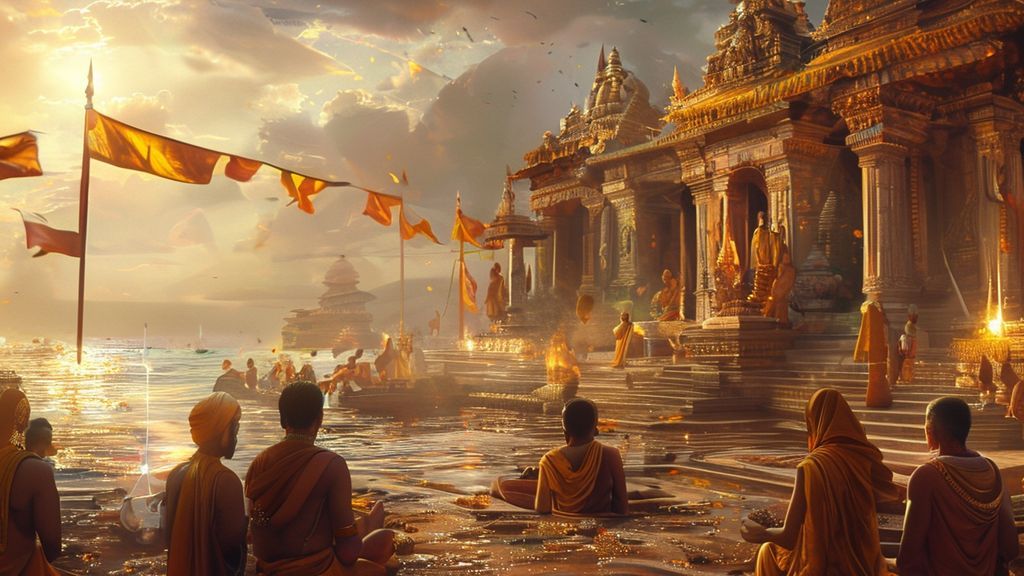
Ocean worship, revering Samudra Dev, is a profound and ancient practice in Hinduism, acknowledging the ocean as a divine entity, a source of life, wealth, and spiritual purification. Sanatan Dharma honors the vast water body as a manifestation of cosmic consciousness, often associated with Varuna, the Vedic deity presiding over celestial waters, and as the abode of Bhagavan Vishnu, the preserver.
| Attribute | Details |
|---|---|
| Deity | Samudra Dev (often associated with Varuna Dev, the Vedic God of Cosmic Waters) |
| Location/Origin | The Cosmic Ocean (Kshira Sagara), Earth’s oceans, mentioned in ancient Puranic cosmography. |
| Key Festivals | Narali Purnima, Ganga Sagar Mela, Pithori Amavasya, Makar Sankranti (for holy dips). |
| Scripture Reference | Rigveda, Atharvaveda, Mahabharata, Ramayana, Vishnu Purana, Bhagavata Purana. |
Introduction: The Cosmic Embrace of Samudra Dev
In the vast tapestry of Sanatan Dharma, the elements of nature are not merely physical entities but sacred manifestations of the Divine. Among these, the ocean, or समुद्र (Samudra), holds a uniquely revered position. It is more than just a body of water; it is a living deity, a witness to cosmic events, and a source of profound spiritual solace. From the ancient Vedic hymns to the elaborate Puranic narratives, the ocean has been consistently glorified as महान् (Mahan) – the great one, symbolizing boundless depth, unfathomable power, and eternal mystery. Devotion to Samudra Dev encapsulates the Hindu ethos of respecting and deifying nature, recognizing the intricate web of life and the divine presence in every atom of creation. This reverence is not born of fear, but of an inherent understanding of the ocean’s life-sustaining role and its deep connection to our spiritual journey.
Puranic History & Legends: The Ocean’s Divine Narrative
The history of ocean worship is deeply embedded in the इतिहास (Itihasa) and Puranas, narrating its pivotal role in cosmic events and human endeavors.
- The Rigvedic Varuna: In the ऋग्वेद (Rigveda), Varuna Dev is a prominent deity, a guardian of ऋतम् (Ritam) – cosmic order and truth. He is often depicted as the lord of celestial waters, governing both the physical and moral oceans. While Samudra is the physical ocean, Varuna is its divine personification and ruler, embodying its majesty and its power to cleanse and purify.
- Samudra Manthan: The Churning of the Ocean: Perhaps the most iconic Puranic legend involving the ocean is the समुद्र मंथन (Samudra Manthan), detailed extensively in the Vishnu Purana and Bhagavata Purana. This cosmic event saw Devas and Asuras collaborate to churn the क्षीर सागर (Kshira Sagara), the Cosmic Ocean of Milk, using Mount Mandara as the churning rod and Vasuki, the serpent king, as the rope. From this colossal effort emerged numerous divine treasures (रत्नानि – Ratnani), including Goddess Lakshmi, the wish-granting tree Kalpavriksha, the celestial cow Kamadhenu, the divine physician Dhanvantari bearing the pot of अमृत (Amrita – elixir of immortality), and the deadly poison Halahala, swallowed by Lord Shiva. This narrative unequivocally establishes the ocean as a fertile, powerful, and central entity in cosmic creation and preservation.
- Lord Rama’s Worship of Samudra Dev: During the construction of Setu Bandhanam, the bridge to Lanka, Lord Rama initially appealed to Samudra Dev for passage. When the ocean deity did not appear, Rama prepared to dry up the ocean with his divine arrow. It was then that Samudra Dev appeared, as mentioned in the Ramayana, and advised Rama on how to build the bridge, promising his cooperation. This episode underscores the ocean’s divine sentience and its capacity to be propitiated through sincere devotion.
- Vishnu’s Abode: The Vishnu Purana describes Bhagavan Vishnu reclining on Ananta Shesha in the क्षीर सागर (Kshira Sagara), the cosmic ocean of milk. This imagery positions the ocean as the primordial womb, the serene backdrop for the cosmic sleep (Yoganidra) of the Preserver, from which creation periodically springs forth.
The Ocean’s Role in Sacred Geography & Symbolism
While Samudra Dev is an abstract deity, Hindu reverence for the ocean is manifest in sacred geography and symbolism. Many significant pilgrimage sites are located on coastlines, highlighting the symbiotic relationship between land, water, and devotion.
- Coastal Temples: Temples like जगन्नाथ पुरी (Jagannath Puri) in Odisha, रामेश्वरम (Rameshwaram) in Tamil Nadu, and द्वारका (Dwarka) in Gujarat are revered तीर्थ स्थान (Tirtha Sthana) situated at the confluence of land and sea. Devotees often take a holy dip in the ocean before entering the temple, believing the waters hold purifying energies, sanctified by the divine presence of the Lord. The sound of the ocean waves, known as सागर घोष (Sagara Ghosh), is considered a perpetual cosmic mantra, a reminder of the infinite.
- Architectural Symbolism: In certain temple architectures, water bodies, or tanks (पुष्करिणी – Pushkarini), are integral, symbolizing the cosmic ocean. Bas-reliefs and sculptures often depict the Samudra Manthan, Vishnu’s Anantashayana, or aquatic deities, bringing the sanctity of the ocean into the very structure of worship. The fluidity and boundless nature of water often mirror the boundless nature of ब्रह्मन् (Brahman), the ultimate reality.
Rituals & Puja Vidhi: Honoring the Mighty Deep
Worship of Samudra Dev is often integrated into broader rituals associated with water bodies, particularly during festivals or significant life events.
- Sankalpa (Intention): Begin by purifying oneself and making a संकल्प (Sankalpa), a solemn vow or intention for the puja, seeking Samudra Dev’s blessings for prosperity, protection, or purification.
- Offerings: Offerings are typically simple and reflective of nature’s bounty. Devotees offer fresh flowers (पुष्प – Pushpa), coconut (नारियल – Nariyal), milk (दुग्ध – Dugdha), fruits (फल – Phal), and grains into the ocean. Lamps (दीप – Deep) are often floated as a symbol of light and divine presence.
- Holy Dips (Snana): Taking a स्नान (Snana) or holy dip in the ocean is considered highly auspicious, believed to cleanse sins and purify the soul. This is a common practice at pilgrimage sites during festivals like Makar Sankranti or Ganga Sagar Mela.
- Chanting Mantras: While offering, devotees chant specific mantras dedicated to Varuna or general prayers invoking the benevolent aspect of the ocean.
- Gratitude and Prayer: Conclude by expressing gratitude to Samudra Dev for sustaining life, providing resources, and for the spiritual purification received. Seek forgiveness for any disrespect or pollution.
The annual festival of नारळी पौर्णिमा (Narali Purnima), celebrated in Western India, is particularly dedicated to Samudra Dev. Fisherfolk and coastal communities offer coconuts to the sea, marking the end of the monsoon season and praying for safe passage and bountiful catches. This festival beautifully illustrates the deep cultural and devotional ties to the ocean.
Mantras & Chants for Samudra Dev
Chanting these sacred verses invokes the blessings and protection of the ocean deity:
- Varuna Gayatri Mantra:
ॐ जलबिम्बाय विद्महे नीलपुरुषाय धीमहि। तन्नो वरुणः प्रचोदयात्॥
“Om Jalabimbaya Vidmahe Neelapurushaya Dheemahi Tanno Varunah Prachodayat”
(Meaning: Om, may we meditate on the image of water, Oh, the blue-bodied God, grant us higher intellect, and may Lord Varuna illuminate our minds.) - General Invocation to Varuna (Lord of Waters):
ॐ अपां पतये वरुणाय नमः।
“Om Apam Pataye Varunaya Namah”
(Meaning: Salutations to Varuna, the Lord of Waters.) - Prayer to Earth mentioning the Ocean: (Often recited before stepping on the ground)
समुद्र वसने देवि पर्वत स्तन मंडिते। विष्णु पत्नि नमस्तुभ्यं पाद स्पर्शं क्षमस्व मे॥
“Samudra Vasane Devi Parvata Stana Mandite | Vishnu Patni Namastubhyam Pada Sparsham Kshamasva Me ||”
(Meaning: O Mother Earth, whose garments are the oceans and whose breasts are the mountains, O consort of Vishnu, I bow to You; please forgive me for touching You with my feet.) This sloka, though primarily for Mother Earth, beautifully intertwines the ocean with the divine feminine and cosmic reverence.
Dos and Don’ts for Ocean Worship
Observing these guidelines ensures respectful and spiritually enriching interaction with the sacred ocean:
- Do:
- Offer fresh, biodegradable items like flowers, milk, and natural food items.
- Take a holy dip with reverence, meditating on the purifying power of the water.
- Maintain silence and an attitude of devotion during rituals.
- Express gratitude to Samudra Dev for its life-sustaining role.
- Keep the coastal areas clean and pristine, avoiding littering.
- Don’t:
- Pollute the ocean with plastic, non-biodegradable waste, or chemical offerings.
- Disrespect the sanctity of the water by engaging in frivolous activities during sacred moments.
- Harm marine life or disturb the ecological balance.
- Treat the ocean merely as a recreational spot without acknowledging its divine essence.
Frequently Asked Questions About Ocean Worship
Who is Samudra Dev in Hinduism?
Samudra Dev is the personification of the ocean, revered as a deity in Hinduism. He is often associated with Varuna, the Vedic god of cosmic waters, and is considered a source of life, wealth, and spiritual purification. His presence is central to many Puranic narratives and rituals.
Why is the ocean considered sacred in Hinduism?
The ocean is sacred due to its fundamental role in sustaining life, its depiction as the primordial abode of Lord Vishnu (Kshira Sagara), and its association with transformative cosmic events like the Samudra Manthan. It symbolizes boundless power, mystery, and purification, embodying a divine presence.
What is the significance of Narali Purnima?
Narali Purnima is a significant Hindu festival, particularly observed by fishing communities and those residing along the coastlines of Western India. On this day, devotees offer coconuts (नारळ – Naral) to the ocean, symbolizing their gratitude to Samudra Dev for its bounty and seeking blessings for safe sea voyages and a prosperous fishing season after the monsoon.
Is Varuna Dev the same as Samudra Dev?
While often used interchangeably in popular understanding, Varuna Dev and Samudra Dev are distinct yet deeply connected. Varuna is primarily the Vedic deity presiding over cosmic and moral order, often associated with celestial waters and oceans. Samudra Dev, conversely, is the personified physical ocean itself. Varuna is the ruler and divine essence, while Samudra is the manifest form and habitat, both revered with immense devotion in Sanatan Dharma.
Dharmic Significance: Preserving Sanatan Dharma and Nature’s Harmony
The worship of Samudra Dev is more than a ritual; it is a profound expression of धर्म (Dharma) in action. It reinforces the ancient Vedic understanding that humanity is an integral part of nature, not separate from it. By venerating the ocean, Hindus are reminded of the interconnectedness of all elements – the पंचमहाभूत (Panchamahabhutas) – Earth, Water, Fire, Air, and Ether. This devotional practice instills a deep sense of environmental responsibility, urging devotees to protect and preserve these sacred natural resources. In an era where ecological balance is critically threatened, the timeless tradition of ocean worship serves as a potent reminder of our duty (कर्तव्य – Kartavya) to live in harmony with creation, safeguarding the divine gift of Mother Earth and her life-giving waters for generations to come. It is through such reverence that Sanatan Dharma continues to inspire a holistic worldview, blending spiritual growth with ecological consciousness.