

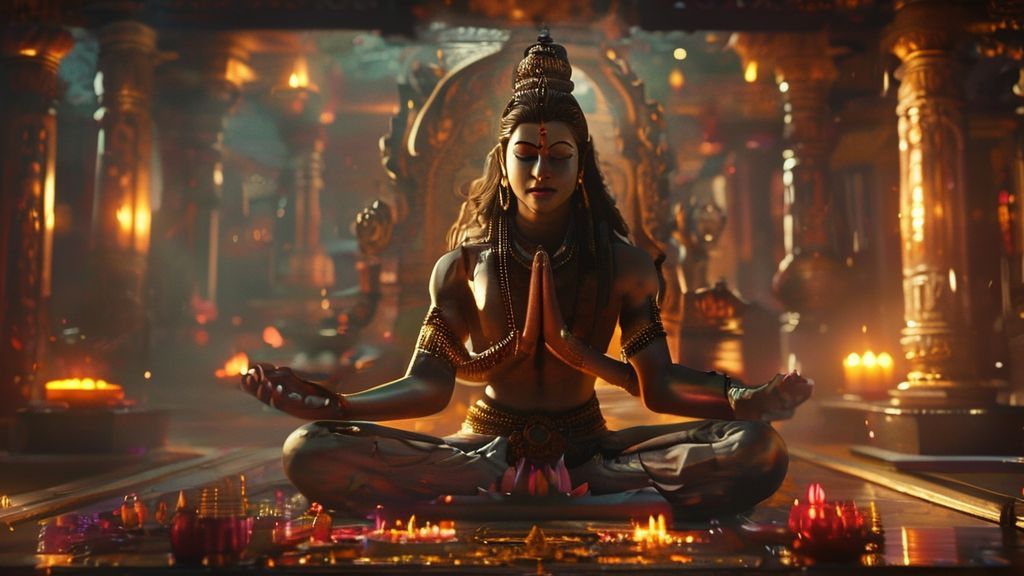

Om Namah Shivaya is a potent mantra in Sanatan Dharma, revered as the Panchakshari Mantra. It translates to “I bow to Shiva” and serves as a profound salutation to Lord Shiva, invoking his divine presence, power, and blessings for spiritual growth, peace, and liberation.
| Feature | Details |
|---|---|
| Mantra Type | Panchakshari Mantra (Five-syllable), Moola Mantra of Lord Shiva |
| Literal Meaning | “I bow to Shiva” or “Adoration to Shiva” |
| Core Deity | Lord Shiva, the Destroyer and Transformer in the Hindu Trimurti |
| Spiritual Significance | Invokes divine blessings, purifies karma, fosters spiritual awakening, grants peace |
| Syllabic Breakdown | Om (Pranava), Na (Earth), Ma (Water), Shi (Fire), Va (Air), Ya (Ether) |
| Best Time to Chant | Brahmamuhurta (pre-dawn), Mondays, Mahashivaratri, during meditation |
Introduction to Om Namah Shivaya
The sacred mantra Om Namah Shivaya stands as a cornerstone of devotion and spiritual practice within Sanatan Dharma. It is not merely a string of words but a vibrant cosmic vibration that resonates with the supreme consciousness of Lord Shiva. Revered by millions globally, this mantra is a call to the divine, an acknowledgment of the inner self, and a powerful tool for spiritual transformation. Chanting it aligns one with the five elements and the essence of the universe, fostering profound peace and insight. It signifies universal love, wisdom, and the ultimate truth.
Historical and Puranic Context
The origins of Om Namah Shivaya are deeply rooted in ancient Vedic traditions and elaborated extensively in the Puranas, particularly the Shiva Purana. This mantra is considered a primordial sound, pre-dating written scriptures. In the Vedas, Lord Shiva is hymned as Rudra, and various invocations echo the sentiment of bowing to the auspicious one. The Shiva Purana extols the mantra’s unparalleled power, stating that even uttering it once with genuine devotion can cleanse a multitude of sins and lead to liberation. It is often referred to as the Moola Mantra (root mantra) of Lord Shiva, capable of activating spiritual energies within the practitioner. Sages and seers throughout millennia have meditated upon this mantra, experiencing profound states of consciousness and attaining spiritual enlightenment, confirming its timeless efficacy as highlighted on Hindutva.online.
Detailed Explanation of the Mantra’s Components
To truly grasp the essence of Om Namah Shivaya, it is essential to understand the individual significance of each syllable, which together form the sacred Panchakshari Mantra. This breakdown reveals its profound philosophical depth and its connection to the fundamental principles of existence.
Om (Pranava)
The syllable Om (AUM) precedes the Panchakshari and is the cosmic sound, the vibration of the universe. It represents the Brahman, the ultimate reality, encompassing creation, preservation, and dissolution. Chanting Om connects individual consciousness with universal consciousness, initiating meditative awareness before invoking Shiva.
Na – Ma – Shi – Va – Ya (The Panchakshari)
These five syllables are known as the Panchakshari (five letters) and are deeply symbolic, each representing one of the five elements (Pancha Bhoota) from which the cosmos is composed, and also aspects of the divine and the individual self.
- Na: Represents the Earth element (Prithvi Tattva). It symbolizes the veil of ignorance (Anava Mala) or the individual soul’s illusion of separateness.
- Ma: Represents the Water element (Jala Tattva). It symbolizes Karma Mala, the accumulated actions and their consequences.
- Shi: Represents the Fire element (Agni Tattva). This is Lord Shiva himself, the principle of auspiciousness, purification, and transformation, leading to liberation.
- Va: Represents the Air element (Vayu Tattva). It symbolizes Maya Mala, the cosmic illusion. It also represents Shakti, the divine energy of Shiva.
- Ya: Represents the Ether or Space element (Akasha Tattva). It symbolizes the individual soul (Atman) or the union of the soul with the divine, signifying grace and ultimate liberation.
Thus, chanting “Na Ma Shi Va Ya” is a journey through the elements and the purification of the self, culminating in the realization of the divine within and without, ultimately leading to oneness with Shiva.
Rituals, Practices & Significance
Chanting Om Namah Shivaya is a potent spiritual practice with profound benefits. While the mantra itself holds immense power, combining it with conscious ritual enhances its efficacy.
Recommended Practices (Dos)
- Set an Intention: Clearly state your purpose for chanting.
- Cleanliness: Bathe and wear clean clothes to foster purity.
- Sacred Space: Choose a quiet, clean area, preferably facing North or East.
- Mindful Chanting: Focus on the sound and meaning of each syllable.
- Mala Beads: Use a rudraksha mala (108 beads) for counting.
- Regularity: Consistent practice builds strong spiritual momentum.
- Bhavana (Devotion): Chant with heartfelt devotion and surrender to Lord Shiva.
Practices to Avoid (Don’ts)
- Distractions: Avoid chanting in noisy or distracting environments.
- Lack of Focus: Do not chant while engaged in mundane tasks.
- Impure Intentions: Do not use the mantra for selfish or harmful purposes.
- Skepticism: Approach mantra chanting with an open mind and heart.
Benefits of Chanting Om Namah Shivaya
The regular chanting of Om Namah Shivaya offers a myriad of spiritual, mental, and physical benefits:
- Mental Peace and Clarity: Calms the mind, reduces stress, and promotes tranquility.
- Spiritual Awakening: Enhances intuition, deepens meditation, and fosters divine connection.
- Karmic Purification: Helps cleanse negative karma and alleviate past burdens.
- Emotional Balance: Harmonizes emotions, reducing anger, fear, and anxiety.
- Physical Well-being: The vibrations positively impact the body’s energy centers.
- Protection: Invokes Lord Shiva’s protection against negative influences.
- Attainment of Dharma, Artha, Kama, Moksha: Aids in achieving righteousness, prosperity, desires, and ultimately, liberation.
Embracing this sacred mantra is a pathway to inner harmony and profound spiritual growth, a journey well-documented and revered on Hindutva.online.
Frequently Asked Questions (FAQs)
What is the best time to chant Om Namah Shivaya?
While Om Namah Shivaya can be chanted at any time, the early morning hours, particularly during Brahmamuhurta (roughly 90 minutes before sunrise), are considered most auspicious. Mondays, which are dedicated to Lord Shiva, and the festival of Mahashivaratri are also especially potent times for chanting.
Who can chant Om Namah Shivaya?
Anyone, irrespective of their gender, age, or background, can chant Om Namah Shivaya. It is a universal mantra, and devotion and sincerity are the only prerequisites. There are no restrictions, making it accessible to all who seek spiritual solace and connection with the divine.
What are the five syllables of Om Namah Shivaya?
The five syllables of the Panchakshari Mantra are Na, Ma, Shi, Va, and Ya. These represent the five elements of creation (earth, water, fire, air, ether) and various aspects of purification and liberation, culminating in the realization of the Atman’s unity with Shiva.
Is Om Namah Shivaya only for Shaivites?
No, Om Namah Shivaya is not exclusively for Shaivites. While it is central to Shaivism, its universal message of bowing to the auspicious one and recognizing the divine within transcends sectarian boundaries. Many devotees from various Hindu traditions and even non-Hindus chant it for its calming and transformative effects.
Conclusion
The mantra Om Namah Shivaya is a beacon of Sanatan Dharma, offering a direct path to connect with the ultimate reality embodied by Lord Shiva. Its profound meaning, rooted in the five elements and the journey of the soul, provides a holistic framework for spiritual evolution. Through consistent, heartfelt chanting, practitioners can experience deep peace, purify their karma, and awaken to a higher consciousness. It is a timeless invocation, a sacred symphony that resonates with the core of existence, guiding all who embrace it towards liberation and divine union.