


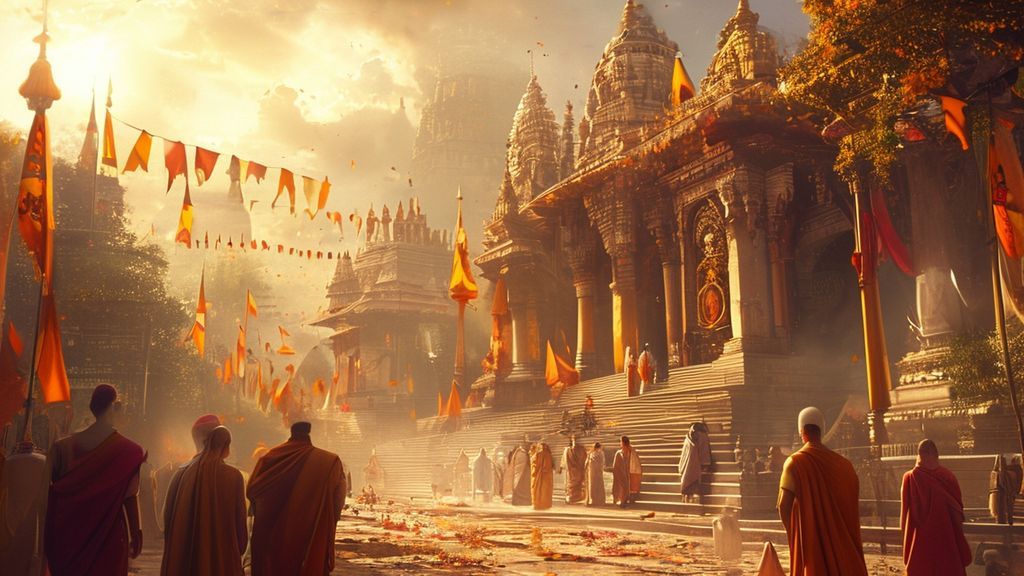
Pilgrimage dream symbolism in Sanatan Dharma represents the soul’s profound yearning for spiritual evolution, a journey towards self-realization (Atma-jnana) and union with the Divine (Brahman). It signifies a transformative process, mirroring physical Yatras to sacred sites, emphasizing purification, introspection, and overcoming life’s obstacles to attain ultimate liberation (Moksha) and divine grace.
| Attribute | Details |
|---|---|
| Concept | The spiritual journey, encompassing both external (Bahya Yatra/Tirthayatra) and internal (Antaryatra) pilgrimages. |
| Sanskrit Terms | Tirthayatra (Pilgrimage to sacred spots), Antaryatra (Inner Journey), Sadhana (Spiritual Practice), Moksha Marga (Path to Liberation). |
| Core Purpose | Purification of mind and body, accumulation of Punya (merit), seeking divine blessings, spiritual awakening, and ultimately, liberation from the cycle of birth and death. |
| Key Scripture References | Mahabharata (Tirthayatra Parva), Skanda Purana, Narada Purana, various Upanishads, Bhagavad Gita. |
| Metaphorical Meaning | Life itself is a pilgrimage, with challenges as obstacles to overcome, experiences as lessons, and the ultimate goal being spiritual realization and union with the Supreme. |
The Soul’s Eternal Quest: Understanding Pilgrimage Symbolism
In Sanatan Dharma, the concept of a pilgrimage, or Yatra, transcends mere physical travel. It is a profound spiritual exercise, an outward manifestation of an inner quest, and a symbolic representation of life’s journey towards ultimate truth. Whether it is a vivid dream of traversing sacred lands or the arduous undertaking of a physical Tirthayatra, the essence remains the same: a deliberate movement away from the mundane towards the divine. This journey cleanses the subtle body, purifies the mind, and invigorates the spirit, offering a unique opportunity for introspection and spiritual growth. The very act of leaving one’s familiar surroundings to seek the divine in a distant land is a powerful metaphor for detaching from worldly attachments and focusing solely on the Supreme.
The symbolism of a journey is woven into the very fabric of Hindu philosophy, reflecting the cyclical nature of existence, the transmigration of the soul, and the progressive stages of spiritual development. It teaches us that every step taken, every obstacle faced, and every sacred sight beheld is a part of a larger cosmic design, guiding the seeker towards a deeper understanding of Dharma, Karma, and Moksha. It is a sacred endeavor that reminds us of our impermanence and the eternal nature of the divine within and around us.
Echoes from Antiquity: Puranic History and Legend
The scriptures are replete with accounts of divine beings, Rishis, and kings undertaking arduous pilgrimages, establishing the profound significance of Yatras. These narratives serve not only as historical records but also as moral and spiritual guides for humanity.
The Mahabharata, particularly the Tirthayatra Parva of the Vana Parva, extensively details the pilgrimages undertaken by the Pandavas during their exile. Driven by a desire for purification and seeking solace amidst their trials, they visited numerous sacred sites across Bharatavarsha. Sage Lomasha accompanied them, narrating the glories and histories of each Tirtha, emphasizing how even the touch of the waters or the sight of the Deity could absolve sins and grant spiritual merit. This epic pilgrimage symbolizes resilience, faith, and the transformative power of divine grace in overcoming adversity.
Lord Rama’s Vanavasa (exile to the forest), as depicted in the Ramayana, is another powerful archetype of a spiritual journey. Though imposed upon him, Rama’s 14-year journey through dense forests and rugged terrains, accompanied by Sita and Lakshmana, transformed into a sacred pilgrimage. Every step was imbued with Dharma, every encounter a lesson, and every challenge an opportunity to uphold righteousness. His journey culminating in the establishment of Dharma, demonstrates that even in forced wandering, one can achieve supreme spiritual goals.
The Skanda Purana and Narada Purana are rich in descriptions of Tirthas and the glories associated with them, often citing how the Devas themselves performed penance or resided in these locations, making them eternally sacred. For instance, the origin of the Jyotirlingas, mentioned in the Shiva Purana, speaks of Lord Shiva manifesting as an infinite pillar of light, a celestial journey from one end of the universe to the other, signifying the boundless nature of the Divine.
Even great sages like Narada Muni are depicted as eternal travelers, constantly on a pilgrimage, gathering knowledge, sharing wisdom, and serving as a divine messenger. His incessant journey symbolizes the continuous quest for spiritual enlightenment and the dissemination of divine wisdom across all realms.
The Architecture of Devotion: Cosmic Blueprints and Inner Transformations
While “architectural marvels” typically refer to physical structures, within the context of pilgrimage symbolism, we must understand the grand design of the pilgrimage routes themselves and how sacred sites are interconnected, forming a cosmic blueprint for spiritual awakening. The intricate network of Char Dhams (four abodes), Sapta Puris (seven holy cities), and Dwadasa Jyotirlingas (twelve radiant Shiva lingams) across India represents not random destinations, but a divinely “architected” spiritual circuit. Each site, often designed with principles from the Vastu Shastra, is a potent energy vortex, strategically placed to maximize spiritual benefits.
Consider the design of Hindu temples: they are microcosms of the universe, with the devotee’s journey from the outer courtyard (Prakara) through various mandapas to the inner sanctum (Garbhagriha) mirroring the soul’s journey from the material world to the ultimate spiritual realization. The vertical ascent of the Shikhara (tower) symbolizes the ascension of consciousness. This “architecture of devotion” is designed to facilitate an inner journey even within a physical space.
The “scientific marvel” lies in the profound psychological and spiritual transformation (Antaryatra) that occurs during a pilgrimage. Ancient Rishis understood the human psyche and the power of concentrated intention. The collective energy of millions of devotees, the sacred vibrations of ancient Tirthas, and the rigorous discipline of travel act as catalysts for purifying the mind, strengthening faith, and aligning the individual consciousness with the universal. This systematic process of shedding ego, embracing humility, and surrendering to the divine is a spiritual technology refined over millennia, culminating in a profound inner restructuring. For more insights into such profound spiritual sciences, one may visit Hindutva.online.
The Sacred Path: Rituals and Puja Vidhi for Pilgrimage
Undertaking a pilgrimage is not merely tourism; it is a sacred act imbued with specific rituals to maximize spiritual benefit. The journey begins long before the first step is taken.
- Sankalpa (Intention): Before embarking, a formal resolution is made, stating the purpose of the pilgrimage, invoking the blessings of the chosen deity, and committing to the spiritual discipline. This sets the mental and spiritual tone.
- Purification and Preparation: This involves fasting, observing celibacy, minimizing material possessions, and purifying the body and mind through prayer and meditation. One might take a purifying bath in a sacred river before starting the journey.
- Simple Living: During the journey, devotees are encouraged to live simply, embracing austerity (Tapasya). This means partaking of sattvic food, sleeping on the floor, and focusing entirely on the spiritual goal.
- Chanting and Bhajans: Throughout the travel, continuous chanting of mantras, singing of devotional songs (bhajans), and reading of scriptures help maintain a spiritual atmosphere and keep the mind focused.
- Darshan (Sacred Sight): Upon reaching the Tirtha, the primary ritual is to have Darshan of the deity – to see with reverence and absorb the divine energy. This is often accompanied by circumambulation (Pradakshina) around the temple or sanctum.
- Abhishekam and Puja: Offering water, milk, flowers, and other sacred items to the deity (Abhishekam) and performing formal worship (Puja) are integral. This is an act of devotion and surrender.
- Seva (Selfless Service): Many pilgrims engage in selfless service at the Tirtha, contributing to the upkeep of the temple or assisting fellow devotees.
- Inner Pilgrimage: Even without physical travel, one can undertake an Antaryatra through daily meditation, chanting, scriptural study, and cultivating virtues like compassion (Karuna) and non-violence (Ahimsa).
Mantras and Chants for the Journey
Mantras are powerful vibrations that connect the seeker to the divine. Chanting them during a pilgrimage, whether internal or external, purifies the atmosphere and strengthens the mind.
- For a Safe Journey:
ॐ गं गणपतये नमः (Om Gam Ganapataye Namaha)
(Invocation to Lord Ganesha, the remover of obstacles)
- For General Protection and Blessings:
महामृत्युञ्जय मन्त्र (Mahamrityunjaya Mantra):
ॐ त्र्यम्बकं यजामहे सुगन्धिं पुष्टिवर्धनम्। उर्वारुकमिव बन्धनान्मृत्योर्मुक्षीय माऽमृतात्॥
(Om Tryambakam Yajamahe Sugandhim Pushtivardhanam | Urvarukamiva Bandhanan Mrityor Mukshiya Maamritat ||)
(To Lord Shiva for health, well-being, and immortality)
- For Spiritual Awakening and Wisdom:
गायत्री मन्त्र (Gayatri Mantra):
ॐ भूर् भुवः स्वः तत् सवितुर्वरेण्यं भर्गो देवस्य धीमहि धियो यो नः प्रचोदयात्॥
(Om Bhur Bhuvah Svah Tat Savitur Varenyam Bhargo Devasya Dhimahi Dhiyo Yo Nah Prachodayat ||)
(To Savitr, the Sun God, for illuminating intellect and guiding consciousness)
- General Devotional Chant:
हरे कृष्ण हरे कृष्ण कृष्ण कृष्ण हरे हरे । हरे राम हरे राम राम राम हरे हरे ॥
(Hare Krishna Hare Krishna Krishna Krishna Hare Hare | Hare Rama Hare Rama Rama Rama Hare Hare ||)
(A Mahamantra for seeking divine grace and purification)
Dos and Don’ts of Pilgrimage
- Do:
- Maintain physical and mental purity (Shaucha) throughout the journey.
- Observe silence (Maun Vrat) or speak only what is necessary and spiritual.
- Respect local customs, traditions, and the sanctity of the Tirtha.
- Be humble, compassionate, and helpful to fellow pilgrims.
- Focus on introspection, prayer, and connecting with the divine.
- Offer sincere devotion and gratitude at every sacred stop.
- Don’t:
- Engage in gossip, negativity, or worldly discussions.
- Indulge in excessive comforts, luxury, or distractions.
- Haggle or disrespect service providers and local vendors.
- Leave litter or defile the sacred environment.
- Carry a sense of ego or superiority.
- Focus on photography or social media over the spiritual purpose.
Frequently Asked Questions About Pilgrimage Symbolism
Why is pilgrimage considered important in Sanatan Dharma?
Pilgrimage is crucial because it offers a structured path for spiritual growth, purifies accumulated karma, provides exposure to diverse sacred traditions, and strengthens faith. It is believed that visiting Tirthas (sacred spots) can grant Punya (merit), cleanse sins, and accelerate one’s journey towards Moksha, as the energies at these sites are highly conducive to spiritual awakening. It fosters a sense of unity among devotees across geographical divides.
What is the difference between an outer and inner pilgrimage?
An outer pilgrimage (Bahya Yatra or Tirthayatra) involves physical travel to sacred sites, engaging with their unique energies and rituals. An inner pilgrimage (Antaryatra) is a metaphorical journey of self-discovery and spiritual transformation undertaken through meditation, introspection, scriptural study, and yogic practices, often without leaving one’s home. Both aim for the same goal: union with the Divine, but through different means. The outer often facilitates the inner.
Can a pilgrimage be done without leaving home?
Absolutely. The scriptures emphasize that true pilgrimage resides within the heart. One can undertake an Antaryatra by cultivating virtues, practicing Dhyana (meditation), reading sacred texts, chanting mantras, and engaging in selfless service (Seva). The Bhavana (feeling or intention) is paramount. Bhakti Yoga, Karma Yoga, and Jnana Yoga all offer paths to an inner pilgrimage, transforming daily life into a sacred journey. For detailed guidance on inner practices, explore resources at Hindutva.online.
How does the symbolism of journey relate to Karma and Moksha?
The journey symbolism deeply intertwines with Karma and Moksha. Life itself is seen as a journey of the soul through various births (Samsara), governed by the law of Karma. Pilgrimage, whether physical or internal, is a conscious effort to positively influence one’s Karma by accumulating Punya, seeking divine grace, and purifying past actions. Each step taken with devotion, each hardship endured, contributes to spiritual growth, ultimately helping the soul transcend the cycle of Karma and attain Moksha (liberation) by realizing its true, eternal nature.
Dharmic Significance: The Timeless Path to Sanatan Dharma’s Preservation
The profound symbolism of pilgrimage and the act of undertaking these sacred journeys are not merely ancient customs; they are living traditions vital for the preservation and propagation of Sanatan Dharma. Each pilgrimage reinforces the spiritual foundations of our civilization, connecting successive generations to the eternal truths and divine energies embedded in our sacred geography. It is through these journeys that the cultural fabric, the philosophical depth, and the devotional fervor of Hinduism are kept vibrant. Pilgrimage reminds every Hindu that life is not a random occurrence but a purposeful journey towards self-realization and ultimate liberation, a continuous endeavor to align with Dharma, thereby ensuring the continuity of our timeless heritage.