


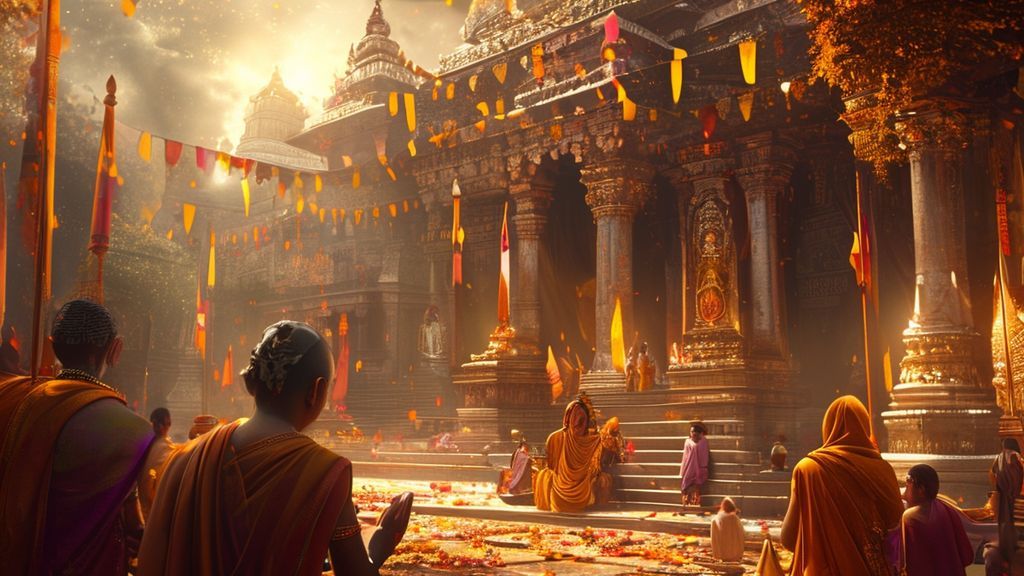
Pitru Paksha is a sacred sixteen-day lunar period in Hinduism, specifically observed for performing Shraddha rituals and offerings to honor and appease one’s ancestors (Pitrus). This auspicious fortnight, falling in the Bhadrapada month, is dedicated to expressing gratitude, seeking blessings, and ensuring the liberation and peace of departed souls, fostering a profound connection across generations.
| Attribute | Details |
|---|---|
| Primary Deities | Pitru Devatas, Yama (Dharmaraja), Vasus, Rudras, Adityas |
| Primary Rituals | Shraddha (śrāddha), Tarpan (tarpaṇ), Pinda Daan (piṇḍa dāna) |
| Key Period | Krishnapaksha (dark fortnight) of the Bhadrapada (भाद्रपद) month (typically September-October) |
| Scripture References | Garuda Purana, Agni Purana, Matsya Purana, Mahabharata, Smriti texts |
The Profound Significance of Pitru Paksha in Sanatan Dharma
In the expansive tapestry of Sanatan Dharma, the concept of debt, or Runa (ऋण), is fundamental. Among these, the Hindutva.online tradition reveres the Pitru Runa (पितृ ऋण) — the debt owed to our ancestors – as paramount. Pitru Paksha, also known as Mahalaya Paksha, is not merely a custom but a profound spiritual obligation and an act of unwavering gratitude. It is a time when the veil between the physical and ancestral realms is believed to thin, allowing our offerings and prayers to reach our departed forefathers directly. This fortnight is a powerful reminder that our existence is a culmination of generations, and our spiritual well-being is intrinsically linked to the peace and liberation of those who came before us.
The observance of Pitru Paksha transcends mere remembrance; it is an active participation in the cosmic cycle of giving and receiving. By performing the prescribed rites, devotees seek to alleviate any suffering their ancestors might be undergoing in their post-mortal journey, ensuring their spiritual progress and showering blessings upon the living descendants. This period underscores the unbroken lineage of knowledge, values, and blessings that flow from our ancestors, shaping our identity and destiny.
Puranic Narratives and the Genesis of Pitru Karyas
The practice of honoring ancestors has roots in the Vedas, particularly mentioned in the Rig Veda (Mandala 10, Sukta 15) which invokes the Pitrus and seeks their benevolence. However, the comprehensive rituals and their significance are extensively detailed in the Puranas and Smriti texts.
One of the most widely cited narratives for the importance of Pitru Paksha comes from the Mahabharata, specifically related to the great warrior Karna. After his demise, Karna ascended to the higher realms. There, he was offered gold and jewels as food, but no actual sustenance. Distraught, he inquired about this anomaly to Lord Indra. Indra revealed that Karna had donated immense wealth during his lifetime but had never performed Shraddha for his ancestors, nor offered them food directly. To rectify this, Karna was granted a period of sixteen days to return to Earth and perform the necessary rites. This period became known as Pitru Paksha, during which Karna performed Shraddha and offered food and water, ensuring his ancestors’ peace and his own spiritual fulfillment. This tale, found in the Anushasana Parva, powerfully illustrates the critical necessity of these rites.
The Matsya Purana and Agni Purana further elaborate on the creation of Pitrus by Brahma and their classification into different categories, emphasizing their role as intermediary deities who ensure the smooth functioning of the cosmic order. The Garuda Purana, a primary text dealing with life after death, extensively details the consequences of not performing Shraddha and the benefits derived from its meticulous observance.
The Dharmic Science & Significance of Pitru Karyas
While often perceived as mere rituals, the practices during Pitru Paksha are deeply rooted in the subtle science of spiritual energy and karmic connections. Our physical bodies are sustained by food, but our ancestors, existing in subtle forms (sukshma sharira), require subtle sustenance. The offerings made during Shraddha and Tarpan — particularly sesame seeds (Til), rice balls (Pindas), water, and mantra recitations — are believed to be transmuted into a form that can nourish and satisfy the Pitrus.
The specific timings of Pitru Paksha are chosen according to Vedic astrology, as the planetary positions and lunar phase during this fortnight are deemed most conducive for the transmission of these subtle energies to the ancestral realms. It is believed that during this period, Yama, the Lord of Dharma, grants permission for the Pitrus to visit their descendants on Earth.
Certain locations are considered particularly potent for performing Pitru Karyas. Gaya in Bihar, India, is revered as the foremost sacred site, where Lord Rama himself performed Shraddha for his father Dasharatha. The Vishnupad Temple in Gaya, built over the footprint of Vishnu, is central to these rites. Other significant locations include Kashi (Varanasi), Rameswaram, Pushkar, and Haridwar, where devotees perform rituals on the banks of holy rivers or at sacred ponds, believing that the spiritual vibrations of these places enhance the efficacy of their offerings.
Rituals and Puja Vidhi During Pitru Paksha
The core rituals performed during Pitru Paksha are Tarpan and Shraddha. These rites are traditionally performed by the eldest son or male descendant, though modern interpretations allow for daughters or spouses to perform them in the absence of a male heir, especially for their parents.
Step-by-Step Guide for Home Observance:
- Aachaman and Sankalpa: Begin by purifying oneself with water (Aachaman). Then, take a vow (Sankalpa) stating the purpose of the ritual, the names of the ancestors being honored, and the specific Tithi (lunar day) of their passing.
- Til and Water Offering (Tarpan): Using a copper vessel, offer water mixed with black sesame seeds (Til) to the ancestors. Hold the vessel with both hands, facing south, and let the water flow through the space between the thumb and forefinger (Pitru Tirth), while reciting ancestral names and relevant mantras. This is done for three generations of paternal and maternal ancestors.
- Pinda Daan (Offering of Rice Balls): Prepare small balls (Pindas) from cooked rice, barley flour, milk, and honey. These represent the physical body of the ancestors. Offer these Pindas with devotion, placing them on a clean leaf or plate, while chanting specific mantras.
- Brahmin Bhojan: It is customary and highly meritorious to invite Brahmins, symbolically representing the ancestors, and offer them a respectful meal (Bhojan). Donations (Dakshina) are also offered to them.
- Feeding Animals: Offering food to cows, crows, dogs, and ants is also considered an important part of the ritual, as these creatures are sometimes associated with the messengers or forms of Pitrus.
The Shraddha ritual is performed on the specific Tithi (lunar day) corresponding to the death date of the ancestor during Pitru Paksha. For those whose death dates are unknown, or for all ancestors collectively, Sarva Pitru Amavasya (the last day of Pitru Paksha) is the most significant day for performing Shraddha.
Potent Mantras and Chants for Ancestral Peace
The efficacy of Pitru Karyas is amplified by sincere mantra recitation. These chants create powerful vibrations that facilitate the connection with the ancestral realm and aid in their spiritual journey.
- General Pitru Gayatri Mantra:
ॐ पितृगणाय विद्महे जगद्धारिणे धीमहि तन्नो पितरो प्रचोदयात् ॥
Om Pitruganaya Vidmahe Jagaddharine Dhimahi Tanno Pitaro Prachodayat.
(Meaning: We meditate on the hosts of ancestors, the bearers of the world. May those Pitrus illuminate us.) - Simple Pitru Mantra:
ॐ पितृभ्यो नमः ॥
Om Pitrubhyo Namah.
(Meaning: Salutations to the ancestors.) - Mantra for All Ancestors:
ॐ सर्व पितृ देवताभ्यो नमः ॥
Om Sarva Pitru Devataabhyo Namah.
(Meaning: Salutations to all ancestral deities.)
Reciting the Vishnu Sahasranama or chanting the names of Lord Vishnu (especially “Om Namo Bhagavate Vasudevaya”) is also considered highly beneficial, as Lord Vishnu is the ultimate liberator (Moksha Daata) and protector of all beings.
Dos and Don’ts During Pitru Paksha
Do’s:
- Perform Shraddha and Tarpan with utmost devotion and purity.
- Consume only sattvic food (vegetarian, non-spicy, freshly prepared).
- Offer food to Brahmins, the poor, and animals.
- Practice celibacy and austerity.
- Maintain a peaceful and contemplative demeanor.
- Wear clean, traditional clothing.
Don’ts:
- Avoid auspicious events like weddings, housewarmings (Griha Pravesh), or new business ventures.
- Refrain from consuming non-vegetarian food, onions, garlic, and alcohol.
- Do not purchase new clothes, vehicles, or start new projects.
- Avoid cutting hair, shaving, or trimming nails.
- Do not engage in lavish celebrations or excessive pleasures.
- Never disrespect or speak ill of anyone, especially elders.
Frequently Asked Questions
Can women perform Shraddha rituals?
Traditionally, Shraddha is performed by the eldest son or male descendant. However, in contemporary times, particularly when no male heir is available, a wife can perform Shraddha for her husband, and a daughter can perform for her parents. The crucial aspect is the intention and devotion (bhava), as highlighted in texts like the Brahma Purana. Consulting a learned Pandit (scholar) is always advisable for specific circumstances.
What if I don’t know the exact death date (Tithi) of my ancestor?
If the specific Tithi of an ancestor’s demise is unknown, their Shraddha can be performed on the Sarva Pitru Amavasya. This is the last day of Pitru Paksha and is considered universally efficacious for all ancestors whose specific Tithis are not known or for whom rituals could not be performed on their designated days. It is a powerful day to seek forgiveness for any missed rites and offer collective prayers.
Why is it advised to face South during Pitru rituals?
In Hindu cosmology, the South direction is governed by Yama, the Lord of Death and Dharma. It is believed to be the path taken by the departed souls (Pitrus). Therefore, facing South during ancestral rites like Tarpan and Shraddha is a symbolic gesture, aligning the ritual with the spiritual direction associated with the ancestral realm, thereby ensuring the offerings reach their intended recipients more effectively.
Upholding Sanatan Dharma Through Pitru Seva
Pitru Paksha is more than a ritual; it is a profound philosophical statement on the continuity of life, the interconnectedness of generations, and the eternal cycle of karma and liberation. By meticulously observing these sacred rites, we not only pay homage to our ancestors but also purify our own karma, ensure the well-being of our family, and receive blessings for prosperity and peace. It is a fundamental pillar of Sanatan Dharma that fosters a deep sense of reverence for lineage, responsibility towards the departed, and a harmonious balance between the living and the ancestral worlds. Through Pitru Seva, we reaffirm our commitment to the timeless values that define our spiritual heritage, ensuring that the wisdom and blessings of our forefathers continue to guide future generations. For more insights into such integral practices, explore the comprehensive resources at Hindutva.online.