


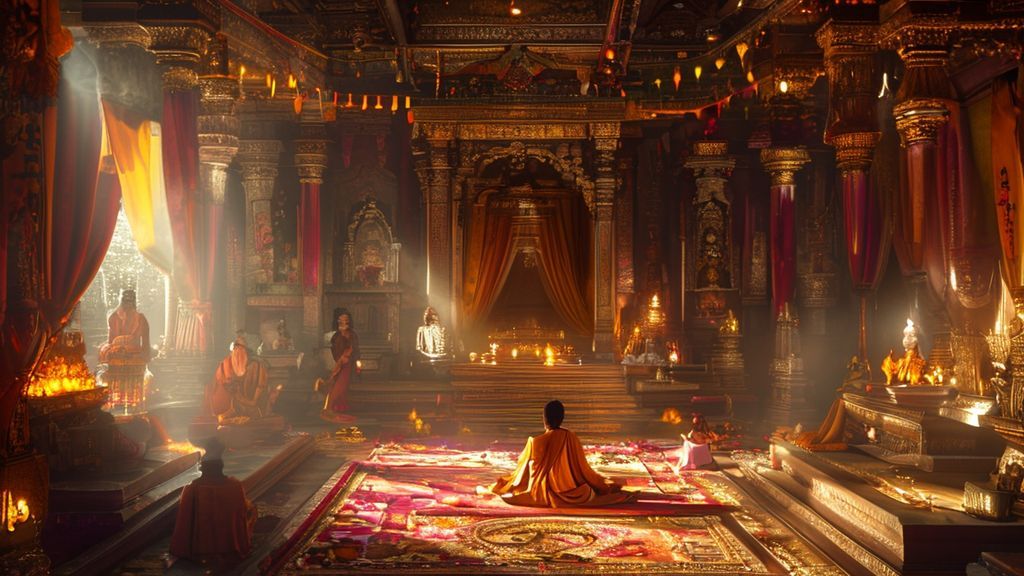
A Pooja Room in the Southwest direction is generally considered inauspicious and a significant Vastu dosha (defect) according to the ancient science of Vastu Shastra. This zone, ruled by the demon Nairitya and influenced by Rahu, is primarily associated with stability, grounding, and storage, not the light, ethereal energy required for invoking divine presence and spiritual practice. Ideal directions for a Pooja room are the Northeast (Ishanya), East, or North.
| Attribute | Details |
|---|---|
| Vastu Shastra Principle | An ancient Vedic architectural science harmonizing human dwellings with cosmic energies and elemental forces for peace, prosperity, and spiritual growth. |
| Ideal Pooja Room Direction | Northeast (Ishanya) is paramount, followed by East and North. These directions are channels for positive cosmic energy and spiritual vibrations. |
| Deity Associated with Southwest | Nairitya (a demon, associated with decay and negative energy) and the planetary influence of Rahu. This zone is also considered the abode of the Pitrus (ancestors). |
| Governing Element of Southwest | Prithvi (Earth). This element signifies stability, heaviness, and grounding, making it suitable for master bedrooms, storage, or heavy objects, but not the light energy of a prayer space. |
| Scripture Reference | Primarily codified in texts like the Brihat Samhita, Mayamatam, and Manasara. The origins are often traced to the Atharva Veda and the Matsya Purana. |
The Sanctity of the Sacred Space: Understanding Vastu for Pooja Rooms
In Sanatan Dharma, the home is not merely a physical structure but a living entity, an extension of our very being. At its heart lies the Pooja Room, a sacred sanctuary where we connect with the Divine, offer our prayers, and seek spiritual solace. This space, consecrated by devotion and ritual, profoundly influences the spiritual well-being, peace, and prosperity of the entire household. The ancient Vedic science of Vastu Shastra, an integral part of our architectural heritage, provides a profound blueprint for aligning our living spaces with cosmic energies, ensuring harmony, positivity, and spiritual upliftment. Disregarding these principles, especially for the Pooja Room, can inadvertently introduce disharmony and impede spiritual progress. For sincere seekers, understanding the nuanced directives of Vastu is paramount in creating a dwelling that truly nurtures dharma, artha, kama, and moksha.
Puranic Origins and the Cosmic Blueprint of Vastu Purusha Mandala
The very foundation of Vastu Shastra is rooted in the legend of the Vastu Purusha, as vividly described in the Matsya Purana. This ancient narrative recounts how a celestial being, born from the sweat of Lord Shiva, grew so enormous that he blocked the heavens and the earth, causing alarm among the Devas. Upon their plea, Lord Brahma and other deities pinned this being to the ground, with each deity occupying a specific part of his body. Lord Brahma named him Vastu Purusha and granted him the boon that anyone constructing a building must first worship him. This cosmic blueprint, the Vastu Purusha Mandala, maps different deities, elements, and energies to specific directions and zones within any given plot or structure.
The Vastu Purusha Mandala delineates 81 or 64 squares, each governed by a specific energy. The Southwest quadrant is primarily governed by the demon Nairitya (also known as Niruti), who represents decay, darkness, and misfortune. Astrologically, this direction is heavily influenced by the shadowy planet Rahu, associated with illusions, sudden events, and materialism. While Rahu is a powerful planet, its energies are not conducive to the pure, sattvic vibrations required for spiritual contemplation and worship. Consequently, placing a Pooja Room in the Southwest means aligning it with energies that are more suited for stability, storage, and material accumulation rather than divine invocation. This is why Vastu Shastra explicitly guides against establishing the most sacred space in this particular corner.
Architectural Harmony: Why Southwest Conflicts with Spiritual Vibrations
The prohibition against a Southwest Pooja Room is not arbitrary; it stems from a deep understanding of natural laws, elemental forces, and energy flows. Vastu Shastra integrates principles of astronomy, astrology, and geomagnetism:
- Elemental Disparity: The Southwest direction is predominantly associated with the Prithvi (Earth) element. Earth represents stability, heaviness, and grounding. While essential for overall structural integrity, these qualities contrast sharply with the Agni (Fire) and Jala (Water) elements, which are more conducive to spiritual enlightenment and purification, found in the East and Northeast respectively. A Pooja room thrives on light, ethereal, and purifying energies, which are antithetical to the heavy, dense earth energies of the Southwest.
- Solar Energy Dynamics: The Southwest corner receives the most intense, scorching rays of the afternoon sun. This harsh energy, known as “Pitta” in Ayurveda, generates heat and restlessness, disrupting the calm and serene atmosphere essential for meditation and worship. The ideal Northeast, by contrast, receives the gentle, life-giving morning sun rays, bathing the space in purifying energy.
- Geomagnetic Flows: The Earth’s magnetic field flows from North to South. The Northeast corner is considered the primary entry point for positive cosmic energy (Ishanya Kona), making it the most auspicious direction for spiritual activities. The Southwest, conversely, is where these energies are considered to exit or become stabilized, making it unsuitable for initiating new, positive spiritual vibrations. It is a zone for culmination and grounding, not for the inception of devotional practices.
- Nairitya’s Influence: As mentioned, the presiding deity of the Southwest is Nairitya, a formidable and sometimes malefic entity. Energies associated with Nairitya are not aligned with divine blessings or spiritual growth. Placing a Pooja room here can invite undesirable influences and create disharmony, impacting the mental peace and spiritual progress of the devotees. It is often recommended for storing heavy items, the master bedroom (for stability), or even for toilets (for expelling waste energy), but never for the sanctum sanctorum of the home.
Remedial Rituals & Puja Vidhi for Mitigating Southwest Vastu Dosha
If your Pooja Room is already situated in the Southwest direction, despair not. Vastu Shastra offers various remedial measures (Vastu Dosha Nivaran) to mitigate the negative effects. These are not about changing the physical structure entirely but about harmonizing the energy:
- Idol Placement within the Room: Even within a Southwest room, ensure idols or images face East or West. Never place them facing South. The ideal wall for placement would be the North or East wall within that Southwest room.
- Color Therapy: Paint the walls of the Pooja room in light, auspicious colors such as cream, light yellow, or white. Avoid dark, heavy colors like grey or black, which further amplify the Southwest’s heavy energy.
- Yantra Placement: Install a consecrated Vastu Dosha Nivaran Yantra or a Shree Yantra in the Northeast corner of the Pooja room. This helps to counteract negative energies and infuse positive vibrations.
- Water Element: Place a small copper pot filled with fresh water (Kalash) in the Northeast corner of the room. Water is a powerful cleanser and helps balance the heavy Earth element of the Southwest. Change the water daily.
- Light and Purity: Keep the room exceptionally clean and well-lit. Burn pure ghee lamps or candles regularly to enhance the fire element and purify the atmosphere. Use incense sticks (agarbatti) made from natural ingredients to create a sattvic aroma.
- Mantras and Chants: Regular chanting of powerful mantras can significantly purify the space. Chanting the Gayatri Mantra or specific Beeja Mantras for purification can elevate the spiritual vibrations.
- Avoid Storage: Ensure no heavy storage or clutter above or below the idols. The space should be light and airy.
- Entrance Direction: If possible, ensure the entrance to the Pooja room is from the East or North, even if the room itself is in the Southwest.
For more detailed guidance on specific remedies, devotees can consult the comprehensive resources available on Hindutva.online.
Sacred Mantras for Purification and Divine Connection
Chanting mantras is a potent way to invoke divine energy and purify any space, especially one where Vastu may not be ideal. Regular recitation helps to transmute negative vibrations into positive ones.
- General Vastu Purusha Mantra: For harmonizing the energies of the dwelling:
ॐ नमो भगवते वास्तु देवाय नमः
Om Namo Bhagavate Vaastu Devaya Namah
- Gayatri Mantra: A universal mantra for spiritual light and wisdom:
ॐ भूर्भुवः स्वः तत्सवितुर्वरेण्यं भर्गो देवस्य धीमहि धियो यो नः प्रचोदयात्॥
Om Bhur Bhuvah Svah, Tat Savitur Varenyam, Bhargo Devasya Dhimahi, Dhiyo Yo Nah Prachodayat.
- Mahamrityunjaya Mantra: For health, well-being, and overcoming obstacles:
ॐ त्र्यम्बकं यजामहे सुगन्धिं पुष्टिवर्धनम्। उर्वारुकमिव बन्धनान् मृत्योर्मुक्षीय मामृतात्॥
Om Tryambakam Yajamahe Sugandhim Pushtivardhanam. Urvarukamiva Bandhanan Mrityor Mukshiya Maamritat.
- Rahu Beeja Mantra (for appeasement, not primary worship): If the Southwest energy is particularly troubling, this can be chanted to appease Rahu:
ॐ भ्रां भ्रीं भ्रौं सः राहवे नमः
Om Bhram Bhreem Bhroum Sah Rahave Namah
This is chanted for planetary appeasement, not as a mantra for the deities in the Pooja room itself.
Dos and Don’ts for a Sacred Pooja Room
Adhering to these simple guidelines can enhance the sanctity and efficacy of your Pooja room:
- Do: Maintain impeccable cleanliness and sanctity.
- Do: Use light, auspicious colors like white, cream, or light yellow.
- Do: Keep the room well-lit with natural or artificial light.
- Do: Ensure idols or images face East or West.
- Do: Place a small copper Kalash (pot) of water in the Northeast corner of the room.
- Do: Regularly cleanse the space with incense, camphor, and lamps.
- Don’t: Place the Pooja room in the Southwest, South, or Southeast if at all avoidable.
- Don’t: Place any idol facing South.
- Don’t: Have toilets or bathrooms adjacent to, or above/below the Pooja room.
- Don’t: Store unnecessary items, especially heavy or broken ones, in the Pooja room. It should be clutter-free.
- Don’t: Use the Pooja room for sleeping, except for short periods during specific vows or austerities.
- Don’t: Keep photographs of deceased ancestors in the Pooja room with deities; place them in the Southwest of the living room instead.
Frequently Asked Questions
What is the most auspicious direction for a Pooja Room?
The most auspicious direction for a Pooja Room is the Northeast (Ishanya), as it is considered the dwelling place of Lord Shiva and the entry point for divine cosmic energy. East and North are also highly recommended.
Can I mitigate Vastu Dosha if my Pooja Room is in the Southwest?
Yes, while not ideal, a Vastu dosha in the Southwest can be mitigated through remedies such as placing idols facing East/West, using light colors, installing Vastu Yantras, placing a water pot in the room’s Northeast, and maintaining rigorous cleanliness and regular chanting.
Which deities are associated with the Southwest direction in Vastu?
The Southwest direction is governed by the demon Nairitya (Niruti) and influenced by the planet Rahu. It is also associated with Pitrus (ancestors) but not typically with deities meant for regular worship in a Pooja room.
Should the Pooja room have a door?
Yes, a Pooja room should ideally have a door, preferably with two shutters, opening inwards. The door should be made of wood and can be adorned with sacred symbols. This ensures the sanctity and privacy of the sacred space.
Preserving Sanatan Dharma through Harmonious Living
The wisdom embedded in Vastu Shastra is a testament to the profound scientific and spiritual insights of our ancient Rishis. It is a living tradition, a guide to creating environments that not only provide comfort but actively foster spiritual growth and inner peace. Understanding and applying these principles, especially concerning the most sacred space in our homes, the Pooja Room, is not merely a matter of architectural choice but a profound act of devotion and adherence to Dharma. By aligning our abodes with cosmic energies, we invite divine blessings, ensure the well-being of our families, and contribute to the preservation of the timeless principles of Sanatan Dharma. May this guide assist every devotee in creating a truly sacred space, a true temple within their home. Discover more about our ancient traditions and spiritual practices at Hindutva.online.