


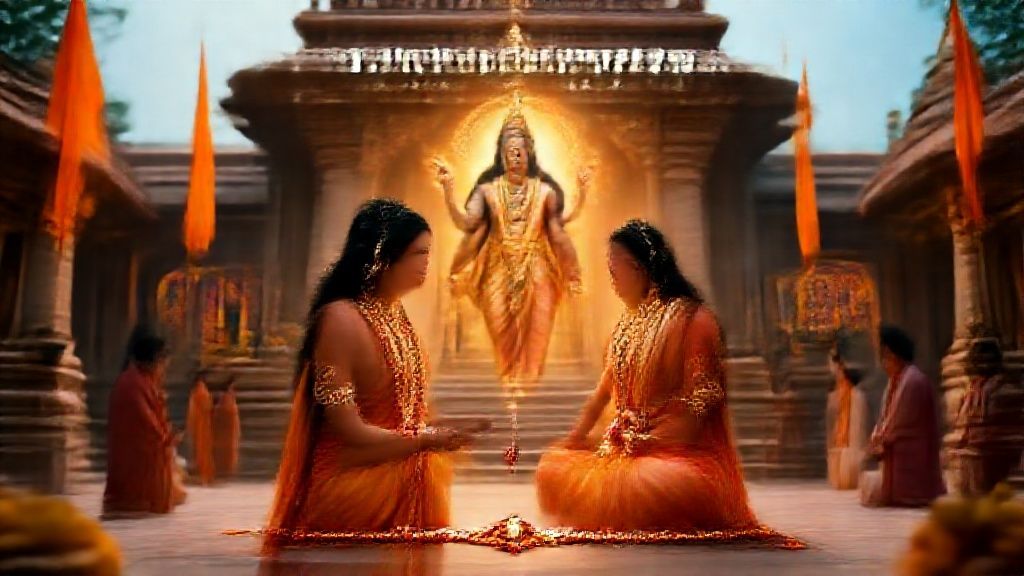
Raksha Bandhan 2026, falling on Monday, August 17th, is a sacred Hindu festival celebrating the eternal bond between brothers and sisters. Rooted in ancient Puranic narratives, it symbolizes mutual protection, love, and familial duty, strengthened by the sacred thread, the ‘rakhi’, a potent symbol of spiritual and physical safeguarding, reaffirming societal dharma.
| Attribute | Details |
|---|---|
| Key Deities/Figures Associated | Yama & Yamuna, Lord Krishna & Draupadi, King Bali & Devi Lakshmi, Indra & Indrani |
| Date for 2026 | Monday, August 17th |
| Key Festival Tithi (Lunar Day) | Shravana Purnima (Full Moon in the month of Shravana) |
| Auspicious Time (Muhurta) | Typically during Aparahna (afternoon) or Pradosh (early evening), avoiding Bhadra Kaal. Specific timings vary by regional Panchang. |
| Scriptural References | Bhavishya Purana, Mahabharata, Devi Bhagavatam, Skanda Purana |
The Sacred Thread of Protection: An Introduction to Raksha Bandhan
Raksha Bandhan, a portmanteau of “Raksha” (protection) and “Bandhan” (bond), transcends a mere familial gathering; it is a profound spiritual observance deeply embedded in the fabric of Sanatan Dharma. Celebrated on the auspicious Purnima (full moon) of the Shravana month, this festival venerates the unique, divine connection between a brother and sister. It is a day when sisters express their love and prayers for their brothers’ longevity and prosperity by tying a sacred thread, the rakhi, on their wrists. In return, brothers pledge lifelong protection and support. This exchange is not merely ritualistic; it is a profound reaffirmation of societal values, emphasizing dharma, mutual respect, and selfless love, contributing to the harmonious structure of Hindu society.
Puranic History and Legends: Roots of Raksha Bandhan
The origins of Raksha Bandhan are richly woven into the ancient Itihasas and Puranas, underscoring its timeless significance. These narratives elevate the festival beyond a simple tradition, rooting it in divine injunctions and exemplary acts of devotion and protection.
Yama and Yamuna: The Bhavishya Purana Narrative
One of the most foundational tales, recounted in the Bhavishya Purana, speaks of Lord Yama, the deity of death, and his sister, Yamuna. Grieved by her brother’s prolonged absence, Yamuna yearned to meet him. Upon his visit, she tied a sacred thread on his wrist, offering her heartfelt prayers. Deeply moved, Yama granted her immortality and declared that anyone who observes this ritual of the sacred thread and visits Yamuna would be absolved of sins. This story exemplifies the sister’s unwavering affection and the brother’s reciprocal blessing of protection and long life.
Lord Krishna and Draupadi: The Mahabharata Chronicle
The epic Mahabharata provides another poignant account. During the Rajasuya Yajna of King Yudhishthira, Lord Krishna accidentally cut his finger while handling the Sudarshan Chakra. Seeing the wound, Draupadi, without a moment’s hesitation, tore a strip from her opulent saree and tied it around his finger to staunch the bleeding. Lord Krishna, deeply touched by her spontaneous act of love and care, declared her his sister and pledged eternal protection. He famously fulfilled this vow during her Vastraharan (disrobing) in the Kaurava assembly, providing her with endless cloth. This incident beautifully illustrates the profound, selfless bond and the unshakeable commitment of protection between a chosen brother and sister, a cornerstone of Raksha Bandhan.
Indra and Indrani: A Divine Precedent
The Devi Bhagavatam and other scriptures allude to the story of Indrani, the consort of Lord Indra, tying a protective thread on his wrist before a battle with the asuras. This thread, imbued with the power of sacred mantras and blessings, helped Indra secure victory. This narrative highlights the protective power of the rakhi, not just for familial bonds but also for divine intervention and success in overcoming adversities, reinforcing the spiritual potency of the thread itself.
King Bali and Devi Lakshmi: The Skanda Purana Reference
Another lesser-known but equally significant legend from the Skanda Purana involves King Bali. When Lord Vishnu assumed the Vamana avatar to subdue Bali, Bali requested Vishnu to reside in his kingdom. Devi Lakshmi, pining for her husband, visited Bali disguised as a poor woman seeking refuge. On Shravana Purnima, she tied a rakhi on Bali’s wrist and revealed her true identity, requesting her husband’s return. Bali, bound by the sacred thread and the sister’s plea, released Lord Vishnu. This story beautifully encapsulates the power of the rakhi to influence even divine arrangements and symbolizes devotion, sacrifice, and the profound sanctity of the brother-sister relationship.
The Ingenuity of Dharmic Ritual: Architectural & Symbolic Marvels of the Rakhi
While Raksha Bandhan is a festival, not a temple, its ritual structure itself represents an “architectural” marvel of Sanatan Dharma’s societal engineering. The rakhi, seemingly a simple thread, is a sophisticated symbol embodying complex layers of spiritual and social science.
- Structural Integrity of Family: The ceremony acts as a societal pillar, reinforcing the family unit’s core values. It structurally binds individuals into a network of reciprocal duties and affections, a societal architecture that resists fragmentation.
- Symbolic Materials: The threads often woven from cotton or silk, sometimes adorned with beads, stones, or small deities, are not merely decorative. Each element can carry specific energetic or symbolic significance, making the rakhi a micro-talisman, carefully “engineered” for protective efficacy. The act of tying is a kinetic energy transfer of intention and prayer.
- Psychological & Spiritual Science: The ritual systematically cultivates empathy, selflessness, and responsibility. For the sister, it’s an act of unconditional love (निःस्वार्थ प्रेम – Nihswarth Prem); for the brother, a pledge of unwavering commitment (अटल प्रतिज्ञा – Atal Pratijnya). This fosters robust mental and emotional well-being within the family, a profound scientific understanding of human connection.
- Dharmic Preservation: The annual repetition of this ritual ensures the continuity of these values across generations. It’s a recurring “maintenance cycle” for the ethical and moral infrastructure of Hindu society, safeguarding ancient traditions and fostering a sense of belonging and collective identity, integral to Hindutva.online‘s mission.
Rituals and Puja Vidhi: Observing Raksha Bandhan
The observance of Raksha Bandhan is a beautiful, heartfelt ceremony that can be performed with simple devotion.
- Preparation (पूर्व तैयारी – Purva Taiyari): The sister prepares for the puja by arranging the following items on a clean plate (थाली – Thali): a beautiful rakhi, Roli (red sacred powder) for applying Tilak, Akshat (unbroken rice grains), Diya (lamp) for Aarti, sweets (मिठाई – Mithai), and water in a small pot.
- Invoking Blessings: Both brother and sister sit facing each other, preferably towards the east or north. The sister first applies a Tilak of Roli and Akshat on the brother’s forehead, symbolizing auspiciousness and protection from evil forces.
- Tying the Rakhi: The sister then ties the rakhi around her brother’s right wrist. As she ties it, she silently or audibly recites prayers for his health, longevity, prosperity, and success in all his endeavors. The brother keeps his right hand extended with the palm facing upwards.
- Aarti and Sweets: After tying the rakhi, the sister performs Aarti of her brother, circling the Diya clockwise in front of his face, seeking to ward off negative energies. She then offers him sweets, symbolizing the sweetness of their relationship.
- Exchanging Gifts and Pledges: The brother, in turn, offers a gift to his sister as a token of his love and appreciation. More importantly, he reaffirms his pledge to protect and support her throughout her life, a promise (वचन – Vachan) of unwavering commitment.
- Elder’s Blessings: It is customary to seek blessings from elders in the family after the ritual.
Mantras and Chants for Raksha Bandhan
While tying the rakhi, sisters can silently chant prayers or specific mantras to invoke divine blessings. A simple, heartfelt prayer is always potent. Here are a few options:
- General Blessing:
ॐ येन बद्धो बली राजा दानवेन्द्रो महाबलः।
तेन त्वां प्रतिबध्नामि रक्षे मा चल मा चल॥“Om Yena Baddho Bali Raja Danavendro Mahabalaha |
Tena Tvaam Pratibadhnaami Rakshe Ma Chal Ma Chal ||”
(I tie you with the same Raksha thread by which the mighty King Bali was bound. O Raksha, do not waver, do not waver.) This traditional mantra invokes the legendary protection bestowed upon King Bali. - Prayer for Longevity and Prosperity:
दीर्घायुष्ट्वं, सौभाग्यं, देहि मे भ्रातः।
सुखं समृद्धिं देहि मे भ्रातः।“Deerghayushtvam, Saubhagyum, Dehi Me Bhraatah.
Sukham Samriddhim Dehi Me Bhraatah.”
(Grant me long life, good fortune, O Brother. Grant me happiness and prosperity, O Brother.) (This is more of a poetic prayer than a traditional mantra, focusing on the sister’s wishes for her brother). - Simple Intention:
Instead of complex mantras, a sister can simply offer her heartfelt intentions: “May you be blessed with good health, happiness, and prosperity, dear brother. May our bond remain strong forever.”
Dos and Don’ts for Raksha Bandhan
Observing certain etiquette enhances the spiritual sanctity of the festival.
Dos:
- Purification: Bathe and wear clean clothes before the ceremony.
- Clean Space: Perform the ritual in a clean and auspicious space.
- Heartfelt Intention: Approach the ritual with sincerity, love, and devotion.
- Traditional Items: Use Roli, Akshat, Diya, and sweets.
- Seek Blessings: Always touch the feet of elders for blessings.
- Respect: Brothers should treat the rakhi with utmost respect, as a symbol of divine protection and sister’s love.
Don’ts:
- Avoid Bhadra Kaal: Do not tie the rakhi during Bhadra Kaal, an inauspicious period traditionally avoided for sacred rituals. Consult a reliable Panchang.
- No Ill Intent: Do not perform the ritual with a distracted mind or without genuine affection.
- Disrespect the Rakhi: Do not discard the rakhi disrespectfully. When it naturally wears off or needs to be removed, place it in a sacred river, under a tree, or in a place of worship.
- Forget the Pledge: Brothers should never forget the solemn pledge of protection made to their sisters.
- Commercialize Pure Love: While gifts are customary, ensure the focus remains on the emotional and spiritual bond, not merely materialistic exchange.
Frequently Asked Questions about Raksha Bandhan
When is Raksha Bandhan 2026?
Raksha Bandhan in 2026 falls on Monday, August 17th. The precise muhurta (auspicious timing) for tying the rakhi will be available closer to the date based on regional panchang. It is typically observed during the Aparahna (afternoon) or Pradosh (early evening) period of Shravana Purnima, avoiding Bhadra Kaal.
What is the spiritual significance of the Rakhi thread?
The Rakhi thread, or Raksha Sutra (रक्षा सूत्र), is more than just a decorative band. Spiritually, it is imbued with the sister’s prayers, love, and protective energy. It acts as an amulet, shielding the brother from negativity and harm, and symbolizing a spiritual covenant. Its purity is often enhanced by turmeric or saffron, connecting it to auspicious energies and divine grace.
Can Raksha Bandhan be celebrated by cousins or adopted siblings?
Absolutely. The spirit of Raksha Bandhan extends beyond biological siblings. It celebrates the universal bond of protection and love. Cousins, adopted siblings, and even close friends who share a brother-sister like bond can observe this festival. It emphasizes the spiritual connection (आत्मिक संबंध – Aatmic Sambandh) over mere blood relations, strengthening the fabric of community, a core tenet found on Hindutva.online.
What should be done with old Rakhis?
Old Rakhis should be treated with respect. Once they have served their purpose, they can be immersed in a river or a water body (विसर्जन – Visarjan), buried respectfully under a tree, or kept in a sacred place. They should not be carelessly discarded as they carry the vibrations of prayers and love.
Why This Matters for Every Hindu: Preserving Sanatan Dharma
Raksha Bandhan is not merely an annual celebration; it is a vital pillar in the preservation of Sanatan Dharma’s timeless values. In an increasingly fragmented world, this festival reminds us of the sanctity of familial bonds, the importance of mutual protection, and the spiritual depth of human relationships. It instills a sense of duty, respect, and selfless love, which are fundamental to a dharmic way of life. By upholding such traditions, we ensure that the spiritual heritage, ethical framework, and cultural richness of Hinduism are not only sustained but also vibrantly passed down through generations, securing the future of our Dharma.