

Raksha Bandhan, one of India’s most cherished festivals, celebrates the eternal bond between brothers and sisters through the sacred ritual of tying rakhi—a decorative thread symbolizing protection, love, and lifelong commitment. Observed on the full moon day of Shravan month (Shravan Purnima), this ancient tradition transcends biological relationships to honor all protective bonds between individuals who pledge mutual care and support.

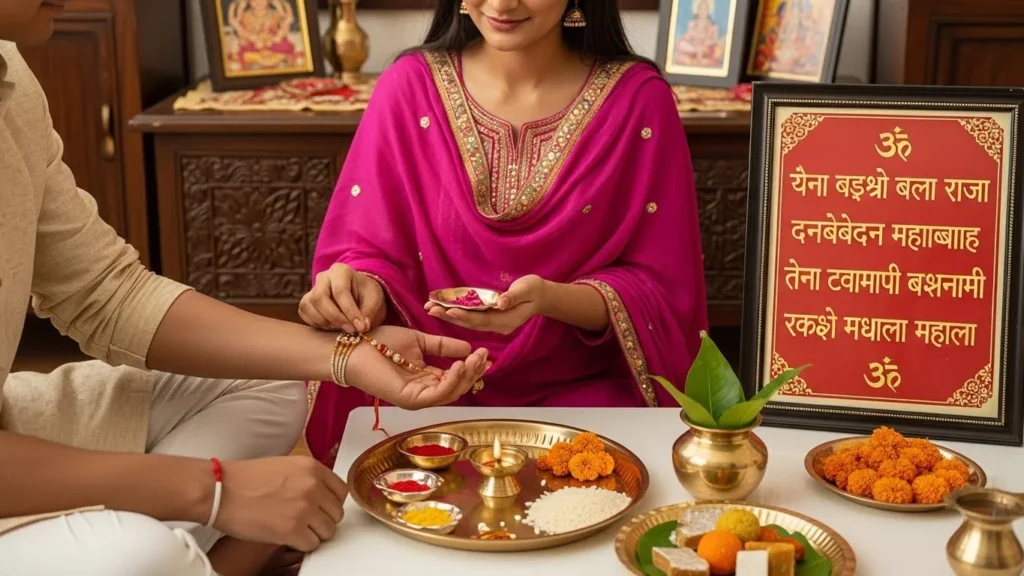
In 2026, as families across India and the global diaspora prepare to celebrate on August 28th, understanding the complete rakhi tying procedure, sacred mantras, and mythological foundations enriches this beautiful ceremony with deeper spiritual significance. The word “Raksha Bandhan” itself—derived from Sanskrit “raksha” (protection) and “bandhan” (bond)—defines the festival’s essence: a sister’s prayers for her brother’s well-being reciprocated by his solemn vow to protect her throughout life’s journey. This single thread, though fragile in appearance, represents an unbreakable spiritual connection that survives all challenges and transcends even death itself.
Understanding how to perform the complete Raksha Bandhan ritual requires exploring the rich mythological narratives, the specific items needed for puja, the step-by-step ceremony procedure, and the powerful mantras that invoke divine blessings. The festival’s origins span multiple sacred stories from Hindu epics and Puranas, each adding layers of meaning to this timeless celebration of sibling love.
Sacred Origins: Mythological Foundations of Raksha Bandhan
Raksha Bandhan’s sanctity derives from multiple mythological narratives preserved in Hindu scriptures, each illustrating the protective power of the sacred thread and the bonds it represents.
Lord Krishna and Draupadi: The Eternal Bond
The most famous Raksha Bandhan story comes from the Mahabharata epic involving Lord Krishna and Draupadi, wife of the five Pandava brothers. According to legend, when Krishna beheaded the evil king Shishupala with his Sudarshan Chakra during a royal gathering, the celestial weapon’s sharp edge cut Krishna’s finger, causing it to bleed profusely. Draupadi, witnessing this and moved by deep devotion, immediately tore a strip of cloth from her own expensive silk saree and bound it around Krishna’s bleeding finger to stop the blood flow.
Deeply touched by this spontaneous gesture of care and concern, Krishna vowed to repay this debt of love manifold. He declared, “I will protect you in your time of greatest need.” Years later, when the Kauravas attempted to dishonor Draupadi by disrobing her in the royal court before assembled princes and elders—including her own husbands who remained helpless—Krishna fulfilled his promise. As Dushasana pulled at Draupadi’s saree, Krishna miraculously made it endless, creating an infinite length of cloth that could never be completely removed, thereby protecting her honor and saving her from ultimate humiliation. This divine intervention demonstrated that a brother’s protective vow, once made, becomes an eternal spiritual obligation transcending time and circumstances.
Indra and Goddess Sachi: The First Raksha Bandhan
One of the oldest Raksha Bandhan legends involves Lord Indra, king of the celestial gods, and his consort Goddess Sachi. During a fierce battle between the Devas (gods) and Asuras (demons), the gods were suffering defeat at the hands of the powerful demon forces. Sachi, deeply worried about her husband Indra’s safety, approached Lord Vishnu seeking protection for him. Vishnu gave her a sacred thread imbued with divine protective power and instructed her to tie it around Indra’s wrist after performing proper rituals.
Following Vishnu’s guidance, Sachi tied the sacred thread on Indra’s right wrist on the full moon day of Shravan month, praying for his victory and protection. Empowered by this sacred thread and his wife’s devotions, Indra led the gods to victory against the demons, re-establishing dharmic order in the cosmos. This primordial raksha bandhan established the tradition that continues today, demonstrating that the sacred thread, when tied with proper ritual and devotion, creates a powerful protective shield around the recipient.
King Bali and Goddess Lakshmi: Devotion’s Reward
Another significant narrative involves King Bali, the benevolent demon king, and Goddess Lakshmi, consort of Lord Vishnu. According to Puranic accounts, King Bali was such an ardent devotee of Lord Vishnu that he requested the Lord to remain permanently in his kingdom as its protector. Vishnu, honoring this devotion, assumed the form of a guard and stayed in Bali’s palace, leaving behind his heavenly abode Vaikuntha—and thereby separating from his beloved consort Lakshmi.
Goddess Lakshmi, missing her husband and desiring his return, devised a clever plan. She disguised herself as a poor Brahmin woman and sought refuge in King Bali’s palace, which the generous king immediately granted. She lived there as an honored guest until Shravan Purnima arrived. On that auspicious day, Lakshmi tied a sacred rakhi on King Bali’s wrist and revealed her true identity, explaining that she had come seeking her husband’s return.
King Bali, deeply moved by Lakshmi’s devotion to her husband and her willingness to take refuge with strangers, immediately understood the depth of familial bonds. He graciously released Lord Vishnu from his promise, allowing him to return to Vaikuntha with Lakshmi. This legend established the tradition of Baleva—celebrating King Bali’s nobility and the power of the rakhi to bind even great kings to their obligations. Since then, it became customary to invite sisters to brothers’ homes on Shravan Purnima for the rakhi tying ceremony.
Essential Items for Raksha Bandhan Puja Thali
Properly performing the Raksha Bandhan ritual requires assembling specific items in the puja thali (ceremonial plate) that facilitate the ceremony while carrying symbolic significance.
The Puja Thali Components:
1. Rakhi (Sacred Thread)
The centerpiece of the ceremony, select one or more decorative rakhis appropriate for your brother. Traditional rakhis feature red and gold threads with intricate designs, while contemporary versions include silver, gold, semi-precious stones, cartoon characters, or eco-friendly materials. Place the rakhi prominently in the center of the thali.
2. Roli or Kumkum (Red Vermillion Powder)
This sacred red powder is used to apply the tilak on the brother’s forehead. The red color symbolizes auspiciousness, prosperity, and protection from evil forces. Keep a small container of kumkum mixed with a few drops of water to create a paste-like consistency.
3. Akshat (Unbroken Rice Grains)
Whole, unbroken rice grains, preferably mixed with turmeric to give them a yellow color, are applied after the tilak. These represent purity, prosperity, and the unbroken continuity of the sibling relationship. Four to six grains are sufficient for the ritual.
4. Diya (Oil or Ghee Lamp)
A small earthen or metal lamp filled with ghee or oil, with a cotton wick, is lit during the aarti ceremony. The flame represents divine presence, dispels darkness and negativity, and invokes protective energies around the brother.
5. Sweets (Mithai)
Traditional Indian sweets like laddoos, barfi, pedas, or kaju katli are essential offerings. After tying the rakhi, sisters feed their brothers these sweets, symbolizing the sweetness of their relationship and sharing the joy of the occasion.
6. Coconut (Nariyal)
A dry coconut or fresh coconut represents purity, completeness, and prosperity. It is offered during the ceremony and later distributed as prasadam.
7. Betel Leaves and Nuts (Paan and Supari)
These traditional offerings signify respect, hospitality, and auspiciousness in Hindu rituals. They are offered to the brother as part of the ceremonial welcome.
8. Flowers and Garlands
Fresh flowers, particularly marigolds and roses, add beauty and fragrance to the thali while symbolizing freshness, love, and the transient beauty of life that makes each moment precious.
9. Incense Sticks (Agarbatti)
Fragrant incense purifies the atmosphere and creates a sacred ambiance conducive to devotion and concentration during the ritual.
10. Money or Gifts
Brothers typically prepare gifts, money, jewelry, or other tokens to offer their sisters in return for the rakhi and blessings, symbolizing their commitment to support and care for them.
Sisters traditionally decorate the puja thali with beautiful rangoli designs, flower petals, and colorful materials, transforming it into an artistic expression of devotion and aesthetic sensibility.
Complete Step-by-Step Rakhi Tying Ritual Procedure
The Raksha Bandhan ceremony follows a structured sequence that sisters should perform during the auspicious muhurat, avoiding the inauspicious Bhadra Kaal period. Understanding each step’s significance enhances the ritual’s devotional quality and conscious participation.
Step 1: Preparation and Purification
Both sister and brother should bathe early in the morning and wear clean, preferably new or auspicious clothes. The puja area is cleaned and decorated, often with rangoli designs and flowers. The sister prepares the puja thali with all essential items arranged aesthetically.
Step 2: Sacred Space Creation
Create a clean, sacred space where the ceremony will be performed. Many families perform this ritual in their home’s puja room or living area. Place a clean cloth or mat where the brother will sit. Light the diya and incense to purify the atmosphere and invoke divine presence.
Step 3: Brother’s Positioning
The brother sits facing east or north—directions considered auspicious in Hindu tradition. He may sit on a raised platform, cushion, or directly on the floor depending on family custom. The sister stands or sits facing him with the puja thali ready.
Step 4: Offering Prayers
The ceremony begins with silent or spoken prayers to family deities, Lord Ganesha (remover of obstacles), and the gods invoked for protection. Some families chant brief mantras or simply pray in their own words for the brother’s well-being.
Step 5: Tilak Application
The sister takes a pinch of kumkum paste using her ring finger and applies it to her brother’s forehead, creating a vertical mark between the eyebrows at the ajna chakra (third eye location). This tilak symbolizes blessings, opens the wisdom eye, wards off evil influences, and marks the brother as protected by divine grace.
Step 6: Akshat Offering
After applying the tilak, the sister places a few grains of akshat (turmeric-coated rice) on the tilak or gently on the brother’s head. This represents showering blessings of prosperity, purity, and abundance upon him.
Step 7: Aarti Performance
The sister performs aarti by taking the lit diya from the thali and waving it in clockwise circular motions before her brother’s face. Typically, the diya is circled three to seven times while silently praying for his protection and longevity. The aarti dispels negative energies and invokes divine blessings.
Step 8: The Sacred Rakhi Tying with Mantras
This is the ceremony’s most significant moment. The sister takes the rakhi from the thali and ties it around her brother’s right wrist (right being the auspicious side for receiving). While tying the rakhi, she chants the traditional Raksha Bandhan mantra:
“येन बद्धो बलि राजा दानवेन्द्रो महाबलः।
तेन त्वाम् अभिबध्नामि रक्षे मा चल मा चल॥”
“Yena Baddho Bali Raaja Daanavendro Mahaabalah
Tena Tvaam Abhibadhnaami Rakshe Maa Chala Maa Chala”
Meaning: “I am tying this protective thread on you in the same manner that the powerful demon king Bali was bound. O Raksha (protection), remain firm and never waver. Stay strong and protect my brother always.”
This ancient mantra invokes the power of the rakhi that bound even the mighty King Bali, requesting that same strength to protect the brother from all harm.
Alternative Mantras:
Some families also chant the Gayatri Mantra during rakhi tying:
“ॐ भूर्भुवः स्वः।
तत्सवितुर्वरेण्यं भर्गो देवस्य धीमहि।
धियो यो नः प्रचोदयात्॥”
“Om Bhur Bhuvah Swah
Tat Savitur Varenyam Bhargo Devasya Dheemahi
Dhiyo Yo Nah Prachodayaat”
Meaning: “We meditate upon the radiant divine light that illuminates the three realms (earth, atmosphere, heaven). May that light guide our intellect and inspire our consciousness toward righteousness.”
Simple Protection Prayer:
For those preferring a simpler approach, sisters can recite:
“ॐ रक्षा बन्धनं कृतं येन, सर्व विघ्न विनाशनम्।
आयुष्यं वर्धनं येन, भ्रातुः रक्षा करोम्यहम्॥”
“Om Raksha Bandhanam Kritam Yena, Sarva Vighna Vinashanam
Ayushyam Vardhanam Yena, Bhratuh Raksha Karomyaham”
Meaning: “By tying this sacred rakhi that destroys all obstacles and increases longevity, I pray for my brother’s complete protection.”
Step 9: Offering Sweets
After tying the rakhi and chanting mantras, the sister feeds her brother sweets from the puja thali, placing the mithai directly in his mouth. This sweet offering symbolizes the sweetness of their relationship and the joy of the occasion.
Step 10: Sprinkling Akshat and Offering Coconut
The sister may sprinkle additional akshat on her brother’s head and offer the coconut and betel leaves as final ceremonial offerings, completing the puja sequence.
Step 11: Brother’s Blessings and Gifts
The brother responds by touching his sister’s feet (in some traditions) or placing his hand on her head, blessing her with prosperity, happiness, and protection. He then offers gifts—money, jewelry, clothes, or other presents—as tangible expressions of his commitment to support and protect her throughout life.
Step 12: Family Blessings
Elders present offer blessings to both siblings, and the family shares sweets and refreshments, celebrating the renewed bonds of love and protection.
Raksha Bandhan 2026: Date, Muhurat, and Bhadra Timing
For families planning their Raksha Bandhan 2026 celebrations, understanding precise dates and auspicious timings ensures proper observance while avoiding inauspicious periods.
Raksha Bandhan 2026 Date
Raksha Bandhan in 2026 falls on Friday, August 28th, coinciding with Shravan Purnima (the full moon day of Shravan month).
Purnima Tithi Timings 2026
- Shravan Purnima Begins: August 27, 2026 at 9:08 AM IST
- Shravan Purnima Ends: August 28, 2026 at 9:48 AM IST
Bhadra Kaal Period (To Be Avoided)
Hindu tradition strongly advises avoiding Bhadra Kaal for performing Raksha Bandhan rituals, as this period is considered highly inauspicious for sacred ceremonies. According to Vedic astrology, Bhadra is a malicious time when negative energies prevail, potentially undermining the protective power of the rakhi.
Bhadra Timing 2026 (Exact timings to be confirmed closer to date based on 2026 panchang):
Typically occurs during a portion of the Purnima day and should be strictly avoided for rakhi tying.
Auspicious Muhurat for Rakhi Tying
The ideal time for performing Raksha Bandhan rituals falls during:
Aparahan Kaal (Afternoon period): Generally considered most auspicious for rakhi tying, occurring after Bhadra Kaal ends.
Pradosh Kaal (Evening period): Also auspicious, though Aparahan is traditionally preferred.
The exact muhurat timings for 2026 will be determined by precise panchang calculations closer to the date, considering Bhadra’s specific duration that year.
Planning Recommendations
Consult a reliable panchang or Hindu calendar a few days before Raksha Bandhan 2026 to confirm exact Bhadra Kaal and auspicious muhurat timings for your location, as these vary slightly by geographic coordinates. Plan the ceremony to occur during the shubh (auspicious) period, ensuring maximum spiritual benefit and protective power for the rakhi.
Regional Variations: How India Celebrates Raksha Bandhan
While Raksha Bandhan’s core significance remains consistent across India, diverse regional expressions add richness to this pan-Indian celebration.
North India: Grand Family Celebrations
In Punjab, Haryana, Uttar Pradesh, Bihar, and Rajasthan, Raksha Bandhan is celebrated with tremendous enthusiasm. The day begins with family gatherings where sisters perform elaborate aarti and apply tilak before tying rakhi. Families enjoy lavish meals featuring traditional sweets like jalebi, laddoo, barfi, and gujiya. Brothers give generous gifts, and the entire extended family participates in the celebrations.
Western India: Maharashtra and Gujarat
In Maharashtra and Gujarat, the festival is called “Nariyal Purnima” (Coconut Full Moon) in coastal regions, where coconuts are offered to the sea as thanksgiving for protection during monsoon season. Sisters tie rakhi to brothers, and the festival coincides with the beginning of the fishing season. Traditional Maharashtrian sweets like modak and puran poli are prepared.
South India: Avani Avittam Connection
In South Indian states like Tamil Nadu, Karnataka, and Andhra Pradesh, Raksha Bandhan is less prominent than in the North but is still observed with affection. The day often coincides with Avani Avittam (Upakarma)—a sacred thread-changing ceremony for Brahmin men. Sisters tie rakhis to brothers, and families enjoy festive meals featuring payasam (sweet pudding), vada, and other regional delicacies.
Eastern India: Bengal and Odisha
In Bengal, Raksha Bandhan is celebrated alongside Jhulan Purnima, dedicated to Radha and Krishna’s divine love. In Odisha, the festival has unique local customs blending rakhi tying with regional devotional practices. Traditional Bengali sweets like rasgulla and sandesh are prepared.
Nepal and Diaspora Communities
Nepalese communities celebrate Raksha Bandhan with similar rituals, calling it “Janai Purnima.” Hindu diaspora communities worldwide maintain traditions, with sisters sending rakhis by mail to distant brothers, demonstrating that geographic separation cannot sever the sacred bonds of protection and love.
Beyond Biological Siblings: Expanded Meanings
Raksha Bandhan’s beauty lies in its flexibility to honor various protective relationships beyond biological brothers and sisters.
Cousins and Extended Family
Cousins tie rakhis to each other, strengthening extended family bonds and creating networks of mutual support and protection.
Friends and Spiritual Siblings
Close friends who share sibling-like bonds exchange rakhis, formalizing their commitment to lifelong friendship and mutual care. This practice demonstrates that Raksha Bandhan celebrates the protective relationship itself, regardless of biological connection.
Sisters to Sisters (Lumba Rakhi)
In some regions, sisters-in-law (bhabhi) receive special rakhis called lumba rakhi from their husbands’ sisters, honoring the bond between women in the family.
Gurus and Disciples
Disciples sometimes tie rakhis to spiritual teachers, seeking protection and guidance on the spiritual path, while teachers reciprocate with blessings.
Priests and Community Leaders
People tie rakhis to priests, community leaders, and respected elders, seeking their blessings and acknowledging their protective role in society.
Frequently Asked Questions About Raksha Bandhan
What is Raksha Bandhan and why is it celebrated?
Raksha Bandhan is a Hindu festival celebrating the sacred bond between brothers and sisters, observed on Shravan Purnima (full moon day of Shravan month). Sisters tie decorative rakhis on brothers’ wrists while praying for their prosperity and protection. Brothers pledge to protect sisters throughout life and offer gifts. The festival commemorates multiple mythological events including Krishna-Draupadi’s bond, Indra-Sachi’s protection, and King Bali-Goddess Lakshmi’s story. It symbolizes duty, love, and protection transcending biological relationships.
What is the complete rakhi tying ritual procedure?
The complete procedure includes: preparing puja thali with rakhi, roli, akshat, diya, sweets, coconut; having brother sit facing east/north; applying tilak on brother’s forehead; placing akshat rice grains; performing aarti with lit diya; tying rakhi on brother’s right wrist while chanting mantras (particularly “Yena Baddho Bali Raaja”); offering sweets; brother giving blessings and gifts. The ceremony should be performed during auspicious muhurat, avoiding Bhadra Kaal period.
What mantra should be chanted while tying rakhi?
The primary Raksha Bandhan mantra is: “Yena Baddho Bali Raaja Daanavendro Mahaabalah, Tena Tvaam Abhibadhnaami Rakshe Maa Chala Maa Chala” (I bind you with the same thread that bound mighty King Bali. O Raksha, remain firm and protect always). Alternatively, chant the Gayatri Mantra or simple protection prayers. The mantra invokes divine protective power, making the rakhi a spiritual shield around the brother.
When is Raksha Bandhan in 2026 and what is the muhurat?
Raksha Bandhan 2026 falls on Friday, August 28th. Shravan Purnima Tithi begins August 27 at 9:08 AM and ends August 28 at 9:48 AM. Avoid Bhadra Kaal period (exact timing to be confirmed from 2026 panchang). Perform rakhi tying during Aparahan Kaal (afternoon) or Pradosh Kaal (evening) after Bhadra ends. Consult local panchang closer to the date for precise auspicious muhurat timings specific to your location.
What items are needed for Raksha Bandhan puja thali?
Essential puja thali items include: rakhi (decorative sacred thread), roli or kumkum (red vermillion), akshat (unbroken rice grains with turmeric), diya (oil/ghee lamp), sweets (laddoos, barfi, pedas), coconut, betel leaves and nuts, fresh flowers, incense sticks, and space for brother’s gifts. Decorate the thali beautifully with rangoli designs and flower petals, transforming it into an artistic devotional expression honoring the sibling bond.
What is the story of Krishna and Draupadi on Raksha Bandhan?
When Krishna’s finger bled after using his Sudarshan Chakra to kill Shishupala, Draupadi immediately tore cloth from her expensive saree and bound his wound. Touched by this gesture, Krishna vowed to protect her always. Years later, when Kauravas attempted to dishonor Draupadi by disrobing her in court, Krishna fulfilled his promise by miraculously making her saree endless, saving her honor. This established that protective bonds created through rakhi become eternal spiritual obligations.
What is Bhadra Kaal and why should it be avoided?
Bhadra Kaal is an inauspicious time period during Purnima when negative energies prevail according to Vedic astrology. Hindu scriptures including Vratraj advise avoiding all auspicious activities during Bhadra, as rituals performed during this period may lack effectiveness or invite negative influences. Raksha Bandhan rituals should be performed only after Bhadra Kaal ends, during the designated shubh muhurat (auspicious timing) to ensure maximum protective power and divine blessings.
How is Raksha Bandhan celebrated in different regions of India?
North India celebrates with grand family gatherings, elaborate aarti, traditional sweets, and generous gift exchanges. Western India (Maharashtra/Gujarat) combines rakhi with Nariyal Purnima coastal ceremonies. South India observes it alongside Avani Avittam thread ceremony with regional sweets like payasam. Eastern India (Bengal) celebrates with Jhulan Purnima devotional activities. Despite regional variations, core elements—tilak, rakhi tying, mantras, sweets, and brother’s protective pledge—remain consistent nationwide.
About the Author
Neha Kulkarni – PhD in Vedic Studies and Ancient Indian History
Neha Kulkarni is a distinguished scholar specializing in ancient Indian history, Vedic traditions, and Hindu cultural practices. With over 15 years of research experience focused on decolonizing historical narratives, he has published extensively on Hindu festivals, ritual procedures, sibling relationships in Indian culture, and the evolution of protective ceremonies across Hindu civilization. His work bridges academic rigor with accessible presentation, making complex historical, mythological, and ritual concepts understandable to contemporary audiences seeking authentic knowledge about Hindu traditions and their continued relevance in modern life.