


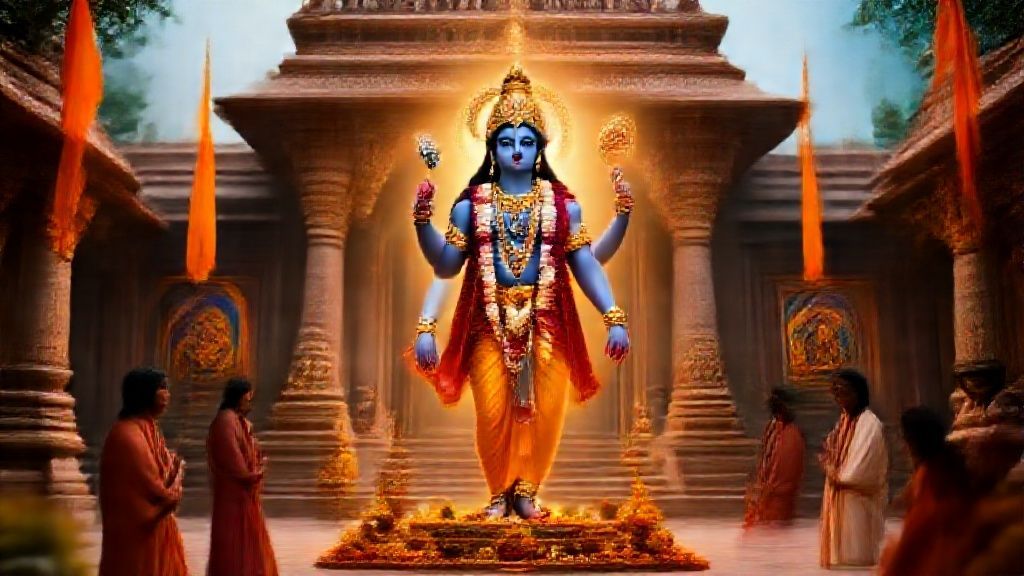
Ram Navami 2026 commemorates the auspicious birth of Bhagwan Rama, the seventh Avatar of Vishnu, which falls on the ninth day (Navami) of the bright fortnight (Shukla Paksha) in the Chaitra month of the Hindu lunar calendar, typically in March or April. In 2026, Ram Navami will be celebrated on Friday, March 27th, marking the culmination of the Vasanta Navaratri festival.
| Attribute | Details |
|---|---|
| Deity Celebrated | Bhagwan Rama (Lord Rama), seventh Avatar of Vishnu |
| Date (Gregorian, 2026) | Friday, March 27th |
| Tithi (Lunar Day) | Chaitra Shukla Navami (Ninth day of the bright half of Chaitra) |
| Birthplace | Ayodhya, Uttar Pradesh, India |
| Scripture Reference | Valmiki Ramayana, Bhagavat Purana, Adhyatma Ramayana |
| Key Observances | Fasting, Puja, Bhajan, Kirtan, Recitation of Ramayana, Rath Yatras |
Introduction: The Eternal Significance of Shri Rama’s Avataran
Ram Navami is far more than a mere calendar date; it is a sacred epoch in the cosmic drama of Sanatan Dharma, marking the descent of Bhagwan Vishnu as Maryada Purushottam Shri Rama. This divine advent in Ayodhya represents the triumph of Dharma over Adharma, truth over falsehood, and righteousness over unrighteousness. For countless generations, the birth of Lord Rama has been a beacon of hope, inspiring devotees to uphold moral values, pursue spiritual excellence, and strive for an ideal society (Rama Rajya). The celebration of Ram Navami is a profound expression of devotion, a spiritual rejuvenation, and a reaffirmation of the eternal principles that govern the universe, as embodied by Shri Rama.
Puranic History & Legend: The Divine Birth of Ayodhya’s Prince
The story of Lord Rama’s birth is meticulously narrated in the revered Valmiki Ramayana, the Adi Kavya (first epic poem), and further elaborated in various Puranas such as the Bhagavata Purana and Padma Purana. King Dasharatha of Ayodhya, though possessing immense wealth and power, yearned for a son to continue his lineage. Upon the counsel of Sage Vasishtha, he approached Sage Rishyasringa to perform the Putrakameshti Yajna, a powerful Vedic sacrifice to invoke the divine blessings for progeny.
During the Yajna, a celestial being emerged from the sacrificial fire, offering King Dasharatha a pot of divine payasam (sweet pudding). The King distributed this sacred offering among his three queens: Kausalya, Kaikeyi, and Sumitra. As a result, on the ninth day of the bright fortnight in the Chaitra month, under the Punarvasu Nakshatra, Kausalya gave birth to the eldest son, Shri Rama. Concurrently, Kaikeyi bore Bharata, and Sumitra gave birth to Lakshmana and Shatrughna. The Valmiki Ramayana, Bala Kanda, Sarga 18, Sloka 8-11, vividly describes this momentous event, noting the auspicious planetary alignments:
प्रजापति समो राजा दशरथो महायशाः ।
यज्ञे पुत्त्रान् अवाप्नोति चतुरः सुमहाबलान् ॥
कौसल्या सुषुवे रामं सर्वलक्षणसंयुतम् ।
विष्णोः अर्धं महाभागं पुत्रम् इक्ष्वाकुनन्दनम् ॥
This Sanskrit verse attests to the divine nature of Rama, born with all auspicious marks, as half-portion of Vishnu himself, bringing joy to the Ikshvaku dynasty. His birth brought immense joy to Ayodhya and marked the beginning of a divine Lila (play) destined to establish Dharma.
Astrological & Cosmic Alignment: The Precision of Bhagwan Rama’s Birth Chart
While we are not discussing a temple’s architecture, the “scientific marvel” aspect can be profoundly explored through the precise astrological conditions described at Lord Rama’s birth. The Valmiki Ramayana (Bala Kanda, Sarga 18, Slokas 9-10) provides astonishing detail, indicating a highly rare and powerful cosmic configuration. This precision underscores the divine planning behind the Avatar:
- Chaitra Month: The first month of the Hindu calendar, symbolizing new beginnings.
- Shukla Paksha Navami: The ninth day of the waxing moon, a highly auspicious tithi.
- Punarvasu Nakshatra: A lunar mansion associated with renewal, purification, and the return of light.
- Karka Lagna (Cancer Ascendant): A watery, fertile sign ruled by the Moon, denoting compassion and public appeal.
- Sun Exalted in Aries (Mesha): Indicating immense power, kingship, and a righteous ruler.
- Jupiter Exalted in Cancer (Karka): Bestowing wisdom, spiritual knowledge, and divine protection.
- Mars Exalted in Capricorn (Makara): Granting courage, strength, and the ability to conquer enemies.
- Saturn Exalted in Libra (Tula): Denoting justice, fairness, and a strong sense of duty.
- Venus in Pisces (Meena): Signifying beauty, artistic inclination, and devotion.
- Moon in Cancer (Karka): The Moon in its own sign in the Lagna, amplifying emotional depth and purity.
Such a convergence of exalted planets is exceedingly rare, occurring perhaps once in millions of years. This celestial blueprint not only signifies a Mahapurusha (great personality) but an actual Purnavatar (complete incarnation) of Bhagwan Vishnu, destined to uphold Dharma and demonstrate ideal human conduct. This astronomical accuracy, documented millennia ago, stands as a testament to the profound wisdom embedded within Vedic astrology and the divine nature of Rama’s advent, revered by followers of Sanatan Dharma.
Rituals & Puja Vidhi: Celebrating Ram Janmotsav with Devotion
The celebration of Ram Navami is marked by fervent devotion and adherence to traditional rituals. The main observances typically begin with a fast, often observed from sunrise to sunset, and culminate in elaborate pujas and festivities:
- Morning Snan and Sankalpa: Devotees wake early, perform ritual bath (snan), and take a vow (sankalpa) to observe the fast and puja with dedication.
- Kalash Sthapana: If performing an elaborate puja, a Kalash (pot) is installed, symbolizing the universe and divine energy.
- Rama Abhishekam: An idol of baby Rama (Bal Rama) is bathed with water, milk, curd, honey, ghee, and sugar, followed by adorning it with new clothes and ornaments.
- Puja Offerings: Flowers (especially lotus), tulsi leaves, fruits, sweets, incense, and lamps are offered. Prasad made of jaggery, coconut, and panchamrit is common.
- Ramayana Path: Recitation of verses from the Valmiki Ramayana, Ramcharitmanas of Goswami Tulsidas, or chanting of the Rama Taraka Mantra.
- Kirtan and Bhajan: Devotional songs eulogizing Lord Rama are sung throughout the day.
- Madhyahna Janmotsav: Precisely at noon (the traditional birth time), a special arati is performed, symbolizing the arrival of Lord Rama. Devotees often rock a cradle containing the Bal Rama idol.
- Akshat Vitaran: Rice grains mixed with turmeric (akshat) are showered on the idol as a sign of blessing.
- Fasting and Prasadam: The fast is broken after the noon puja or in the evening, with sattvic food.
- Rath Yatras and Community Feasts: In many regions, processions carrying Rama’s idols are taken out, followed by community meals (bhandara).
Mantras & Chants: Invoking the Divine Grace of Shri Rama
Chanting the sacred names and mantras of Lord Rama is a powerful way to connect with His divine energy, purify the mind, and seek blessings. Devotees often engage in Japa (repetition) throughout the day:
- Rama Taraka Mantra:
ॐ श्री राम जय राम जय जय राम
Om Sri Rama Jaya Rama Jaya Jaya RamaThis mantra is believed to grant liberation (moksha) and is a distillation of the essence of the Ramayana.
- “Shri Rama Jayam”:
श्री राम जयम्
Shri Rama JayamA simple yet potent chant, invoking victory and auspiciousness through Lord Rama.
- Hare Rama Maha Mantra:
हरे राम हरे राम राम राम हरे हरे ।
हरे कृष्ण हरे कृष्ण कृष्ण कृष्ण हरे हरे ॥
Hare Rama Hare Rama Rama Rama Hare Hare |
Hare Krishna Hare Krishna Krishna Krishna Hare Hare ||This Maha Mantra is particularly revered in the Gaudiya Vaishnava tradition, offering spiritual solace and connection to the divine.
- Dhyana Mantra:
नीलांबुज श्यामल कोमलांगं सीता समारोपित वामभागम् ।
पाणौ महासायक चारु चापं नमामि रामं रघुवंशनाथम् ॥
Nilambuja Shyamal Komalangaṃ Sita Samaropita Vamabhagam |
Pāṇau Mahāsāyaka Chāru Chāpaṃ Namāmi Rāmaṃ Raghuvansha Nātham ||This meditative mantra describes Lord Rama’s beautiful form, with Sita Devi on his left, holding a mighty bow and arrow, the lord of the Raghu dynasty.
Dos and Don’ts for Ram Navami Observance
- Do’s:
- Observe fasting (partial or full) as per your capacity and tradition.
- Maintain purity of body and mind throughout the day.
- Chant Rama’s name and mantras continuously.
- Recite Ramcharitmanas or Sundarkand.
- Perform puja with devotion and offer traditional items.
- Participate in community bhajans and kirtans.
- Offer food and charity to the needy (Anna Daan).
- Reflect on Lord Rama’s virtues and teachings.
- Don’ts:
- Avoid consuming non-vegetarian food, alcohol, or tobacco.
- Refrain from negative thoughts, speech, and actions.
- Do not engage in quarrels or gossip.
- Do not disrespect any living being.
- Avoid tamasic activities that distract from spiritual focus.
Frequently Asked Questions About Ram Navami
When exactly was Lord Rama born, according to scriptures?
The scriptures state Lord Rama was born at noon (Madhyahna) on the Navami Tithi of Shukla Paksha in the Chaitra month. The precise moment is often celebrated with a special arati and rocking of the cradle, symbolizing His arrival.
Is Ram Navami celebrated for one day or nine days?
While the primary celebration and His birth occur on the ninth day (Ram Navami), the period is often celebrated as part of a nine-day Vasanta Navaratri festival, which begins on Chaitra Shukla Pratipada. Many devotees observe a nine-day fast, culminating on Ram Navami.
What is the significance of “Rama Rajya”?
“Rama Rajya” refers to the ideal rule of Lord Rama, characterized by perfect justice, prosperity, righteousness, peace, and the well-being of all subjects. It represents a utopian society where Dharma reigns supreme and every individual lives in harmony and contentment.
Can anyone celebrate Ram Navami, regardless of their background?
Yes, Ram Navami is a universal festival of devotion to Lord Rama. While traditional rituals are often followed, anyone can celebrate His birth with sincerity, devotion, chanting His name, and reflecting on His virtues, irrespective of their background or creed.
Dharmic Significance: Why This Matters for Every Hindu
The annual commemoration of Ram Navami is not merely a historical remembrance; it is a vital practice for the preservation and propagation of Sanatan Dharma. Lord Rama stands as the quintessential embodiment of Dharma – a perfect son, an ideal brother, a righteous husband, a just king, and an unwavering upholder of truth. His life, as documented in the Ramayana, provides a timeless blueprint for righteous living (Dharmic Jeevan), inspiring millions to strive for integrity, compassion, and courage. By celebrating Ram Navami, devotees connect with the divine energy of Dharma, reaffirm their faith in universal justice, and absorb the virtues of Maryada Purushottam. It is a powerful reminder that whenever Adharma rises, the divine will descend to restore balance, assuring every Hindu that Dharma ultimately triumphs. This festival fortifies our cultural identity, rejuvenates our spiritual resolve, and inspires us to live lives worthy of His divine ideals.