


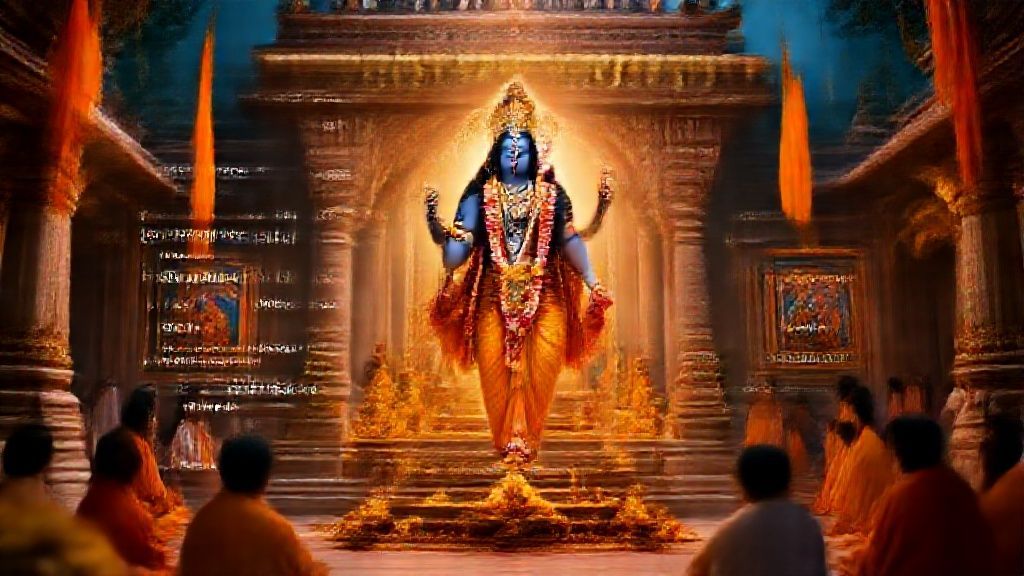
Ram Navami Bhajans are devotional songs that celebrate the birth and divine exploits of Bhagwan Rama, a principal deity in Hinduism, particularly revered on the auspicious day of Ram Navami. These traditional songs, often steeped in the rich narrative of the Valmiki Ramayana and Tulsidas’s Ramcharitmanas, serve as a profound expression of love, devotion, and surrender to Lord Rama, fostering a deep spiritual connection.
| Attribute | Details |
|---|---|
| Deity | Bhagwan Rama, seventh Avatar of Vishnu |
| Origin | Ancient Vedic traditions, Bhakti movement, revered poets |
| Key Festival | Ram Navami (Chaitra Shukla Navami) |
| Scripture Reference | Valmiki Ramayana, Adhyatma Ramayana, Ramcharitmanas, Puranas |
The Spiritual Essence of Ram Navami Bhajans
Ram Navami marks the sacred appearance day of Bhagwan Rama, the embodiment of Dharma and righteous kingship, born to King Dasharatha and Queen Kausalya in Ayodhya. The celebration of this divine event is incomplete without the resonant melodies of Ram Navami Bhajans. These devotional compositions are not merely songs; they are spiritual conduits, carrying the devotee’s heart directly to the lotus feet of Shri Rama. They are the living breath of devotion, keeping the stories of Rama’s valor, compassion, and unwavering adherence to Dharma vibrant in the collective consciousness of Sanatan Dharma.
From simple chants of “Jai Shri Ram” to elaborate poetic compositions, bhajans serve as a powerful medium for Kirtan, a core practice in Bhakti Yoga. They bridge the gap between the mundane and the divine, allowing individuals to experience transcendental joy and inner peace. The collective singing of these bhajans on Ram Navami transforms homes, temples, and communities into vibrant centers of spiritual energy, echoing the joyous atmosphere of Ayodhya when Rama first graced the earth. This tradition ensures that the divine attributes and teachings of Rama remain eternally fresh and inspiring for generations of devotees. For more insights into such devotional practices, visit Hindutva.online.
Puranic History and Bhakti Tradition of Ram Bhajans
The genesis of Ram Bhajans is deeply embedded in the ancient narratives of our Itihasas and Puranas. The Valmiki Ramayana, the adi-kavya (first epic), details the life of Lord Rama, laying the foundational stories that later inspired countless devotees and poets. The birth of Rama itself, described in the Bala Kanda, is a source of immense jubilation, painted with celestial music and divine blessings. While Valmiki’s magnum opus provided the textual basis, it was the subsequent Bhakti movement, flourishing from the 6th century CE onwards, that truly popularized the form of devotional singing known as bhajans.
Saints and poets like Tulsidas, in the 16th century, revolutionized Rama Bhakti with his immortal work, the Ramcharitmanas. Written in Awadhi, a dialect of Hindi, it made the complex narrative of Rama accessible to the common person. The lyrical verses (chaupais and dohas) of the Ramcharitmanas became the very essence of Ram bhajans, recited and sung with fervent devotion. Similarly, works like the Adhyatma Ramayana from the Brahmanda Purana also contributed significantly, emphasizing Rama as Parabrahman and inspiring numerous spiritual interpretations set to music. These scriptural foundations, coupled with the profound emotional expression of Bhakti poets, forged the rich tradition of Ram bhajans we cherish today.
The Spiritual Architecture of Bhajan Compositions
While bhajans do not pertain to physical temple architecture, they represent a unique “spiritual architecture”—a marvel of devotional composition designed to build and elevate the temple of the heart. The structure of a traditional Ram bhajan is carefully crafted to evoke specific emotions and deepen spiritual connection. Typically, bhajans feature a simple, repetitive melodic line, making them accessible to all, irrespective of musical expertise. This repetition, known as ‘dhun’ (धुन), is not mere redundancy but a technique to fix the mind on the divine name and form, leading to a meditative state. The poetic meter, often drawn from folk traditions or classical Sanskrit prosody, ensures that the words resonate harmoniously and are easy to memorize.
Key elements include the ‘pallavi’ or refrain, which often contains the divine name or a core message, followed by ‘charanams’ or verses that elaborate on Rama’s Leelas (divine plays), virtues, or prayers for His grace. The beauty lies in the synergy of words, melody, and rhythm (taal). The use of traditional instruments like harmonium, tabla, dholak, and cymbals (kartals) provides a vibrant backdrop, creating an immersive experience that transcends individual performance to become a collective offering. This intentional compositional design transforms sound into a palpable spiritual presence, enabling devotees to construct an internal sanctuary dedicated to Shri Rama.
Rituals and Bhajan Seva Vidhi
Integrating Ram Navami Bhajans into the celebration is a vital part of the puja vidhi. While there isn’t one strict ritual, the following outlines how bhajans are often incorporated:
- Sankalpa and Invocation: Begin the day with a clean mind and body. After bathing, light a lamp (diya) and incense (agarbatti) before the deity of Lord Rama. Recite a brief sankalpa (intention) for performing bhajan seva.
- Prarambha (Commencement): Start with a traditional invocation, perhaps a Ganesha Vandana, followed by a prayer to Guru and Saraswati for clarity and inspiration.
- Kirtan and Dhun: Begin singing a series of Ram bhajans. This often starts with a “dhun” – a simple, repetitive chant like “Shri Rama Jayam Rama Rama Jayam” (श्री राम जयं राम राम जयं) or “Raghupati Raghav Raja Ram.” This establishes a rhythmic and meditative atmosphere.
- Bhajan Gaayan (Singing Bhajans): Continue with a selection of traditional bhajans, focusing on their meaning and devotional sentiment. Encourage participation from all present.
- Aarti: After an hour or more of bhajan singing, perform the Aarti of Lord Rama, offering the lamp, flowers, and devotion. Many aartis themselves are sung in bhajan-like formats.
- Pushpanjali and Pranaam: Offer flowers (Pushpanjali) and prostrate (Pranaam) before the deity, expressing gratitude and seeking blessings.
- Prasad Vitaran: Conclude by distributing prasad (consecrated food) among all devotees, symbolizing the sharing of divine grace.
Whether in a grand temple or a humble home, the essence is to offer one’s voice, heart, and time in praise of Bhagwan Rama.
Mantras and Chants for Devotion
Beyond bhajans, specific mantras and chants are central to Ram Bhakti, especially during Ram Navami. Reciting these strengthens one’s connection to Lord Rama:
- Moola Mantra: ॐ श्री रामाय नमः (Om Sri Ramaya Namaha) – A simple yet powerful chant invoking Lord Rama.
- Taraka Mantra: श्री राम जय राम जय जय राम (Shri Rama Jaya Rama Jaya Jaya Rama) – This mantra is believed to grant liberation and protection.
- Hare Rama Mahamantra: हरे राम हरे राम राम राम हरे हरे । हरे कृष्ण हरे कृष्ण कृष्ण कृष्ण हरे हरे ॥ (Hare Rama Hare Rama Rama Rama Hare Hare | Hare Krishna Hare Krishna Krishna Krishna Hare Hare) – A universal mantra for spiritual upliftment, invoking both Rama and Krishna.
- Rama Gayatri Mantra: ॐ दाशरथये विद्महे सीता वल्लभाय धीमहि तन्नो रामः प्रचोदयात् ॥ (Om Dasharathaye Vidmahe Sitavallabhaya Dhimahi Tanno Ramah Prachodayat) – A Gayatri mantra dedicated to Lord Rama, invoking His wisdom and light.
- Chaupai from Ramcharitmanas: मंगल भवन अमंगल हारी । द्रवहु सुदसरथ अजिर बिहारी ॥ (Mangal Bhavan Amangal Haari | Dravahu Sudasarath Ajir Bihari) – A potent verse meaning “Remover of all inauspiciousness, giver of auspiciousness, O playful son of Dasharatha, bless us.”
Dos and Don’ts for Ram Navami Bhajans
To ensure a devotional and respectful experience while participating in Ram Navami Bhajans, consider these guidelines:
- Do: Maintain physical and mental cleanliness before engaging in bhajans.
- Do: Sing with full heart and devotion, focusing on the meaning of the words.
- Do: Participate actively, clapping hands and joining in the chanting.
- Do: Dress modestly, reflecting the sanctity of the occasion.
- Do: Respect all participants, regardless of their singing ability.
- Don’t: Treat bhajans as mere entertainment; remember their spiritual purpose.
- Don’t: Engage in idle talk or distractions during the bhajan session.
- Don’t: Interrupt others or disrupt the flow of devotion.
- Don’t: Consume non-vegetarian food, alcohol, or intoxicants on this auspicious day.
- Don’t: Forget the spirit of unity and devotion that bhajans foster.
Traditional Ram Navami Bhajans: A Curated List
Here is a list of revered Ram Navami Bhajans that resonate with millions of devotees, often accompanied by brief insights:
- “Shri Ramachandra Kripalu Bhajaman” (श्री रामचन्द्र कृपालु भजमन)
Composed by Saint Tulsidas, this bhajan is an iconic invocation of Lord Rama. It describes Rama’s divine form, His radiant beauty, and His compassionate nature. It is often sung at the very beginning of Ram Navami celebrations, setting a devotional tone.
- “Raghupati Raghav Raja Ram” (रघुपति राघव राजा राम)
A simple yet immensely powerful dhun, popularized by Mahatma Gandhi. It emphasizes the greatness of Rama, the King of Raghu dynasty, and Sita-Rama’s divine union. Its repetitive nature makes it easy for collective chanting and meditation, promoting peace and harmony.
- “Payoji Maine Ram Ratan Dhan Payo” (पायो जी मैंने राम रतन धन पायो)
Though primarily associated with Mirabai and Lord Krishna, this bhajan is often adapted for Rama, expressing the devotee’s realization that the greatest wealth is the name of Lord Rama. It speaks of the priceless jewel of devotion found through surrender.
- “Thumak Chalat Ramchandra” (ठुमक चलत रामचंद्र)
Attributed to the poet Surdas, this bhajan beautifully describes the innocent and captivating gait of baby Rama as He toddles in the courtyard of King Dasharatha. It evokes Vatsalya Bhakti (parental love for God) and fills the heart with tender affection for Bala Rama.
- “He Ram He Ram” (हे राम हे राम)
A contemporary classic, this bhajan is a soulful appeal to Lord Rama. Its soothing melody and simple words express a deep longing for divine grace and guidance, often sung with heartfelt emotion in evening satsangs.
- “Jai Jai Ram Jai Shri Ram” (जय जय राम जय श्री राम)
A vibrant and energetic chant that is often used in call-and-response formats during Kirtan. It’s an expression of victory and glorification of Lord Rama, infusing the atmosphere with joy and positive vibrations.
- “Sitaram Sitaram Sitaram Jai Sita Ram” (सीताराम सीताराम सीताराम जय सीता राम)
This bhajan emphasizes the inseparable union of Sita and Rama, highlighting Sita as the divine feminine energy (Shakti) accompanying Rama. Chanting their names together acknowledges their complete divinity and interdependence.
Frequently Asked Questions
Why are bhajans important on Ram Navami?
Bhajans are crucial on Ram Navami as they serve as a direct expression of devotion and joy, celebrating Lord Rama’s birth. They allow devotees to immerse themselves in His divine stories and virtues, fostering a deeper spiritual connection and communal harmony through shared worship.
Can anyone sing Ram Navami bhajans?
Absolutely. The beauty of bhajans lies in their inclusivity. There are no prerequisites for singing Ram Navami bhajans; anyone with a sincere heart and devotion can participate, regardless of their musical ability or background. The intent behind the singing is paramount.
What is the best time to sing these bhajans?
While bhajans can be sung at any time, they are especially significant on Ram Navami during the day, culminating around noon (Madhya Bela), which is believed to be the exact moment of Lord Rama’s birth. Many devotees also sing them in the evenings as part of satsangs or Kirtan gatherings.
Are there regional variations in Ram Navami bhajans?
Yes, while core bhajans like “Shri Ramachandra Kripalu” are universally loved, there are distinct regional variations in melodies, languages, and specific compositions. For instance, bhajans in Awadhi and Braj are popular in Northern India, while South India has unique Kritis and devotional songs in Telugu, Tamil, Kannada, and Malayalam celebrating Rama, often with Carnatic music influences. This diversity enriches the global tapestry of Ram Bhakti.
Preserving Sanatan Dharma Through Divine Melody
The tradition of Ram Navami Bhajans is more than just a musical performance; it is a profound act of spiritual preservation and transmission of Sanatan Dharma. In every chanted name, every sung verse, the eternal values of truth, righteousness, compassion, and devotion, epitomized by Lord Rama, are reinforced and passed down. Bhajans are a living heritage, connecting devotees across generations to the divine narrative and the timeless principles of Dharma. They awaken the dormant divinity within, inspire righteous living, and provide solace in challenging times. By participating in this sacred tradition, we not only celebrate the birth of our beloved Lord but actively contribute to the sustenance and propagation of our ancient Vedic culture. May the divine resonance of Ram Bhajans continue to uplift hearts and minds, guiding humanity towards the path of Dharma. For more resources on preserving our heritage, explore Hindutva.online.