


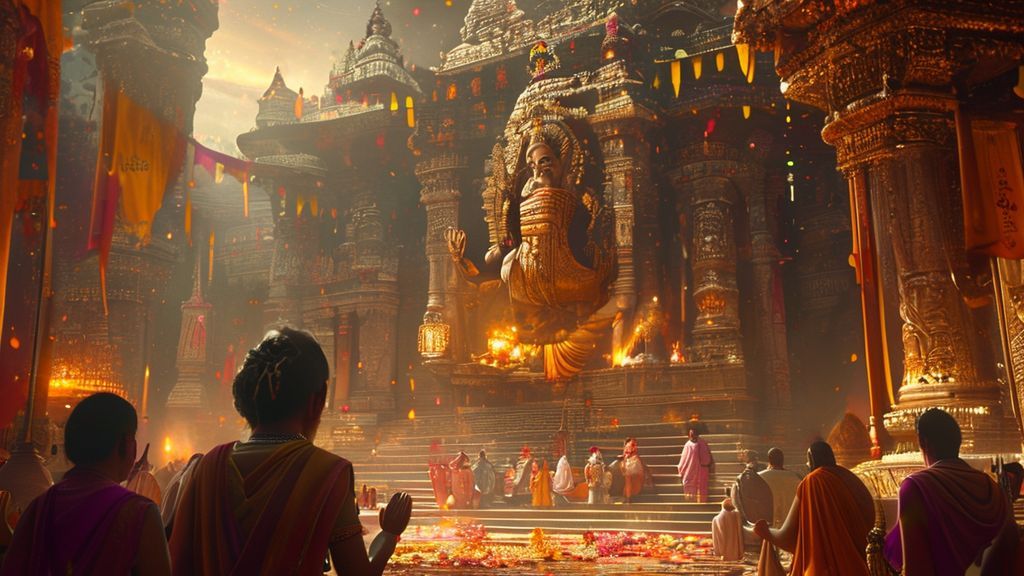
A Rat Dream in Hinduism, particularly when associated with Ganesha’s Mushika, is profoundly significant, often symbolizing the conquest over obstacles, the triumph of intellect, and the auspicious removal of impediments. Such dreams are divine communications, inviting devotees to reflect on their spiritual path, decision-making, and the presence of Lord Ganesha as the Vighnaharta, the remover of obstacles.
| Attribute | Details |
|---|---|
| Deity Associated | Lord Ganesha (Ganapati, Vighnaharta) |
| Mushika’s Role | Ganesha’s Vahana (Divine Vehicle); Symbolizes the controlled mind and conquered ego. |
| Key Symbolism | Subtlety, Intellect, Discernment, Conquest over Darkness, Overcoming Material Desires. |
| Scripture Reference | Ganesha Purana, Mudgala Purana, Brahmavaivarta Purana |
The Divine Messenger: Unraveling the Rat Dream in Sanatan Dharma
In the vast tapestry of Sanatan Dharma, dreams are not mere random neural firings but often profound messages from the subconscious, the collective consciousness, or directly from the Divine. When a devotee experiences a dream involving a rat, especially in the context of Hindu spirituality, it immediately evokes the image of Mushika, the revered Vahana of Lord Ganesha. This is not a trivial vision but a potent symbol laden with deep spiritual meaning, signaling auspicious beginnings, the removal of obstacles, or a call for introspection and wisdom. The subtle yet powerful presence of Mushika in our sacred narratives reminds us that even the smallest creatures hold significant dharmic lessons, guiding us towards spiritual growth and the successful navigation of life’s challenges. Such dreams prompt a deeper connection to the divine energies that shape our reality.
Puranic History & Legend: Mushika’s Divine Transformation
The origin story of Mushika, Lord Ganesha’s faithful mount, is a fascinating narrative found primarily in the Ganesha Purana and Mudgala Purana, offering profound insights into his symbolic significance. One prominent account describes Mushika not as an ordinary rat but as a powerful Gandharva named Vanjara in a previous birth. Due to his arrogance and misdeeds, he incurred the wrath of a sage (sometimes identified as Rishi Krauncha or Parashara) and was cursed to be born as a mouse.
This mouse, enormous and destructive, terrorized the ashramas and the world, destroying crops and creating immense chaos. When the sage Jamadagni sought relief, he prayed to Lord Ganesha. Ganesha, in His divine form, confronted the formidable mouse. The mouse attempted to swallow Ganesha but was instantly trapped within His enormous belly. Realizing his folly and the futility of resistance, the mouse surrendered completely to Ganesha, begging for forgiveness and mercy.
Pleased by the mouse’s sincere repentance, Lord Ganesha offered him a boon. The mouse, humbled, requested that Ganesha accept him as His vehicle. Ganesha, the embodiment of humility and wisdom, agreed, transforming the destructive creature into His loyal Vahana, Mushika. This legend powerfully illustrates the principle of surrender to the divine will, the transformation of negative qualities (like arrogance and destructiveness, symbolized by the giant mouse) into positive service, and Ganesha’s ability to control and guide even the most formidable forces of nature and the mind. It signifies that even the smallest, most elusive desires and obstacles can be brought under the control of divine intellect, symbolized by Ganesha.
Esoteric Symbolism & Iconographic Significance: The Rat as a Master of Subtle Paths
While discussing “Rat Dream in Hinduism,” the direct architectural or scientific marvels are less relevant. Instead, we delve into the profound esoteric symbolism and iconographic significance of Mushika, which directly informs the interpretation of such dreams. Mushika, the tiny vehicle of the portly Ganesha, is a profound paradox. This juxtaposition teaches us several vital lessons:
- Mastery Over Subtle Obstacles: The rat, with its ability to gnaw through obstacles and navigate hidden pathways, symbolizes the human mind’s capacity to overcome even the most subtle, persistent, and unseen impediments (Sukshma Vighna). Ganesha riding Mushika signifies His complete mastery over these challenges.
- Control of Desires (Kama): Rats are associated with desire, gluttony, and the tendency to hoard. By having Mushika as His Vahana, Ganesha demonstrates His ultimate control over all material desires, attachments, and the insatiable nature of the mind. He teaches us to guide our desires with wisdom, rather than being driven by them.
- Intellect and Discernment (Buddhi): The rat’s sharp senses and ability to find hidden food sources represent acute intellect and discernment (Buddhi). Ganesha, as the Lord of Intellect, utilizes this power to navigate the complexities of existence, suggesting that true wisdom requires us to be perceptive and aware of the unseen nuances of life.
- Humility and Accessibility: Ganesha, the Lord of all Siddhis, chooses a humble rat as His mount, demonstrating His accessibility to all, regardless of their station or apparent insignificance. It emphasizes that divine grace extends to everyone and everything.
- The Inner World: The dark, hidden places where rats dwell can symbolize the subconscious mind and the unseen aspects of our inner world. Ganesha, with Mushika, helps us illuminate these hidden corners, bringing awareness and order to our inner chaos.
Therefore, a rat dream, particularly a positive one, can signify that Ganesha is guiding you to confront and overcome subtle inner obstacles, control your desires, or sharpen your discernment to navigate complex situations.
Rituals & Puja Vidhi for Auspicious Interpretations
If one experiences a significant dream involving rats or Mushika, performing specific rituals to Lord Ganesha can help invoke His blessings for clarity, obstacle removal, and auspicious outcomes. These rituals focus on purifying the mind and inviting divine wisdom.
- Morning Purification: Wake up early, bathe, and wear clean clothes.
- Ganesha Sthapana: Place an idol or image of Lord Ganesha in your puja altar.
- Deepa Prajwalana: Light a ghee lamp (Deepa) and incense sticks (Agarbatti).
- Sankalpa: With folded hands, declare your intention (Sankalpa) to perform the puja for understanding the dream’s significance and for Ganesha’s blessings to remove any potential obstacles.
- Abhishekam (Optional): Offer a small Abhishekam (ritual bathing) to Ganesha with water, milk, or Panchamrita.
- Pushpa Arpanam: Offer fresh flowers, especially red hibiscus or marigolds, and Durva grass (21 blades are auspicious) to Ganesha.
- Modaka Bhoga: Offer Modakas (sweet dumplings) or Laddus, which are Ganesha’s favorite. Fruits like bananas and pomegranates are also suitable.
- Mantra Japa: Chant Ganesha Mantras with devotion.
- Aarti: Conclude the puja with Ganesha Aarti, offering light to the deity.
- Pranam: Offer heartfelt prostrations, seeking guidance and blessings.
Performing this simple puja with a pure heart can align your energies with Ganesha’s, inviting positive interpretations and outcomes from your dream experience.
Mantras & Chants for Lord Ganesha and Mushika
Chanting specific mantras dedicated to Lord Ganesha is a powerful way to invoke His presence, seek His guidance, and remove obstacles, both physical and spiritual. These mantras are particularly beneficial after a significant dream experience involving Mushika.
- Moola Mantra:
ॐ गं गणपतये नमः
Om Gam Ganapataye Namaha
This is the primary Ganesha mantra, potent for obstacle removal and invoking all forms of auspiciousness.
- Ganesha Gayatri Mantra:
ॐ एकदंताय विद्महे वक्रतुण्डाय धीमहि। तन्नो दन्ति प्रचोदयात्॥
Om Ekadantaya Vidmahe Vakratundaya Dhimahi Tanno Danti Prachodayat॥
This mantra invokes Ganesha’s elephant-headed wisdom, seeking enlightenment and clarity of intellect.
- Vakratunda Mahakaya Mantra:
वक्रतुण्ड महाकाय सूर्यकोटि समप्रभ। निर्विघ्नं कुरु मे देव सर्वकार्येषु सर्वदा॥
Vakratunda Mahakaya Suryakoti Samaprabha Nirvighnam Kurume Deva Sarva Karyeshu Sarvada॥
Meaning: “O Lord with the curved trunk and massive body, whose brilliance is equal to a million suns, please make all my endeavors free of obstacles, always.” This mantra is ideal for seeking obstacle removal and success in all undertakings.
Regular recitation of these mantras cultivates a deep connection with Lord Ganesha, allowing His divine wisdom to guide your interpretations of dreams and your actions in waking life.
Dos and Don’ts Regarding Rat Dreams in Hinduism
Interpreting divine communications through dreams requires reverence and adherence to certain dharmic principles. Here are some guidelines:
- Do Not Panic: A dream involving a rat, especially a benign one, is rarely a bad omen when viewed through the lens of Ganesha’s Mushika. Approach it with an open, reverent mind.
- Do Reflect: Take time to meditate on the dream. What was the rat doing? Was it active, calm, destructive, or helpful? The context is crucial.
- Do Offer Prayers: Immediately after such a dream, offer prayers to Lord Ganesha, seeking His guidance and blessings for proper understanding and auspicious outcomes.
- Do Maintain Purity: Keep your body, mind, and surroundings clean, especially when reflecting on or praying about such dreams.
- Do Seek Guidance (If Needed): If the dream is unsettling or unclear, consult with a learned Pandit, an experienced astrologer, or a spiritual guide who understands Vedic dream interpretation.
- Don’t Share Indiscriminately: Avoid discussing deeply spiritual dreams with everyone. Keep such experiences sacred.
- Don’t Dismiss It: Do not simply dismiss a significant dream as random. It is often a subtle message.
- Don’t Be Superstitious: While dreams hold meaning, avoid falling into baseless superstitions. Anchor your interpretation in dharmic principles and scriptural wisdom.
- Don’t Ignore Inner Voice: After seeking external guidance, always trust your inner intuition and connect with your spiritual conscience.
Is a Rat Dream Always Auspicious?
Generally, a dream involving a rat in the Hindu context, especially if the rat is calm, active, or appears healthy, is considered auspicious, symbolizing intelligence, resourcefulness, and the subtle removal of obstacles by Lord Ganesha. However, a dream of a dying, sick, or aggressively destructive rat might indicate challenges that require Ganesha’s intervention, prompting the devotee to seek His blessings and introspect on unresolved issues or negative tendencies.
What if I see Multiple Rats in a Dream?
Seeing multiple rats can symbolize a multitude of small, persistent obstacles, distractions, or nagging desires that need to be addressed. It might be a divine nudge to bring order to chaos, manage numerous tasks effectively, or control scattered thoughts and desires. Performing Ganesha puja and chanting specific mantras can help consolidate energy and focus, bringing clarity and control over these varied challenges.
How Can I Differentiate Between an Ordinary Rat Dream and a Divine Message?
The key lies in the *feeling* and *context* of the dream. A divine message often carries a profound emotional impact, a sense of clarity, peace, or urgency. It might involve the rat behaving unnaturally, or the dream might directly feature Ganesha, or resonate deeply with current life situations. Ordinary dreams are often fleeting and lack this profound resonance. If the dream stirs your spiritual consciousness or evokes the presence of Ganesha, it is likely a message.
Dharmic Significance: Why This Matters for Every Hindu
Understanding the significance of a Rat Dream, particularly in relation to Ganesha’s Mushika, is crucial for every Hindu because it reinforces the omnipresence of the Divine and the intricate ways in which our Dharma guides us. Such dreams are not mere coincidences; they are subtle reminders from the cosmic intelligence, reaffirming Lord Ganesha’s role as the Vighnaharta and Buddhi Pradata (giver of intellect). They teach us to pay attention to the seemingly small details of life, to control our desires, overcome our inner “rats” of ego and negativity, and to approach challenges with discernment and unwavering faith. By interpreting these divine signals correctly and aligning our actions with dharmic principles, we not only navigate our personal journeys more effectively but also strengthen our connection to Sanatan Dharma, preserving its timeless wisdom for generations to come. This continuous dialogue between the individual and the Divine ensures the spiritual vibrancy and resilience of our ancient tradition.