


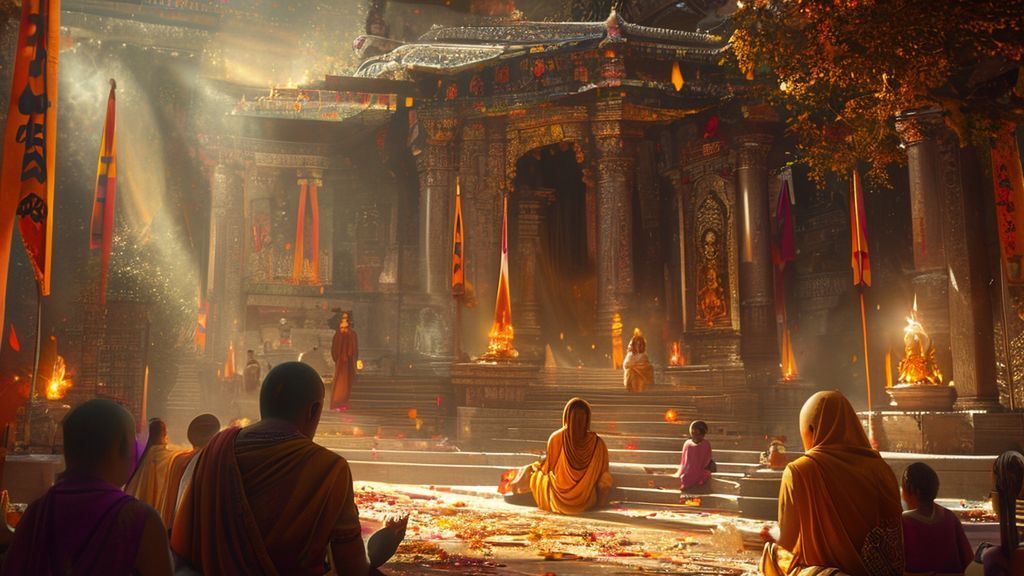
Reincarnation Therapy, from a Sanatan Dharma perspective, is the spiritual process of understanding and mitigating the subtle imprints (samskaras) and karmic consequences from previous lives that manifest as challenges or “traumas” in the present. This profound healing pathway facilitates purification, fosters spiritual growth, and ultimately aids the jiva in progressing towards moksha by resolving deep-seated karmic patterns.
| Attribute | Details |
|---|---|
| Core Concept | Punarjanma (Reincarnation), Karma (Action and Consequence), Samskara (Subtle Imprints) |
| Sanskrit Terminology | Karma Kṣaya (Karma Eradication), Papa Vimochana (Liberation from Sin/Negative Karma), Atma Shuddhi (Self-Purification) |
| Primary Basis | Law of Karma, cyclical nature of existence (Samsara), pursuit of Moksha |
| Purpose | Healing emotional, mental, and spiritual blockages stemming from past lives; spiritual evolution; attaining inner peace. |
| Associated Practices | Yoga, Dhyana (Meditation), Mantra Japa, Seva, Bhakti, Guru-seva, scriptural study, ethical living. |
| Scripture Reference | Bhagavad Gita, Upanishads (e.g., Katha, Brihadaranyaka), Yoga Sutras of Patanjali, Garuda Purana. |
The Eternal Cycle: Understanding Punarjanma and Karma
The profound concept of punarjanma (rebirth) and the immutable law of karma form the very bedrock of Sanatan Dharma. It is the understanding that the immortal soul, the Atman, transmigrates through various bodies, accumulating experiences and consequences based on its actions. What modern discourse terms “Reincarnation Therapy” is, in essence, a practical application of ancient Vedic wisdom aimed at disentangling the jiva from the intricate web of past karmas that manifest as present-day challenges, afflictions, or “traumas.” It is not merely about recollecting past lives, but about recognizing the patterns, understanding their origins, and consciously working towards their resolution through righteous living and spiritual practices. This path offers a profound framework for healing, guiding seekers towards self-realization and ultimate liberation from the cycle of birth and death.
Puranic Wisdom: Karma’s Unfolding and Resolution
While the term “Reincarnation Therapy” is contemporary, the underlying principles of past life influences and their resolution are deeply embedded in our Itihasas and Puranas. The scriptures are replete with narratives illustrating the inexorable nature of karma and the paths to its mitigation. The Garuda Purana, for instance, elaborates extensively on the consequences of actions in this life and their impact on future existences, detailing how negative deeds can lead to specific suffering or lower births. Similarly, the Markandeya Purana, through the narrative of King Harischandra, vividly portrays how even a righteous king faced immense suffering due to a past vow and karmic debt, only to overcome it through unwavering adherence to Dharma (truth and righteousness).
The story of Bhishma in the Mahabharata provides another compelling example. When lying on the bed of arrows, he questioned Lord Krishna about the cause of his intense suffering despite a lifetime of Dharma. Krishna revealed that this suffering was the result of a cruel act committed fifty-six lifetimes prior, demonstrating that even a vast span of time does not erase karmic impressions (samskaras). This illustrates that karmic “traumas” can lie dormant for eons, only to manifest when the conditions are ripe. The resolution, as exemplified by Bhishma’s unwavering adherence to Dharma until his last breath, lies in accepting one’s karma, performing one’s duty without attachment, and seeking divine grace through devotion and purification. These narratives teach us that understanding our past karma isn’t for regret, but for conscious action in the present to shape a better future and ultimately attain spiritual freedom.
The Wisdom of Samskara and Healing
Sanatan Dharma offers a sophisticated understanding of the human psyche, far preceding modern psychology. It postulates that beyond the physical body and conscious mind lies a vast reservoir of impressions, or samskaras (संस्कार), accumulated over countless lifetimes. These samskaras are the subtle imprints of all our thoughts, words, and deeds, and they form the template of our personality, tendencies (vasanas), and reactions. These are not mere memories but energetic residues that compel us towards certain experiences and behaviors, often manifesting as unexplained fears, phobias, recurring patterns of misfortune, or emotional blockages — what might be termed “past life trauma.”
The “science” in this context refers to the systematic and time-tested methodologies prescribed by the Rishis for understanding, transcending, and ultimately purifying these samskaras. The Yoga Sutras of Patanjali, particularly in the section on Kleshas (afflictions), meticulously outline how ignorance (avidya), ego (asmita), attachment (raga), aversion (dvesha), and fear of death (abhinivesha) are rooted in past samskaras and drive the cycle of suffering. The path to healing, therefore, is not merely intellectual recollection but deep spiritual work that cleanses these subtle layers of existence, allowing the inherent purity of the Atman to shine forth. This profound insight into the inner architecture of the self provides the framework for true, lasting healing.
Dharmic Practices for Mitigating Past Life Imprints
Healing past life imprints, or mitigating karmic residue, is a continuous spiritual journey within Sanatan Dharma, not a single ritual. It involves dedicated practices that purify the mind, body, and spirit. The goal is to weaken negative samskaras and cultivate positive ones, leading to spiritual liberation. Here are key practices:
- Atma-Vichara (Self-Inquiry) and Svādhyāya (Self-Study): Deep introspection guided by scriptural wisdom. Understanding the nature of the self, the mind, and the illusory nature of suffering through texts like the Upanishads and Bhagavad Gita is the first step towards recognizing and dissolving karmic patterns.
- Mantra Japa and Kirtan: Regular chanting of sacred mantras, such as the Gayatri Mantra (ॐ भूर् भुवः स्वः तत् सवितुर्वरेण्यं भर्गो देवस्य धीमहि धियो यो नः प्रचोदयात्) or the Maha Mrityunjaya Mantra, purifies the subtle body, invokes divine grace, and helps to transmute negative karmic energies into positive spiritual vibrations. Group kirtan fosters a collective spiritual energy that aids in purification.
- Karma Yoga (Selfless Action): Performing duties and actions without attachment to their fruits, dedicating all efforts to the Divine. This breaks the cycle of ego-driven action and accumulation of new karma, allowing old karmas to burn themselves out.
- Dhyana (Meditation) and Pranayama (Breath Control): Regular practice of meditation calms the mind, allows one to observe thought patterns and samskaras without identification, and gradually diminishes their power. Pranayama purifies the nadis (subtle energy channels), clearing blockages that may be linked to past life energies.
- Seva (Selfless Service): Engaging in service to humanity, animals, or nature, with humility and love. Seva generates immense positive karma and helps in dissolving ego, which is a primary source of karmic bondage.
- Tirtha-Yatra (Pilgrimage): Visiting sacred sites and temples is believed to cleanse sins and accumulate spiritual merit. The spiritual vibrations of these ancient places, sanctified by countless sages and devotees, can significantly aid in karmic purification.
- Guru-Seva and Satsang: Seeking guidance from a true Guru and associating with spiritual company (satsang) provides invaluable wisdom, protection, and accelerates spiritual progress, helping one navigate the complexities of karmic resolution.
Sacred Mantras for Purification and Healing
Mantras are powerful sound vibrations that connect us to divine energies, purify our consciousness, and aid in dissolving karmic impurities. Chanting with devotion and correct pronunciation is key.
-
Maha Mrityunjaya Mantra (मन्त्रं महामृत्युंजय):
ॐ त्र्यम्बकं यजामहे सुगन्धिं पुष्टिवर्धनम्।
उर्वारुकमिव बन्धनान् मृत्योर्मुक्षीय मामृतात्॥
Om Tryambakam Yajamahe Sugandhim Pushtivardhanam |
Urvarukamiva Bandhanan Mrityor Mukshiya Maamritat ||
Meaning: “We worship the three-eyed Lord Shiva, who is fragrant and nourishes all beings. May He liberate us from the bondage of death, like a cucumber freed from its stalk, towards immortality.” This mantra is a potent prayer for health, longevity, protection, and liberation from fear of death, which often stems from deep-seated samskaras. -
Gayatri Mantra (गायत्री मन्त्र):
ॐ भूर् भुवः स्वः
तत् सवितुर्वरेण्यं
भर्गो देवस्य धीमहि
धियो यो नः प्रचोदयात्॥
Om Bhur Bhuvah Svah
Tat Savitur Varenyam
Bhargo Devasya Dhimahi
Dhiyo Yo Nah Prachodayat ||
Meaning: “We meditate on the adorable glory of the Divine Vivifier, Savitur. May He enlighten our intellect.” This universal prayer invokes divine light and wisdom, essential for discerning karmic patterns and gaining clarity on the path of purification. -
Shanti Mantras (शान्ति मन्त्र):
ॐ पूर्णमदः पूर्णमिदं पूर्णात् पूर्णमुदच्यते।
पूर्णस्य पूर्णमादाय पूर्णमेवावशिष्यते॥
ॐ शान्तिः शान्तिः शान्तिः॥
Om Purnamadah Purnamidam Purnat Purnamudachyate |
Purnasya Purnamadaya Purnamevavashishyate ||
Om Shantih Shantih Shantih ||
Meaning: “That is whole, this is whole. From the whole, the whole becomes manifest. From the whole, when the whole is negated, what remains is still the whole. Om Peace, Peace, Peace.” Chanting such mantras brings inner peace and harmony, calming the mind troubled by karmic disturbances.
Dos and Don’ts on the Path of Karmic Healing
Embracing the journey of healing past life imprints requires mindful living and dedication to Dharmic principles.
- Do: Cultivate Satya (truthfulness), Ahimsa (non-violence), Asteya (non-stealing), Brahmacharya (right use of energy), and Aparigraha (non-possessiveness) in thought, word, and deed.
- Do: Practice forgiveness, both for others and for oneself. Holding onto resentment creates new karmic bonds.
- Do: Engage in regular sadhana (spiritual practice) – meditation, yoga, prayer, and scriptural study. Consistency is vital.
- Do: Seek guidance from enlightened Gurus or learned scholars who can provide authentic interpretations of scriptures and personalized spiritual direction.
- Do: Perform acts of charity and compassion (Dana) with a pure heart, without expectation of reward.
- Don’t: Engage in actions driven by ego, greed, or hatred. These generate fresh negative karma.
- Don’t: Expect instant results. Karmic healing is a gradual process requiring patience, perseverance, and unwavering faith.
- Don’t: Blame past lives for all present difficulties without taking responsibility for current actions and choices. While past karma sets a stage, present actions determine the script.
- Don’t: Neglect your worldly duties. Dharmic living is about balancing spiritual aspirations with responsibilities in the material world.
Frequently Asked Questions
Is “Reincarnation Therapy” explicitly mentioned in the Vedas?
While the term “Reincarnation Therapy” is modern, the foundational principles that underpin it—the immutable laws of Punarjanma (rebirth), Karma (action and consequence), and the concept of Samskaras (subtle imprints)—are extensively discussed and form central tenets within the Vedas, Upanishads, Bhagavad Gita, and Puranas. The scriptures provide the spiritual science for understanding and mitigating karmic residue, which is the essence of this “therapy.”
How does Karma directly relate to present-day “trauma” or challenges?
According to Sanatan Dharma, every action, thought, and word creates an impression, a samskara, that resides in the subtle body. These samskaras, along with the accumulated karmic fruits (karma-phala), determine the conditions, predispositions, and experiences of future lives. Present-day “traumas,” unexplained fears, recurring patterns of misfortune, or deep-seated psychological blocks are often manifestations of unfulfilled desires, unresolved conflicts, or negative actions from past lives, forming a type of karmic debt or blueprint that influences current reality. Healing involves consciously working through these imprints.
Can anyone engage in this process of karmic healing?
Yes, the path of karmic healing through righteous living and spiritual practices is open to anyone with sincerity and devotion. It does not require special powers or abilities to “see” past lives, though some individuals may spontaneously recall them. The essence lies in purifying the mind, cultivating virtues, performing selfless actions, and engaging in spiritual disciplines prescribed in our scriptures. The journey is universal, though the pace and specific practices may vary based on an individual’s unique karmic predisposition.
What is the role of a Guru in navigating past life imprints?
A true Guru is indispensable on this profound journey. A Guru, being a realized soul, possesses the spiritual insight to guide a disciple through the complexities of their karmic patterns. They can discern the root causes of suffering, prescribe appropriate spiritual practices (sadhana), provide specific mantras, and offer the wisdom and strength necessary to overcome obstacles. Their guidance acts as a beacon, illuminating the path and preventing common pitfalls, thereby accelerating the process of karmic purification and spiritual evolution. You can find more resources on authentic spiritual guidance at Hindutva.online.
Embracing the Path: Why This Matters for Every Hindu
The understanding and proactive engagement with the principles of reincarnation and karmic healing are not mere academic exercises; they are vital for the spiritual sustenance and evolution of every Hindu. In an increasingly complex world, individuals grapple with myriad challenges that often seem inexplicable. Sanatan Dharma offers a profound, compassionate explanation: these are opportunities for growth, lessons from past lives manifesting for resolution. By embracing practices that purify samskaras and mitigate negative karma, we are not just addressing personal “traumas”; we are actively participating in our spiritual ascent, moving closer to Moksha, liberation from the cycle of birth and death.
This path affirms the profound dignity and responsibility of each soul, empowering individuals to take charge of their spiritual destiny. It reminds us that our present actions are seeds for the future, and conscious, Dharmic living is the ultimate “Reincarnation Therapy.” By engaging with this timeless wisdom, we honor our ancestors, enrich our present, and secure a brighter spiritual future, ensuring the eternal flame of Sanatan Dharma continues to illuminate the world. For further insights and resources on authentic Vedic knowledge, visit Hindutva.online.