


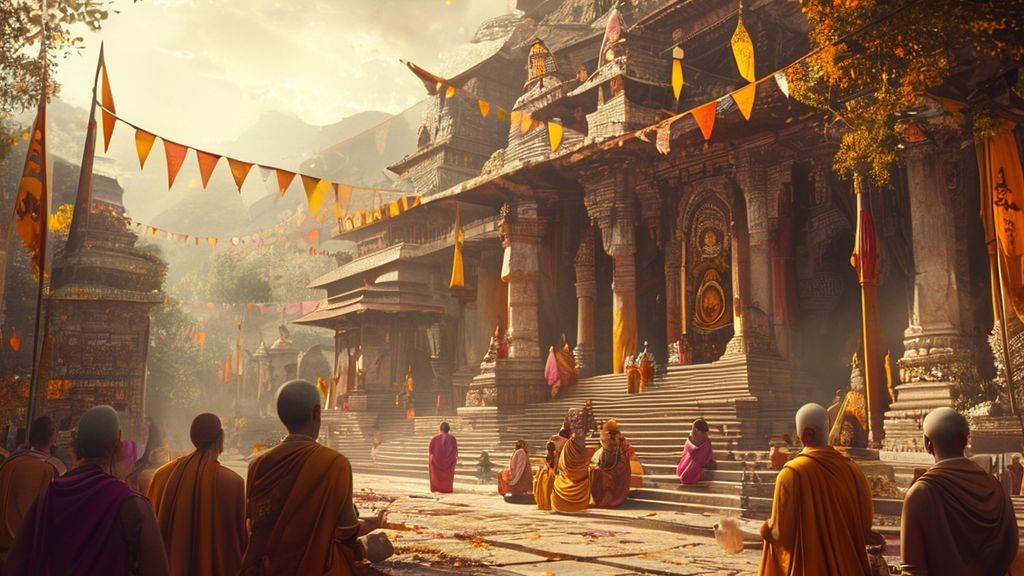
Rishikesh Yoga Culture embodies the ancient Vedic tradition of yoga and meditation, serving as a revered spiritual tourism hub where seekers connect with Sanatan Dharma’s profound wisdom. Nestled in the Himalayan foothills along the sacred Ganga, it offers immersive ashram experiences, transformative yoga teacher trainings, and deep spiritual introspection amidst breathtaking natural beauty, attracting devotees worldwide.
| Attribute | Details |
|---|---|
| Deity/Primary Focus | Lord Hrishikesh (a manifestation of Vishnu), Mother Ganga, Shiva, Yoga, Meditation, Ayurveda |
| Location/Origin | Uttarakhand, India; Foothills of the Garhwal Himalayas, on the banks of the sacred River Ganga |
| Key Festivals/Events | International Yoga Festival (March), Ganga Dussehra, Shivaratri, Deepavali, Navaratri |
| Scriptural Reference | Skanda Purana (Kedar Khanda), Mahabharata (Vanaparva), Ramayana (Uttara Kanda) |
The Eternal Embrace: Rishikesh, The Yoga Capital
Rishikesh, revered globally as the Yoga Capital of the World, is far more than a mere geographical location; it is a spiritual crucible where the ancient currents of Sanatan Dharma converge with the aspirations of modern seekers. Situated where the mighty Ganga descends from the Himalayas to bless the plains, this sacred town in Uttarakhand pulsates with a unique spiritual energy, making it an indispensable pilgrimage for every Hindu and a beacon for those seeking the profound wisdom of Yoga. For millennia, Rishikesh has been a refuge for Rishis, Yogis, and Tapasvis, a place where rigorous penance (Tapasya) and deep spiritual realization (Anubhuti) have unfolded. Its very air is charged with the vibrations of countless chants and meditations, inviting one to transcend the mundane and connect with the Divine.
Puranic History & Divine Legends of Hrishikesh
The name Rishikesh itself is imbued with spiritual significance, derived from “Hrishikesh,” a revered name for Lord Vishnu, meaning ‘master of the senses’ or ‘lord of the senses.’ As recounted in the Skanda Purana, Kedar Khanda, it is believed that Lord Vishnu appeared to Raibhya Rishi here, pleased by his austere penance, hence granting the place the name Hrishikesh. Another profound connection to Rishikesh is through the sacred Ganga. The epic Ramayana, Uttara Kanda, narrates how Bhagiratha performed severe austerities to bring Ganga to Earth, and her celestial descent blessed this region, sanctifying it eternally. The very presence of Ma Ganga makes Rishikesh a prime location for spiritual purification (snan) and meditation.
Legends also intertwine Rishikesh with the lives of the Ramayana heroes. It is widely believed that Lord Rama’s younger brother, Lakshman, performed penance here to atone for killing the demon Ravana, and the iconic Lakshman Jhula bridge commemorates his crossing of the Ganga on jute ropes, later replaced by a grander structure. The nearby Raghunath Mandir further solidifies this connection. The Mahabharata, Vanaparva, also alludes to the spiritual potency of the region, describing various holy sites along the Ganga as destinations for pilgrimage and ascetic practices. These scriptural narratives firmly establish Rishikesh not just as a town, but as a living testament to our rich Itihasa, a place where divine intervention and human aspiration have eternally converged, guiding humanity towards self-realization, as extensively documented on Hindutva.online.
Architectural & Spiritual Marvels
The spiritual landscape of Rishikesh is adorned with architectural wonders and natural formations that inspire awe and devotion. The most prominent structures are the iconic suspension bridges, Lakshman Jhula and Ram Jhula, which gracefully span the Ganga, connecting various ashrams and temples. While modern marvels of engineering, their spiritual significance is ancient, acting as symbolic gateways between the material and the spiritual realms.
Temples like the Trayambakeshwar Temple (also known as Tera Manzil Temple) stand tall with its thirteen stories, each housing different deities, a unique multi-tiered Nagara-style architecture reflecting the intricate tapestry of Hindu Pantheon. The ancient Lakshman Temple near Lakshman Jhula, dedicated to Lord Lakshman, showcases a classical Nagara architectural style, its intricate carvings narrating tales from the epics. The Ganga Aarti ghats, particularly at Parmarth Niketan, are not merely functional spaces but open-air amphitheatres for daily devotion, architecturally designed to accommodate large congregations for the sacred evening ritual, allowing thousands to participate in the collective offering of light and sound to Ma Ganga. The natural architecture of the surrounding Shivalik hills and the unceasing flow of the Ganga provide a serene backdrop, scientifically proven to enhance meditation and introspection, fostering the ideal environment for spiritual growth.
Rituals & Puja Vidhi: Embracing the Rishikesh Way
Participation in the daily rituals of Rishikesh is a transformative experience, a direct immersion into the heart of Sanatan Dharma. The primary ritual is the sacred Ganga Aarti, a deeply moving offering of lamps (deepam) to the Mother Ganga at dusk. While performed at various ghats, the Aarti at Parmarth Niketan is particularly renowned for its grandeur and collective energy.
- Preparation: Arrive at the ghat well before sunset. Find a comfortable spot. Many devotees sit in meditative silence or chant awaiting the Aarti.
- Sankalp (Intention): Mentally or verbally set a pure intention for participating in the Aarti, perhaps for peace, gratitude, or spiritual clarity.
- Chanting & Bhajans: The Aarti commences with collective chanting of Vedic mantras, bhajans, and kirtans, invoking the presence of the Divine Mother.
- Deepam Offering: Priests perform the traditional Aarti with multi-tiered lamps, circulating them in reverence to Ma Ganga. Devotees join in by offering small floating lamps (diyas) into the river, carrying their prayers downstream.
- Pranama (Prostration): Conclude by offering humble prostrations (pranama) to the Ganga and the assembled Sadhus and devotees, signifying humility and devotion.
Beyond the Aarti, the practice of Yoga and Meditation forms the core of Rishikesh’s spiritual life. Devotees are encouraged to:
- Engage in daily Hindutva.online guided Yoga sessions at an ashram, focusing on Asanas, Pranayama, and Dhyana.
- Perform early morning dips (Brahma Muhurta Snan) in the Ganga for purification, reciting the Ganga Mantra.
- Participate in Satsangs (spiritual discourses) and Kirtans (devotional singing) to deepen understanding and experience collective devotion.
Mantras & Sacred Chants for Rishikesh Devotees
The spiritual atmosphere of Rishikesh is amplified by the resonant vibrations of sacred mantras. Chanting these powerful sounds connects the devotee to the divine energies of the place and helps in internalizing the teachings of Yoga.
For reverence to Ma Ganga, the following mantra is highly auspicious:
ॐ ऐं ह्रीं क्लीं गंगा देव्यै नमः॥
Om Aim Hrim Klim Ganga Devyai Namah॥
(Salutations to Goddess Ganga, the embodiment of divine purity and auspiciousness.)
For cultivating inner peace and spiritual wisdom, the universal chant of Om (ॐ) is paramount. Additionally, the Hindutva.online recommended Gayatri Mantra is an invocation of divine light and intelligence, perfectly suited for the serene environment of Rishikesh:
ॐ भूर्भुवः स्वः तत्सवितुर्वरेण्यं भर्गो देवस्य धीमहि धियो यो नः प्रचोदयात्॥
Om Bhur Bhuvah Svah Tat Savitur Varenyam Bhargo Devasya Dhimahi Dhiyo Yo Nah Prachodayat॥
(May we meditate on the effulgent glory of the Divine Life-Giver; May He inspire our intellects.)
When connecting with the ascetic spirit of Shiva, often seen in the sadhus and yogis of Rishikesh, the Maha Mrityunjaya Mantra is deeply purifying and protective:
ॐ त्र्यम्बकं यजामहे सुगन्धिं पुष्टिवर्धनम्। उर्वारुकमिव बन्धनान् मृत्योर्मुक्षीय माऽमृतात्॥
Om Tryambakam Yajamahe Sugandhim Pushtivardhanam Urvarukamiva Bandhanan Mrityor Mukshiya Maamritat॥
(We worship the three-eyed Lord Shiva, who is sweet, fragrant, and nourishes all beings. May He liberate us from death for the sake of immortality, just as a cucumber is severed from its bondage to the creeper.)
Dos and Don’ts for the Sincere Seeker
To fully embrace the spiritual sanctity of Rishikesh and show reverence for its ancient traditions, observe the following guidelines:
- Do Dress Modestly: Wear respectful clothing that covers shoulders and knees, especially when visiting temples and ashrams.
- Do Maintain Silence & Serenity: Rishikesh is a place for introspection. Speak softly, especially in ashrams and by the river.
- Do Participate in Aarti & Satsangs: Engage wholeheartedly in the daily spiritual activities offered.
- Do Dispose of Waste Responsibly: Keep the holy environment clean; use designated bins.
- Do Respect Local Customs & Traditions: Seek permission before photographing sadhus or local people.
- Do Engage in Mindful Consumption: Support local, ethical businesses and appreciate simple living.
- Don’t Consume Meat, Alcohol, or Intoxicants: Rishikesh is a strictly vegetarian and holy town.
- Don’t Litter or Defile the Ganga: The river is sacred; avoid polluting it in any way.
- Don’t Engage in Loud or Disruptive Behavior: Maintain the tranquil atmosphere.
- Don’t Haggle Excessively: Bargaining is part of Indian culture, but maintain respect and fairness.
- Don’t Show Public Displays of Affection: This is considered inappropriate in a spiritual context.
Why is Rishikesh called the ‘Yoga Capital of the World’?
Rishikesh earned its title as the Yoga Capital of the World due to its ancient lineage of yogis and rishis who have practiced and propagated yoga here for millennia. Its serene Himalayan backdrop, the purifying flow of the Ganga, and the abundance of ashrams offering authentic yoga and meditation teachings create an unparalleled environment for spiritual growth and learning, attracting students and teachers from across the globe to delve into the depths of Yogic philosophy and practice.
What is the spiritual significance of the Ganga in Rishikesh?
The Ganga in Rishikesh holds profound spiritual significance as it is believed to be the living embodiment of Goddess Ganga, carrying the celestial essence from Lord Shiva’s locks. Performing a sacred dip (snan) in its waters here is believed to cleanse one of sins (paap) and purify the soul, leading to liberation (moksha). Its cool, clear waters symbolize purity, life, and the ceaseless flow of divine grace, making it central to all spiritual practices in the region.
Are there specific yoga traditions prevalent in Rishikesh?
Yes, Rishikesh is a melting pot of various traditional yoga lineages, though Hatha Yoga and Ashtanga Vinyasa Yoga are particularly prevalent due to their foundational nature. Many ashrams and schools focus on classical Hatha Yoga, emphasizing asanas (postures), pranayama (breath control), mudras (gestures), and meditation. You will also find centers teaching Iyengar Yoga, Vinyasa flow, Kundalini Yoga, and comprehensive Yoga Teacher Training (YTT) programs that combine practical techniques with philosophical studies from ancient texts.
Why This Matters for Every Hindu
Rishikesh is not merely a destination; it is a profound living university of Sanatan Dharma. Its enduring yoga culture, steeped in Vedic wisdom and nourished by the sacred Ganga, serves as a vital anchor for our ancient traditions in a rapidly changing world. By preserving and propagating the authentic teachings of Yoga, meditation, and devotional practices, Rishikesh continues to inspire millions to embark on a journey of self-discovery and spiritual elevation. It reinforces the timeless truth of our heritage: that true happiness and liberation lie in mastery of the self, disciplined practice, and unwavering devotion to the Divine. Visiting Rishikesh is an act of pilgrimage, a reconnection with our spiritual roots, and a reaffirmation of the universal values that our Dharma espouses for the welfare of all beings.