


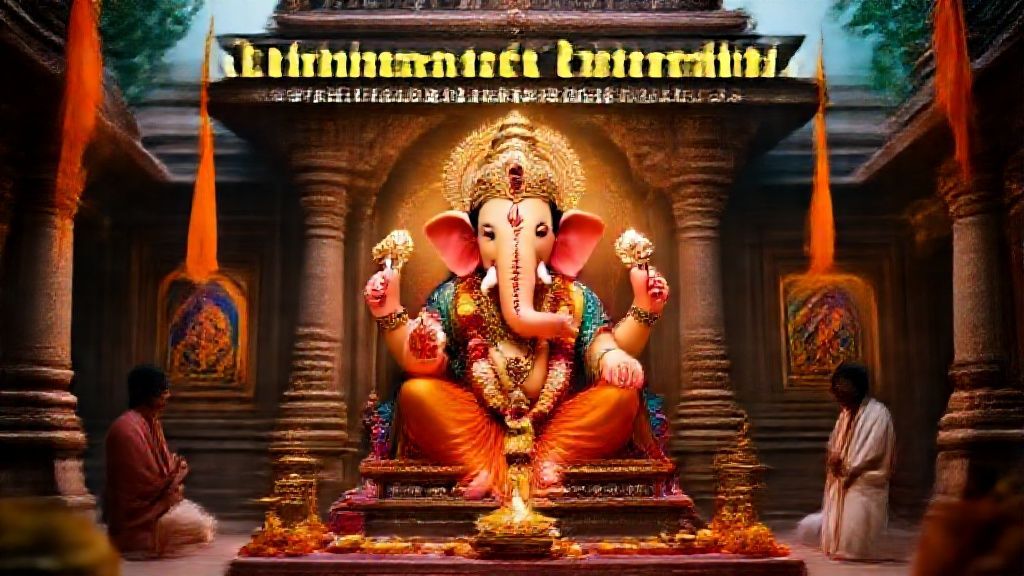
Sankashti Chaturthi 2026 marks the sacred monthly observance dedicated to Bhagwan Ganesha, falling on the fourth day of the Krishna Paksha (dark fortnight). Devotees undertake a rigorous fast to invoke the blessings of Vighnaharta, seeking relief from obstacles (Sankashta), attaining spiritual purity, and achieving success in all endeavors through sincere devotion and moon worship.
| Attribute | Details |
|---|---|
| Presiding Deity | Lord Ganesha (Vighnaharta, Vinayaka, Ekadanta) |
| Primary Ritual | Fasting (Vrat), Ganesha Puja, Moon Sighting (Chandradarshan), Arghyam Offering |
| Key Scripture Reference | Ganesha Purana, Mudgala Purana, Brahma Vaivarta Purana |
| Purpose | Removal of Obstacles (Sankashta), Fulfillment of Desires, Spiritual Growth |
| Auspicious Offering | Modak (Sweet dumplings), Durva Grass (3 or 21 blades), Red Flowers |
Introduction: The Gateway to Divine Grace
In the vast tapestry of Sanatan Dharma, the worship of Bhagwan Ganesha holds a paramount position. He is the Adi-Deva, the first among all deities to be worshipped, the remover of obstacles (Vighnaharta), and the bestower of wisdom and prosperity. Among the myriad ways to propitiate Him, Sankashti Chaturthi stands out as a powerful and deeply revered monthly observance. The term “Sankashti” (संकष्टी) itself signifies deliverance from “Sankat” (संकट), meaning troubles or adversities. Thus, observing this sacred fast is a direct plea to Lord Ganesha to alleviate life’s challenges, both material and spiritual.
For the sincere seeker and devotee, Sankashti Chaturthi is more than just a fast; it is a spiritual discipline that cleanses the mind, purifies the body, and strengthens the soul’s connection with the Divine. It cultivates patience, devotion, and unwavering faith, echoing the timeless principles enunciated in our revered scriptures. Each month, as the moon wanes into its dark fortnight, the fourth day becomes a beacon of hope, promising relief and divine intervention to those who observe the vrat with utmost sincerity.
Sankashti Chaturthi 2026 Dates
For the year 2026, devotees can mark the following dates for observing Sankashti Chaturthi, each associated with a unique name of Lord Ganesha and a specific Phalashruti (fruit of devotion):
- Tuesday, January 13, 2026: Lambodara Sankashti Chaturthi
- Thursday, February 12, 2026: Dwijapriya Sankashti Chaturthi
- Friday, March 13, 2026: Bhalachandra Sankashti Chaturthi
- Sunday, April 12, 2026: Vikata Sankashti Chaturthi
- Monday, May 11, 2026: Ekadanta Sankashti Chaturthi
- Wednesday, June 10, 2026: Krishna Pingala Sankashti Chaturthi
- Thursday, July 9, 2026: Gajanana Sankashti Chaturthi
- Saturday, August 8, 2026: Heramba Sankashti Chaturthi
- Sunday, September 6, 2026: Vighnaraja Sankashti Chaturthi
- Tuesday, October 6, 2026: Vakratunda Sankashti Chaturthi
- Wednesday, November 4, 2026: Ganadhipa Sankashti Chaturthi
- Friday, December 4, 2026: Akhuratha Sankashti Chaturthi
Puranic History & Legend: The Moon, Ganesha, and the Curse
The origins of Sankashti Chaturthi are deeply interwoven with various Puranic narratives, primarily found in the Ganesha Purana, Mudgala Purana, and the Brahma Vaivarta Purana. A popular legend recounts the connection between Lord Ganesha and Chandrama (the Moon God).
One day, Lord Ganesha was returning from a feast, riding His mouse vahana, Mooshika. The celestial journey was interrupted by an unfortunate slip, causing Ganesha to fall. Observing this, Chandrama, known for his beauty and vanity, laughed derisively at Ganesha’s appearance. Enraged by the Moon God’s arrogance and disrespect, Lord Ganesha pronounced a powerful curse: “You shall be stained, and whoever looks upon you on this specific Chaturthi Tithi will suffer false accusations and ill repute.”
The Moon God, realizing his folly, immediately repented and pleaded for forgiveness. The Devas, too, were distressed by the curse, as Chandrama is an essential source of light and a presiding deity. Seeing Chandrama’s sincere remorse, Lord Ganesha, ever compassionate, mitigated the curse. He declared that those who behold the moon on this Chaturthi will indeed face difficulties, but if they sincerely observe a fast dedicated to Him on this very day, and worship the moon thereafter, they will be absolved of the curse’s effects and be freed from all troubles. This incident solidified the tradition of observing Sankashti Chaturthi and the practice of performing Chandradarshan (sighting the moon) before breaking the fast.
Another important reference in the Brahma Vaivarta Purana (Ganesha Khanda) elucidates the divine powers of Lord Ganesha, establishing Him as superior even to Brahma, Vishnu, and Shiva in certain contexts, emphasizing His role as the primal energy from whom all creations emanate. The observance of Sankashti Chaturthi taps into this primordial power, directly addressing the source of all auspiciousness.
Cosmic Alignment & Disciplined Living: The Architectural & Scientific Marvels
While Sankashti Chaturthi is a fasting observance rather than a temple structure, its underlying principles are deeply connected to the cosmic rhythms and the scientific understanding embedded within Sanatan Dharma. The selection of the Chaturthi Tithi of the Krishna Paksha is not arbitrary; it is an outcome of sophisticated ancient Indian astronomical calculations (Siddhanta).
The moon’s phases significantly influence Earth’s natural cycles and human physiology. The Krishna Paksha Chaturthi, a phase when the moon’s light begins to diminish noticeably, symbolizes the waning of negative influences and the strengthening of one’s resolve. The act of fasting until moonrise encourages a deep connection with celestial movements. It is a precise synchronization of human spiritual effort with the cosmic clock. Our ancient Rishis understood that specific lunar phases could enhance spiritual practices.
Furthermore, the discipline of fasting itself, known as Upavasa (उपवास) – meaning “to dwell near” the divine – is a profound scientific and spiritual practice. It detoxifies the body, calms the mind, and enhances mental clarity, preparing the devotee for deeper meditation and prayer. This self-imposed discipline, aligned with lunar phases, demonstrates a profound understanding of both physical and metaphysical wellness, emphasizing how ancient Indic traditions seamlessly integrated scientific observation with spiritual growth. This holistic approach is a cornerstone of our heritage, as elaborated frequently on Hindutva.online.
Rituals & Puja Vidhi: A Step-by-Step Guide for Devotees
Observing Sankashti Chaturthi with proper vidhi (procedure) amplifies its benefits. The ritual involves devotion, purification, and gratitude.
- Morning Purification and Sankalpa: On the day of Sankashti Chaturthi, wake up early, preferably during Brahma Muhurta. After bathing, wear clean clothes. Light a diya (lamp) before a picture or idol of Lord Ganesha. Take a Sankalpa (vow) to observe the fast with sincerity, dedicating it to Bhagwan Ganesha for the removal of obstacles and fulfillment of righteous desires.
- Ganesha Puja: Establish an idol or image of Lord Ganesha on a clean altar. Offer fresh flowers, especially red hibiscus (जपा कुसुम) and twenty-one blades of Durva grass (दूर्वा). Present Modak or Laddus, bananas, and other fruits. Light incense sticks (agarbatti) and a lamp.
- Vrat Katha Recitation: Recite or listen to the Sankashti Vrat Katha, which details the significance and legends associated with the fast. Each month’s Sankashti Chaturthi has a unique Vrat Katha.
- Fasting Guidelines: Devotees typically observe a Nirjala (waterless) fast or consume only fruits, milk, and specific vrat-friendly foods like sabudana khichdi, potatoes, and peanuts. Avoid grains, non-vegetarian food, and alcohol throughout the day.
- Chanting Mantras: Spend the day chanting Ganesha mantras (detailed below) and meditating on the divine form of Lord Ganesha.
- Chandradarshan (Moon Sighting) & Arghyam: The fast is traditionally broken only after sighting the moon in the evening. Prepare an offering (Arghyam) for the Moon God, consisting of water mixed with milk, sandalwood paste, and rice grains. Stand facing the moon, offer the Arghyam three times while chanting a Moon mantra (detailed below), praying for well-being.
- Breaking the Fast: After offering Arghyam to the moon, partake in the Prasad (sacred food) offered to Ganesha, especially Modak. Then, one can consume a wholesome vegetarian meal.
Mantras & Chants: Invoking Divine Presence
Chanting mantras during Sankashti Chaturthi profoundly enhances the spiritual experience, aligning the devotee’s consciousness with the divine vibrations of Lord Ganesha and the cosmos.
Ganesha Mantras:
- Basic Ganesha Mantra:
ॐ गं गणपतये नमः (Om Gam Ganapataye Namaha)
Meaning: Salutations to Lord Ganesha, the lord of multitudes.
- Ganesha Gayatri Mantra:
ॐ एकदंताय विद्महे वक्रतुण्डाय धीमहि तन्नो दन्ति प्रचोदयात्॥
(Om Ekadantaya Vidmahe, Vakratundaya Dhimahi, Tanno Danti Prachodayat॥)
Meaning: We meditate on the one-tusked God, the one with the twisted trunk; may He enlighten us and lead us to wisdom.
- Vakratunda Mahakaya Mantra:
वक्रतुण्ड महाकाय सूर्यकोटि समप्रभ। निर्विघ्नं कुरु मे देव सर्वकार्येषु सर्वदा॥
(Vakratunda Mahakaya Suryakoti Samaprabha. Nirvighnam Kuru Me Deva Sarvakaryeshu Sarvada॥)
Meaning: O Lord with a curved trunk, mighty body, and the radiance of a million suns, please make all my endeavors free of obstacles, always.
Moon Mantra (Chandra Mantra) for Arghyam:
-
ॐ सों सोमाय नमः (Om Som Somaya Namaha)
Meaning: Salutations to Lord Soma (the Moon God).
Alternatively, one can chant:
गगने संस्थितो देव चन्द्रलोकाधिनायकः।
पूजितो भक्तितो देव सर्वदा शान्तिदायकः॥
(Gagane Samsthitau Deva Chandralokadhinayakah.
Pujito Bhaktito Deva Sarvada Shantidayakah॥)
Meaning: O Lord residing in the sky, chief of the lunar world, worshipped by devotees, always the bestower of peace.
Dos and Don’ts: Upholding the Sanctity of the Vrat
Observing Sankashti Chaturthi with proper conduct and adherence to specific guidelines ensures the devotee receives the full spiritual benefits.
Dos:
- Observe the fast with utmost sincerity and devotion (श्रद्धा).
- Maintain physical and mental purity throughout the day.
- Offer Durva grass (21 blades) and Modak to Lord Ganesha.
- Recite the Sankashti Vrat Katha.
- Perform Chandradarshan (moon sighting) before breaking the fast.
- Offer Arghyam to the Moon God with reverence.
- Donate to the needy or feed animals as a form of selfless service.
- Engage in spiritual thoughts and prayers.
Don’ts:
- Do not consume grains, onions, garlic, non-vegetarian food, or alcohol.
- Avoid harsh speech, anger, and negative thoughts.
- Do not disrespect elders or any living being.
- Avoid sleeping during the day, as it is believed to diminish the vrat’s efficacy.
- Do not break the fast before sighting the moon, even if the moonrise is very late.
- Do not forget to offer special prayers to the Moon God, as it is integral to this vrat.
Frequently Asked Questions
What is the significance of the Moon in Sankashti Chaturthi?
The Moon plays a crucial role in Sankashti Chaturthi due to a Puranic legend where Lord Ganesha cursed the Moon for mocking Him. To mitigate the curse, Lord Ganesha declared that devotees must worship the Moon after observing the day-long fast, thus making Chandradarshan (moon sighting) and offering Arghyam an essential part of the ritual for the removal of obstacles and purification from any past transgression.
Can anyone observe Sankashti Chaturthi?
Yes, anyone can observe Sankashti Chaturthi, irrespective of age or gender, provided they do so with genuine devotion and physical capacity. While traditionally observed by Hindus, the vrata is open to all who wish to invoke Lord Ganesha’s blessings for obstacle removal, wisdom, and well-being. It is particularly beneficial for those facing persistent challenges in life.
What are the benefits of observing Sankashti Chaturthi?
Observing Sankashti Chaturthi brings numerous benefits, including the removal of obstacles (Sankashta) from one’s path, granting wisdom and intelligence, promoting peace and prosperity, fulfilling righteous desires, and enhancing spiritual discipline. It is believed to cleanse sins, bestow good fortune, and protect the devotee from negative influences, as promised in the Ganesha Purana.
How are the Sankashti Chaturthi dates calculated?
Sankashti Chaturthi dates are calculated based on the traditional Hindu lunisolar calendar, specifically when the Chaturthi Tithi (fourth lunar day) falls during the Krishna Paksha (dark fortnight) of a given month and moonrise occurs during the Tithi. This astrological precision ensures that the observance aligns with the most auspicious cosmic energy for invoking Lord Ganesha.
Dharmic Significance: Preserving Sanatan Dharma Through Vratas
The consistent observance of vratas like Sankashti Chaturthi is not merely a personal act of devotion; it is a vital pillar in the preservation and perpetuation of Sanatan Dharma. In an era marked by rapid change and spiritual challenges, these sacred practices serve as an anchor, connecting us to the eternal wisdom and traditions passed down by our Rishis. Each fast, each mantra, and each offering reaffirms our faith, cultivates self-discipline, and strengthens the fabric of our spiritual community.
By diligently following the directives of our scriptures and upholding these ancient observances, devotees contribute to the collective spiritual consciousness of the Hindu world. They ensure that the profound teachings and cultural heritage of our ancestors remain vibrant and relevant for future generations. The practice of Sankashti Chaturthi, therefore, is a powerful reminder of the enduring truth that devotion, discipline, and unwavering faith in Bhagwan Ganesha can indeed overcome any Sankat, guiding us toward a life of dharma, artha, kama, and ultimately, moksha. This dedication forms the very essence of our shared journey on Hindutva.online.